Most water heaters in the Upper Ohio Valley need a new anode rod every 3–5 years. In harder-water towns like Steubenville, Wintersville, Toronto, Weirton, Mingo Junction, Follansbee, Brilliant, Wellsburg, New Cumberland, and Colliers, I often see rods fail closer to 2–3 years. Once the rod is gone, the tank begins rusting from the inside and can fail long before its expected lifespan.
Why This Matters
I’ve been called into hundreds of homes where the water heater failed early, and most of those failures started with a worn-out anode rod homeowners didn’t even know existed. Once the rod stops protecting the tank, corrosion takes over quickly—especially in our region’s hard water.
A healthy anode rod is the number one factor in how long your water heater will last.
Why You Can Trust This Advice
I’m Alex Largent, owner of Honest Fix Heating, Cooling & Plumbing. I’ve worked in HVAC and plumbing for more than 20 years and hold the highest NATE credential in the industry: Senior HVAC Efficiency Analyst.
My team and I work on water heaters across the entire Ohio Valley every single day. We’ve seen how local water conditions—especially mineral content—affect anode rod wear and tank lifespan.
This is field-tested, local insight—not guesswork.
What the Anode Rod Does
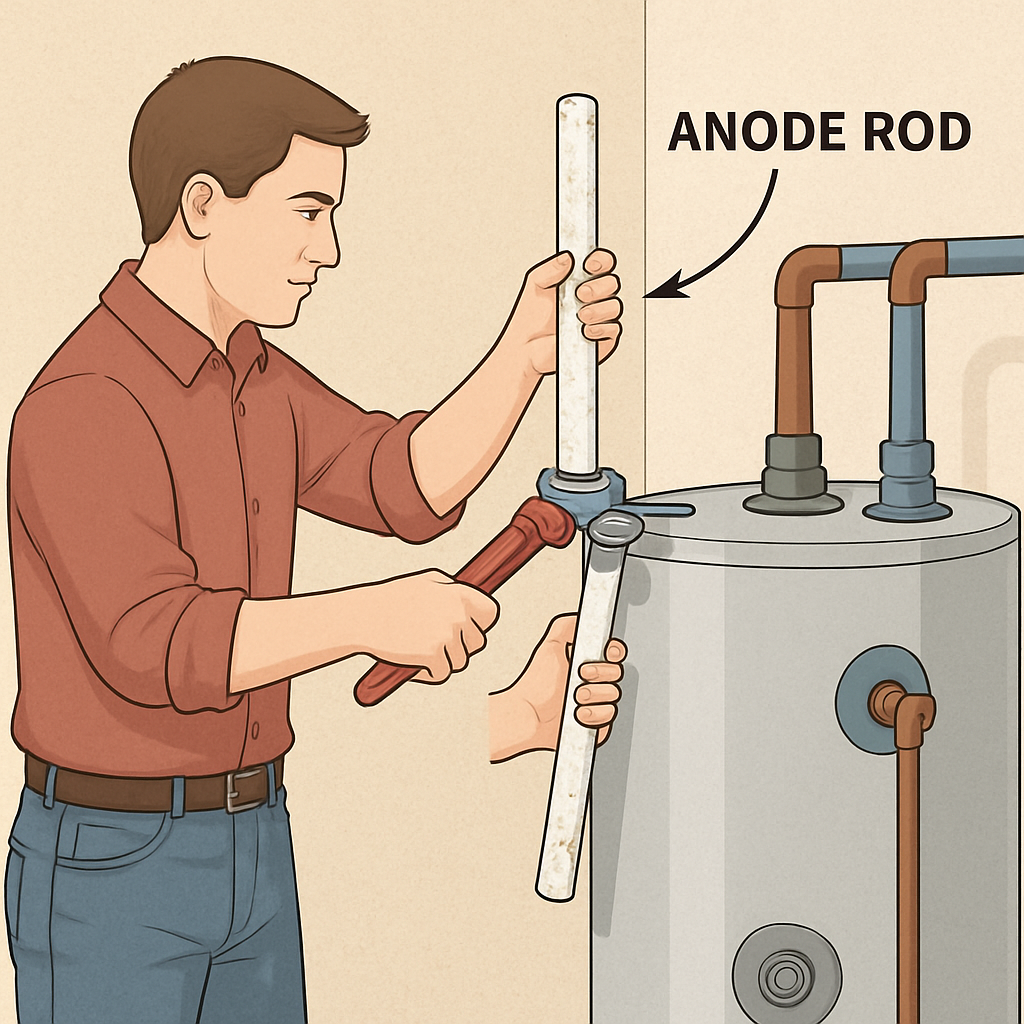
Inside a standard water heater, the anode rod is designed to corrode so the tank doesn’t. It’s a “sacrificial” metal rod that attracts corrosion to itself. Once it wears out, the steel tank becomes exposed, and corrosion accelerates.
What I look for when inspecting a rod:
- Heavy pitting or thinning
- Fragmenting or swollen sections
- Sediment buildup inside the tank
- Any signs of rust in the hot water
When the rod is gone, corrosion shifts to the tank walls almost immediately.
How Long the Rod Actually Lasts Here
Typical lifespan: 3–5 years
But in our water conditions, I often see it fail earlier.
1. Hard Water (2–3 Years)
Steubenville, Weirton, Wintersville, and Follansbee have high mineral levels that eat through rods quickly.
2. High Water Usage
Larger families cycle their water heater more often, increasing wear.
3. Rod Material
- Magnesium: Best protection, shorter lifespan
- Aluminum/Zinc: Longer life, less aggressive protection
- Powered Rod: Longest life, great for odor issues
4. Tank Age
Older tanks have more internal wear, so rod failure causes faster damage.
In the Ohio Valley, it’s a mistake to assume your rod will last five years without being checked.
A Real Example From My Work
A family in Weirton’s Marland Heights called because their hot water had turned brown. Their tank was seven years old and still heating fine, but once I opened it, I found the anode rod completely dissolved.
Because the tank had been unprotected for too long, internal rust had already begun—and replacement was the only safe option.
That entire replacement could have been avoided with a simple rod swap.
What It Costs to Replace an Anode Rod
Here in the Upper Ohio Valley, I typically see anode rod replacement fall between:
$120–$350 total
It depends on:
- Rod type
- Tank age
- Sediment levels
- Condition of fittings
- How tightly the rod is stuck
For comparison, regional water heater replacement pricing ranges from $2,925–$5,950 for standard tanks and $5,290–$6,050 for tankless models.
Replacing the rod costs a fraction of replacing the entire tank.
Magnesium vs. Aluminum vs. Powered Rods (My Recommendation)
Magnesium Rod
- Strongest protection
- Wears out faster
- My top recommendation for most homes
Aluminum/Zinc Rod
- Longer lifespan
- Moderate protection
- Useful for extremely hard water
Powered Anode Rod
- Doesn’t corrode
- Excellent for sulfur or rotten-egg smells
- Best long-term value
If you’ve had odor issues, a powered rod is usually the best long-term fix.
Problems That Happen When the Rod Isn’t Replaced
From what I see daily across Steubenville, Toronto, Wellsburg, and Colliers, these are the most common consequences:
1. Rusty or Brown Water
Once the rod is gone, the tank rusts directly.
2. Tank Leaks
Corrosion eats through the steel and causes bottom-seam failure.
3. Higher Energy Bills
Sediment insulation forces the heater to run longer.
4. Early Tank Failure
A water heater designed to last 10–12 years may fail in 6–8.
Skipping rod replacement is the fastest way to shorten your water heater’s lifespan.
Guarantees That Protect You
Service Trust Guardian — for Water Heater Repairs
Covers services like anode rod replacement with:
- 5-Year Labor Warranty
- Money-Back Satisfaction Guarantee
- No-Overtime-Charge Guarantee
- Clean Workspace Guarantee
Lifetime Trust Shield — for New Water Heater Installations
If the tank is too far gone:
- 10-Year Labor Warranty
- No-Lemon Guarantee
- 90-Day Money-Back Satisfaction
Everything is backed by written coverage, never verbal promises.
Who I’m the Right Fit For
I’m a good fit if:
- You want things explained clearly
- You want the work done the right way
- You value long-term reliability
- You appreciate a free exact quote with no pressure
I may not be the right fit if:
- You’re shopping for the cheapest option
- You prefer DIY or unlicensed labor
- You’re okay with “good enough” instead of thorough
I focus on doing the job thoroughly—not rushed.
FAQs
How often should I have the rod inspected?
Every 2 years, especially in hard-water areas.
Does replacing the rod fix sulfur smell?
Often—especially with a powered anode rod.
Can I replace it myself?
You could, but seized factory rods can strip easily. Damaging the threads often forces a full tank replacement.
What guarantees cover the service?
Repairs fall under the Service Trust Guardian, and new installations fall under the Lifetime Trust Shield.
Your Next Step
If your water heater is 3 years old or more, it’s time to check the anode rod. It’s one of the simplest ways to prevent early tank failure and protect your home from unexpected costs.
Call Honest Fix today for a free exact quote.
Learn about our guarantees before you decide.
Alex Largent is the Owner and Senior HVAC Efficiency Analyst at Honest Fix Heating, Cooling & Plumbing. With more than 20 years of field experience, NATE and EPA certifications, and a hands-on leadership style, Alex teaches his team to fix systems right the first time — with transparency, precision, and no upsells. He writes about HVAC diagnostics, home energy efficiency, and practical maintenance advice for homeowners across the Upper Ohio Valley. Read Alex Largent’s full bio to learn more about his expertise in the HVAC and Plumbing industry. Updated October 2025.