Quick Answer
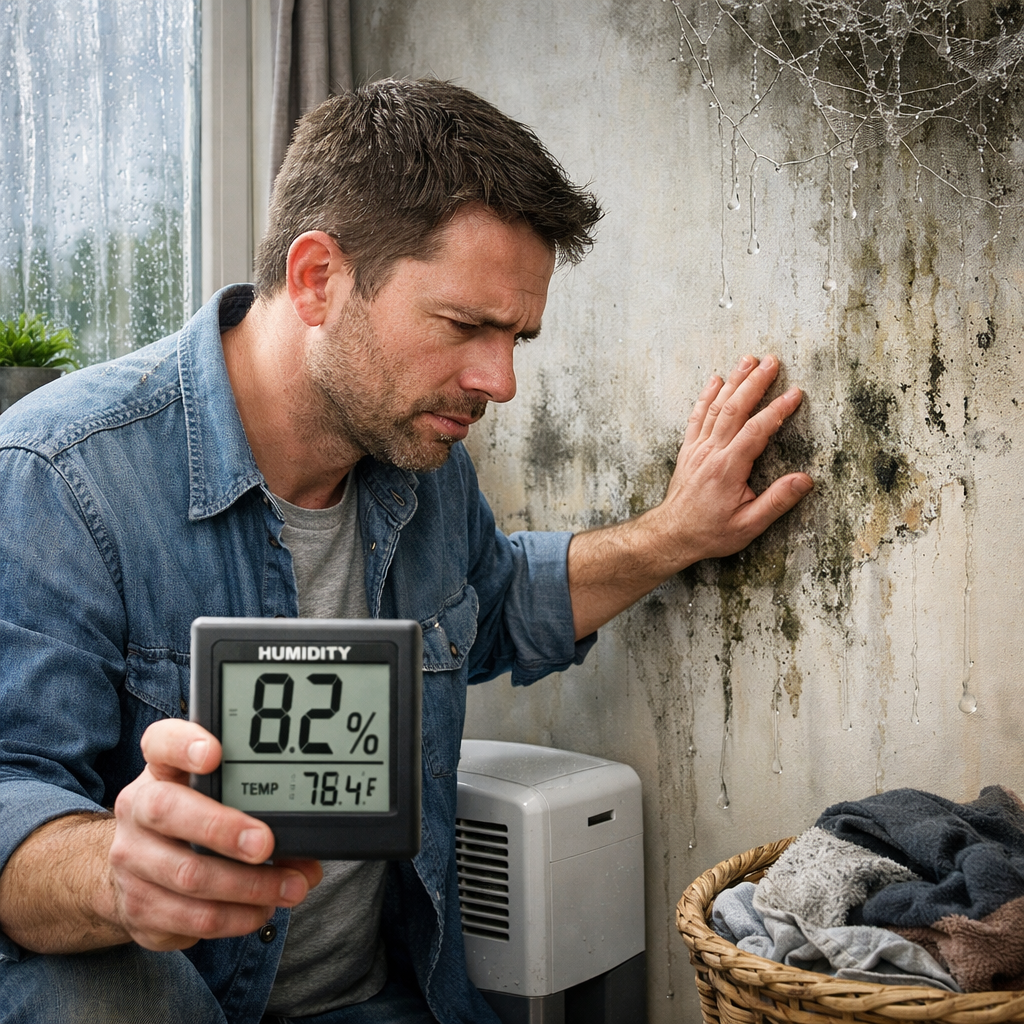
High humidity when the AC is running is usually caused by short run times, oversized equipment, poor airflow, or moisture entering the home faster than the system can remove it. In Steubenville homes, basements, hillside foundations, and older duct designs often make the problem worse. Cooling air is fast—removing moisture takes time and proper system setup.
If your home still feels sticky or clammy even though the air conditioner is running, you’re not imagining it—and your thermostat isn’t lying. We see this issue every summer in Steubenville, especially in homes built before 1980 with basements or hillside lots.
This article is meant to help homeowners understand why humidity problems happen—not to push system replacement.
Air conditioning lowers temperature. Humidity control depends on run time, airflow, and moisture sources. When those don’t line up, moisture stays behind.
Why This Problem Is So Common in Steubenville Homes
Steubenville sits along the Ohio River, with rolling terrain, clay-heavy soil, and a large number of older homes. That combination creates constant moisture pressure.
In Steubenville, river humidity, clay soil, basements, and hillside drainage often collide—creating indoor humidity problems even when the AC is running normally.
Common local contributors include:
- Homes designed before modern comfort standards
- Finished basements with limited return airflow
- Add-on ductwork installed over decades
- Hillside runoff pushing moisture toward foundations
Big Problem #1: An Oversized Air Conditioner
This is the most common cause we find.
An oversized AC cools the home too quickly and shuts off before it can remove moisture.
Humidity removal only happens while the system is running. Short cycles stop the process early.
Real Steubenville Example
A 1950s brick ranch near Sunset Boulevard had newer windows and insulation, but the home still used a 4-ton AC sized for its original condition. The house cooled quickly, but indoor humidity stayed above 65%.
The system wasn’t broken—it was oversized.
Big Problem #2: Short Cycling from Thermostat Placement
Even properly sized systems can struggle if the thermostat is satisfied too fast.
When the thermostat reaches temperature quickly, the system shuts down before moisture removal happens.
Common Steubenville issues include:
- Thermostats near kitchens or sun-exposed walls
- Thermostats above supply vents
- Single thermostats in multi-level hillside homes
Big Problem #3: Poor Airflow or Aging Duct Design
Humidity control requires steady airflow across the indoor coil.
Restricted airflow equals weak dehumidification.
We often see:
- Finished basements with no return air
- Undersized trunk lines feeding additions
- Older ductwork with leaks or collapse
Basement moisture then migrates upward into the living space.
Big Problem #4: Basement Moisture Feeding the Whole House
If the basement is damp, the entire home will feel humid.
Air conditioning does not stop ground moisture—it only manages airborne moisture after it enters the home.
Why this matters locally:
- High water tables near the river
- Block and stone foundations common in older neighborhoods
- Hillside drainage directing water toward foundation walls
A Common Steubenville Homeowner Mistake
Lowering the thermostat to “force” humidity out of the air.
This
Scott Merritt
Scott Merritt is a co-founder of Honest Fix Heating, Cooling and Plumbing and brings more than 30 years of experience across HVAC, leadership, and industry education. He serves in a senior leadership and oversight role, providing licensed guidance, reviewing HVAC educational content, and supporting technician training and documentation standards. Prior to co-founding Honest Fix, Scott founded and owned Fire & Ice Heating & Air Conditioning in Columbus, Ohio, which he operated for more than two decades before selling the company in 2025. During that time, he led programs and partnerships including Carrier Factory Authorized Dealer, Trane Comfort Specialist, and Rheem Pro Partner, helping establish high technical and training standards. Scott is the Ohio State HVAC license holder for Honest Fix and provides licensed oversight to help ensure work meets applicable codes and manufacturer requirements. Learn more about Scott’s background and role at Honest Fix by viewing his
full leadership bio.