What Problems Occur If My AC Is Oversized or Undersized in Toronto, OH?
February 4th, 2026
4 min read
Quick Answer
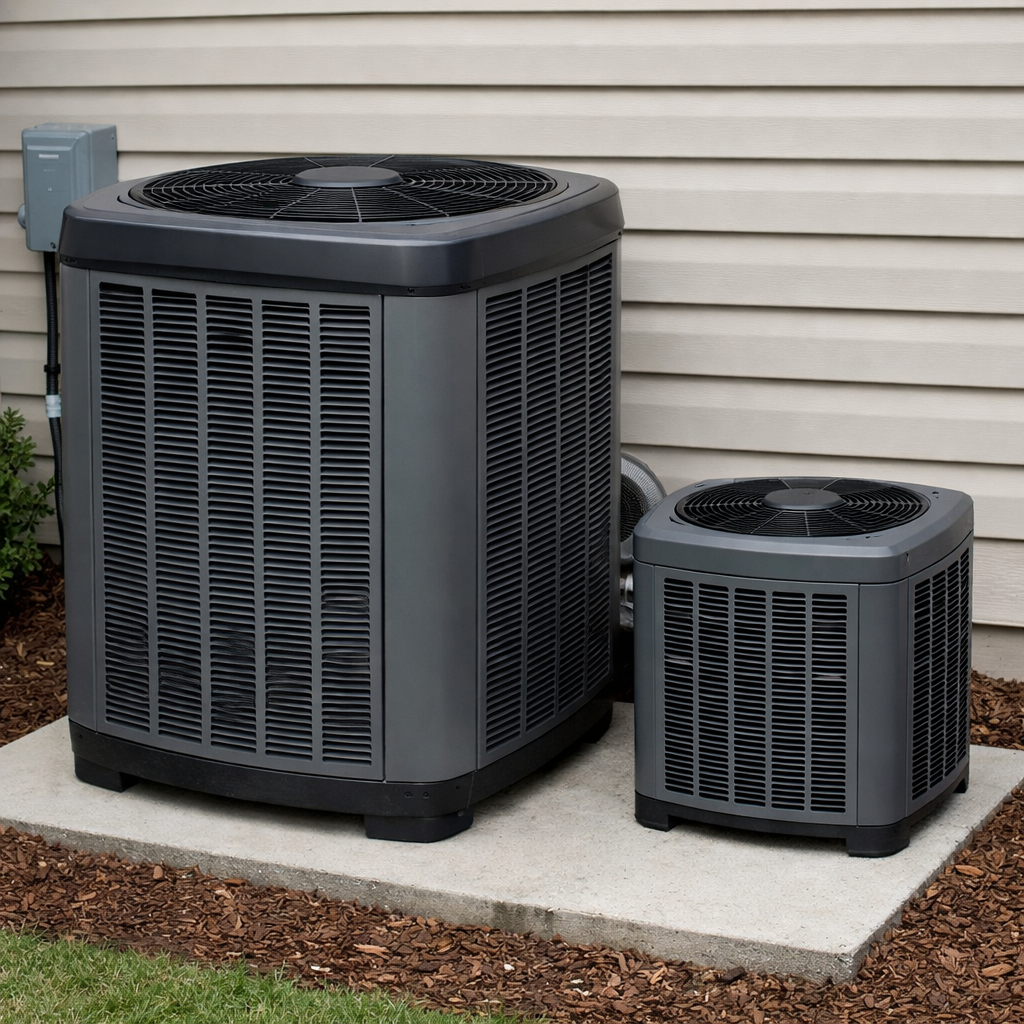
If your AC is oversized in a Toronto home, it will cool the space too quickly, fail to remove enough humidity, short cycle, and wear out components early. If your AC is undersized, it will run for long periods, struggle during humid river conditions, raise electric bills, and experience reduced system life.
Why System Size Problems Are Common in Toronto
AC sizing problems are especially common in Toronto because of the area’s proximity to the Ohio River and the age of many homes.
Many Toronto homes:
- Sit near the river or in low-lying areas
- Were built between the 1940s and 1970s
- Have older insulation and duct systems
- Were retrofitted with central air long after construction
Humidity plays a much larger role in comfort here than many homeowners realize. When systems are sized without accounting for moisture load, problems appear quickly—even with newer equipment.
Is Oversized or Undersized Worse in Toronto Homes?
Both cause issues, but they fail in different ways.
Oversized systems in Toronto commonly lead to:
- Poor humidity control
- Cool but damp indoor conditions
- Short cycling and frequent starts
- Early component wear
Undersized systems more often cause:
- Constant runtime
- High electric bills
- Difficulty keeping up on humid days
- Accelerated system fatigue
Because Toronto homes face sustained moisture from the river, oversizing usually causes comfort and humidity problems, while undersizing usually causes cost and longevity problems.
What Actually Changes When an AC Is the Wrong Size
Homeowners often say:
“It cools, but the house still feels sticky or uneven.”
That is a classic sizing symptom.
Common changes include:
- Short or excessively long run cycles
- Inconsistent moisture removal
- Rooms that feel cool but clammy
- Energy bills rising without thermostat changes
Sizing issues often show up during the first humid summer after installation.
Problems Caused by an Oversized AC in Toronto Homes
Short Cycling and Moisture Retention
Oversized systems shut off too fast.
In Toronto’s river-driven humidity:
- The thermostat is satisfied quickly
- Moisture remains in the air
- The home feels cool but uncomfortable
Humidity removal requires steady runtime, not extra capacity.
Increased Mold and Moisture Risk
When humidity stays elevated:
- Condensation lingers on surfaces
- Basements and lower levels feel damp
- Indoor air quality suffers
Oversized systems often worsen these conditions despite cooling quickly.
Premature Wear on Equipment
Frequent on-off cycling stresses:
- Compressors
- Electrical controls
- Blower motors
Oversized systems often experience failures earlier than expected.
Problems Caused by an Undersized AC in Toronto Homes
Long Runtime and Rising Electric Bills
Undersized systems rarely get a break.
During humid weather:
- The AC runs most of the day
- Electric bills steadily increase
- Comfort never fully stabilizes
Moisture removal becomes inefficient when the system is always behind.
Falling Behind During Humid Heat
On hot, humid days:
- Indoor temperatures creep upward
- Recovery takes hours
- Comfort drops late in the day
This is common in older Toronto homes with limited insulation or air leakage.
Reduced System Lifespan
Continuous operation accelerates wear on:
- Compressors
- Fan motors
- Electrical components
Undersized systems often fail earlier than properly sized ones.
Which Sizing Problems Cost the Most Over Time?
Different sizing mistakes create different financial pain.
Problems that raise monthly energy costs:
- Undersized systems
- Long runtimes
- High humidity load
Problems that shorten system life:
- Oversized systems
- Short cycling
- Electrical stress
Problems that most often force early replacement:
- Chronic undersizing
- Oversizing combined with poor duct airflow
Higher costs usually come from mismatch, not the AC brand.
Why AC Systems End Up the Wrong Size
Sizing mistakes are rarely intentional.
They usually happen when:
- Square footage is used instead of load calculations
- Humidity load is underestimated
- Equipment is replaced “like for like”
- Duct limitations are ignored
AC sizing problems usually come from shortcuts, not bad intentions—but shortcuts cost homeowners for years.
The Role of Ductwork and Humidity
A critical truth for Toronto homeowners:
A properly sized AC can still behave oversized or undersized if airflow and moisture removal are not balanced.
Restricted airflow or poor drainage can cause:
- Short cycling
- Long runtimes
- Persistent humidity
Sizing problems are often duct or moisture problems in disguise.
When Oversizing vs Undersizing Problems Show Up
Oversized system problems usually appear:
- Immediately after installation
- During the first humid summer
- As dampness or comfort complaints
Undersized system problems usually appear:
- Gradually
- During extended heat and humidity
- As rising energy bills and nonstop runtime
Timing often reveals the real issue.
A Real Toronto Home Example
A homeowner in a 1960s Toronto home near the river replaced their AC with a larger unit hoping to improve comfort.
The system cooled quickly, but the home stayed humid and musty. Energy bills increased, and basement areas felt damp.
The issue was not equipment quality—it was oversizing in a moisture-heavy environment.
A Unique Toronto Cost Driver
River-level humidity magnifies sizing mistakes.
In Toronto, moisture load matters as much as temperature. Systems that are too large or too small struggle to manage humidity efficiently, driving comfort complaints and higher costs.
A Common Homeowner Mistake
A common mistake is assuming:
“If it cools fast, it’s working better.”
Fast cooling often means poor humidity control. Comfort depends on moisture removal, not speed.
How Proper Sizing Prevents These Problems
Correct sizing considers:
- Heat gain and loss
- Insulation and air leakage
- Window exposure
- Duct design and airflow
- Local humidity conditions
When sizing is done correctly, systems run longer, steadier cycles that control moisture, improve comfort, and lower energy use.
Higher bills and comfort problems are usually symptoms, not the real problem.
Guarantees That Matter When Sizing Is Done Right
Service Trust Guardian (Repairs and Adjustments)
If sizing-related issues are tied to service work:
- 5-year labor coverage on qualifying repairs
- Clear accountability if problems persist
- No hidden follow-up charges
Lifetime Trust Shield (New Installations)
For new system installations:
- 15-year labor coverage
- Protection against sizing-related workmanship issues
- Long-term accountability in the Upper Ohio Valley
Cities Where This Same Issue Is Common
Improper AC sizing affects homeowners throughout the Upper Ohio Valley, including:
- Steubenville, OH
- Wintersville, OH
- Mingo Junction, OH
- Brilliant, OH
- Weirton, WV
- Follansbee, WV
- Wellsburg, WV
- New Cumberland, WV
- Colliers, WV
- Hooverson Heights, WV
Home conditions matter more than AC brand.
Frequently Asked Questions
Why does humidity feel worse with a bigger AC?
Because moisture removal requires longer runtime, not more cooling power.
Can river humidity affect AC sizing?
Yes. Moisture load must be included in sizing calculations.
Does oversizing save energy?
No. Short cycling usually increases energy use.
Can ductwork make sizing problems worse?
Yes. Poor airflow can make any system behave incorrectly.
What guarantees do you offer?
- 5-year labor coverage through the Service Trust Guardian
- 15-year labor coverage through the Lifetime Trust Shield
Final Thoughts
Oversized and undersized AC systems create real comfort and cost problems in Toronto homes—especially in moisture-heavy river environments. Proper sizing solves more issues than bigger equipment or higher efficiency ratings.
If you are looking for the cheapest replacement without evaluating humidity and airflow, this approach likely is not the right fit.
Call Honest Fix today for a free exact quote.
Optional next step: Learn about our guarantees before you decide.
Scott Merritt is a co-founder of Honest Fix Heating, Cooling and Plumbing and brings more than 30 years of experience across HVAC, leadership, and industry education. He serves in a senior leadership and oversight role, providing licensed guidance, reviewing HVAC educational content, and supporting technician training and documentation standards. Prior to co-founding Honest Fix, Scott founded and owned Fire & Ice Heating & Air Conditioning in Columbus, Ohio, which he operated for more than two decades before selling the company in 2025. During that time, he led programs and partnerships including Carrier Factory Authorized Dealer, Trane Comfort Specialist, and Rheem Pro Partner, helping establish high technical and training standards. Scott is the Ohio State HVAC license holder for Honest Fix and provides licensed oversight to help ensure work meets applicable codes and manufacturer requirements. Learn more about Scott’s background and role at Honest Fix by viewing his full leadership bio.