How Much Does It Cost to Repair a Leaking AC Unit in Weirton, WV?
January 26th, 2026
4 min read
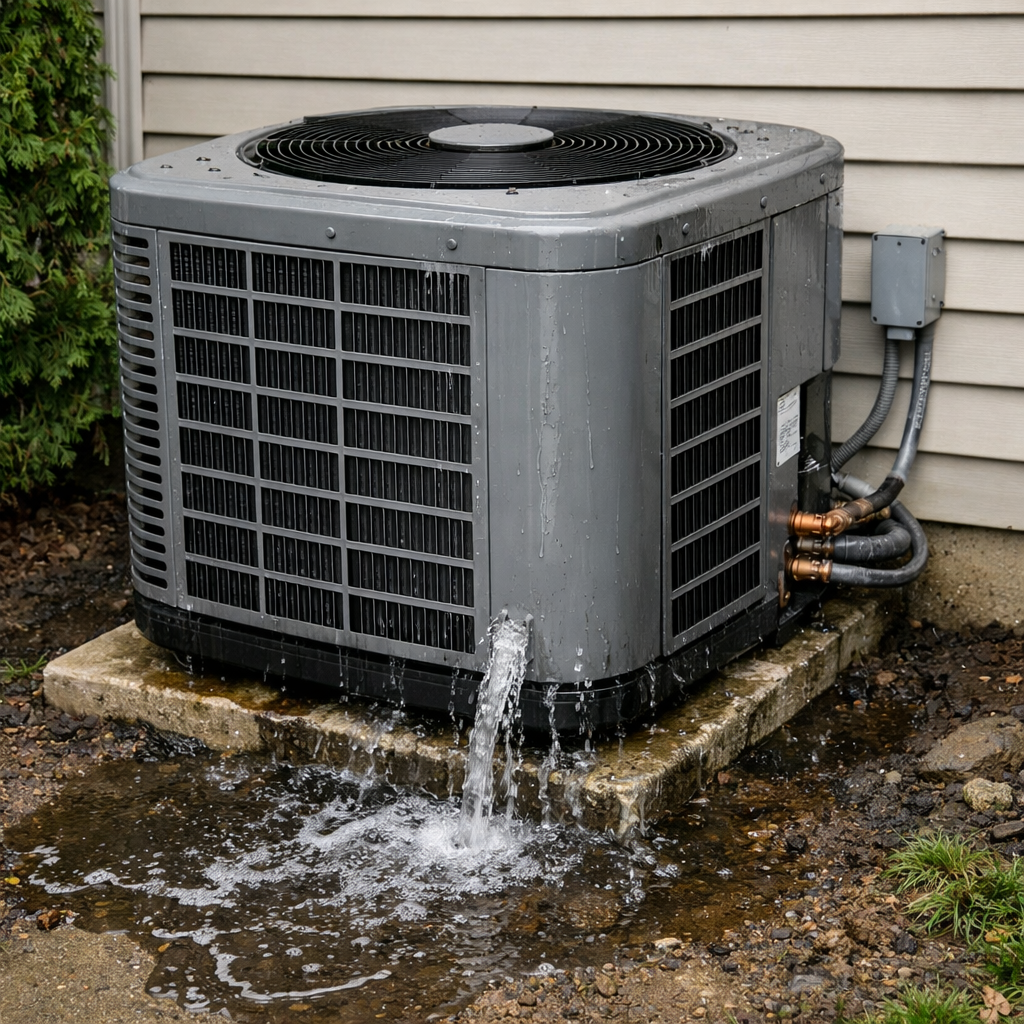
Quick Answer
In Weirton, repairing a leaking AC unit typically costs $150–$500 for minor HVAC repairs, $500–$1,500 for medium repairs, and $1,500–$4,000 for major repairs. Water, refrigerant, and oil leaks can fall into any of these categories depending on the cause, with major component leaks being the most expensive to fix.
In most Weirton homes, AC leaks are commonly tied to mixed housing age, outdoor equipment exposure, and electrical variability. Unlike smaller river towns, Weirton includes older neighborhoods, mid-century homes, and newer developments — often on open ground where systems are exposed to wind, weather, and power fluctuations. These factors can cause leaks to repeat if the underlying stress isn’t addressed.
We don’t recommend repair or replacement based on assumptions — only on what the system is actually doing after proper inspection.
What “Leaking” Actually Means for an AC Unit
When a homeowner says their AC is leaking, it usually means one of three things:
- Water leaking from condensate or frozen coils
- Refrigerant leaking from coils or line sets
- Oil leaking, usually tied to compressor or refrigerant system failure
Most water leaks start as minor repairs, refrigerant leaks usually fall into medium or major repairs, and oil leaks almost always indicate a major repair.
The cost to repair the leak depends on which HVAC repair category it falls into — not the liquid itself.
Cost to Repair a Leaking AC Unit in Weirton, WV (By Repair Category)
Minor HVAC Repairs
$150–$500
Minor repairs involve leaks that do not indicate system failure.
Typical examples:
- Clogged condensate drain lines
- Overflow during long cooling cycles
- Cracked or disconnected drain piping
- Dirty filters causing temporary coil freeze and excess water
In Weirton homes, minor leaks often occur when outdoor units are exposed to debris and wind, increasing system runtime.
Minor leaks are usually safe to repair when caught early.
Medium HVAC Repairs
$500–$1,500
Medium repairs involve leaks tied to performance problems or recurring stress.
Common examples:
- Repeated water leaks from frozen evaporator coils
- Airflow issues caused by older ductwork or retrofits
- Blower or fan issues linked to electrical fluctuations
- Refrigerant loss that does not yet require major component replacement
In Weirton, these repairs often repeat when electrical service and HVAC upgrades aren’t aligned.
One medium repair may be reasonable. Repeated medium repairs are a warning sign.
Major HVAC Repairs
$1,500–$4,000
Major repairs involve leaks tied to core system components.
These include:
- Evaporator coil refrigerant leaks
- Condenser coil failures accelerated by exposure
- Compressor or refrigerant system failures (often associated with oil leaks)
Oil leaks almost always fall into the major repair category, because oil loss signals internal mechanical damage.
The Repair-vs-Replace Stop Point (Critical Clarity)
If a leaking AC repair reaches the $1,500–$4,000 major repair category, replacement should always be compared before moving forward.
At this point:
- The cost gap between repair and replacement narrows
- Reliability becomes uncertain
- Exposure and electrical stress increase failure risk
This is the decision line many Weirton homeowners don’t realize they’ve crossed.
Why Leaking AC Repairs Get Expensive Over Time in Weirton
One leak repair rarely ends the story.
In Weirton homes, we commonly see:
- A $300 drain or overflow repair
- Followed by an $800–$1,200 airflow or electrical-related repair
- Followed by a $2,000+ coil or refrigerant system failure
Individually, each repair seems reasonable. Collectively, they often exceed the value of replacement.
Fixing the leak the right way matters more than fixing it the cheapest way — this approach isn’t for everyone, but it prevents repeat failures.
A Real Weirton Leaking AC Example
A homeowner in a more open Weirton neighborhood called after repeated water and moisture issues around the indoor unit.
The home had:
- An outdoor unit fully exposed to wind and weather
- Older electrical service feeding newer HVAC equipment
- Long daily cooling run times
- Prior drain cleanings that didn’t stop the leaks
The first repair addressed drainage. The second addressed airflow and electrical strain. When refrigerant loss was later found at the evaporator coil, the issue moved into the major repair category.
At that point, continuing to repair leaks no longer made financial sense.
Weirton-Specific Cost Driver: Exposure and Electrical Variability
In Weirton, exposure is a hidden cost driver.
Many homes here deal with:
- Outdoor units exposed to wind and debris
- Voltage fluctuations
- Mixed-age electrical infrastructure
- Longer cooling cycles
When these factors aren’t addressed, leaks and failures return.
Safety Matters: Refrigerant and Oil Leaks
Not all leaks are just messy — some are serious.
- Refrigerant leaks reduce cooling and strain compressors
- Oil leaks indicate internal mechanical failure and almost always lead to major system damage
These leaks should never be ignored or temporarily “topped off.”
How the Service Trust Guardian Protects You on AC Leak Repairs
When repairing a leaking AC unit, the biggest concern isn’t just the upfront cost — it’s whether the repair actually holds.
The Service Trust Guardian is Honest Fix’s written protection for repairs and maintenance, designed to reduce the risk of trying a repair first.
It includes:
- A 60-day money-back service guarantee if the repair doesn’t resolve the issue
- A 5-year labor warranty on repairs, so you don’t pay twice for workmanship
- No overtime or after-hours charges, even when leaks need urgent attention
- Clean work area and on-time arrival guarantees, especially important in mixed-use homes
If a leaking AC repair reaches the major category or keeps repeating, we clearly explain when replacement should be considered instead.
Frequently Asked Questions About Leaking AC Units in Weirton, WV
Is a leaking AC unit dangerous?
Some leaks are minor, but others are serious. Water leaks can cause damage over time, refrigerant leaks can strain the system, and oil leaks usually indicate internal mechanical failure that should be addressed immediately.
How much does it usually cost to fix a leaking AC unit?
The cost depends on which repair category the leak falls into. Minor HVAC repairs typically cost $150–$500, medium repairs usually range from $500–$1,500, and major repairs involving coils or refrigerant systems typically cost $1,500–$4,000.
When does it make more sense to replace instead of repair a leaking AC?
Replacement should always be considered when leak-related repairs fall into the $1,500–$4,000 major repair category, when refrigerant or oil leaks are present, or when medium repairs keep repeating.
Cities We Serve Across the Upper Ohio Valley
Steubenville, Wintersville, Toronto, Mingo Junction, Brilliant, Weirton, Follansbee, Wellsburg, New Cumberland, Colliers, and Hooverson Heights.
Call Honest Fix today for a free exact quote.
Optional: Learn about our guarantees before you decide.
Scott Merritt is a co-founder of Honest Fix Heating, Cooling and Plumbing and brings more than 30 years of experience across HVAC, leadership, and industry education. He serves in a senior leadership and oversight role, providing licensed guidance, reviewing HVAC educational content, and supporting technician training and documentation standards. Prior to co-founding Honest Fix, Scott founded and owned Fire & Ice Heating & Air Conditioning in Columbus, Ohio, which he operated for more than two decades before selling the company in 2025. During that time, he led programs and partnerships including Carrier Factory Authorized Dealer, Trane Comfort Specialist, and Rheem Pro Partner, helping establish high technical and training standards. Scott is the Ohio State HVAC license holder for Honest Fix and provides licensed oversight to help ensure work meets applicable codes and manufacturer requirements. Learn more about Scott’s background and role at Honest Fix by viewing his full leadership bio.