What Are the Risks of Not Fixing an HVAC Problem in the Upper Ohio Valley?
March 24th, 2026
3 min read
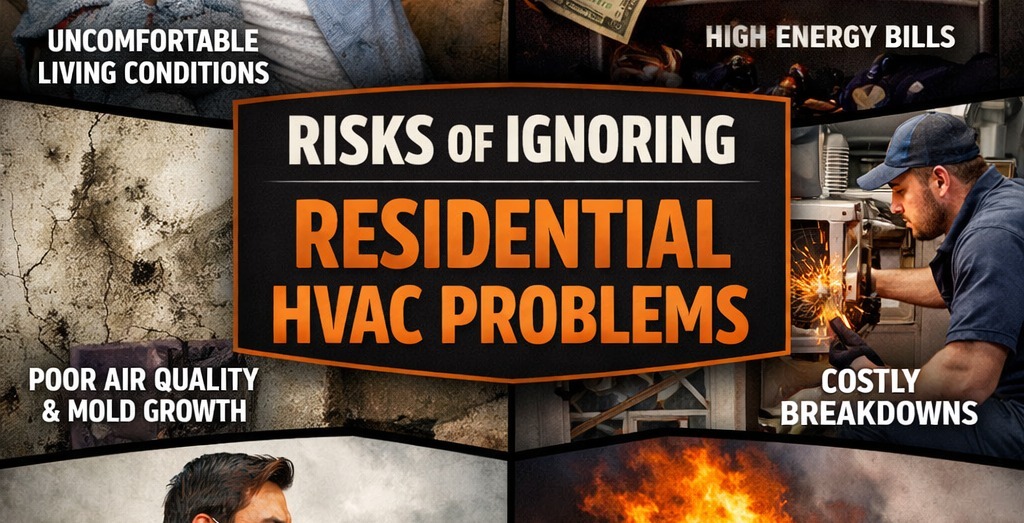
Not fixing an HVAC problem can quickly lead to system failure, higher energy bills, safety risks, and property damage. Small issues often escalate within hours or days. In the Upper Ohio Valley, delays during freezing temperatures or high humidity can result in frozen pipes, mold growth, or complete system breakdown.
Across the Upper Ohio Valley—including Steubenville and Weirton—homes deal with river-valley humidity, older duct systems, and insulation gaps that accelerate HVAC failures. Basement moisture, aging equipment, and temperature swings make small issues worsen faster than expected.
What Happens If You Ignore an HVAC Problem?
Ignoring an HVAC problem allows small issues to escalate into system damage, higher repair costs, and potential safety risks—often within days.
If you do nothing:
- the system runs longer and harder
- components overheat or wear faster
- electrical strain increases
- failure spreads to other parts
A clogged filter can shut a system down within hours under heavy demand. A failing capacitor can stop operation without warning.
If the system is still running, it does not mean the problem is safe to ignore.
After 30+ years servicing HVAC systems across Ohio, most major failures started as small, delayed issues.
How Fast Can HVAC Problems Get Worse?
HVAC problems can worsen within hours to days, especially during extreme weather or in older homes.
What Happens Over Time
- same day: reduced airflow or performance
- 1–3 days: increased strain on motors and compressors
- 1+ week: higher likelihood of component failure
- longer delays: full system breakdown
In the Upper Ohio Valley, humidity and aging duct systems accelerate this timeline faster than newer homes.
Waiting even a short time can significantly increase repair complexity.
Can HVAC Problems Damage Your Home?
Yes, HVAC problems can lead to frozen pipes, water damage, mold growth, and indoor air quality issues if not addressed.
In winter, indoor temperatures dropping toward 55°F increase pipe-freezing risk. Pipes can begin freezing when outdoor temperatures approach 20°F.
In summer, humidity often exceeds 70% in this region. Without proper cooling and dehumidification, moisture can build up quickly, leading to mold and structural damage.
What starts as a system issue can become a home damage problem.
What Safety Risks Can HVAC Issues Cause?
Unresolved HVAC problems can create fire hazards, carbon monoxide exposure, and electrical risks.
Electrical faults can cause overheating, breaker trips, or fire risk. Burning smells should never be ignored.
Faulty furnaces or venting issues can lead to carbon monoxide exposure, causing symptoms like headaches, dizziness, and nausea.
The CDC outlines carbon monoxide risks here: CDC Carbon Monoxide Guide
The National Fire Protection Association identifies heating equipment as a leading cause of home fire risk: NFPA Heating Safety
If safety risks are present, act immediately.
Will Waiting Increase Repair Costs?
Yes, delaying HVAC repairs increases costs by allowing small issues to damage larger components and reduce efficiency.
Systems under stress can run 10–30% longer, increasing energy use and wear.
Compounding damage is common:
- airflow problems strain compressors
- electrical issues damage motors
- refrigerant issues affect the entire system
A small repair can turn into a major component replacement if ignored.
According to the U.S. Department of Energy, poor maintenance leads to higher energy costs and reduced system performance: U.S. Department of Energy Maintenance Guide
Should You Keep Running the System or Shut It Off?
Keep the system running only if there are no safety risks and performance issues are minor. Shut it off if there are electrical, overheating, or repeated failure signs.
Safe to keep running:
- mild performance issues
- stable temperatures
- no unusual smells or noises
Shut the system off if:
- burning or electrical smell
- repeated breaker trips
- ice buildup or overheating
- system shutting down repeatedly
Running a failing system can cause additional damage quickly.
What Problems Start Small but Become Serious?
Small HVAC issues like dirty filters, weak airflow, or minor electrical faults often lead to major system failures if ignored.
Examples:
- dirty filter → frozen coil or overheating
- weak airflow → compressor damage
- short cycling → control or system failure
- electrical issues → breaker trips or motor failure
One failing component often causes damage to others.
Most repeat issues trace back to airflow, installation quality, or aging components.
Key Risks of Waiting
- system failure
- higher repair costs
- frozen pipes
- mold and humidity damage
- fire or carbon monoxide risk
Quick Risk Summary
| Issue Ignored | Potential Outcome | Severity |
|---|---|---|
| Dirty filter | System shutdown or overheating | Moderate → High |
| No heat | Frozen pipes, water damage | High |
| Electrical issue | Fire risk or system damage | High |
| High humidity | Mold and structural damage | Moderate → High |
| Refrigerant issue | Compressor failure | High |
Quick Decision Guide
- minor issue, system stable: schedule within 24–48 hours
- performance dropping: do not delay
- safety signs (smell, CO, electrical): immediate action
- no heat in cold weather: urgent
- repeated issues: escalate quickly
FAQs
Can a small HVAC issue really become serious?
Yes. Many major system failures start as small issues. Delaying repair allows damage to spread to other components.
Is it safe to ignore HVAC problems for a few days?
Only if there are no safety risks and the system is stable. Even then, problems can worsen quickly depending on conditions.
Does delaying HVAC repair increase energy bills?
Yes. Systems under stress run longer and less efficiently, increasing energy consumption.
Are older systems more at risk if ignored?
Yes. Systems over 10–15 years old are less stable and more prone to failure once issues begin.
Exact HVAC replacement quotes available at (740) 825-9408 or HonestFix.com/schedule-service.
Scott Merritt is a co-founder of Honest Fix Heating, Cooling and Plumbing and brings more than 30 years of experience across HVAC, leadership, and industry education. He serves in a senior leadership and oversight role, providing licensed guidance, reviewing HVAC educational content, and supporting technician training and documentation standards. Prior to co-founding Honest Fix, Scott founded and owned Fire & Ice Heating & Air Conditioning in Columbus, Ohio, which he operated for more than two decades before selling the company in 2025. During that time, he led programs and partnerships including Carrier Factory Authorized Dealer, Trane Comfort Specialist, and Rheem Pro Partner, helping establish high technical and training standards. Scott is the Ohio State HVAC license holder for Honest Fix and provides licensed oversight to help ensure work meets applicable codes and manufacturer requirements. Learn more about Scott’s background and role at Honest Fix by viewing his full leadership bio.
