Heat Pumps vs. Traditional Air Conditioners in Steubenville & Weirton: What’s the Real Difference?
February 11th, 2026
2 min read
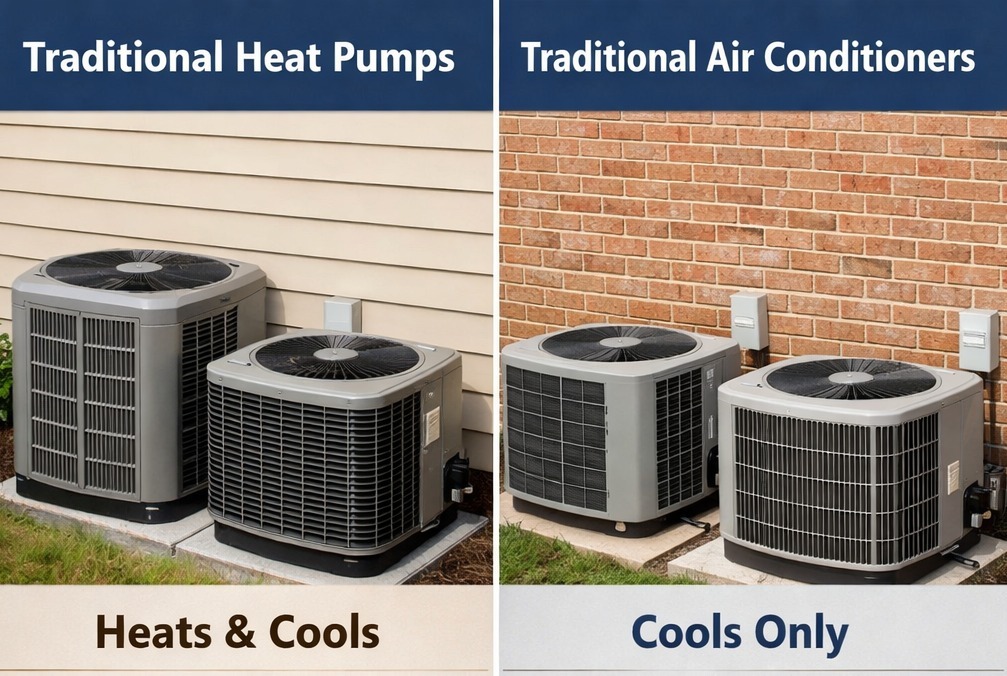
Heat pumps and traditional air conditioners both cool homes, but heat pumps also provide heating by reversing operation in winter. In Steubenville and Weirton, heat pumps work well during mild cold stretches, while traditional AC systems still require a separate furnace. The right choice depends on home age, insulation, electric capacity, and winter heating expectations.
What Makes Heat Pumps and Air Conditioners Different?
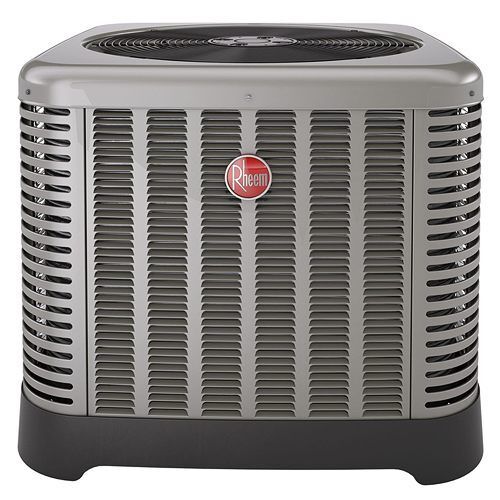
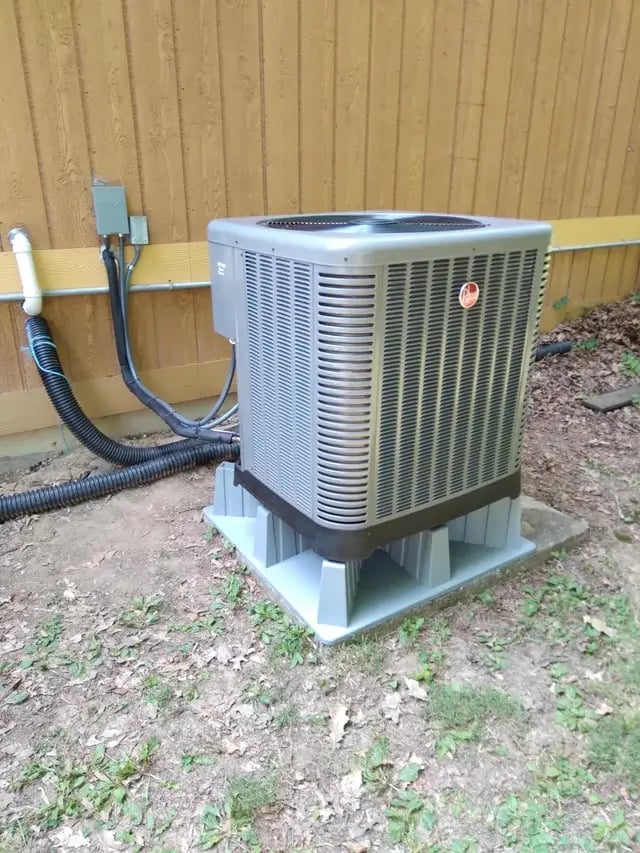
At a basic level, both systems move heat rather than create cold air. A traditional central air conditioner removes heat from inside your home and sends it outdoors. A heat pump does the same thing in summer — but in colder months, it reverses direction and pulls heat from outside air to warm the home.
This difference matters locally. Many Steubenville and Weirton homes were built with gas furnaces paired with central AC, especially in older brick homes near the Ohio River and hillside neighborhoods with basements. Heat pumps can replace both pieces of equipment, but only when the home’s electrical service and insulation support it.
Heating Performance in Upper Ohio Valley Winters
This is where most confusion happens.
Traditional AC systems do not heat at all. They rely on a furnace — usually gas — to handle winter temperatures. Gas furnaces perform consistently during single-digit cold snaps common in Jefferson and Hancock counties.
Heat pumps heat efficiently down to the mid-20s, but performance drops as temperatures fall. In river-valley locations like downtown Steubenville or lower-lying Weirton neighborhoods, cold air settling overnight can trigger backup heat more often. Many local heat pump installations use dual-fuel setups, switching to gas heat when outdoor temperatures drop too far.
A common local mistake is assuming heat pumps eliminate heating costs entirely without accounting for winter electric demand.
Installation Cost and Local Cost Drivers
Upfront costs vary widely, but local factors play a large role.
Heat pump installations often cost more initially because they may require:
- Electrical panel upgrades in older homes
- Line-set replacements in tight basements
- Duct sealing in pre-1980 construction
Traditional AC replacements are usually simpler if ductwork and furnaces already exist, which is why many Steubenville neighborhoods still lean toward AC + furnace systems.
Homes in Wintersville, Toronto, Mingo Junction, Follansbee, Wellsburg, Brilliant, New Cumberland, Colliers, and Hooverson Heights face similar cost drivers, especially where older duct systems or limited electrical capacity are common.
Efficiency, Comfort, and Operating Costs
Heat pumps are highly efficient during shoulder seasons — spring and fall — which matches local climate patterns well. They provide steady, even temperatures without the hot-blast effect of furnaces.
Traditional AC systems paired with gas furnaces often:
- Heat faster in deep winter
- Cost less to install
- Offer predictable performance regardless of outdoor temperature
Homes on hillsides or with finished basements often experience uneven temperatures, where zoning or ductless heat pump solutions can help — but only when planned correctly.
Warranties, Protection, and Long-Term Risk
Equipment choice matters, but protection matters more.
Honest Fix systems include:
- Trust Shield Warranty: 5-year repair coverage
- Trust Guardian Warranty: 15-year full system replacement coverage
These warranties are among the strongest available in the Upper Ohio Valley and protect homeowners against early component failures, installation-related issues, and long-term system risk — regardless of whether you choose a heat pump or traditional AC system.
Common Local Mistakes Homeowners Make
- Choosing a heat pump without confirming winter backup heat strategy
- Oversizing systems for older, drafty homes
- Ignoring duct leakage in river-valley humidity zones
- Assuming all homes qualify for full electric conversion
These mistakes lead to comfort complaints and higher operating costs.
Frequently Asked Questions
Do heat pumps work in Steubenville winters?
Yes, but performance depends on insulation, layout, and whether a backup heat source is installed. Many homes still benefit from dual-fuel systems.
Is a heat pump cheaper than AC plus furnace long-term?
Sometimes. Electric rates, home efficiency, and winter usage determine operating costs more than the equipment itself.
Are older homes in Weirton good candidates for heat pumps?
Some are, but electrical capacity and duct condition must be evaluated first.
Do warranties differ between system types?
No. Honest Fix provides the same Trust Shield (5-year repair) and Trust Guardian (15-year replacement) coverage on qualifying installations.
Final Takeaway
Heat pumps offer flexibility and efficiency, while traditional air conditioners paired with furnaces deliver consistent winter performance. In the Upper Ohio Valley, the right choice depends less on trends and more on home structure, terrain, utilities, and winter expectations.
Scott Merritt is a co-founder of Honest Fix Heating, Cooling and Plumbing and brings more than 30 years of experience across HVAC, leadership, and industry education. He serves in a senior leadership and oversight role, providing licensed guidance, reviewing HVAC educational content, and supporting technician training and documentation standards. Prior to co-founding Honest Fix, Scott founded and owned Fire & Ice Heating & Air Conditioning in Columbus, Ohio, which he operated for more than two decades before selling the company in 2025. During that time, he led programs and partnerships including Carrier Factory Authorized Dealer, Trane Comfort Specialist, and Rheem Pro Partner, helping establish high technical and training standards. Scott is the Ohio State HVAC license holder for Honest Fix and provides licensed oversight to help ensure work meets applicable codes and manufacturer requirements. Learn more about Scott’s background and role at Honest Fix by viewing his full leadership bio.