Single-Stage vs. Two-Stage vs. Variable-Speed AC in Steubenville, OH and Weirton, WV
February 11th, 2026
3 min read
Quick Answer
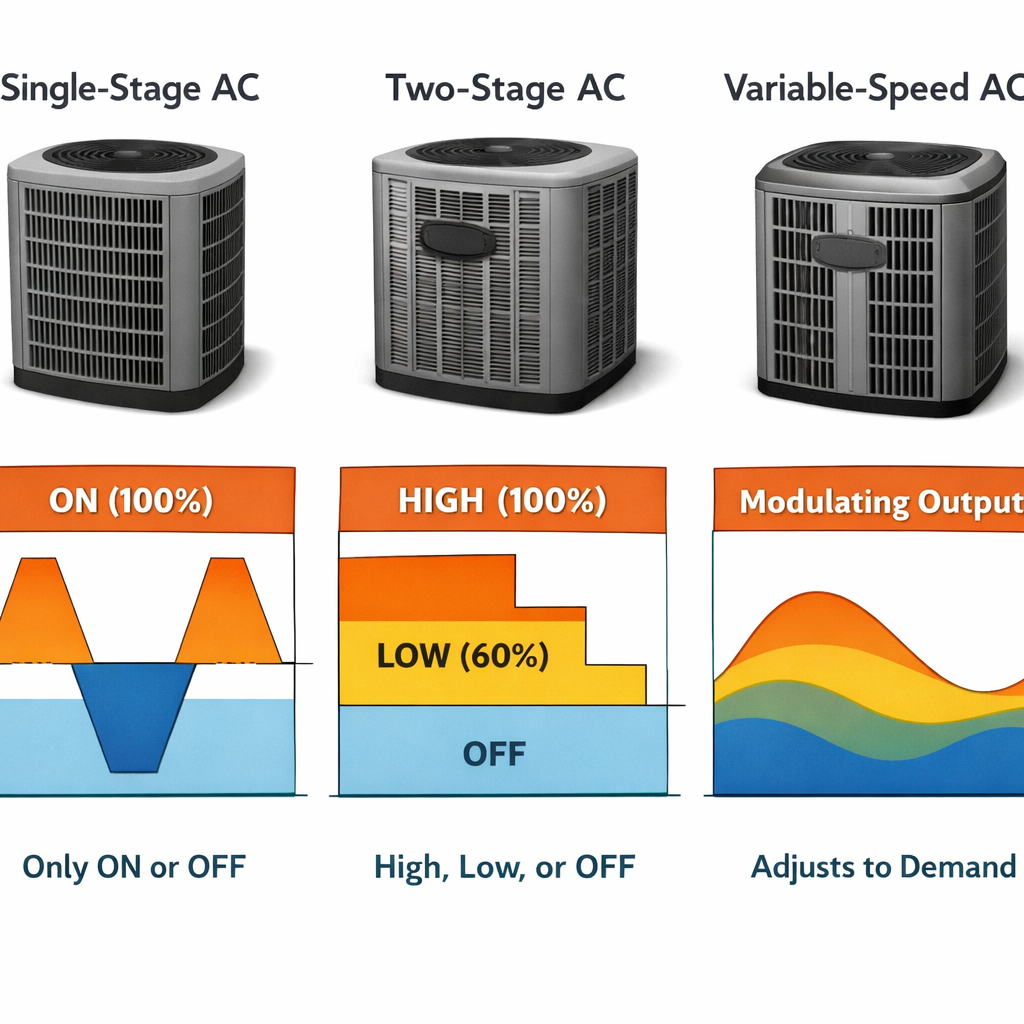
Single-stage air conditioners run at full power or not at all, two-stage systems operate at high or low output, and variable-speed systems adjust continuously based on demand. Single-stage units cost less upfront but offer less comfort. Two-stage and variable systems provide better temperature control, humidity management, and efficiency, especially in homes with uneven cooling or high summer humidity.
Homeowners in Steubenville and Weirton often hear these terms when replacing an older air conditioner, but the differences are rarely explained clearly. Local factors like river humidity, hillside neighborhoods, older ductwork, and mixed housing ages all affect how each system performs. The right choice depends on comfort expectations, home layout, and how evenly cooling is needed throughout the summer.
Single-Stage Air Conditioners: How They Work and Their Limits
A single-stage air conditioner has one operating level: full power. When it turns on, it runs at 100% capacity until the thermostat is satisfied, then shuts off.
Where Single-Stage ACs Make Sense
- Smaller homes or condos
- Tight budgets
- Homes with consistent cooling needs
Common Issues in This Region
- Noticeable temperature swings
- Short, frequent cycles during mild days
- Limited humidity control near the Ohio River
In older Steubenville homes with oversized equipment, single-stage systems often cool too quickly without removing enough moisture. A common mistake is assuming higher capacity means better comfort.
Two-Stage Air Conditioners: A Middle Ground
Two-stage systems operate at two levels—usually a low setting for most of the day and a high setting for peak heat.
Benefits of Two-Stage Systems
- Longer run times at lower output
- More even temperatures
- Better humidity removal
- Quieter operation
Two-stage ACs perform well in Weirton and Wintersville homes with multiple floors or finished basements, where cooling needs change throughout the day.
Where Two-Stage Systems Can Fall Short
- Homes with poor duct design
- Situations where airflow problems haven’t been addressed
A common local mistake is upgrading to a two-stage unit without correcting duct issues, which limits the system’s benefits.
Variable-Speed Air Conditioners: Maximum Control
Variable-speed air conditioners adjust output in small increments instead of fixed stages. They run longer at lower speeds and increase output only when needed.
Why Variable-Speed Systems Stand Out
- Consistent indoor temperatures
- Strong humidity control
- Lowest operating noise
- Highest efficiency
These systems are well suited for river-adjacent homes, hillside properties, and houses with mixed-use spaces. They adapt well to Steubenville’s humid afternoons and Weirton’s temperature swings.
Potential Downsides
- Higher upfront cost
- More sensitive to poor ductwork or installation quality
Variable systems perform best when the entire system—ducts, airflow, and controls—is designed correctly.
Side-by-Side Comparison
| Feature | Single-Stage | Two-Stage | Variable-Speed |
|---|---|---|---|
| Operating levels | One | Two | Many |
| Temperature consistency | Low | Medium | High |
| Humidity control | Limited | Improved | Strong |
| Noise level | Higher | Lower | Lowest |
| Energy efficiency | Basic | Better | Best |
| Upfront cost | Lowest | Mid-range | Highest |
Who Each Option Is Not Right For
Single-Stage AC Is Often a Poor Fit If:
- The home has multiple floors
- Humidity control is a concern
- Even temperatures are a priority
Two-Stage AC Is Often a Poor Fit If:
- Ductwork problems are unresolved
- Cooling needs are extremely uneven
Variable-Speed AC Is Often a Poor Fit If:
- Budget is the main deciding factor
- Existing ducts cannot be improved
Clear expectations help prevent dissatisfaction after installation.
A Real Local Decision Scenario
In a 1970s split-level Weirton home with a finished basement, a single-stage AC may leave the lower level cold while upstairs rooms remain warm. A two-stage system improves balance, while a variable-speed system delivers the most consistent comfort across all levels, especially during humid summer evenings.
Cost Drivers That Matter in This Region
Single-Stage Cost Factors
- Lower equipment cost
- Fewer control components
Two-Stage Cost Factors
- More complex compressor design
- Enhanced controls
Variable-Speed Cost Factors
- Advanced compressor technology
- System design and airflow requirements
Homes across Wintersville, Toronto, Mingo Junction, Follansbee, Wellsburg, Brilliant, New Cumberland, Colliers, and Hooverson Heights experience similar comfort challenges where higher-stage systems provide noticeable improvement.
Warranty Protection and Long-Term Risk
Higher-end systems include more components, making protection important.
Qualifying systems installed by Honest Fix can include:
- Trust Shield Warranty: 5-year repair coverage
- Trust Guardian Warranty: 15-year full system replacement coverage
These warranties help protect long-term investments in comfort and efficiency.
Frequently Asked Questions
Is a variable-speed AC worth the cost?
It can be, especially in homes with humidity issues or uneven temperatures. Comfort improvements are usually noticeable.
Does a two-stage system save energy?
Yes. Longer, lower-output run times reduce cycling and improve efficiency.
Can ductwork limit the benefits of higher-stage systems?
Yes. Airflow problems can reduce the advantages of two-stage and variable-speed systems.
Are single-stage systems still installed?
Yes, but mostly in smaller homes or budget-focused replacements.
Decision Summary
Single-stage systems offer basic cooling, two-stage systems improve comfort, and variable-speed systems deliver the highest level of control and consistency. In the Upper Ohio Valley, the right choice depends on home layout, humidity levels, duct condition, and comfort expectations.
Exact HVAC replacement quotes available at (740) 825-9408 or HonestFix.com/schedule-service.
Scott Merritt is a co-founder of Honest Fix Heating, Cooling and Plumbing and brings more than 30 years of experience across HVAC, leadership, and industry education. He serves in a senior leadership and oversight role, providing licensed guidance, reviewing HVAC educational content, and supporting technician training and documentation standards. Prior to co-founding Honest Fix, Scott founded and owned Fire & Ice Heating & Air Conditioning in Columbus, Ohio, which he operated for more than two decades before selling the company in 2025. During that time, he led programs and partnerships including Carrier Factory Authorized Dealer, Trane Comfort Specialist, and Rheem Pro Partner, helping establish high technical and training standards. Scott is the Ohio State HVAC license holder for Honest Fix and provides licensed oversight to help ensure work meets applicable codes and manufacturer requirements. Learn more about Scott’s background and role at Honest Fix by viewing his full leadership bio.