
What Size Air Conditioner Do I Need for My Home in Colliers, WV?
July 9th, 2026
3 min read
Quick Answer
The right size AC for a Colliers, WV home comes from a Manual J load calculation, not a square-foot rule of thumb. Most homes fall between two and four tons, but upland air keeps humidity low.
In Colliers and the Upper Ohio Valley, sizing is more straightforward than in the river towns, but a rule of thumb still misses. Upland air keeps humidity low, so the cooling load is mostly about temperature.
Square footage is only a starting point. Insulation, windows, and the larger rural homes here all factor in, so the right size comes from a calculation rather than a quick estimate.
How Is AC Size Measured?
Quick Answer:
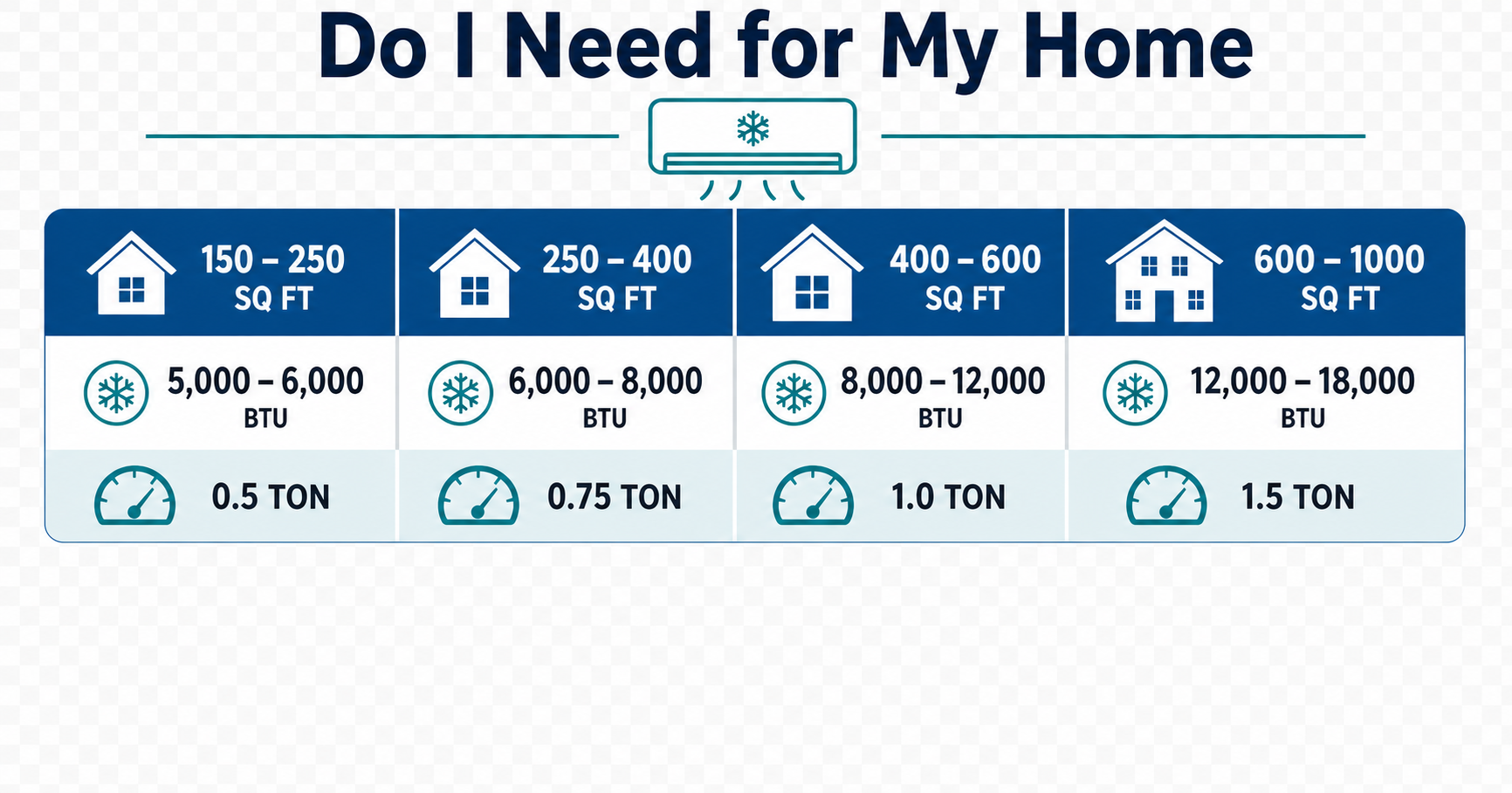
AC size is measured in tons, where one ton equals twelve thousand BTUs of cooling per hour. Most homes need somewhere between two and four tons, but the exact number depends on the home, not just its square footage.
Square footage is only a starting point. Two homes the same size can need different units depending on insulation, windows, ceiling height, and sun exposure. That is why a rule of thumb based on floor area alone gets sizing wrong.
Why Is a Bigger AC Not Better?
Quick Answer:
An oversized AC cools the air fast, then shuts off before it removes humidity, so the home feels cold and clammy. It also short-cycles, which wastes energy and wears parts. The right size runs longer and more evenly.
Undersizing is the opposite problem: the system runs nonstop and still cannot keep up on the hottest days. Right-sizing finds the balance, enough capacity for peak heat without the short-cycling and poor humidity control that come with too much.
- Short-cycling: the system starts and stops too often
- Poor dehumidification, so rooms feel cold but clammy
- Higher energy bills from the frequent restarts
- More wear on the compressor and a shorter lifespan
- Uneven temperatures from one room to the next
What Does My Colliers Home Add to the Sizing?
Quick Answer:
In Colliers, low upland humidity means the cooling load is mostly sensible, about temperature rather than moisture. Sizing focuses on capacity and airflow, and on rural lots, any detached space you want cooled gets its own calculation.
Without the valley's humidity, the moisture factor is small, but insulation, windows, and home size still drive the load. A Manual J calculation sets the right capacity, and a workshop or garage is sized separately.
What Actually Determines the Right Size?
Quick Answer:
A Manual J load calculation. It measures square footage, insulation levels, window type and orientation, ceiling height, air leakage, and local climate. Those inputs, not a quick floor-area estimate, give the tonnage that fits your home.
This is why matching your old unit's size can be a mistake. If the original was oversized, or the home has been re-insulated or had windows replaced, the right size today may be different. A fresh calculation settles it.
Key Point: In Colliers, low upland humidity keeps the load temperature-driven. Size the home with a calculation, and cool a detached workshop with its own system rather than oversizing the main unit.
What AC Sizing Actually Depends On
|
Factor |
Why it matters |
|
Square footage |
A starting point, not the answer |
|
Insulation and windows |
Change how much heat gets in |
|
Local climate |
Humidity adds moisture load to remove |
|
Colliers note |
Low humidity; size for temperature |
Honest Fix sizes every system with a Manual J calculation, not a guess, so your AC fits your home and runs efficiently. We will measure your home and recommend the right size as part of a free exact quote.
Frequently Asked Questions
Can I size an AC by square footage alone?
Not reliably. The common rule of about one ton per 500 to 600 square feet is only a rough starting point. It ignores insulation, windows, sun, and air leakage, which is why two same-size homes often need different units. A load calculation gets it right.
What happens if my AC is too big?
An oversized AC short-cycles: it blasts cold air, then shuts off before pulling humidity out, leaving the home cold and clammy. The frequent starts waste energy and wear the compressor. A right-sized unit runs longer, dehumidifies better, and lasts longer.
Should I just replace my AC with the same size?
Not automatically. Many older systems were oversized to begin with, and if your home has been re-insulated or had windows replaced, the load has changed. A fresh Manual J calculation may recommend a smaller, better-fitting unit than the one you have.
Do I need a bigger AC to also cool my Colliers workshop?
No. Oversizing the home's system to reach a detached space leaves the house short-cycling and humid. A separate system or zone, each properly sized with its own calculation, cools the workshop better than one oversized unit trying to do both.
Get the Right-Size AC for Your Colliers Home
Not sure what size AC your home needs? Call (740) 825-9408 or schedule a free exact quote. We will run a load calculation on your Colliers home and recommend the right size, no guessing.
Scott Merritt is a co-founder of Honest Fix Heating, Cooling and Plumbing and brings more than 30 years of experience across HVAC, leadership, and industry education. He serves in a senior leadership and oversight role, providing licensed guidance, reviewing HVAC educational content, and supporting technician training and documentation standards. Prior to co-founding Honest Fix, Scott founded and owned Fire & Ice Heating & Air Conditioning in Columbus, Ohio, which he operated for more than two decades before selling the company in 2025. During that time, he led programs and partnerships including Carrier Factory Authorized Dealer, Trane Comfort Specialist, and Rheem Pro Partner, helping establish high technical and training standards. Scott is the Ohio State HVAC license holder for Honest Fix and provides licensed oversight to help ensure work meets applicable codes and manufacturer requirements. Learn more about Scott’s background and role at Honest Fix by viewing his full leadership bio.
