Best Humidity Control Options in HVAC Systems for Steubenville, OH and Weirton, WV
January 22nd, 2026
4 min read
By Alex Largent
Quick Answer
The best humidity control option for HVAC systems in Steubenville and Weirton depends on the home and the system. High-efficiency air conditioners with variable-speed operation can control humidity effectively on their own, while homes with persistent moisture issues benefit from whole-home dehumidifiers. In colder months, whole-home humidifiers complete year-round humidity control.
Why Humidity Problems Are Common in the Upper Ohio Valley
Humidity problems are common in the Upper Ohio Valley. Homes often feel damp in summer, dry in winter, and inconsistent during spring and fall. These swings affect comfort, indoor air quality, and HVAC performance.
In Steubenville and Weirton, humidity issues are influenced by river proximity, older basements, hillside construction, and duct systems that were never designed to manage moisture independently. Solving the problem requires matching the right equipment to the home, not relying on a single fix.
Why Humidity Control Matters in This Region
Steubenville and Weirton experience high outdoor humidity during summer and very dry indoor air during winter heating season. Many homes also draw moisture from basements and lower levels.
When humidity is not controlled:
- Homes feel warmer and stickier in summer
- Static electricity and dry air increase in winter
- Mold risk rises in basements and ductwork
- HVAC systems run longer and less efficiently
Balanced humidity improves comfort, protects the home, and reduces strain on HVAC equipment.
High-Efficiency Air Conditioners With Built-In Humidity Control
Many modern high-efficiency air conditioners actively control humidity as part of their design. Variable-speed and inverter-driven systems run longer, lower-capacity cycles that remove more moisture without overcooling the home.
These systems work well because:
- Longer run times improve moisture removal
- Airflow adjusts automatically to conditions
- Humidity is reduced without temperature swings
In homes with properly sized ductwork and no significant moisture intrusion, a high-efficiency AC may provide sufficient humidity control without adding a separate dehumidifier.
When a Whole-Home Dehumidifier Is Needed
Some homes continue to struggle with humidity even with a high-efficiency AC. This is common in houses with basements, hillside foundations, or moisture entering from below grade.
A whole-home dehumidifier is often needed when:
- Humidity stays high during mild weather
- The system short cycles due to oversizing
- Basement moisture spreads through the home
- Comfort requires overcooling to feel dry
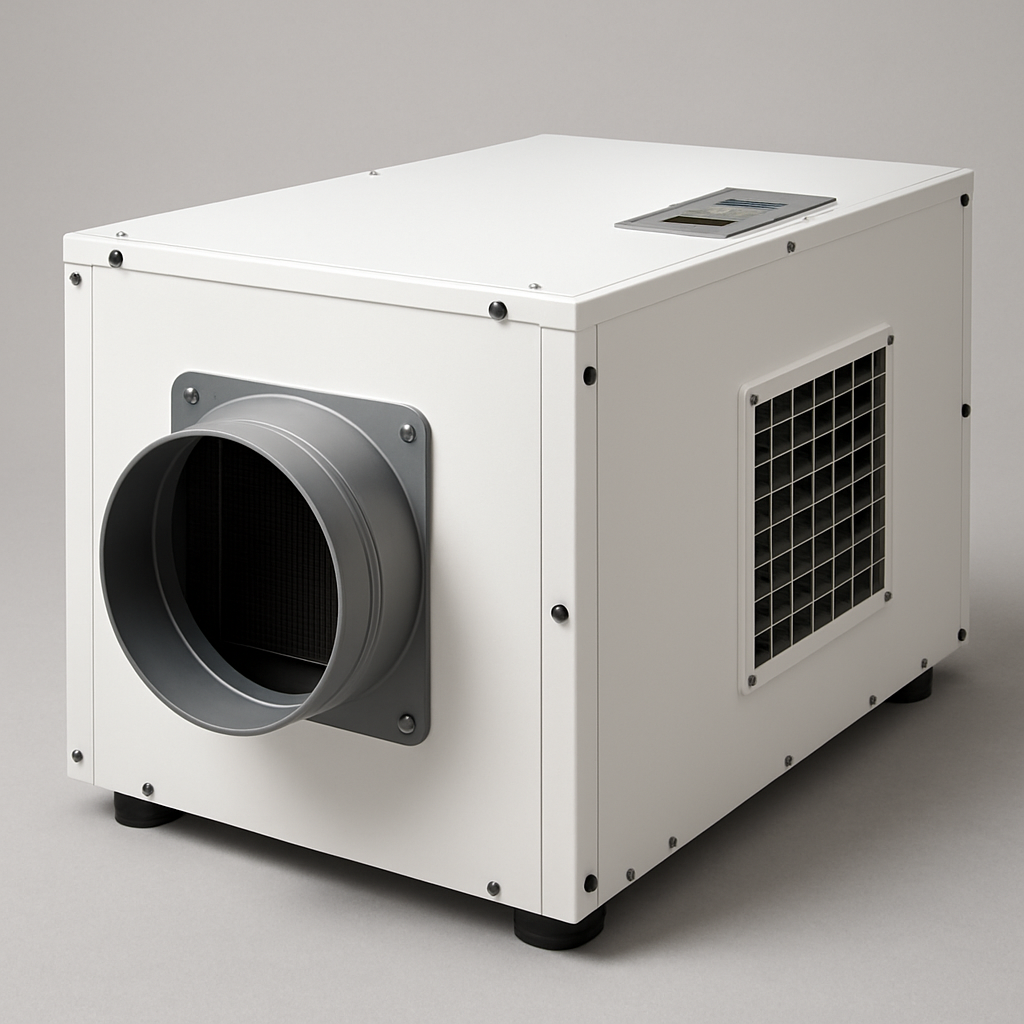
Whole-home dehumidifiers remove moisture independently of cooling, allowing humidity to stay controlled even when temperatures do not call for air conditioning.
The Role of Whole-Home Humidifiers in Winter
During heating season, indoor air often becomes too dry. Furnaces and heat pumps remove moisture as they heat air, leading to dry skin, static electricity, and discomfort.
Whole-home humidifiers restore moisture during winter by adding controlled humidity through the HVAC system. This prevents excessive dryness without relying on portable units or room-by-room solutions.
Why System Sizing Affects Humidity Control
Humidity control depends heavily on proper system sizing. Oversized air conditioners cool homes too quickly, shutting off before enough moisture is removed. This leads to cool but clammy indoor conditions.
Even high-efficiency equipment cannot control humidity properly if it is not sized for the home. Proper load calculations and airflow design are critical to successful moisture control.
How Humidity Is Controlled, Not Just Removed
Effective humidity control depends on how equipment is managed, not just what is installed. Depending on the system, humidity may be regulated by:
- The air conditioner’s internal controls
- A dedicated humidistat
- An integrated thermostat
- A separate control module
Two homes with similar equipment can experience very different results based on control strategy alone. Proper setup ensures the system responds to moisture levels, not just temperature.
A Common Steubenville Example: Basement Moisture
Many Steubenville homes built before the 1980s have full basements that introduce moisture into return air. During summer, this moisture spreads upward, making upstairs rooms uncomfortable even when temperatures are low.
In these homes, a whole-home dehumidifier paired with the HVAC system removes moisture before air is distributed, reducing musty odors, surface condensation, and uneven comfort.
Weirton-Specific Humidity Challenges
In Weirton, hillside construction and shallow foundations can trap moisture near mechanical rooms and duct chases. Spring and summer humidity can rise even when outdoor temperatures are moderate.
High-efficiency AC systems help, but homes with persistent moisture often require dedicated dehumidification to maintain stable indoor conditions.
Humidity Control Across the Full Service Area
Humidity control principles apply consistently across the Upper Ohio Valley. While homes vary by layout, age, and terrain, moisture movement and comfort thresholds remain the same.
This guidance applies to homes in:
- Steubenville, OH
- Wintersville, OH
- Toronto, OH
- Mingo Junction, OH
- Brilliant, OH
- Weirton, WV
- Follansbee, WV
- Wellsburg, WV
- New Cumberland, WV
- Colliers, WV
- Hooverson Heights, WV
Local factors such as basements, river proximity, and hillside construction are evaluated when designing a solution, but the overall approach does not change.
How Proper Humidity Control Is Verified
Effective humidity control is measured, not assumed. Indoor humidity is typically targeted between 40% and 50%, depending on season and temperature.
Verification includes confirming humidity levels after installation and ensuring performance remains consistent across seasonal changes. This ensures comfort improvements are real and lasting.
When Equipment Alone Is Not Enough
If a home has ongoing water intrusion, structural moisture problems, or severely restricted ductwork, humidity equipment alone may not solve the issue. In these cases, additional evaluation is required before installing a whole-home solution.
Humidity control works best when the HVAC system and building envelope are fundamentally sound.
Frequently Asked Questions
What is the ideal indoor humidity level?
Most homes are most comfortable between 40% and 50% relative humidity, depending on season and temperature.
Can air conditioning alone control humidity?
High-efficiency systems can, when properly sized and installed. Homes with persistent moisture often require additional dehumidification.
Does humidity control help HVAC systems last longer?
Yes. Stable humidity reduces run time, prevents moisture-related wear, and helps protect coils, ductwork, and indoor components.
Final Thoughts on HVAC Humidity Control
Balanced humidity improves comfort, protects the home, and reduces strain on HVAC equipment. In regions with humid summers and dry winters, the best results come from matching the right combination of high-efficiency air conditioning, dehumidification, and humidification to the home.
If your home feels damp in summer or overly dry in winter, the HVAC system may be managing temperature without managing moisture. Honest Fix installs and services high-efficiency air conditioners, whole-home dehumidifiers, and whole-home humidifiers to create balanced indoor humidity year-round.
Alex Largent is the Owner and Senior HVAC Efficiency Analyst at Honest Fix Heating, Cooling & Plumbing. With more than 20 years of field experience, NATE and EPA certifications, and a hands-on leadership style, Alex teaches his team to fix systems right the first time — with transparency, precision, and no upsells. He writes about HVAC diagnostics, home energy efficiency, and practical maintenance advice for homeowners across the Upper Ohio Valley. Read Alex Largent’s full bio to learn more about his expertise in the HVAC and Plumbing industry. Updated October 2025.