SEER vs. AFUE Ratings in Steubenville OH and Weirton WV: What’s the Difference?
January 20th, 2026
3 min read
By Alex Largent
Quick Answer
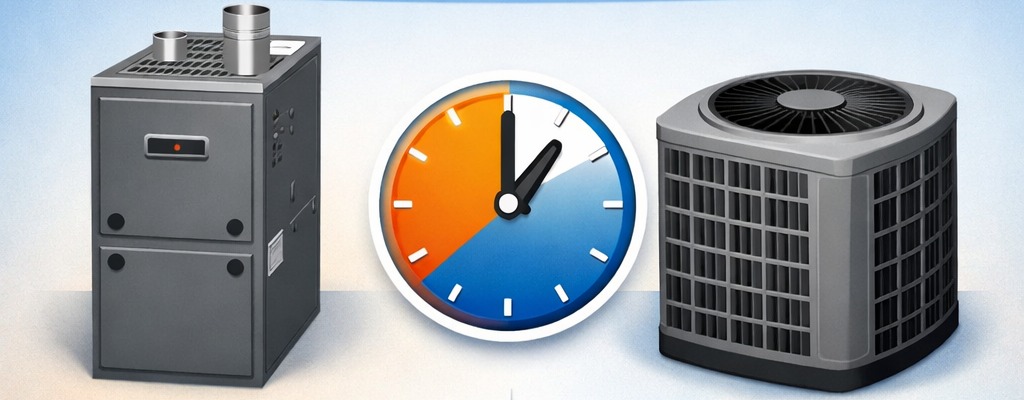
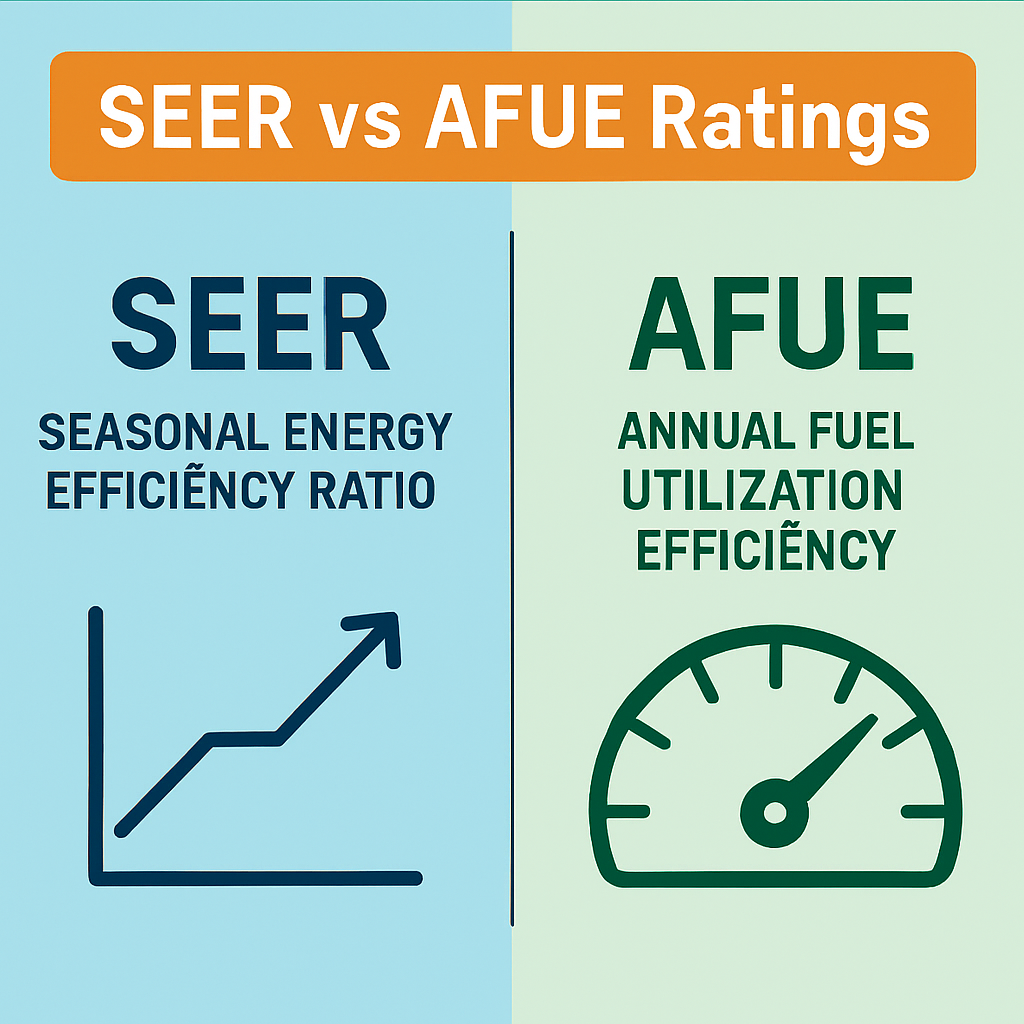
SEER measures how efficiently an air conditioner or heat pump cools, while AFUE measures how efficiently a gas furnace converts fuel into heat. In Steubenville and Weirton, SEER affects summer electric costs and humidity control, while AFUE affects winter gas bills. They measure different equipment, in different seasons, and should not be compared directly.
Homeowners often search for this as “SEER vs AFUE,” “difference between SEER and AFUE,” “SEER vs AFUE rating,” or “what do SEER and AFUE mean?” Confusion happens because both are efficiency ratings—but they apply to different systems and solve different problems.
SEER vs AFUE: Key Differences at a Glance
- SEER: Cooling efficiency for air conditioners and heat pumps
- AFUE: Heating efficiency for gas furnaces
- Measured as: Seasonal efficiency ratio vs percent of fuel converted to heat
- Primary impact: Summer electric usage vs winter gas usage
- Not comparable: They apply to different equipment and seasons
Rule of thumb:
SEER applies to cooling equipment only. AFUE applies to gas furnaces only. Comparing them directly leads to bad decisions.
Why SEER and AFUE Are Commonly Confused
SEER and AFUE are often confused because they’re both marketed as efficiency numbers, even though they measure different systems doing different jobs. Neither rating tells you how comfortable a home will feel, how evenly air moves, or whether rooms stay consistent.
Important clarification:
SEER and AFUE measure energy efficiency—not comfort, airflow, or temperature consistency.
What SEER Measures (and What It Does Not)
SEER (Seasonal Energy Efficiency Ratio) measures how efficiently an air conditioner or heat pump provides cooling over a typical season.
What Higher SEER Can Help With
- Lower cooling-related electric use
- Longer run times that can improve humidity control
- Quieter operation on modern systems
Limits of High SEER
- Higher upfront equipment cost
- Smaller returns if ducts or insulation are poor
- Little benefit in homes with modest cooling demand
SEER does not apply to gas furnaces and does not measure heating efficiency.
In river-adjacent and valley areas—such as Toronto or lower elevations of Steubenville—SEER choices can affect comfort because humidity control matters as much as temperature.
What AFUE Measures (and What It Does Not)
AFUE (Annual Fuel Utilization Efficiency) shows how much of the fuel a gas furnace converts into usable heat over a heating season.
What Higher AFUE Can Help With
- Lower gas usage during winter
- Sealed combustion and steadier heat output
- More consistent heating in prolonged cold
Limits of Very High AFUE
- Higher upfront cost
- Venting or drainage changes may be required
- Smaller payoff if heat loss through the home is high
AFUE does not apply to air conditioners or heat pumps and does not measure cooling efficiency.
Efficiency Tiers (Context Without Numbers)
For clarity, efficiency ratings generally fall into broad tiers:
- Entry-level efficiency: Meets minimum standards, lower upfront cost
- Mid-range efficiency: Balanced cost and performance
- High efficiency: Higher upfront cost, smaller incremental gains
Higher tiers only pay off when ducts, insulation, and airflow allow the system to perform as designed.
Replacement vs. Research: Why the Focus Changes
- Early research: Understanding SEER vs AFUE helps avoid comparing the wrong numbers.
- Active replacement: Ratings should match how often the system runs in each season and how the home actually loses or gains heat.
This distinction prevents paying more for efficiency that never gets used.
Local Factors That Change Which Rating Matters More
- Steubenville, OH: Older brick homes with basements often benefit more from reasonable AFUE paired with duct sealing than from extreme furnace efficiency.
- Weirton, WV: Hills and elevation changes make airflow balance as important as ratings.
- Wintersville, OH: Suburban layouts often benefit from moderate SEER improvements with good insulation.
- Toronto, OH: River humidity increases the value of sensible SEER choices for moisture control.
- Mingo Junction, OH: Smaller homes may see limited return from high ratings without envelope improvements.
- Follansbee, WV: Higher winter run time makes heating efficiency more noticeable on gas bills.
- Wellsburg, WV: Mixed housing stock means rating impact varies widely by duct condition.
- Brilliant, OH: Straightforward layouts benefit from balanced efficiency rather than extremes.
- New Cumberland, WV: Drafty sections can reduce AFUE payoff without air sealing.
- Colliers, WV: Multi-level homes often need airflow corrections before efficiency gains show up.
- Hooverson Heights, OH: Exposed walls and elevation changes increase winter heat loss, making AFUE more noticeable than SEER in annual costs.
Locally, winter heating often dominates annual energy use in gas-served homes, while summer electric costs rise during humid stretches.
Cost and Ownership Reality
Higher SEER or AFUE ratings usually mean higher upfront cost. Long-term satisfaction depends more on:
- Proper sizing
- Duct sealing and airflow balance
- Insulation and air leakage
- How long the system actually runs each season
Efficiency standards and installation practices are shaped by national energy and mechanical codes, which affect venting, drainage, airflow, and electrical requirements.
A Real Local Example
A 1950s Steubenville home with gas heat and leaky basement ducts may see more winter savings from moderate AFUE paired with duct sealing than from the highest furnace rating available. A newer Weirton home with solid insulation but summer humidity complaints may benefit more from a sensible SEER upgrade than from pushing furnace efficiency higher.
Decision Shortcut for Ohio Valley Homes
If winter gas bills are the concern, AFUE matters more—after heat loss is addressed. If summer comfort and humidity drive complaints, SEER deserves more attention. In many homes, balanced efficiency paired with airflow fixes outperforms extreme ratings.
FAQ
Is a higher SEER or AFUE rating always worth the cost in Steubenville and Weirton?
Not always. The value depends on how often the system runs in each season and whether ducts and insulation allow the efficiency gains to be realized.
Final Takeaway
SEER and AFUE measure different types of efficiency for different systems and seasons. Confusing them leads to poor comparisons and wasted spending. The best results come from choosing ratings that match real heating and cooling use—and pairing them with good airflow and insulation.
If you’re comparing systems, focusing on how your home actually uses heating and cooling will matter more than chasing the highest efficiency number.
Alex Largent is the Owner and Senior HVAC Efficiency Analyst at Honest Fix Heating, Cooling & Plumbing. With more than 20 years of field experience, NATE and EPA certifications, and a hands-on leadership style, Alex teaches his team to fix systems right the first time — with transparency, precision, and no upsells. He writes about HVAC diagnostics, home energy efficiency, and practical maintenance advice for homeowners across the Upper Ohio Valley. Read Alex Largent’s full bio to learn more about his expertise in the HVAC and Plumbing industry. Updated October 2025.