Hybrid HVAC Systems vs. Single-Fuel Systems in Steubenville OH and Weirton WV: What’s the Difference?
January 19th, 2026
4 min read
By Alex Largent
Quick Answer
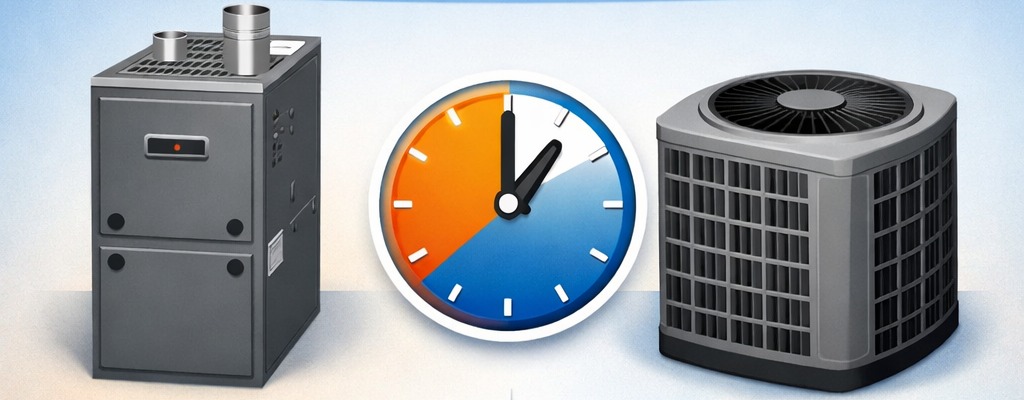
Hybrid HVAC systems combine an electric heat pump with a gas furnace, while single-fuel systems rely on only one energy source. Hybrid systems switch fuels automatically to manage operating cost, not comfort. In Steubenville and Weirton, hybrids can reduce fuel expense during mild weather but only perform well when natural gas is available and the system is set up correctly for local conditions.
Hybrid systems are situational tools. They are not automatically cheaper, more comfortable, or better for every Ohio Valley home.
Hybrid vs. Single-Fuel HVAC: How They Differ in Real Homes
- Single-fuel systems: Use one energy source year-round, usually gas or electricity
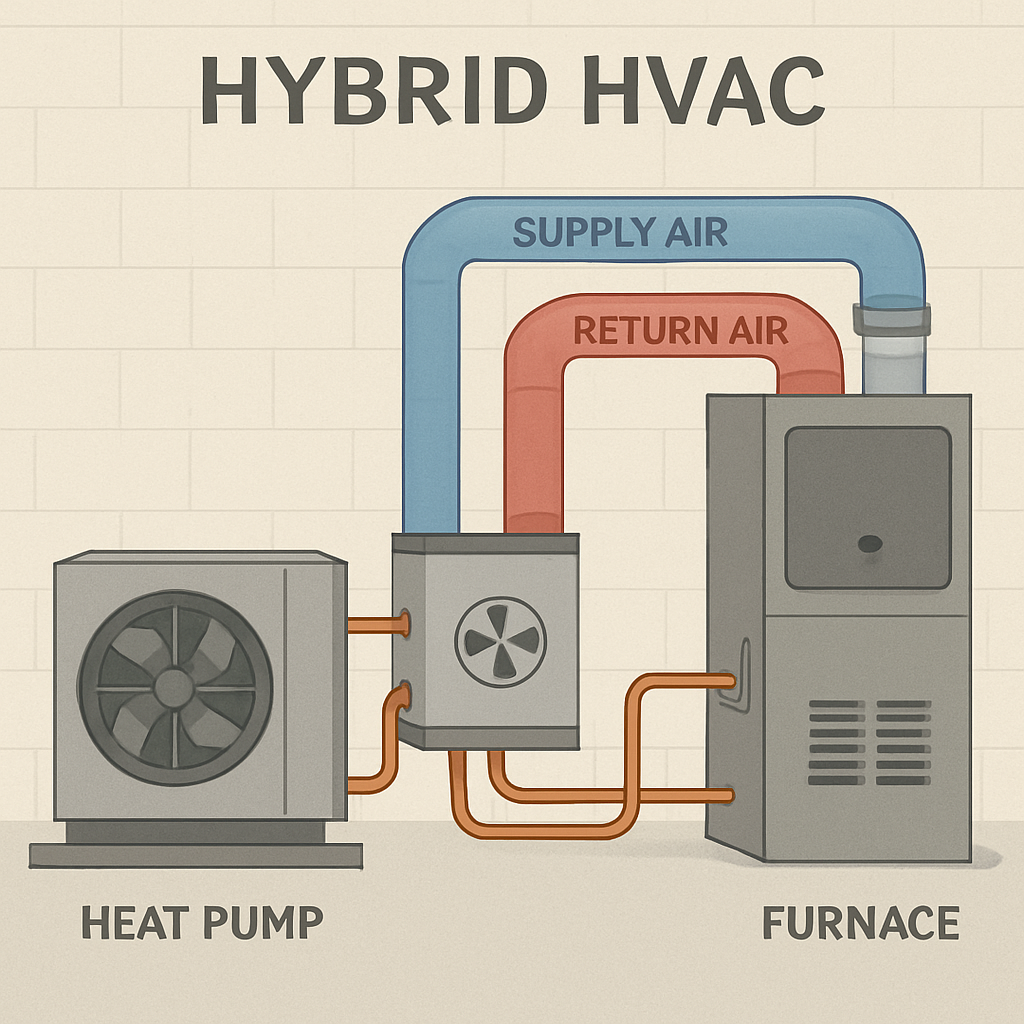
- Hybrid systems: Combine a heat pump with a gas furnace
- Fuel selection: Fixed in single-fuel systems; automatic in hybrids
- System complexity: Higher in hybrids due to added controls
Hybrid systems only make sense when natural gas service is already available at the home.
A practical rule many homeowners use:
If gas heat is preferred in winter but electric efficiency makes sense in spring and fall, a hybrid system may be useful.
Another practical rule:
If fuel prices are stable and simplicity matters most, a single-fuel system is usually sufficient.
How Hybrid HVAC Systems Actually Switch Fuels
Hybrid systems change between electric and gas heat based on outdoor temperature or programmed cost settings. When temperatures are mild, the heat pump runs. When temperatures drop below an efficiency threshold, the system switches to gas automatically.
The homeowner does not manually control this switch, but the changeover point must be set correctly for local weather and utility costs.
Important clarification:
A poorly configured changeover setting can erase any potential savings.
What Hybrids Do—and Don’t Do
Hybrid systems are designed to manage operating cost, not to deliver warmer air or better comfort than single-fuel systems.
Comfort still depends on:
- Duct design and airflow
- Insulation and heat loss
- Proper system sizing
Myth check:
Hybrid systems are not automatically cheaper or smarter. When fuel pricing, setup, or electrical capacity is wrong, operating costs can increase instead of decrease.
Hybrid systems also do not simplify installation—they combine the requirements of both electric and gas systems.
Cost Control vs. Comfort Expectations
Most homeowners consider hybrids for one of two reasons:
- Cost control: Reducing gas usage during mild temperatures
- Fuel flexibility: Hedging against seasonal fuel price swings
Hybrids do not fix comfort problems caused by airflow or insulation issues. In those cases, system type matters less than correcting the underlying problem.
Pros and Cons of Single-Fuel HVAC Systems
Pros
- Lower upfront cost
- Simple controls and operation
- Fewer components to maintain
Cons
- No flexibility if fuel prices change
- Can cost more to operate during certain seasons
Single-fuel systems remain common because they are predictable and easy to service.
Pros and Cons of Hybrid HVAC Systems
Pros
- Automatically uses the more cost-effective fuel
- Reduces gas use during mild weather
- Retains gas heat reliability during cold snaps
Cons
- Higher upfront cost
- More complex setup and controls
- Savings depend heavily on configuration
Hybrids work best when fuel pricing and climate variability justify the added complexity.
Ohio Valley Utility Reality
In the Ohio Valley, natural gas rates tend to be more stable, while electric rates can fluctuate more seasonally. Hybrid systems only perform as intended when those differences are accounted for during setup.
Some older Ohio Valley homes may also require electrical upgrades before a hybrid system is possible, which can change the cost equation.
Ignoring local rate behavior or electrical limits is one of the fastest ways to negate hybrid system benefits.
New Construction vs. Existing Homes
Hybrid systems are most practical in homes that already have gas service.
- New construction: Fuel strategy can be planned from the start
- Existing homes: Hybrids work best when gas infrastructure is already in place
If gas is unavailable or electrical capacity is limited, a hybrid system is usually not the right choice.
Common Local Mistake to Avoid
A common local mistake is installing a hybrid system without verifying electrical capacity and setting the changeover temperature correctly. When hybrids switch fuels at the wrong point, they can cost more to operate than single-fuel systems.
Local Factors by Town That Affect Hybrid Performance
- Steubenville, OH: Long heating seasons make fuel-cost management important.
- Weirton, WV: Variable winter temperatures favor controlled fuel switching.
- Wintersville, OH: Suburban homes often already have gas service.
- Toronto, OH: River humidity supports heat-pump use in shoulder seasons.
- Mingo Junction, OH: Smaller homes may see limited hybrid savings.
- Follansbee, WV: Existing gas infrastructure supports hybrid retrofits.
- Wellsburg, WV: Mixed housing stock produces varied outcomes.
- Brilliant, OH: Straightforward layouts support predictable switching behavior.
- New Cumberland, WV: Drafty homes reduce efficiency gains.
- Colliers, WV: Multi-level homes benefit more from airflow fixes than fuel changes.
- Hooverson Heights, OH: Elevation and exposure increase heating demand during cold snaps.
A Real Local Example
A Weirton home with natural gas service may use a heat pump for spring and fall heating, then switch automatically to gas during cold winter nights. A similar Steubenville home with high heat loss may see little benefit until insulation and duct sealing are addressed.
Who Hybrid Systems Are—and Aren’t—a Good Fit For
Hybrid systems often make sense if:
- Natural gas is available
- Fuel prices vary seasonally
- Operating cost control is a priority
Single-fuel systems often make sense if:
- Simplicity matters most
- Fuel prices are stable
- Electrical capacity or budget is limited
Hybrids are situational tools, not universal upgrades.
Decision Shortcut for Ohio Valley Homes
If gas service exists and fuel costs vary by season, a properly configured hybrid system can help manage operating costs. If not, a single-fuel system is usually the safer and simpler choice.
Warranties and Long-Term Reliability
Hybrid systems rely on additional sensors, controls, and logic boards. Long-term reliability depends more on installation quality and setup accuracy than on fuel strategy alone.
FAQ
Are hybrid HVAC systems worth it in Steubenville and Weirton?
They can be, but only when gas availability, electrical capacity, utility pricing, and system setup are aligned. Without those factors, hybrids rarely outperform simpler single-fuel systems.
Final Takeaway
Hybrid HVAC systems offer fuel flexibility, not automatic savings or better comfort. In the Ohio Valley, they work best when local utility behavior, home condition, and system configuration are all considered together. For many homes, simpler single-fuel systems remain the more reliable option.
Next Steps
If you’re weighing a hybrid HVAC system against a single-fuel option, the right choice depends on fuel availability, utility rates, electrical capacity, and how your home actually uses energy. Honest Fix helps homeowners evaluate existing systems and upgrade paths based on real conditions—not assumptions.
Exact HVAC replacement quotes available at (740) 825-9408 or HonestFix.com/schedule-service.
Alex Largent is the Owner and Senior HVAC Efficiency Analyst at Honest Fix Heating, Cooling & Plumbing. With more than 20 years of field experience, NATE and EPA certifications, and a hands-on leadership style, Alex teaches his team to fix systems right the first time — with transparency, precision, and no upsells. He writes about HVAC diagnostics, home energy efficiency, and practical maintenance advice for homeowners across the Upper Ohio Valley. Read Alex Largent’s full bio to learn more about his expertise in the HVAC and Plumbing industry. Updated October 2025.