
Do I Need a Whole-Home Dehumidifier in Toronto, OH?
July 25th, 2026
3 min read
Quick Answer
It depends on your home and how damp your area runs. A whole-home dehumidifier helps where summers are humid and basements stay clammy; drier spots may not need one. Old uninsulated basements here often run damp.
Toronto has more pre-1940 homes than any nearby town, and their old uninsulated basements draw in summer moisture. That makes a whole-home dehumidifier, or one set for the basement, a common fit in these aging houses.
If your old Toronto home feels muggy or the basement stays clammy, a dehumidifier is worth a look. Measuring the humidity first tells you whether it is really needed.
After 30-plus years on HVAC across Ohio, what we see in Toronto is the oldest housing stock with uninsulated basements that stay damp all summer, so dehumidifiers fit a lot of these homes.
What Does a Whole-Home Dehumidifier Do?
Quick Answer:
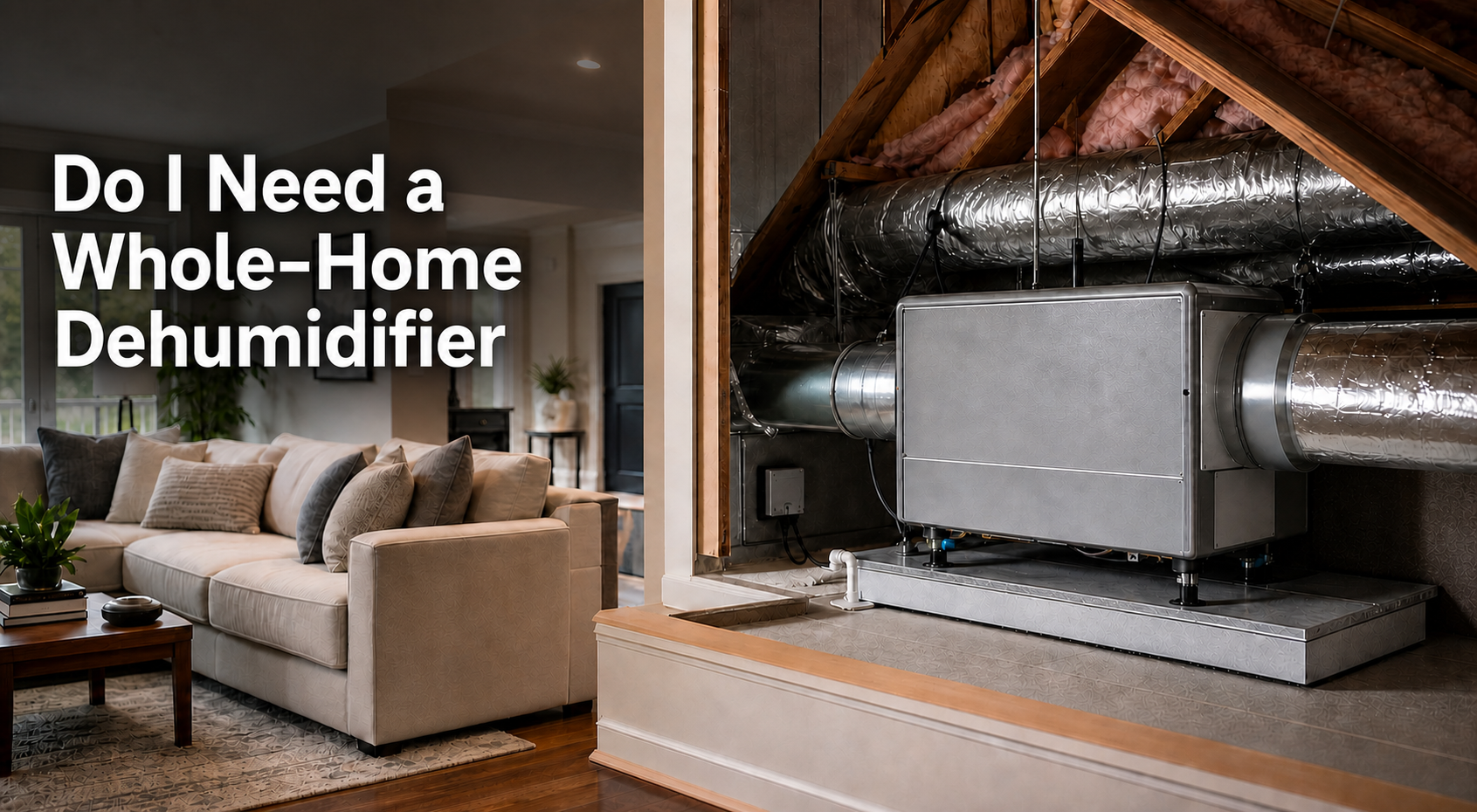
A whole-home dehumidifier works with your HVAC to pull moisture from the entire house, not just one room. It holds your indoor humidity around 45 to 50 percent, which feels cooler, protects the home, and eases your AC's work.
Unlike running the AC colder or a small portable unit, a whole-home dehumidifier targets moisture directly across every room. That keeps the whole house comfortable without overcooling it just to wring out the damp air.
Whether you need one comes down to your local climate and your home. Damp, low-lying areas often benefit; drier, higher spots usually do not, or only need help in a basement or in peak summer.
Does a Toronto Home Usually Need One?
Quick Answer:
Toronto's pre-1940 homes have older, often uninsulated basements that hold summer moisture, so a whole-home dehumidifier benefits many of them. The age of the house and its basement, more than anything, drives the need here.
If your Toronto home predates modern insulation, the basement likely runs damp in summer. A dehumidifier, set for the whole house or just the lower level, is usually the cleanest fix for that age of home.
In an old Toronto home, the uninsulated basement is the giveaway. Bare block or stone walls that feel cool and damp in summer mean ground and air moisture the AC upstairs never touches.
What Are the Signs I Could Use One?
Quick Answer:
Clammy or muggy air even with the AC on, a musty smell, foggy windows, mold or mildew spots, or a damp basement. If your indoor humidity sits above about 55 percent in summer, a dehumidifier would help.
Whole-Home or a Portable Dehumidifier?
Quick Answer:
A portable unit covers one room and needs emptying; a whole-home dehumidifier handles the entire house, drains on its own, and runs quietly through your ductwork. For whole-house damp, the built-in system is the lasting fix.
Portables are fine for a single damp room or a short spell. But if several rooms feel muggy or the basement stays clammy all summer, a whole-home unit solves it once instead of hauling a portable from room to room.
Key Point: In Toronto, the area's oldest pre-1940 homes have damp, uninsulated basements, so a whole-home or basement dehumidifier fits many of them, driven by the home's age.
Dehumidifier at a Glance
|
Question |
Quick take |
|
What it does |
Holds whole-home humidity near 45 to 50 percent |
|
Signs you need one |
Muggy air, musty smell, damp basement |
|
Whole-home vs portable |
Whole-home covers the house and auto-drains |
|
Toronto focus |
Pre-1940 uninsulated damp basements |
Honest Fix measures your home's humidity before recommending anything. If a whole-home dehumidifier fits, we will size and install it; if you do not need one, we will tell you. Our work is backed by the Lifetime Trust Shield.
Frequently Asked Questions
Will my AC dehumidify enough on its own?
Your AC removes some moisture, but it is sized to cool, not to dehumidify. On mild, humid days it short-cycles and leaves the air damp. A dehumidifier controls humidity on its own, so you stay comfortable without overcooling.
What humidity level should I keep indoors?
Aim for about 30 to 50 percent indoor humidity. The EPA recommends staying under 60 percent to discourage mold, and most homes feel best between 45 and 50 in summer. A dehumidifier holds that range steadily.
Do old Toronto homes need a dehumidifier?
Many do. Pre-1940 Toronto homes have older, often uninsulated basements that hold summer moisture, so a whole-home or basement dehumidifier benefits a good share of them. Measuring your basement humidity confirms it.
Why does my old Toronto basement feel damp?
Older basements were built before modern insulation and moisture barriers, so they absorb ground and air moisture in summer. The AC upstairs does not reach them. A dehumidifier set for the basement controls that dampness.
Find Out If Your Toronto Home Needs One
Not sure if your Toronto home needs a dehumidifier? Call (740) 825-9408 and we will measure your humidity and give you a straight answer, with no pressure to buy what you do not need.
Scott Merritt is a co-founder of Honest Fix Heating, Cooling and Plumbing and brings more than 30 years of experience across HVAC, leadership, and industry education. He serves in a senior leadership and oversight role, providing licensed guidance, reviewing HVAC educational content, and supporting technician training and documentation standards. Prior to co-founding Honest Fix, Scott founded and owned Fire & Ice Heating & Air Conditioning in Columbus, Ohio, which he operated for more than two decades before selling the company in 2025. During that time, he led programs and partnerships including Carrier Factory Authorized Dealer, Trane Comfort Specialist, and Rheem Pro Partner, helping establish high technical and training standards. Scott is the Ohio State HVAC license holder for Honest Fix and provides licensed oversight to help ensure work meets applicable codes and manufacturer requirements. Learn more about Scott’s background and role at Honest Fix by viewing his full leadership bio.
