
Why Is My Ductless Mini-Split Leaking Water in Steubenville, OH?
June 30th, 2026
4 min read
Quick Answer
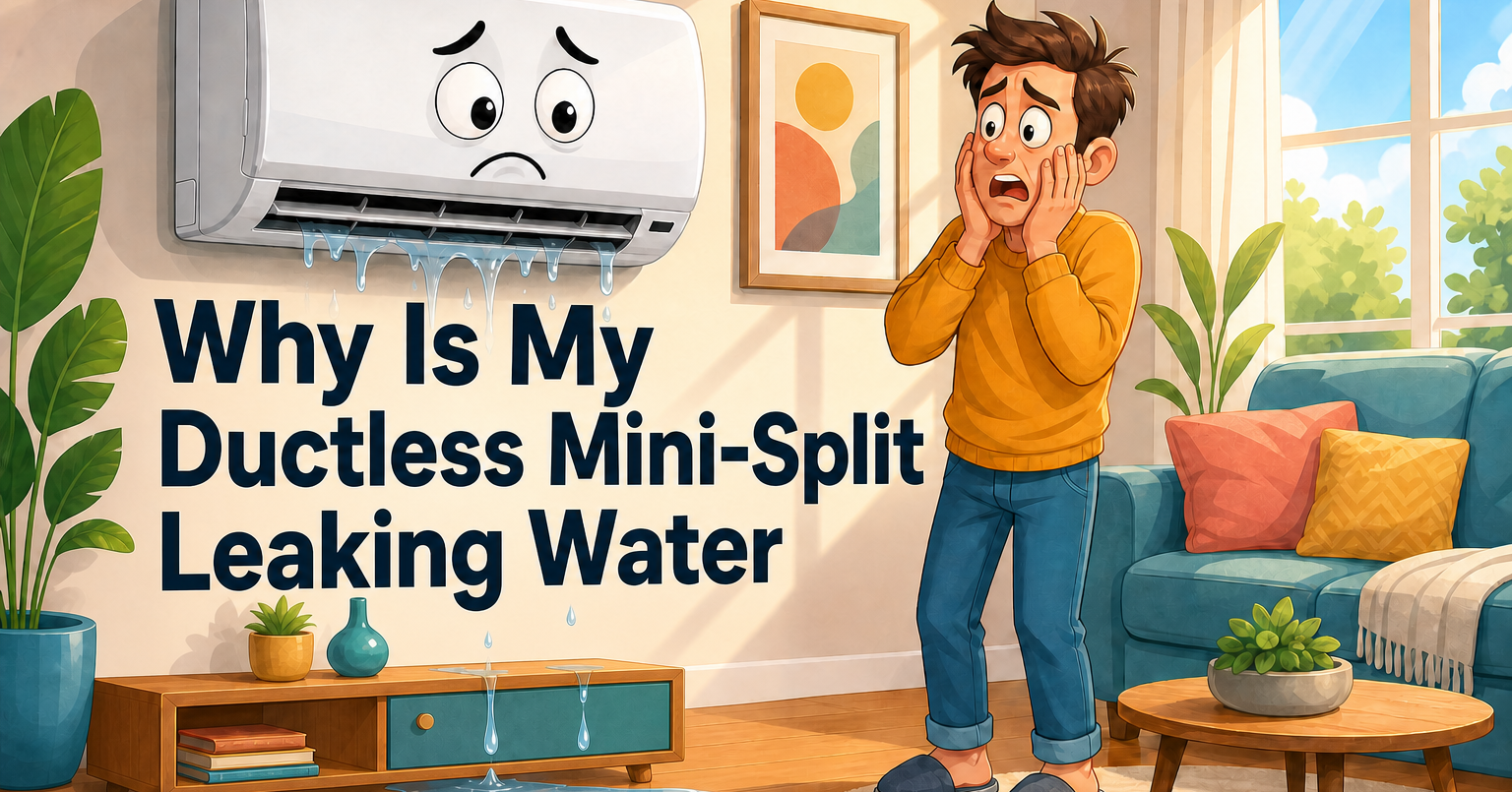
Water leaking from a ductless indoor head in Steubenville usually means a plugged condensate drain or a frozen coil. Both show up as a steady drip. A refrigerant leak causes the same symptom. We can diagnose all three in a single service call.
After 30 years of HVAC work across the Upper Ohio Valley, we can tell you that a dripping ductless head is one of the most common summer calls we get in Steubenville. The river humidity here means the indoor unit pulls more moisture out of the air than it would in an upland town, and that extra condensate has to go somewhere.
Most of the time, it goes where it is supposed to: out through the condensate drain line. But when that drain plugs, the pan overflows. The fix is usually a 20-minute service call. The problem is knowing when it is the drain versus something more serious, like a frozen coil or a refrigerant leak.
Why Is Water Dripping from the Indoor Unit?
Quick Answer:
The indoor head collects condensation and drains it outside through a small line. When algae, dust, or debris plugs that line, water backs up and drips from the unit. River-valley humidity in Steubenville means more condensate volume per hour, so blockages here happen faster.
The condensate drain line on a ductless system is typically a half-inch plastic tube that runs from the indoor head to an exterior exit point. On hillside homes above Market Street, that run can be 10 to 15 feet with one or two bends.
More bends mean more places for algae to form. Algae is the most common culprit. It builds up in the drain pan and eventually restricts the line enough that water has nowhere to go. The pan fills and drips from the lowest point on the indoor head.
We flush condensate drains with a dilute bleach solution every year during tune-ups on Steubenville homes. On a humid valley home running the system heavily in July, that annual flush is not optional.
What Causes a Ductless Mini-Split to Ice Up?
Quick Answer:
A ductless coil freezes when airflow drops below what the refrigerant circuit needs to absorb heat. Dirty filters, a blocked indoor unit, or low refrigerant all cause this. When the ice thaws, it overflows the drain pan and drips from the indoor head.
Steubenville pre-1940 homes often have unusual ductless placements: units mounted in finished areas with limited front clearance, or with furniture pushed close to the intake grille. Both restrict airflow below what the coil needs.
The filter is always the first thing we check. A filter that is half-blocked from dust and lint causes enough airflow restriction to freeze a coil in a few hours. On lower-city homes near the Ohio River, filters load faster because the air is carrying more humidity and particulates.
Key Point: If you see ice on the indoor unit or on the line-set running to the outdoor compressor, shut the system to cooling and switch to fan-only. Let it thaw completely before calling us. Running it while frozen can damage the compressor.
How Can I Tell If the Refrigerant Is Leaking?
Quick Answer:
A refrigerant leak causes the coil to run colder than designed, which leads to ice formation and dripping when it thaws. Other signs include reduced cooling at the same thermostat setting and a faint hissing near the line-set.
Refrigerant leaks are less common than drain blockages, but they produce the same visible symptom: water dripping from the indoor head. The difference is that a drain blockage usually drips steadily even when the system is off, while a refrigerant-related drip tends to appear during or after a cooling cycle.
We check line-set connections and the indoor coil for oil staining, which is the telltale sign of a refrigerant leak. Modern systems use R-454B or R-32; older units may still carry R-410A, which was phased out for new installations January 1, 2025 but is still serviceable.
Key Point: Refrigerant work requires an EPA Section 608 certification. Do not attempt to add refrigerant yourself. The issue needs a licensed technician to locate the leak, repair it, and properly recharge the system.
When Should I Call for Service?
Quick Answer:
Call when the drip continues after cleaning the filter and running the unit in fan-only for 30 minutes, or when you see ice on the indoor head or line-set. Condensate overflow left overnight can damage walls and flooring in older Steubenville homes.
A few things you can safely do before calling: clean or replace the air filter, set the unit to fan-only to thaw any ice, and check whether the condensate drain exits where you think it does. On hillside homes, that exit point is sometimes concealed in a crawlspace or behind a finished wall.
What you should not do: open the unit cover and probe the drain pan yourself, run the system in cooling when ice is visible, or ignore a drip that has been going on for more than a day.
Water getting into wall cavities in pre-1940 Steubenville homes is a particular concern. The original plaster-and-lath construction absorbs moisture quickly and is slow to dry out. Mold can establish in hidden wall cavities within 48 to 72 hours of a sustained condensate leak.
Frequently Asked Questions
Can I clear a plugged condensate drain myself?
You can try flushing the drain line with a mix of warm water and white vinegar through the indoor pan access. If the blockage does not clear in one flush or the drip returns within a week, call for service.
How much does it cost to fix a leaking ductless mini-split in Steubenville?
A condensate drain flush or filter cleaning is typically covered under a tune-up visit. Coil cleaning or a refrigerant leak repair costs more. We provide exact pricing before any work begins.
How often should I clean the condensate drain?
Once per year is the minimum for most Upper Ohio Valley homes. In Steubenville's lower city where humidity is highest, twice per year is a reasonable interval for systems running heavily through July and August.
Does water dripping from a ductless unit mean I need to replace it?
Almost never. A drip from a ductless head is almost always a maintenance issue, not a system failure. Replacement is warranted only when the leak source is a cracked coil or a defective drain pan that cannot be repaired.
If your ductless unit is dripping in Steubenville, call us at (740) 825-9408 or schedule service at honestfix.com. We will diagnose the cause, clear the drain, and tell you exactly what the fix involves before any work begins.
Scott Merritt is a co-founder of Honest Fix Heating, Cooling and Plumbing and brings more than 30 years of experience across HVAC, leadership, and industry education. He serves in a senior leadership and oversight role, providing licensed guidance, reviewing HVAC educational content, and supporting technician training and documentation standards. Prior to co-founding Honest Fix, Scott founded and owned Fire & Ice Heating & Air Conditioning in Columbus, Ohio, which he operated for more than two decades before selling the company in 2025. During that time, he led programs and partnerships including Carrier Factory Authorized Dealer, Trane Comfort Specialist, and Rheem Pro Partner, helping establish high technical and training standards. Scott is the Ohio State HVAC license holder for Honest Fix and provides licensed oversight to help ensure work meets applicable codes and manufacturer requirements. Learn more about Scott’s background and role at Honest Fix by viewing his full leadership bio.
