Furnace vs. Boiler: Which Is Better for My Home in New Cumberland, WV?
July 22nd, 2026
3 min read
Quick Answer
Neither is automatically better. The right choice depends mostly on how your home already delivers heat: ducts favor a furnace, while radiators favor a boiler. Most New Cumberland homes, including manufactured ones, use forced air.
Most New Cumberland homes, including the many manufactured homes, heat with forced air through ducts. For these homes, the practical heating choice is usually a furnace or heat pump, not a boiler.
If your home has ducts and vents, a furnace fits and shares the system with cooling. Boilers are uncommon here, so a boiler usually only fits an older home already built around radiators.
After 30-plus years on heating systems across Ohio, what we see in New Cumberland is mostly ducted homes, including manufactured ones, so a furnace or heat pump is the usual fit.
What Is the Difference Between a Furnace and a Boiler?
Quick Answer:
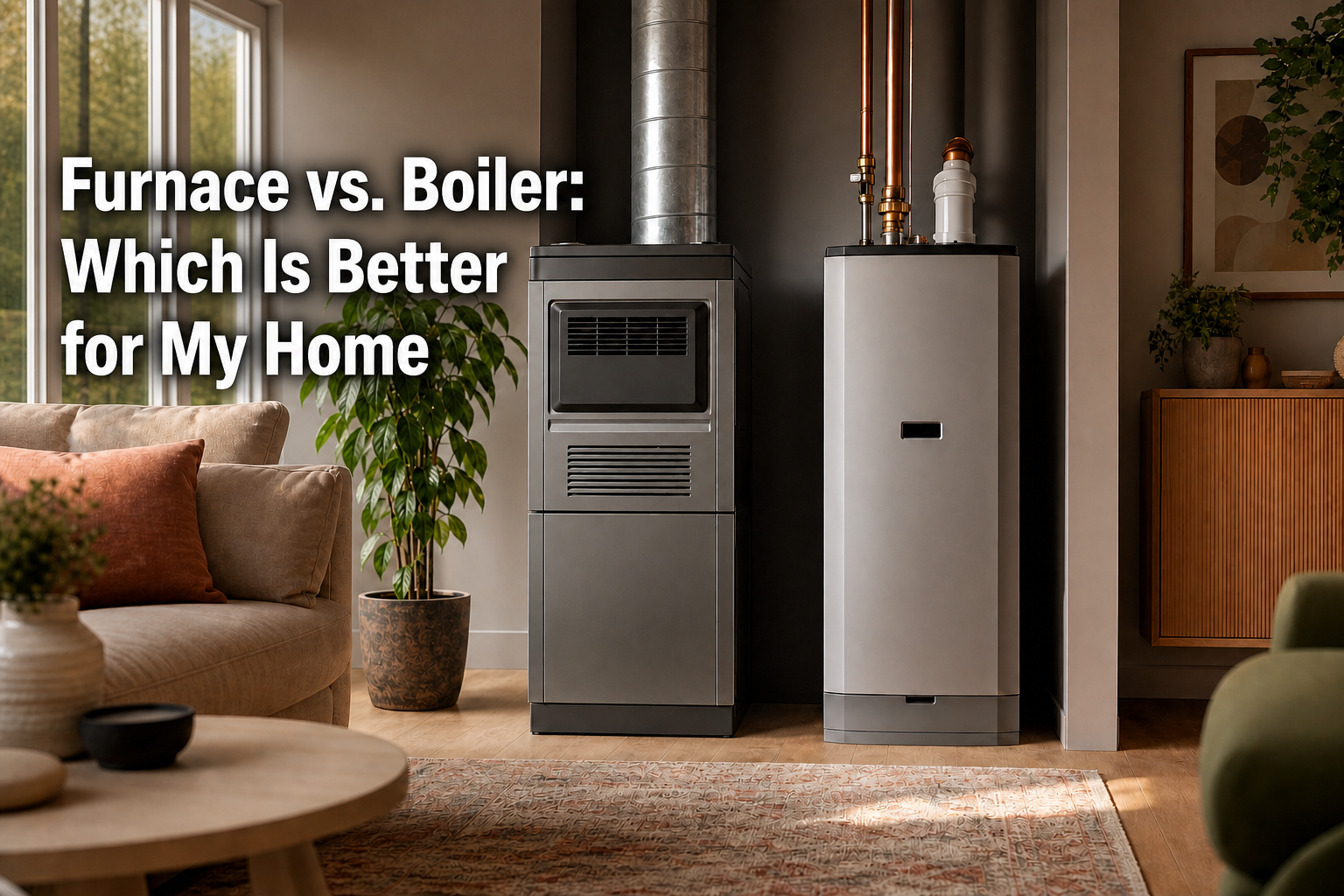
A furnace heats air and blows it through ducts to vents in each room. A boiler heats water and sends it to radiators, baseboards, or radiant floor loops. One moves warm air, the other moves warm water.
That core difference drives everything else. A furnace shares its ducts with central air conditioning, while a boiler delivers steady, even radiant warmth without blowing air or dust around the home.
Most homes already have one system or the other built in. The distribution already in your walls, ducts or water loops, usually points to the practical choice before cost or preference even come up.
Which Suits a New Cumberland Home?
Quick Answer:
Most New Cumberland homes, manufactured and site-built alike, use ducted forced air, so a furnace fits naturally. Boilers are uncommon, found mainly in older homes with radiators, where keeping the boiler can still make sense.
If your home has vents in each room, a furnace or heat pump is the practical pick, and manufactured homes are nearly always forced air. A boiler only fits where radiators are already in place.
In New Cumberland, most homes are ducted, so a furnace makes sense and adds cooling. A boiler enters the picture only in the older radiator homes, where conversion would be costly.
Furnace vs. Boiler: What Are the Trade-Offs?
Quick Answer:
Furnaces heat quickly, cost less to install where ducts exist, and share those ducts with air conditioning. Boilers give quiet, even, comfortable heat with no blown dust, but respond slower and do not carry cooling.
How Do I Decide Which Is Right for My Home?
Quick Answer:
Start with what your home already has. If you have ducts, a furnace or heat pump is usually the practical pick. If you have radiators, keeping or replacing a boiler often makes more sense than a costly conversion.
Switching from one system to the other means adding ducts or water loops, which is a major expense. We help you weigh comfort, cooling needs, and cost, then recommend what truly fits your home, not what sells.
Key Point: In New Cumberland, most homes including manufactured ones use ducted forced air, so a furnace or heat pump fits, while a boiler suits only older radiator homes.
Furnace vs. Boiler at a Glance
|
System |
Best for |
|
Furnace (forced air) |
Homes with ducts; pairs with AC |
|
Boiler (hydronic) |
Homes with radiators; even, quiet heat |
|
Switching systems |
Costly retrofit; weigh carefully |
|
New Cumberland focus |
Mostly ducted; furnace fits |
Honest Fix gives you a straight recommendation based on your home, not a sales pitch. We will assess your current setup, lay out the furnace and boiler options honestly, and back any system we install with the Lifetime Trust Shield.
Frequently Asked Questions
Is a furnace or a boiler cheaper to run?
It depends on fuel, efficiency, and your home. A modern high-efficiency furnace and a modern boiler run fairly close on cost. Your insulation and the system's age and tune usually matter more to the bill than the type itself.
Can I switch from a boiler to a furnace?
Yes, but it is a major project. A furnace needs ductwork run throughout the home, which a radiator house does not have. Because that is costly and disruptive, many homeowners weigh ductless or heat-pump options too. An assessment helps.
Do New Cumberland homes use furnaces or boilers?
Mostly furnaces. Most New Cumberland homes, including manufactured homes, use ducted forced air, so furnaces and heat pumps are standard. Boilers appear only in older homes that still run radiators.
Can a manufactured home in New Cumberland use a boiler?
It is rare. Manufactured homes are almost always built for forced air with ducts, so a furnace or heat pump is the practical fit. A boiler would require radiators and water loops the home was not designed for.
Find the Right Heating System for Your New Cumberland Home
Not sure whether a furnace or boiler fits your home? Call (740) 825-9408 for a free, honest assessment. We will look at your New Cumberland home's setup and recommend the system that truly fits, with no pressure.
Scott Merritt is a co-founder of Honest Fix Heating, Cooling and Plumbing and brings more than 30 years of experience across HVAC, leadership, and industry education. He serves in a senior leadership and oversight role, providing licensed guidance, reviewing HVAC educational content, and supporting technician training and documentation standards. Prior to co-founding Honest Fix, Scott founded and owned Fire & Ice Heating & Air Conditioning in Columbus, Ohio, which he operated for more than two decades before selling the company in 2025. During that time, he led programs and partnerships including Carrier Factory Authorized Dealer, Trane Comfort Specialist, and Rheem Pro Partner, helping establish high technical and training standards. Scott is the Ohio State HVAC license holder for Honest Fix and provides licensed oversight to help ensure work meets applicable codes and manufacturer requirements. Learn more about Scott’s background and role at Honest Fix by viewing his full leadership bio.
