
Single-Zone vs. Multi-Zone Ductless Mini-Split: Which Do I Need for My Wellsburg, WV Home?
June 27th, 2026
4 min read
Quick Answer
A ductless head can't reach a floor above it -- and historic district properties add line set routing constraints on top of the zone-count question. Floor count determines your zones; your property's history determines how we get there.
Wellsburg has the oldest housing stock of any town in our 11-city service area. The median construction year is 1938, and the NRHP-listed Historic District contains 693 contributing structures -- including Federal-style and Greek Revival homes from the early 1800s. For HVAC purposes, that means the majority of homes in the lower historic core were never designed for any kind of forced-air system.
Adding ductless to a pre-Civil War house in Wellsburg requires thinking through historic district exterior placement rules and routing line sets without disturbing original plaster walls or masonry facades. Zone count comes second; access and placement come first.
At a Glance: Single-Zone vs. Multi-Zone
|
Feature |
Single-Zone |
Multi-Zone |
|
Coverage |
1 head — conditions the space it can directly reach |
2-4 heads — each floor or space has its own independent zone |
|
Installed Cost |
$4,250–$6,800 |
$9,350–$17,000+ |
|
Consider it when... |
Your living space is on one connected floor a single head can cover |
You have two or more floors or separate spaces that heat independently |
|
Strength |
Lower upfront cost; simpler maintenance |
Lower cost per zone than separate systems; one outdoor unit |
|
Limitation |
Cannot condition floors or spaces it can't reach |
Higher upfront; outdoor unit sized for all zones at once |
What Is the Difference Between a Single-Zone and Multi-Zone Ductless System?
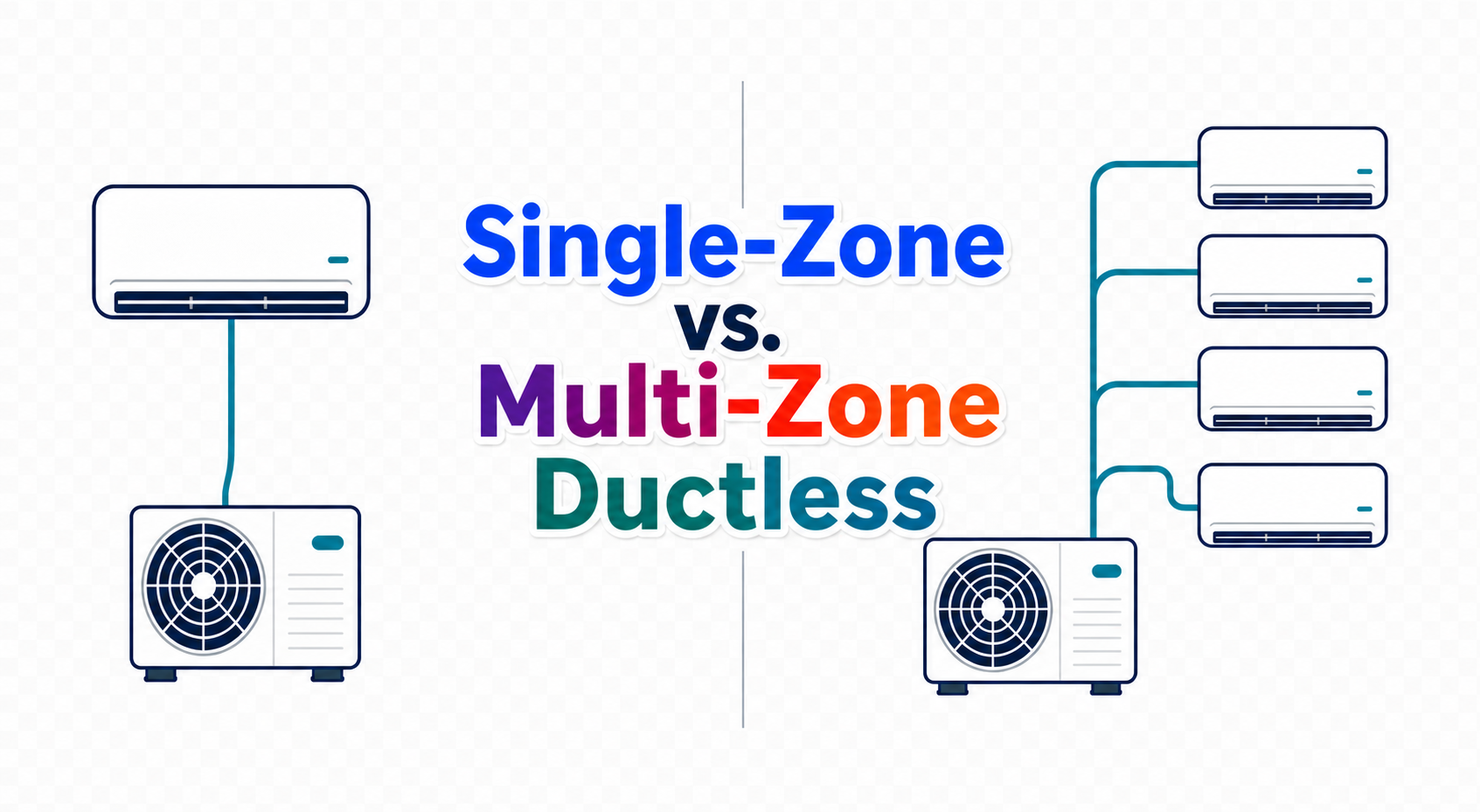
Quick Answer: Single-zone: one outdoor compressor, one indoor head, one conditioned space. Multi-zone: one outdoor compressor serving two to four independent indoor heads in separate rooms or floors, each with its own thermostat.
For Wellsburg's historic properties, the ductless advantage is specifically the absence of ductwork. Adding forced-air ducts to a Federal-style townhouse requires cutting through plaster ceilings, dropping soffits, or routing through masonry chases. Ductless avoids all of that -- the only penetration is a 3-inch core through an exterior wall for the line set.
Multi-zone systems run all heads from one outdoor compressor -- one exterior penetration per floor. In a historic district where facade penetrations are reviewed, consolidating zones under one outdoor unit has a real preservation advantage.
Windsor Heights above the valley operates under ordinary residential construction norms -- no historic district constraints.
Which Wellsburg Homes Are a Good Fit for Single-Zone?
Quick Answer: Single-zone fits when your living space is on one connected floor a single head can reach. One-story construction with no separate upper level -- ranch, cottage, small bungalow -- is the layout single-zone handles well.
Windsor Heights is Wellsburg's postwar neighborhood on higher ground above the valley. Split-levels and ranches here are typical 1950s-70s suburban construction without the historic preservation constraints of the lower district. A single-story ranch with one continuous living floor is the right candidate for single-zone.
Within the lower historic district, there are some smaller structures -- modest Victorian cottages and converted carriage houses -- where a single floor plan is the whole living space. For those, single-zone is proportionate and avoids the additional exterior penetrations of a multi-zone system.
When Does Multi-Zone Make More Sense for Wellsburg Homes?
Quick Answer: Multi-zone makes sense when your home has two occupied floors that need independent conditioning. Historic two-story homes were built without ductwork -- ductless is the right fit, and two occupied floors means two zones.
A pre-1900 two-story in Wellsburg's historic district presents the clearest multi-zone case in our entire service area. These homes were heated by fireplaces, then steam or hot water radiators -- systems with no supply-air component at all. The original wall cavities are not accessible for duct runs without demolishing plaster.
Two zones -- one main floor, one upper -- provides both floors with independent conditioning. River humidity adds dehumidification demand throughout; long low-speed cycles on both heads address that load.
How Wellsburg Homeowners Choose Between the Two
The zone-count question in Wellsburg starts the same way it does anywhere: count your occupied floors. One floor points to single-zone; two floors mean two zones. For historic district properties, a second layer of planning comes first -- routing line sets without disturbing original plaster or visible facades. The floor count answer doesn't change; the path to get there requires more planning.
Single-zone runs $4,250-$6,800; multi-zone runs $9,350-$17,000+ by zone count and routing complexity. WV permits required; historic district properties may require building authority review before permit submission. Financing at 0% for 18 months. Every install includes the Lifetime Trust Shield. Full terms on request.
Frequently Asked Questions
Can ductless be installed in a pre-Civil War home in Wellsburg's historic district?
Yes, and it is often the best option precisely because it requires only a 3-inch wall penetration for the line set rather than cutting through original plaster for duct chases. We plan line set routing carefully to avoid disturbing historically significant surfaces.
Does the historic district in Wellsburg have rules about where I can place the outdoor condenser?
Exterior placement of condensers on historically visible facades may require review by the Wellsburg Building Authority. We flag historic district properties before permit submission and recommend rear or side placement as standard practice.
How many zones does a typical Wellsburg two-story need?
Two zones is the standard starting point -- one per occupied floor. Homes with three or more occupied levels or very large floor plates may need three zones. We run a load calculation at the quote visit to confirm.
What does the high Ohio River humidity do to ductless equipment in Wellsburg?
High ambient humidity accelerates coil corrosion over time. Annual coil cleaning and a maintenance agreement address this. For the lower historic district near the river, we recommend a maintenance visit every 9-12 months rather than extending beyond the annual interval.
Schedule a free exact quote on a Wellsburg ductless install at (740) 825-9408 or HonestFix.com/schedule-service. We start with your property's location within the city, floor plan, and any historic district constraints before recommending a zone configuration.
Scott Merritt is a co-founder of Honest Fix Heating, Cooling and Plumbing and brings more than 30 years of experience across HVAC, leadership, and industry education. He serves in a senior leadership and oversight role, providing licensed guidance, reviewing HVAC educational content, and supporting technician training and documentation standards. Prior to co-founding Honest Fix, Scott founded and owned Fire & Ice Heating & Air Conditioning in Columbus, Ohio, which he operated for more than two decades before selling the company in 2025. During that time, he led programs and partnerships including Carrier Factory Authorized Dealer, Trane Comfort Specialist, and Rheem Pro Partner, helping establish high technical and training standards. Scott is the Ohio State HVAC license holder for Honest Fix and provides licensed oversight to help ensure work meets applicable codes and manufacturer requirements. Learn more about Scott’s background and role at Honest Fix by viewing his full leadership bio.
