
Two-Stage vs. Modulating Furnace: Which Is Better for My Hooverson Heights, WV Home?
July 28th, 2026
3 min read
Quick Answer
Both heat more evenly and efficiently than an old single-stage furnace, but they are not the same. A two-stage furnace burns high or low; a modulating furnace fine-tunes its flame continuously. On the cold ridge, modulating handles snaps well.
In Hooverson Heights, the exposed ridge sees colder, windier nights, where a modulating furnace's continuous output holds a steady temperature through a cold snap instead of swinging between blasts.
A two-stage furnace still handles ridge winters well for less money. The bigger comfort question is often airflow through attic-routed ductwork, which matters for whichever furnace you choose.
After 30-plus years on furnaces across Ohio, what we see in Hooverson Heights is that modulating holds steady through ridge cold snaps, while attic-duct airflow shapes comfort for either furnace.
What Is the Difference Between a Two-Stage and a Modulating Furnace?
Quick Answer:
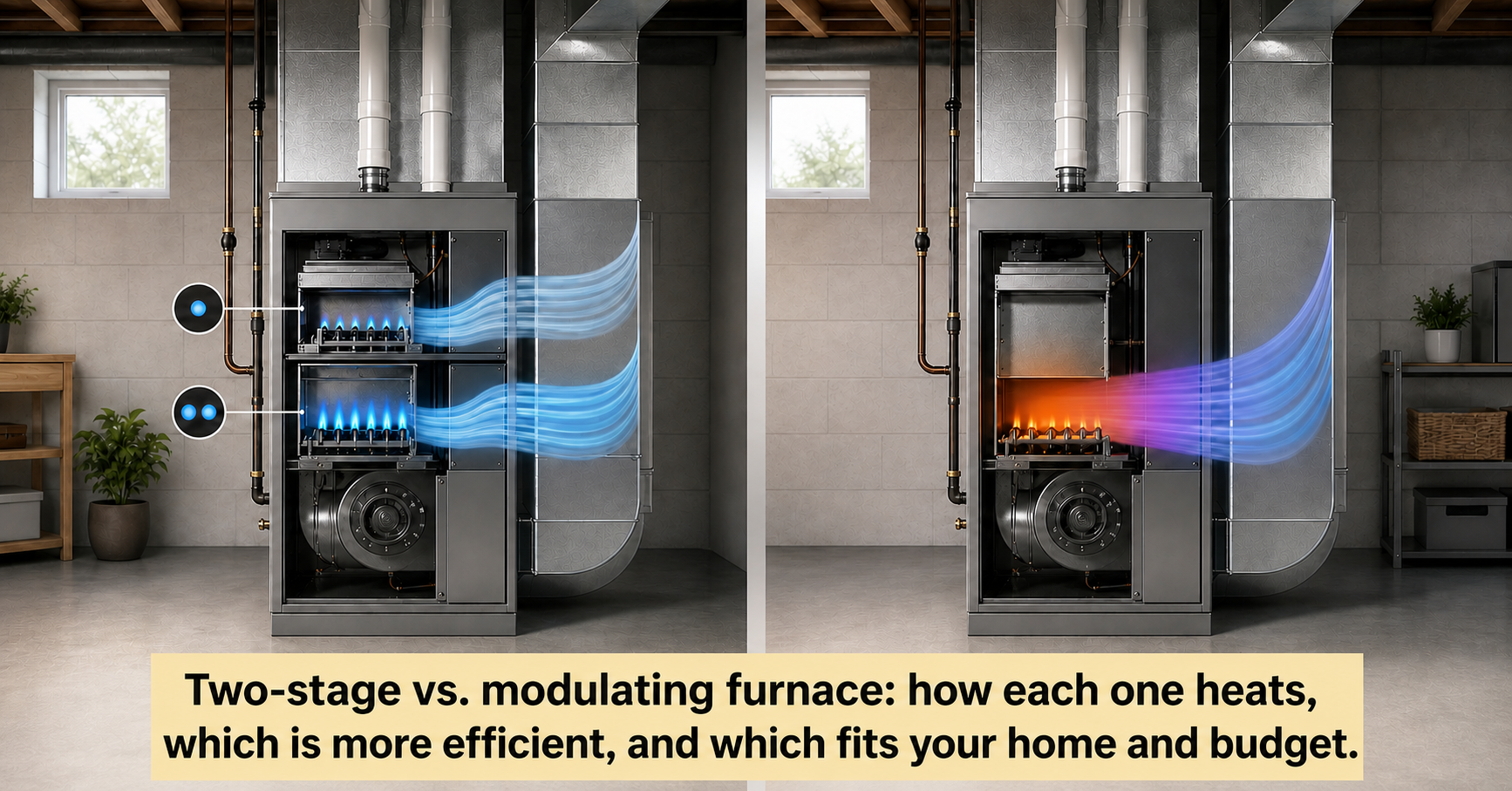
A two-stage furnace burns at two levels, high and low, and runs on low most of the time. A modulating furnace adjusts its flame continuously in small steps, so it matches your home's heat demand almost exactly.
A single-stage furnace, by contrast, is all or nothing: full blast until the thermostat is satisfied, then off. Both two-stage and modulating run longer, gentler cycles than that, which means steadier heat and fewer temperature swings.
Modulating goes furthest, holding a room within about a degree by sipping gas at the exact rate needed. A two-stage furnace gets most of that comfort for less money and with simpler, fewer electronics to service.
Which Is Better for a Hooverson Heights Home?
Quick Answer:
For a cold, wind-exposed Hooverson Heights ridge home, a modulating furnace holds the steadiest heat through a cold snap. A two-stage furnace handles ridge winters well too, for less money, if the budget is tighter.
Attic-routed ductwork loses heat before it reaches your rooms, so airflow and duct sealing matter alongside the furnace stage. Address those, and either furnace delivers more of the even heat it promises.
Size the furnace to the home, not the old unit. On the ridge, a correctly sized furnace paired with sealed ducts keeps rooms even, while an oversized one short-cycles and undoes the benefit of either stage.
Is a Modulating Furnace Worth the Extra Cost?
Quick Answer:
It can be, if comfort and efficiency matter most to you. A modulating furnace costs more upfront and has more electronics, but it delivers the steadiest heat and the lowest gas use, especially in milder weather.
A two-stage furnace is the value choice: most of the comfort, a lower price, and fewer parts. The honest answer depends on your home, your budget, and how long you plan to stay. We will lay out both in writing.
Does a Two-Stage or Modulating Furnace Save Energy?
Quick Answer:
Both save energy over a single-stage furnace by running longer at lower output instead of blasting and shutting off. A modulating furnace saves the most, because it rarely runs at full power except on the coldest days.
The savings are real but gradual, so they matter more the longer you stay and the colder your winters. In a leaky older home, sealing and insulating first lets either furnace deliver the efficiency it is capable of.
Key Point: In Hooverson Heights, modulating holds the steadiest heat through ridge cold snaps, but attic-duct airflow and correct sizing shape comfort for whichever stage you choose.
Two-Stage vs. Modulating at a Glance
|
Factor |
Two-Stage |
Modulating |
|
Firing |
High or low |
Continuous |
|
Comfort |
Very even |
Most even, ~1 degree |
|
Efficiency |
Better |
Best, esp. mild days |
|
Upfront cost |
Lower |
Higher |
|
Best for |
Value and comfort |
Comfort-first homes |
Note for web: this 3-column table needs a responsive or horizontal-scroll wrapper so it does not overflow a narrow phone screen.
Honest Fix will explain two-stage and modulating in plain language, run a proper sizing calculation, and recommend the furnace that fits your home and budget, not the priciest one. We put both options in writing so you can compare.
Frequently Asked Questions
Is a modulating furnace better than a two-stage furnace?
Better for comfort and efficiency, yes, but it costs more and has more electronics. A two-stage furnace delivers most of the same even heat for less money. The best choice depends on your home, your budget, and how long you plan to stay.
Do two-stage and modulating furnaces need a special thermostat?
They work best with a compatible thermostat that can call for the different stages or modulation, and most installs include one. A modulating system is usually paired with a variable-speed blower so the airflow matches the flame.
Does a modulating furnace help on a cold Hooverson Heights ridge?
Yes. Its continuous output holds a steady temperature through the cold snaps and wind the ridge sees, rather than swinging between blasts. A two-stage furnace handles ridge winters well too, for less money, if the budget is tighter.
What matters as much as the furnace stage up on the ridge?
Airflow. Many ridge ranches route ducts through hot or cold attics that lose heat before it reaches the rooms. Sealing and checking that ductwork lets either a two-stage or modulating furnace deliver the even heat it promises.
Choosing a Furnace in Hooverson Heights? We Will Help
Deciding between a two-stage and a modulating furnace in Hooverson Heights? Call (740) 825-9408. We will size your home properly and lay out both options in writing, with no pressure, so you can choose what fits.
Scott Merritt is a co-founder of Honest Fix Heating, Cooling and Plumbing and brings more than 30 years of experience across HVAC, leadership, and industry education. He serves in a senior leadership and oversight role, providing licensed guidance, reviewing HVAC educational content, and supporting technician training and documentation standards. Prior to co-founding Honest Fix, Scott founded and owned Fire & Ice Heating & Air Conditioning in Columbus, Ohio, which he operated for more than two decades before selling the company in 2025. During that time, he led programs and partnerships including Carrier Factory Authorized Dealer, Trane Comfort Specialist, and Rheem Pro Partner, helping establish high technical and training standards. Scott is the Ohio State HVAC license holder for Honest Fix and provides licensed oversight to help ensure work meets applicable codes and manufacturer requirements. Learn more about Scott’s background and role at Honest Fix by viewing his full leadership bio.
