
What Is a Water Heater Pressure Relief Valve, and When Should It Be Replaced in Follansbee, WV?
July 16th, 2026
3 min read
Quick Answer
In Follansbee, the pressure relief valve is your water heater's key safety device. The local groundwater can leave sediment that fouls the valve seat, so it weeps. Test it yearly and replace it if it will not reseat.
Every tank water heater has a pressure relief valve, the most important safety part. In Follansbee, the groundwater supply is the local twist: its sediment can keep a valve from sealing cleanly.
Follansbee's public water is drawn from groundwater, which can carry fine sediment. A bit of grit on the valve seat keeps it from sealing fully after it opens or is tested, so it weeps even when the pressure is normal.
After 30-plus years on water heaters across Ohio, what we see on Follansbee calls is that groundwater sediment is a common reason a relief valve will not reseat and starts to weep, on top of any pressure issue.
What Does the Pressure Relief Valve Do?
Quick Answer:
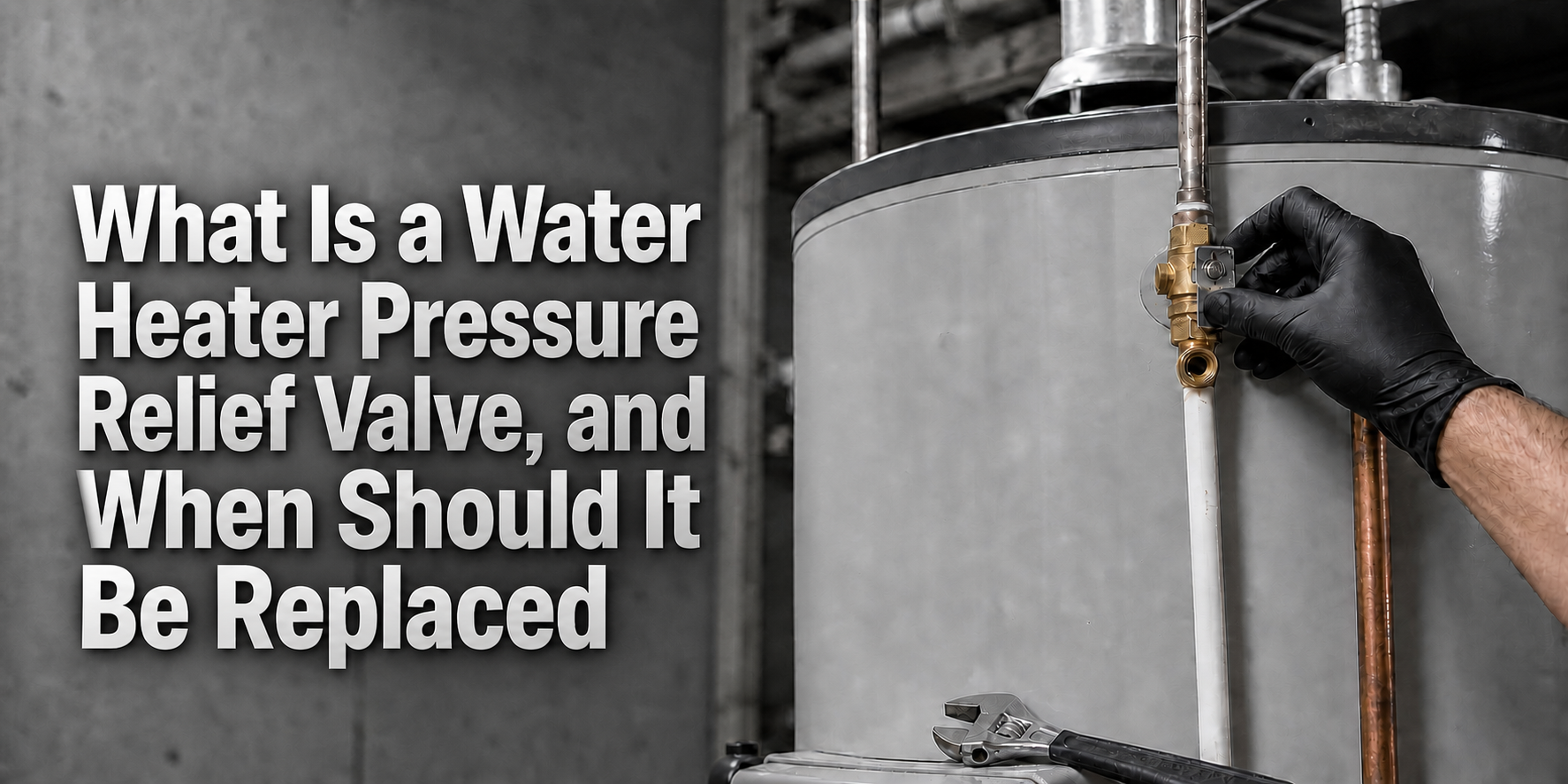
The pressure relief valve, or T&P valve, is your water heater's key safety device. If temperature or pressure inside the tank climbs too high, it opens and releases water to prevent a dangerous tank failure.
In Follansbee, the T&P valve is the tank's safety backstop, opening to release excess heat or pressure. The local issue is sediment from groundwater, which can lodge on the seat so the valve does not close cleanly afterward.
When Should a T&P Valve Be Replaced?
Quick Answer:
Replace it if it leaks or drips constantly, looks corroded, or does not snap back after you test it. Many should be replaced every few years as a precaution, and always when you replace the water heater.
Test it once a year: lift the lever briefly and let it snap back. Water should rush out the discharge tube, then stop. If it keeps dripping, will not reseat, or looks rusty, it is time for a new valve.
Why Is My Pressure Relief Valve Dripping?
Quick Answer:
A constant drip is often not the valve's fault. It usually means the pressure or temperature is too high, frequently from thermal expansion on a closed system. The fix may be an expansion tank, not just a new valve.
Here is the key: a healthy T&P valve only opens when something is wrong. If yours drips often, we check the home's water pressure, the thermostat setting, and whether thermal expansion needs an expansion tank, before simply swapping the valve.
In Follansbee, a weeping valve often has sediment on the seat from groundwater, so it will not reseat after opening. We replace the valve and check the pressure, since trapped pressure can also be part of the picture.
Key Point: Never cap a weeping relief valve. In Follansbee, sediment on the seat is a common cause, so the fix is usually a new valve, plus a pressure check, not blocking the one you have.
T&P Valve Safety and Maintenance
- A new valve when groundwater sediment fouls the seat.
- A pressure check in case expansion adds to the drip.
- Never cap, plug, or block the valve or its discharge tube.
- Test the valve once a year by lifting the lever.
- Keep the discharge tube pointed down, ending near the floor.
- Have the valve and your water pressure checked if it drips.
What Does This Mean for a Follansbee Home?
Quick Answer:
In Follansbee, groundwater sediment is the local reason a relief valve weeps, by fouling the seat so it cannot reseal. Replacing the valve and checking pressure is the fix, and a yearly test catches it early.
Follansbee's public water comes from groundwater, which can carry fine sediment. That sediment can settle on the relief valve seat, so the valve does not close cleanly after it opens, leaving it to weep over time.
Pressure still matters here too. We check whether trapped pressure or thermal expansion is adding to the drip, but in Follansbee, a sediment-fouled valve that will not reseat is often the simplest cause to fix.
Relief Valve Signs in a Follansbee Home, at a Glance
|
What you notice |
What it means |
|
Valve weeps after a test |
Sediment on the seat, replace it |
|
Groundwater supply |
Carries fine sediment |
|
Will not reseat |
Fouled seat, time for a new valve |
|
Drip plus high pressure |
Check pressure and expansion too |
|
Capped or blocked valve |
Dangerous, never do this |
Honest Fix services water heaters as part of our plumbing work. We test the T&P valve, find the real cause of a drip, and fix it safely, never just cap it. Every install carries the Lifetime Trust Shield, including a 15-year labor warranty. Full terms are available on request.
Frequently Asked Questions
Is it safe to ignore a dripping pressure relief valve?
No. A constant drip means the valve is working, the system is over pressure, or the valve is worn, and any of those needs attention. Never cap or plug the valve to stop the drip; that removes your tank's main safety protection.
Why won't my Follansbee relief valve reseat after testing?
Often sediment. Follansbee's groundwater can carry grit that lodges on the valve seat, so it cannot close cleanly after opening. The fix is a new valve, and we also check the pressure in case trapped pressure is adding to the drip.
How often should a T&P valve be tested?
About once a year. Lift the lever briefly and let it snap back; water should discharge, then stop cleanly. If it keeps dripping or will not reseat, replace it. Testing keeps the valve from seizing and confirms it still works.
Can I replace a T&P valve myself?
It is possible, but it involves draining the tank and getting the threading and discharge tube right, and a drip often points to a bigger pressure issue. Because it is your tank's main safety device, it is worth having it done correctly.
Relief Valve Concern in Follansbee? We Can Help
Worried about your relief valve? Call us at (740) 825-9408 or schedule a visit online. We test the valve, find why it is dripping, and fix it safely, never just cap it, with no upsells.
Scott Merritt is a co-founder of Honest Fix Heating, Cooling and Plumbing and brings more than 30 years of experience across HVAC, leadership, and industry education. He serves in a senior leadership and oversight role, providing licensed guidance, reviewing HVAC educational content, and supporting technician training and documentation standards. Prior to co-founding Honest Fix, Scott founded and owned Fire & Ice Heating & Air Conditioning in Columbus, Ohio, which he operated for more than two decades before selling the company in 2025. During that time, he led programs and partnerships including Carrier Factory Authorized Dealer, Trane Comfort Specialist, and Rheem Pro Partner, helping establish high technical and training standards. Scott is the Ohio State HVAC license holder for Honest Fix and provides licensed oversight to help ensure work meets applicable codes and manufacturer requirements. Learn more about Scott’s background and role at Honest Fix by viewing his full leadership bio.
