Quick Answer:
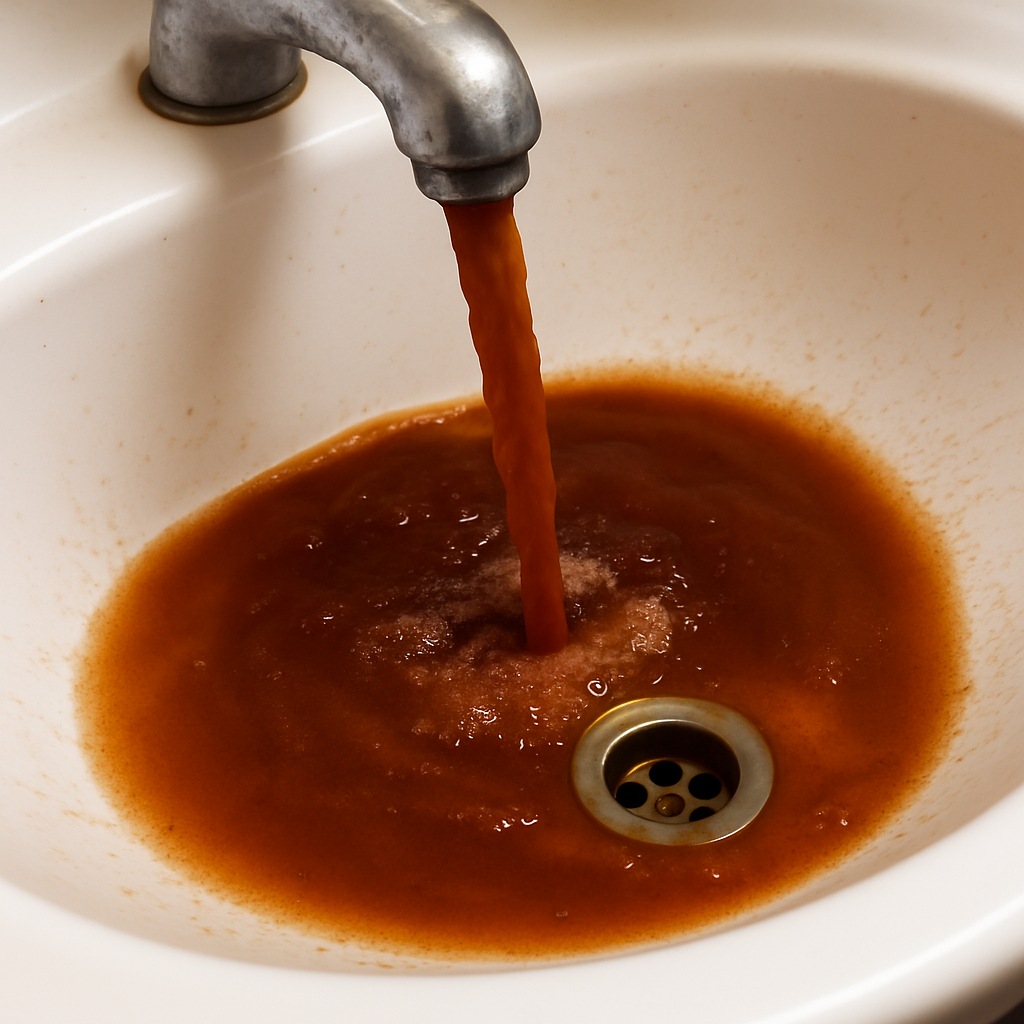
Brown or rusty water in Upper Ohio Valley homes often means corrosion, sediment buildup, or an aging tank. If it appears only when using hot water, your heater is likely the cause. If both hot and cold taps run discolored, older galvanized pipes or Jefferson County water line work may be responsible.
Homes in Wintersville range from mid-century ranches near Fernwood State Forest to newer builds off Two Ridge Road. Many share decades-old water lines and hard-water minerals from the Upper Ohio Valley supply Steubenville-Weirton. Pressure changes and hillside elevations can stir rust in pipes and tanks alike. Knowing whether the issue lies inside the home or in the city main makes all the difference.
Hot-Water Rust Often Points to Tank or Anode Problems
If rusty water runs only from hot taps, your water heater is likely the problem. Inside each tank, a magnesium or aluminum anode rod attracts minerals to prevent corrosion. Once it dissolves, the steel begins to rust. Drain a few gallons: if water clears, sediment is the issue; if it stays rusty, corrosion may be inside the tank.
How Wintersville’s Hard Water Fuels Sediment Buildup
Mineral-rich water from the Jefferson County system accelerates sediment buildup. Calcium and iron settle at the bottom, overheating the tank and reducing efficiency. Annual flushing before winter helps prevent this. Honest Fix often finds heavy deposits in older Meadowbrook and Ward Heights homes—clear signs of stress that shorten heater life and discolor tap water.
When It’s Not the Heater—Aging Lines or Utility Work
If both hot and cold taps show rust, city or household lines may be involved. Many Wintersville houses built before 1970 still use galvanized steel pipes that flake internally. During hydrant flushing or line repairs on Cadiz or Bantam Ridge Roads, sediment can enter home plumbing. Usually, running cold water for several minutes clears it.
FAQs
Q: Should I replace my heater if flushing doesn’t clear rust?
A: If the tank is over ten years old and water stays discolored, replacement is safest. Corroded tanks can leak or rupture without warning.
Q: Why does brown water appear near Fernwood or the high school area?
A: Utility flushing in spring or fall can stir sediment in mains. It’s temporary and typically clears within a day.
Exact HVAC replacement quotes available at (740) 825-9408 or HonestFix.com/schedule-service.
Author: Alex Largent
Alex Largent
Alex Largent is the Owner and Senior HVAC Efficiency Analyst at Honest Fix Heating, Cooling & Plumbing. With more than 20 years of field experience, NATE and EPA certifications, and a hands-on leadership style, Alex teaches his team to fix systems right the first time — with transparency, precision, and no upsells. He writes about HVAC diagnostics, home energy efficiency, and practical maintenance advice for homeowners across the Upper Ohio Valley. Read Alex Largent’s full bio to learn more about his expertise in the HVAC and Plumbing industry. Updated October 2025.