0% for 25 months on a qualifying new Rheem® heating or cooling system. Installed by November 15.
Metal ductwork is the trunk of your whole system, the main line every room branches off. Built well, it moves air quietly and loses almost none of it. Built fast, it leaks conditioned air into your basement, drums and pops when the blower kicks on, and sags where it should run straight. Honest Fix fabricates and hangs every piece to a written standard: straight, quiet, and sealed where a leak actually costs you. This page is that standard, published in full, so you can hold any contractor to it. Ours included.
Published from our Installation Handbook · Reviewed by Alex Largent · 100% satisfaction, no exceptions
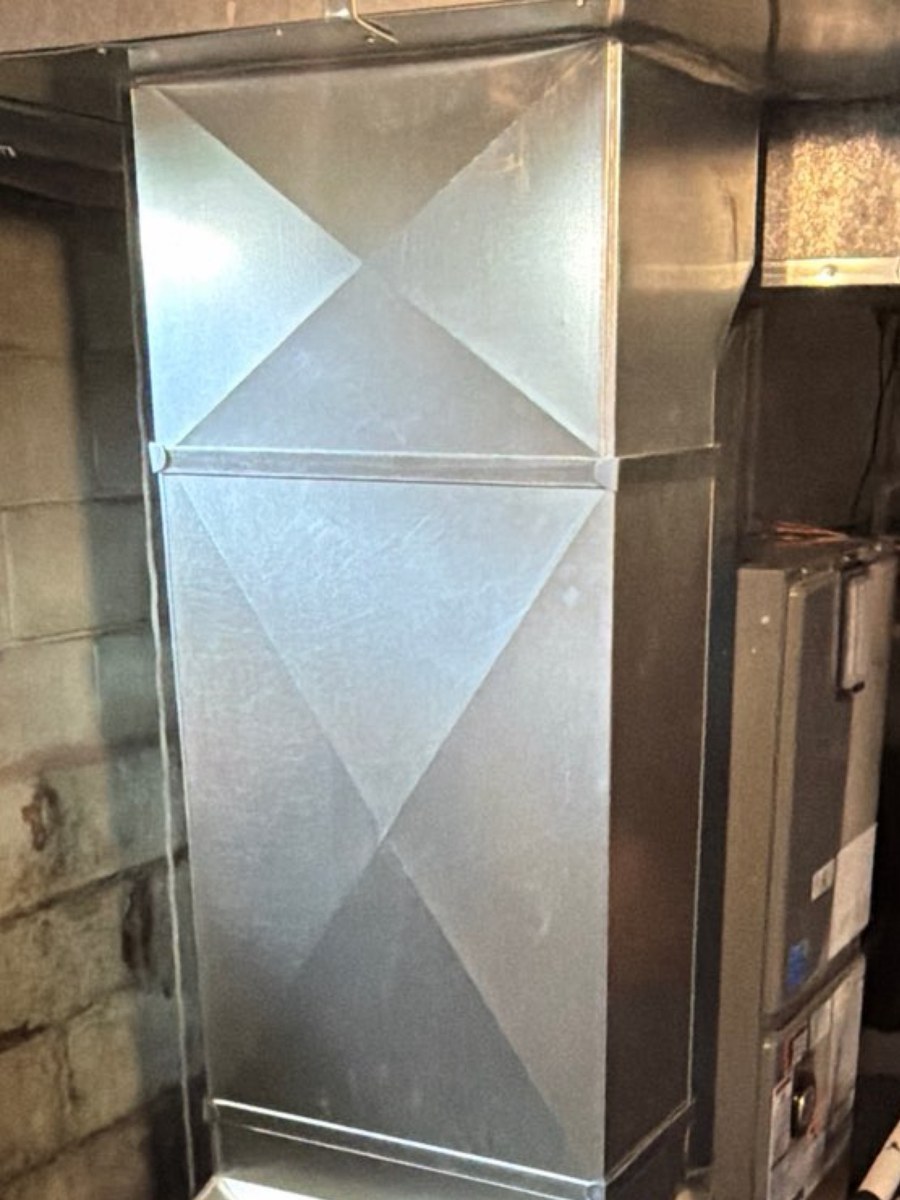
Every connection at the equipment is sealed on every job, and duct running through an unconditioned basement, crawlspace, or attic gets its seams sealed too, because that is where a leak is air you paid for and will never feel.
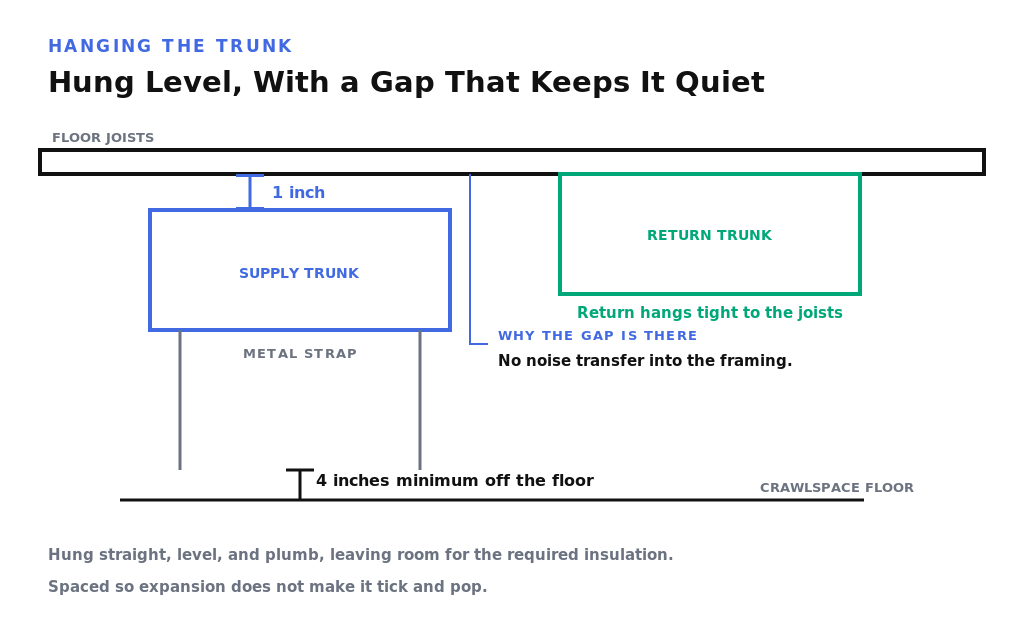
Trunk lines hang level to the joists on proper straps, with a gap that keeps the metal from drumming and popping as it heats, cools, and pressurizes.
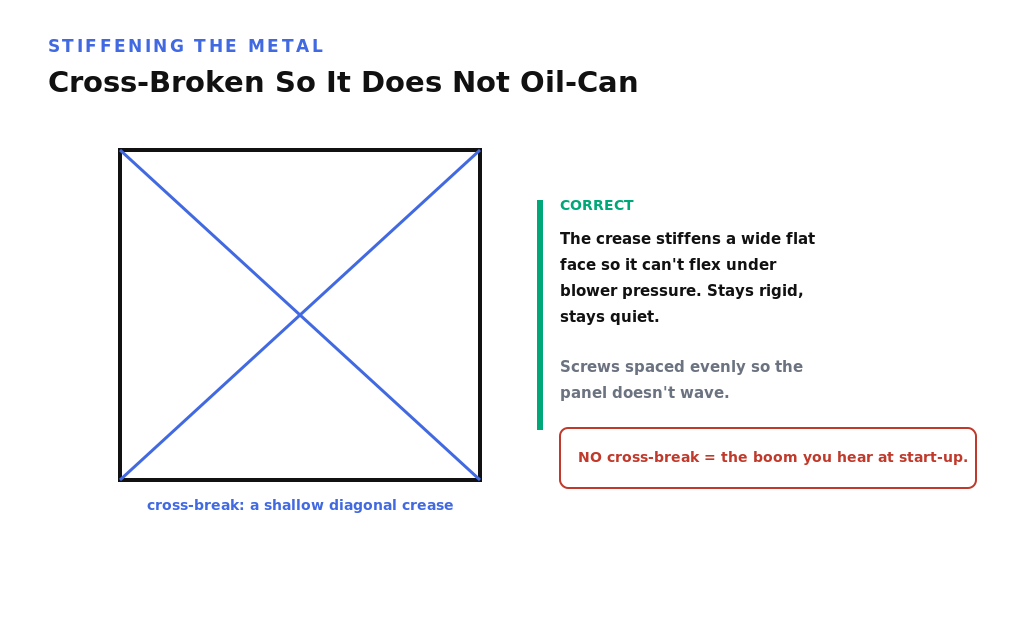
Flat duct faces are cross-broken to stiffen the metal, which stops the booming oil-can pop you hear when a weak duct flexes under blower pressure.
Metal ductwork is the least glamorous part of a system and the one that quietly decides how well everything else performs. A trunk that leaks or sags wastes the capacity of the equipment feeding it, and a trunk that was not stiffened right turns every start-up into a bang. Here is what Honest Fix requires on every piece of sheet metal we hang. You are welcome to check yours against it.
Trunk lines are hung straight, level, and plumb on proper metal straps and hangers, at least four inches off a crawlspace floor. There is a deliberate gap at the joists so the metal is not transmitting noise into the framing: supply trunks hang one inch down from the floor joists, return trunks hang tight to them. Runs are hung leaving room for the required insulation, and spaced so expansion does not make them tick and pop.
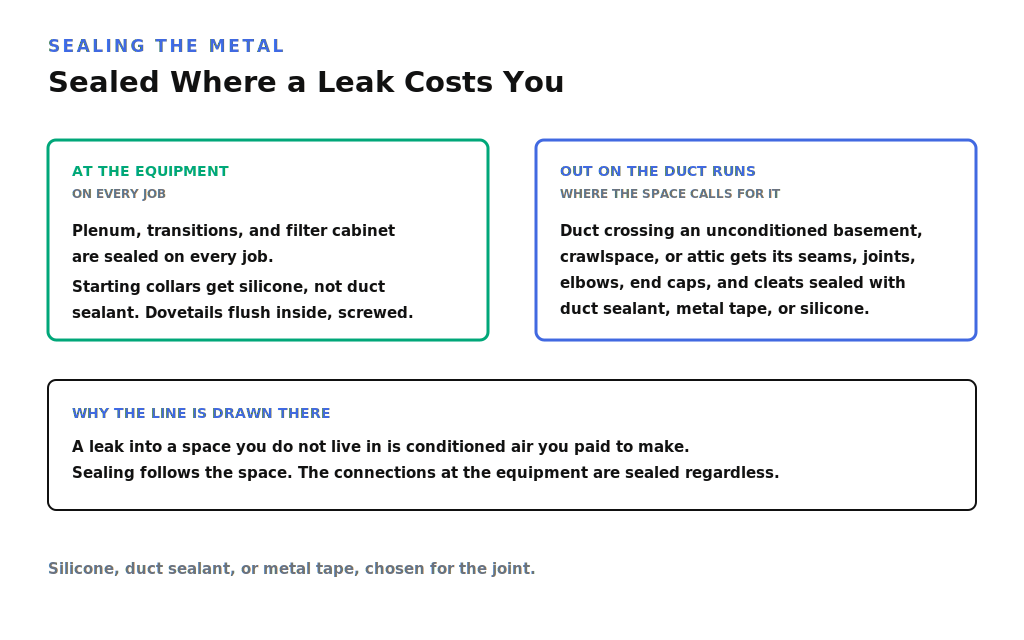
Sealing is not decoration, so Honest Fix puts it where it changes what you pay. Every connection at the equipment is sealed on every job: the plenum, the transitions, the filter cabinet, and the starting collars, which get silicone specifically because duct sealant will not close the larger gap there, with the dovetails left flush inside the duct and screwed properly. Out on the duct runs, sealing follows the space the duct is in. A trunk crossing an unconditioned basement, crawlspace, or attic gets its seams, joints, elbows, end caps, and cleats sealed with duct sealant, metal tape, or silicone, because every leak there is conditioned air dumped into a space you do not live in. Where a sealant line on an exposed plenum will be painted, it is taped off first for a clean finish.
Flat duct faces are cross-broken in the proper direction to stiffen the metal. Without it, a wide flat face flexes when the blower pressurizes the duct and snaps back with a boom, the sound people call oil-canning. Screws are spaced evenly along the metal, both for appearance and to keep the panels from waving. Where sound liner is used, it is cut straight and tacked so it cannot blow loose into the airstream.
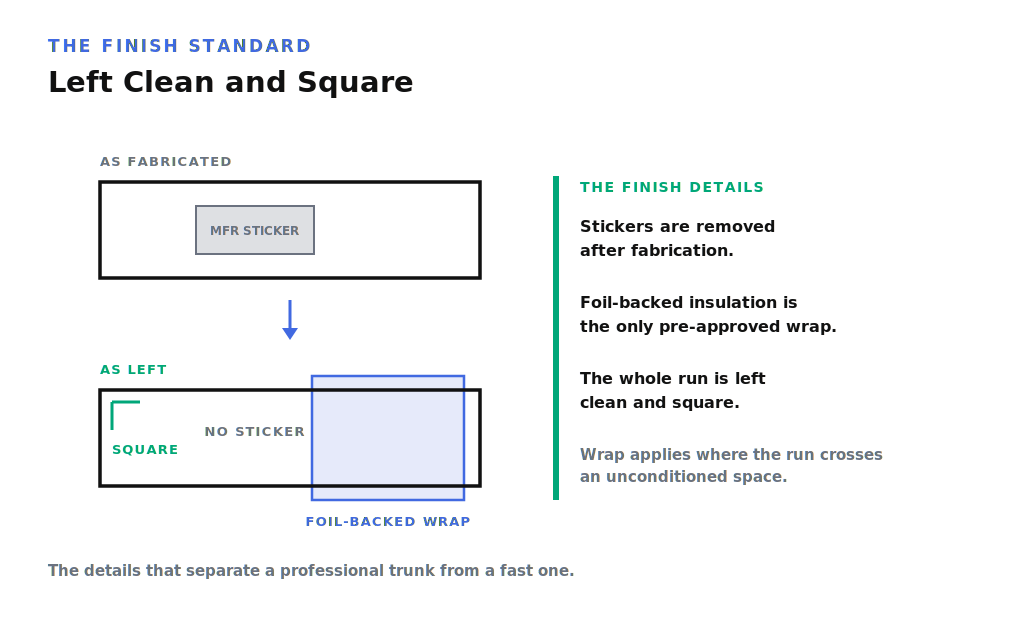
The details that separate a professional trunk from a fast one: manufacturer stickers are removed after fabrication, foil-backed insulation is the only pre-approved wrap at Honest Fix, and the whole run is left clean and square. Where metal duct meets flexible duct, that connection follows the flexible ductwork standard, and every run in an unconditioned space is insulated per the insulation standard.
A lot of ductwork here runs through unconditioned basements and crawlspaces. Every seam that leaks there is conditioned air you paid to make, dumped into a space you do not live in, on a system that then has to run longer to keep up.
Air escaping at a seam in an unheated basement or a crawlspace is heating or cooling you paid for and will never feel. That is exactly why sealing follows the space rather than stopping at the equipment.
A flat face with no stiffening flexes under blower pressure and pops back with a bang every time the system starts. It is not a defect that fixes itself.
Metal touching framing telegraphs every tick and pop into the rooms above. The gap at the joist is what keeps the system quiet.
Duct hung loose or screwed unevenly waves and sags, and every dip is a spot that slows the air the whole system depends on.
Field conditions. Final installation details may vary based on manufacturer requirements, local code, home conditions, equipment model, safety constraints, and the written scope of work. Where the manufacturer's instructions and this standard disagree, the manufacturer's instructions win, and your technician follows them.
Almost always because a flat face of the duct was not cross-broken. Cross-breaking is a shallow diagonal crease that stiffens a wide sheet-metal panel. Without it, the panel flexes when the blower pressurizes the duct and snaps back with a boom. Honest Fix cross-breaks the flat faces so the metal stays rigid and quiet.
It means closing the places air can escape, using duct sealant, metal tape, or silicone depending on the joint, and silicone specifically on starting collars where the gap is larger. Honest Fix seals every connection at the equipment on every job, and out on the duct runs it seals where a leak actually costs you: a trunk crossing an unconditioned basement, crawlspace, or attic. A leak there is conditioned air you paid to make, dumped into a space you do not live in, and the system runs longer to make up for it.
On purpose, one inch. Metal ducting that touches the framing transmits noise, so every tick and pop travels into the rooms above. The gap breaks that path. Return trunks, which are under less pressure, hang tight to the joists by design.
Neither is better on its own. Rigid metal is what you want for the main trunk lines, and flexible duct is what suits a lot of the branch runs. What matters is that each is installed to its standard. Honest Fix uses metal for the trunk and flex for the branches, and each one is fabricated, supported, and sealed to its own published standard.
A shallow crease put diagonally across a flat sheet-metal face to stiffen it, the same idea as a rib pressed into a car panel. It keeps a wide, flat duct face from flexing and booming under air pressure. It is a fabrication step that costs nothing but a few minutes and it is the difference between a quiet system and a noisy one.
Because bare metal duct in an unconditioned space gains and loses heat through its walls and can sweat and drip in humid weather. Honest Fix insulates every metal run in an unconditioned space to at least R-12, and only with foil-backed insulation as the approved material. The full standard is on the insulation page.
Read this page and go look at the trunk in your basement. You are checking for a trunk that runs level with a gap at the joists, sealed seams and end caps anywhere the duct crosses an unheated space, flat faces stiffened rather than flat and flexible, and screws spaced evenly with no waves. If you would rather have someone look with you, that is what a free exact quote visit is for.
Now you know what correct metal ductwork looks like. If yours sags, leaks, or bangs, or you would rather have someone else check, Honest Fix will come out and give you a straight answer. No upsells, no games.
Flexible ductwork · Duct insulation · The full Installation Standard