Search for topics or resources
Enter your search below and hit enter or click the search icon.
0% for 25 months on a qualifying new Rheem® heating or cooling system. Installed by November 15.
An air handler is an indoor coil and blower with no furnace attached, common on heat pump and cooling-only systems, and it makes condensate every hour it is cooling. The detail that decides whether it drains cleanly is one most homeowners never hear about: whether the drain is set up for a positive-pressure or a negative-pressure cabinet. Get that wrong and it either will not drain or it will spit water. Honest Fix installs every one to a written standard. This page is that standard, published in full, so you can hold any contractor to it. Ours included.
Published from our Installation Handbook · Reviewed by Alex Largent · 100% satisfaction, no exceptions

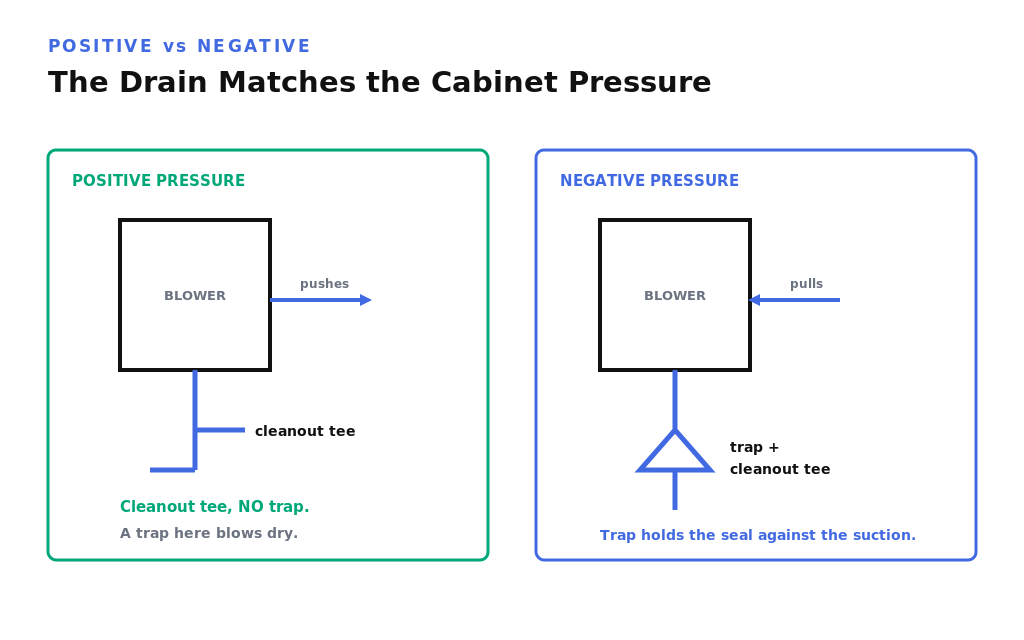
A positive-pressure cabinet gets a cleanout tee and no trap; a negative-pressure one gets a trap, always confirmed against the manufacturer's instructions. The wrong choice holds water or blows it out.
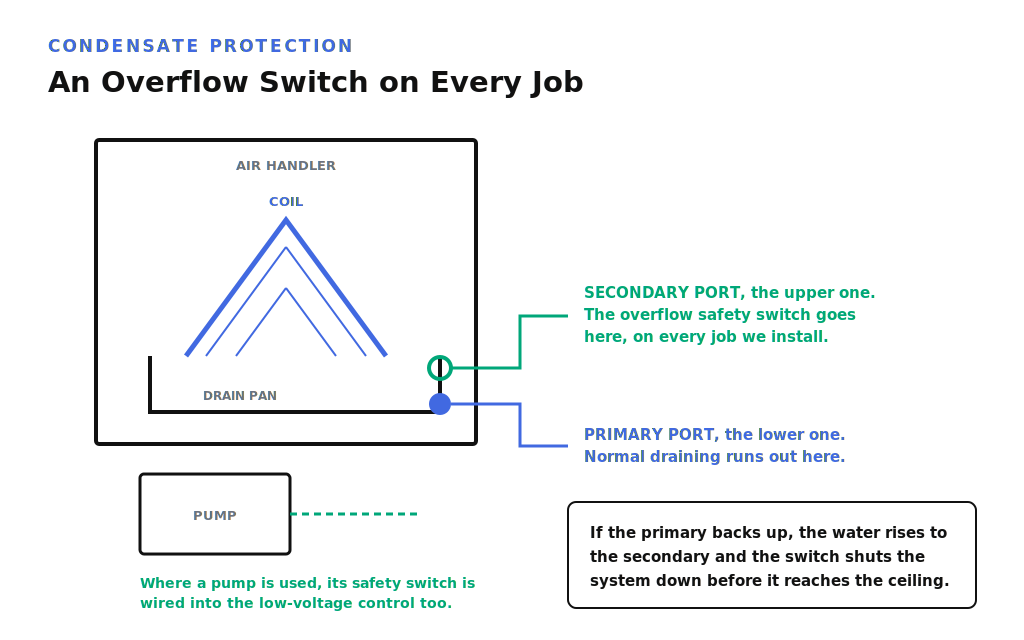
A safety switch sits in the secondary drain port on every air handler we install, so a plugged drain shuts the system down instead of overflowing.
The line set is left far enough off the coil cabinet that the access door still opens, so the unit can be serviced years from now without cutting anything apart.
This is the standard that defines an air handler install. On a positive-pressure cabinet, the blower pushes air past the drain, so it gets a cleanout tee and no trap, because a trap there would just get blown dry and let air bypass the drain. On a negative-pressure cabinet, the blower pulls against the drain, so it gets a condensate trap with a cleanout tee, or the suction holds the water in the pan instead of letting it out. Honest Fix confirms that configuration against the manufacturer's instructions for the specific unit on every job, because the manufacturer sets the requirement and the cabinet type only tells you what to expect. Beyond that, the condensate follows the same standard as every coil: sloped to the manufacturer's spec, and the full condensate standard applies.
A condensate overflow switch goes in the secondary drain port on every air handler we install, not just the ones that seem likely to clog. If the primary drain backs up, the switch shuts the system down before water finds your ceiling. Where a condensate pump is used, it is mounted to the equipment and its safety switch is wired into the low-voltage control, so the system stops if the pump fails.
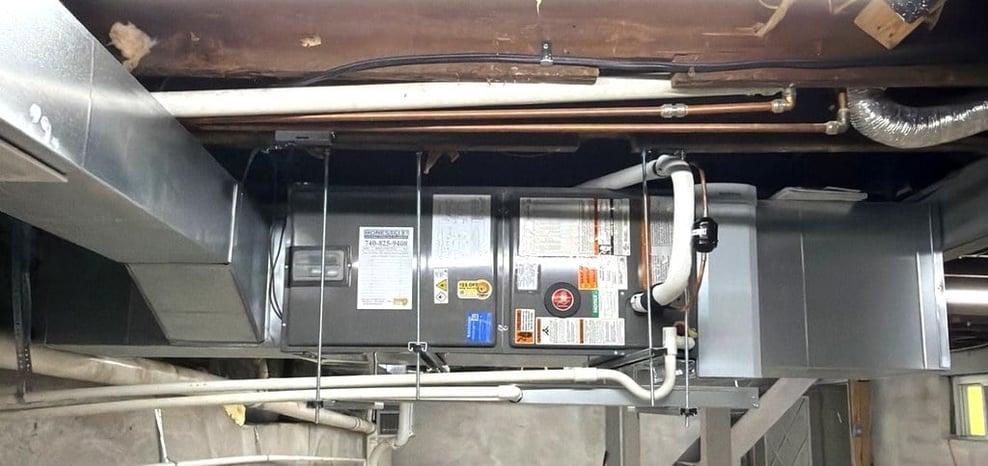
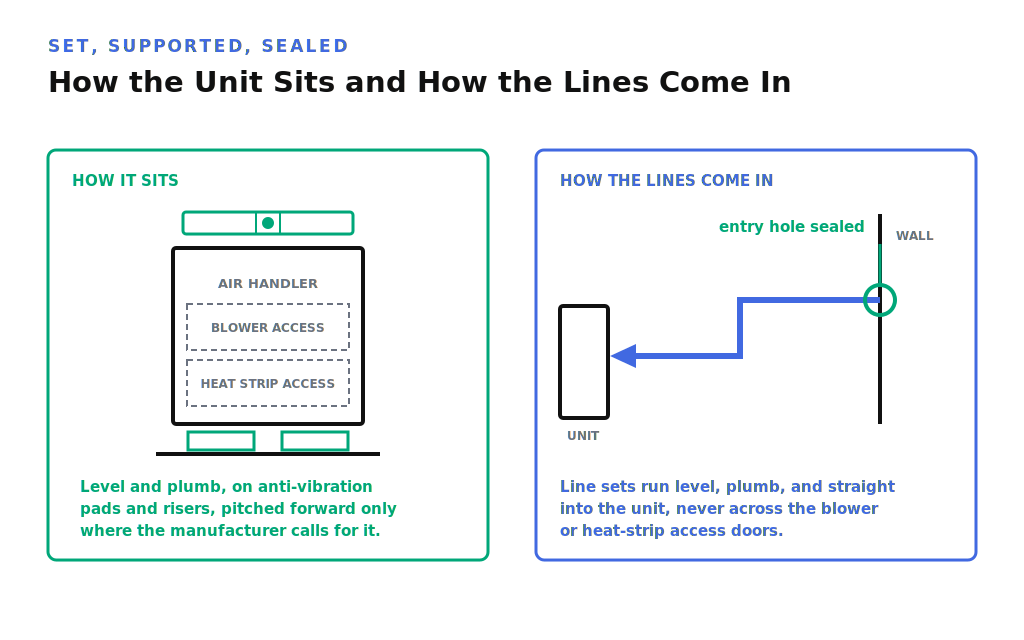
The air handler is set level and plumb, or pitched forward only where the manufacturer calls for it. A horizontal install meets the manufacturer's clearances and rides on anti-vibration pads and risers. Line sets run level, plumb, and straight into the unit where the space allows, with the entry holes sealed so air cannot leak around them, and they are routed so they never block the blower or heat-strip access doors.
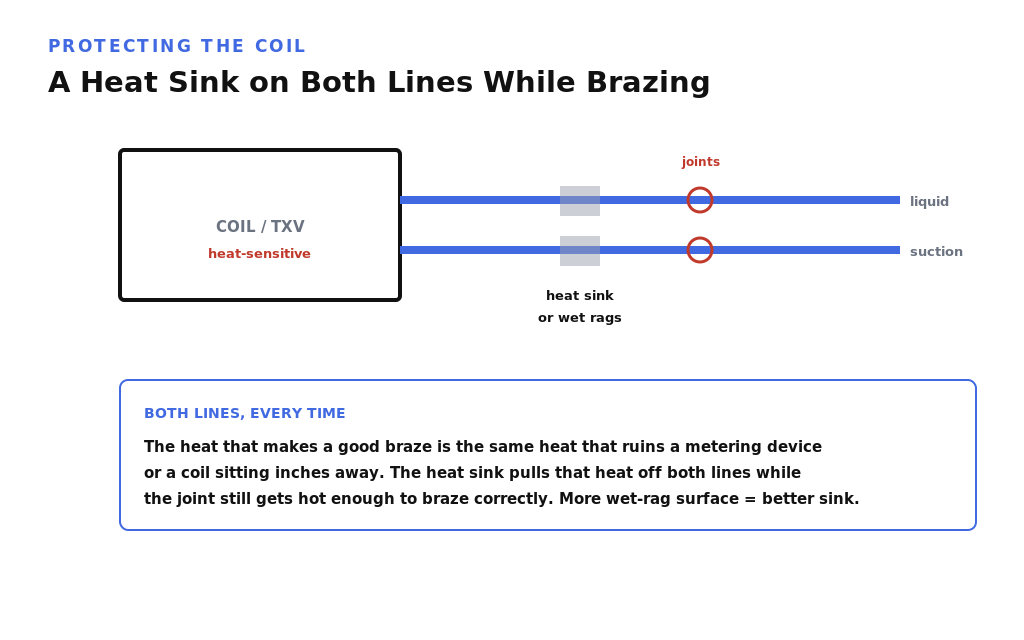
When the refrigerant lines are brazed at the air handler, wet rags go on both the liquid and the suction line as a heat sink, with a heat-blocking product added where a joint needs more protection, because the metering device and the coil sit close to the joint and the heat that makes a good braze is the same heat that ruins them. Beyond the brazing, the refrigerant-side standard follows the outdoor unit standard for nitrogen, pressure testing, and evacuation.
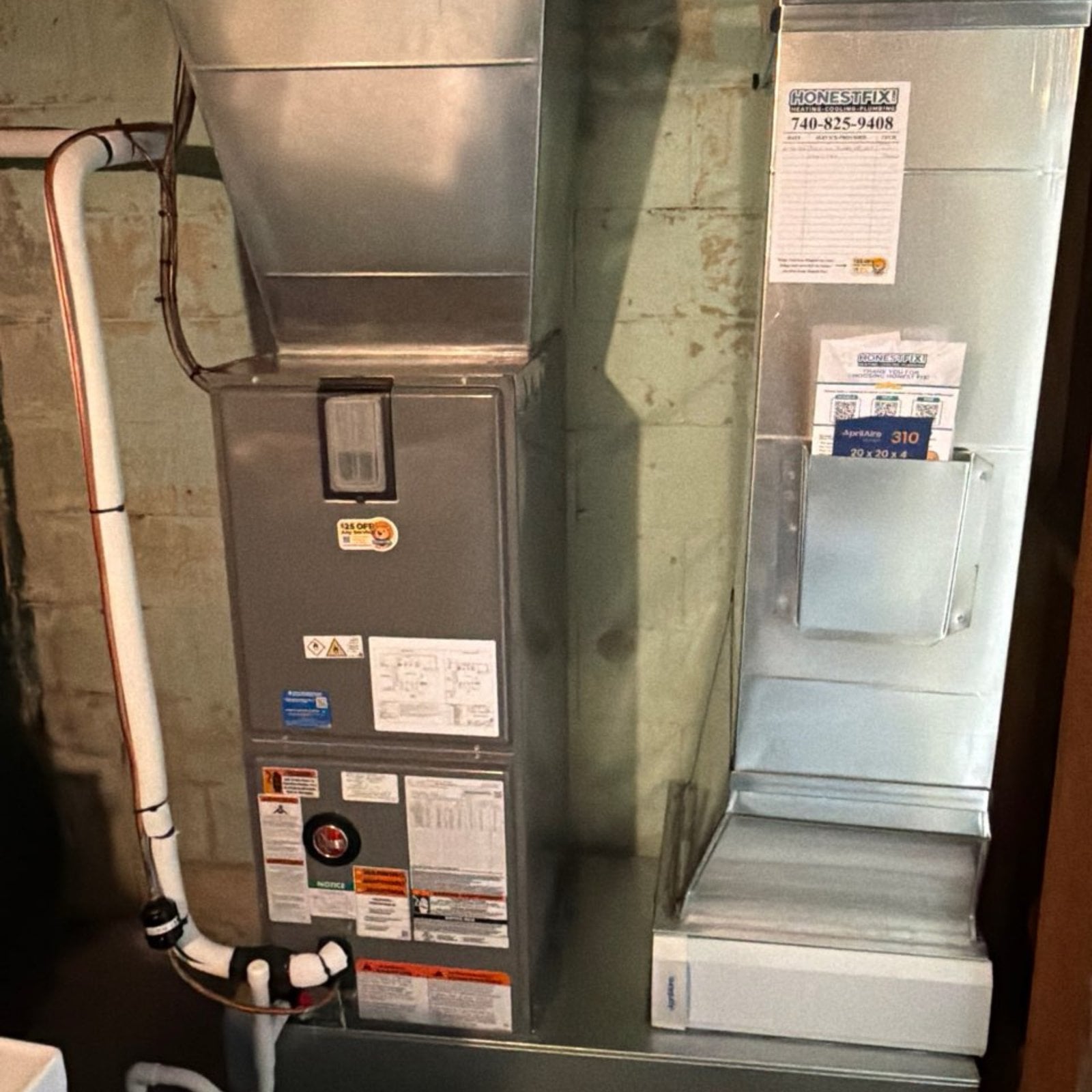
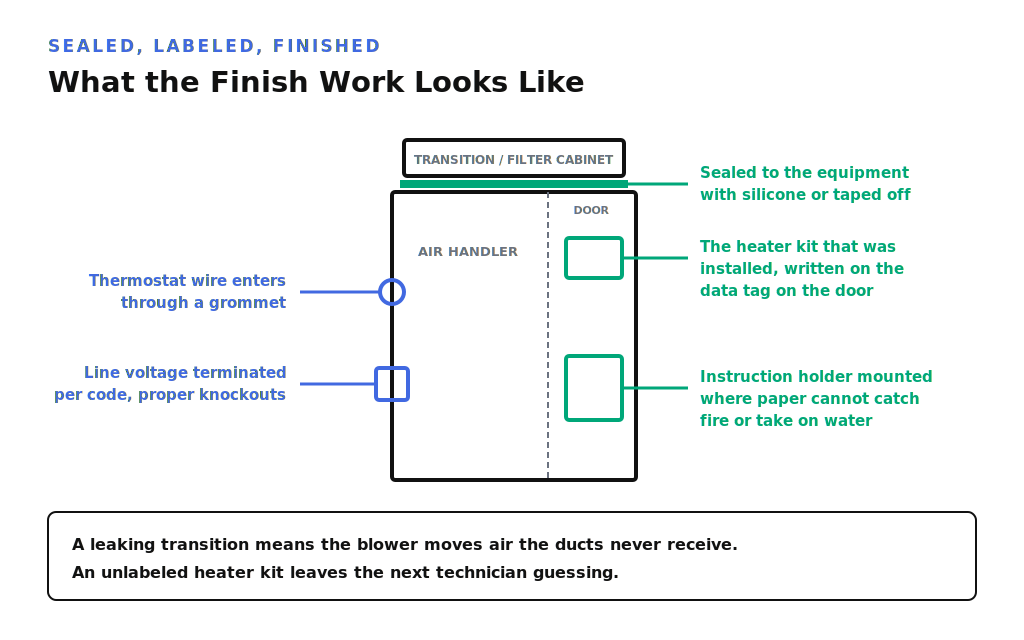
Transitions and filter cabinets are sealed to the equipment with silicone or taped off so the air the blower moves actually reaches the ducts. Thermostat wire enters through a grommet, line-voltage terminates per code with proper knockouts, and the heater kit that was installed is written on the data tag on the air handler door so the next technician knows what is in there. The instruction holder is mounted where paper cannot catch fire or take on water.

You can check most of this yourself in about five minutes, and the drain is the part worth checking first. If it does not match the cabinet it is fitted to, or you cannot tell which kind you have, Honest Fix will look at it and tell you plainly what you are dealing with. No upsells, no games.
Evaporator coils · Condensate standards · Outdoor unit standards · How your system is commissioned · Heat pump installation · The full Installation Standard