The Museum of Rheem: Support & Troubleshooting for Legacy Criterion and Classic Furnaces
March 18th, 2026
5 min read
Quick Answer:
Many Rheem furnaces installed between 1995 and 2010, including the Criterion II and Classic 90 Plus, are still operating today. These systems typically last 15–20 years, but many exceed that lifespan with maintenance. This guide explains common failures, troubleshooting steps, and safety risks for these legacy Rheem models.
Why So Many Old Rheem Furnaces Are Still Running
Quick Answer:
Older Rheem furnaces such as the Criterion II (80% AFUE) and Classic 90 Plus (90%+ AFUE) were built with durable heat exchangers and simple controls. Many units installed in the early 2000s are still operating today, especially in homes across the Upper Ohio Valley.
In my 30 years servicing basements in Steubenville, Ohio and Weirton, West Virginia, I’ve seen thousands of these furnaces still heating homes.
The modern Rheem lineup has moved to the Endeavor™ platform, but across neighborhoods like Wintersville, Follansbee, and Mingo Junction, these older systems remain common.
At Honest Fix Heating, Cooling & Plumbing, we service these systems regularly as a Rheem Pro Partner and Authorized Rheem Service Provider, which means our technicians follow Rheem’s official service standards and maintain access to dealer documentation for discontinued models.
For homeowners with one of these legacy units, finding accurate troubleshooting information can be difficult.
That’s why this guide exists.
Think of it as the Museum of Rheem — a field manual for systems that refuse to retire.
Where Is the Rating Plate on a Legacy Rheem Furnace?
Quick Answer:
The model and serial number for older Rheem furnaces are located on the rating plate inside the furnace cabinet. On split systems, the label is usually on the left or right interior wall behind the burner door. Package units place the plate on the exterior corner near gas and electrical connections.
Before troubleshooting anything, you need two pieces of information:
- Model number
- Serial number
This information is located on the manufacturer rating plate.
Split System Furnaces
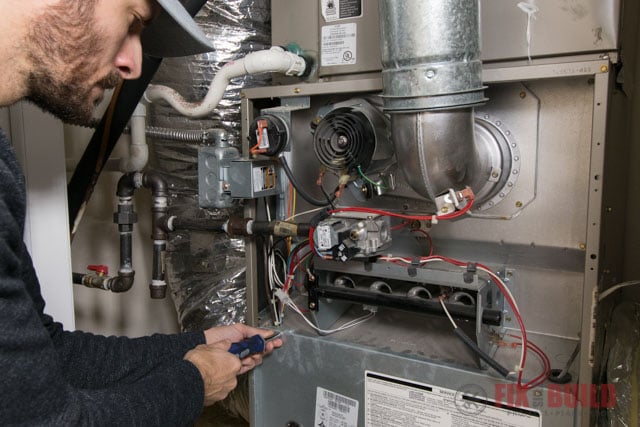
Look inside the cabinet:
- left interior wall
- right interior wall
- sometimes behind the burner compartment
You usually must remove the upper burner door to see it.
Package Units
For outdoor packaged systems, the plate is on the outside corner of the cabinet, typically near the gas or electrical entry points.
Pro Tip
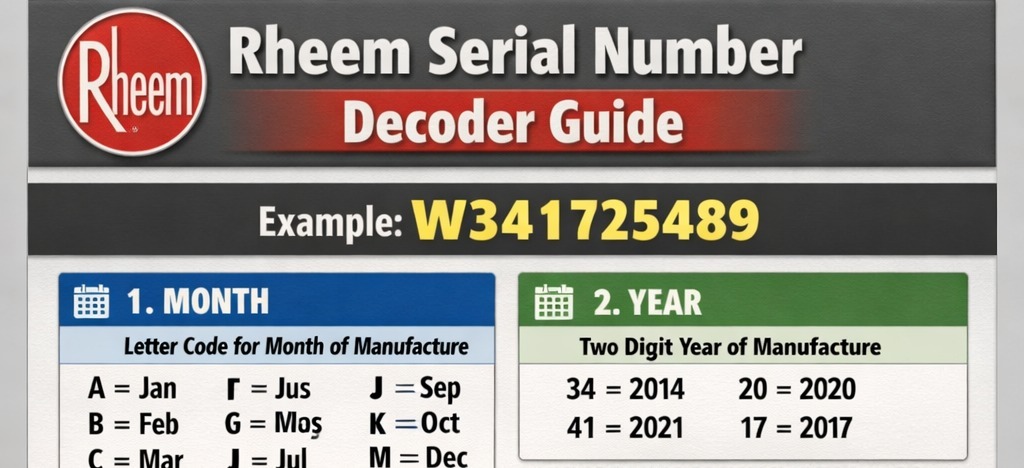
If the sticker has faded, technicians can often estimate the manufacturing date by checking:
- gas valve date stamps
- control board manufacturing labels
- blower motor tags
These internal components usually include production dates.
What Problems Are Common on the Rheem Criterion II Furnace?
Quick Answer:
The Rheem Criterion II furnace (RGP series) is an 80% AFUE non-condensing furnace produced between 1995 and 2008. The most common failures include flame sensor oxidation, pressure switch failures, and cracked inducer housings.
You can identify the Criterion II by:
- olive-green or tan cabinet
- metal chimney vent
- standard efficiency design
Despite its age, many units still run reliably.
However, several predictable failures appear after 15+ years of operation.
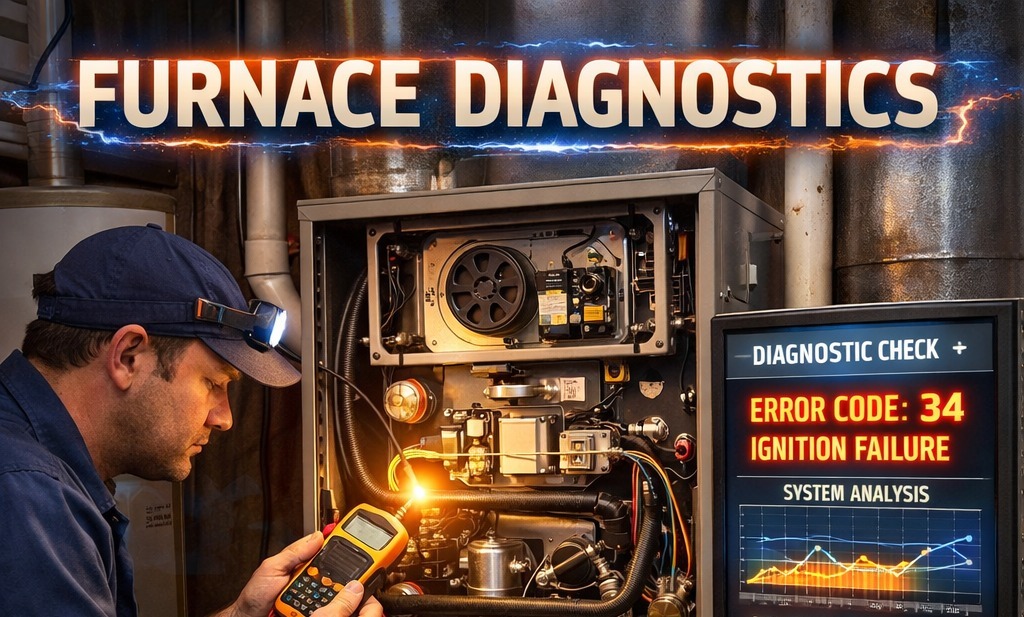
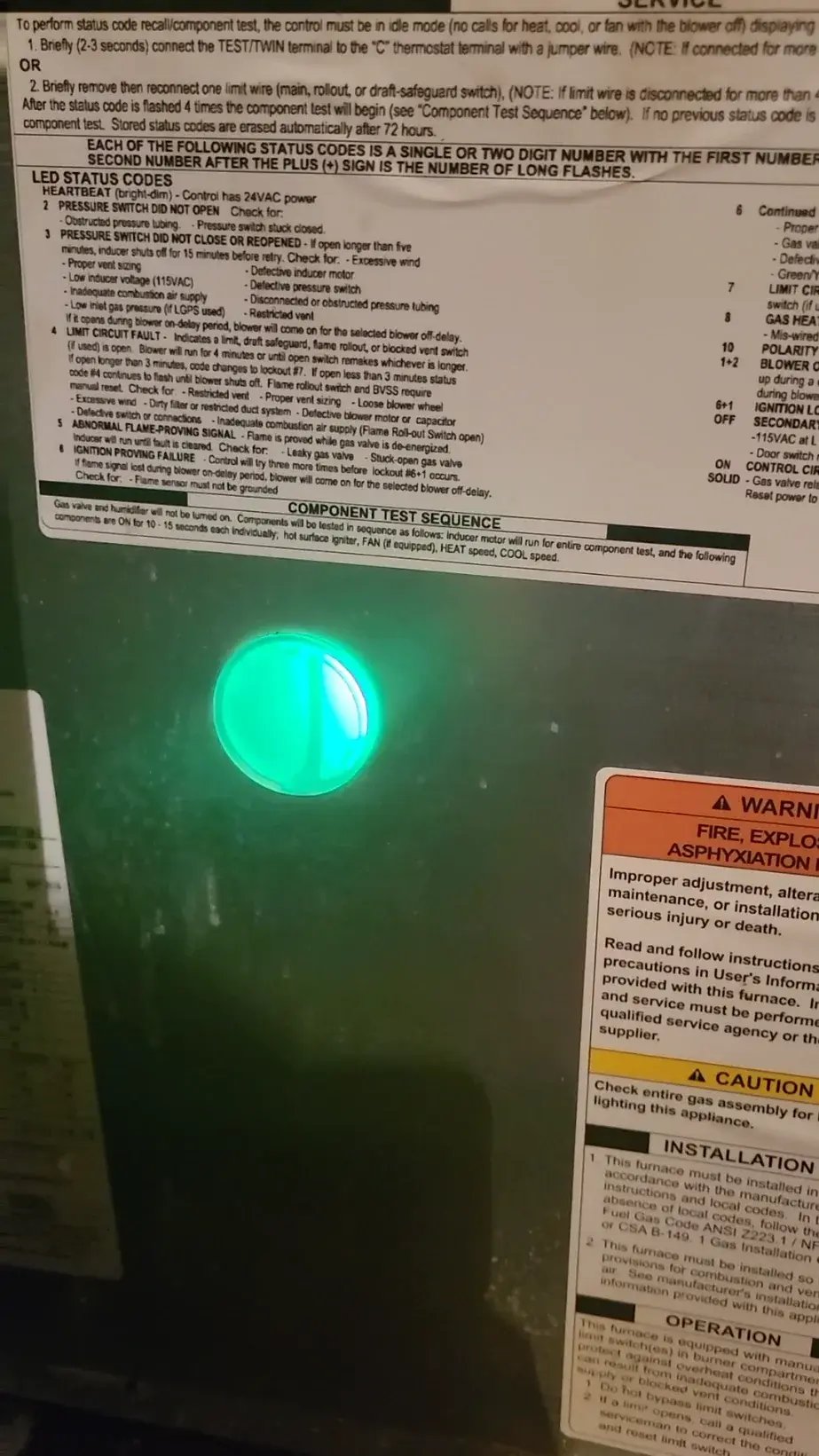
The 1-Blink “Ghost” Lockout
This is one of the most common service calls in Mingo Junction and Toronto homes.
Symptoms:
- furnace ignites normally
- flame runs for 3–5 seconds
- burner shuts off immediately
The cause is usually flame sensor oxidation.
Carbon buildup prevents the control board from detecting the flame signal.
Typical fix:
Cleaning the sensor rod with a fine abrasive pad to restore a signal around 2.0 microamps (µA).
Inducer Housing Micro-Cracks
Another issue we frequently see involves the inducer motor housing.
The small plastic port that connects the pressure switch hose can develop microscopic cracks.
When that happens:
- the vacuum seal breaks
- the pressure switch never closes
- the furnace cannot start
This failure often appears on systems older than 18 years.
What Problems Occur on the Rheem Classic 90 Plus?
Quick Answer:
The Rheem Classic 90 Plus furnace (RGRK series) is a high-efficiency condensing furnace that vents through PVC pipes. The most common service issue involves a condensate drainage restriction known as the “S-hose trap.”
The Classic 90 Plus was Rheem’s flagship high-efficiency furnace for many years.
It uses:
- dual heat exchangers
- condensing technology
- PVC vent pipes
Because it extracts more heat from exhaust gases, the system produces condensate water.
The “S-Hose” Moisture Trap
A common field issue occurs with the pressure switch tubing.
Over time, the tubing can sag into an S-shaped loop.
This creates a moisture trap.
The Problem
Water collects in the low point of the tubing, similar to a sink P-trap.
This blocks the pressure signal needed for the furnace to run.
Symptoms often include a 3-blink pressure switch code.
Quick Diagnostic Test
Disconnect the hose from the pressure switch and blow toward the inducer motor.
If you hear water gurgling, condensate buildup is the likely cause.
Shortening the hose and ensuring a consistent downward slope usually resolves the issue.
When Is a Furnace Heat Exchanger “Condemned”?
Quick Answer:
If a licensed HVAC technician finds a cracked heat exchanger, the furnace must be shut down immediately because it can leak carbon monoxide. Heat exchangers cannot be repaired — the furnace must be replaced.
By 2026, many Criterion and Classic furnaces are more than 20 years old.
The most serious failure that can occur is a cracked heat exchanger.
This is not a minor repair.
A cracked heat exchanger can allow carbon monoxide (CO) to enter the home.
Because of the Venturi effect, the blower can actually draw exhaust gases into the living space rather than pushing them out.
If a crack is confirmed, technicians are required to disable the gas supply to that furnace.
Professional verification methods include:
- borescope camera inspection
- combustion analysis testing
Homeowners should always ask to see the evidence before replacement decisions are made.
CPSC carbon monoxide safety reference:
https://www.cpsc.gov/Safety-Education/Safety-Education-Centers/Carbon-Monoxide-Information-Center/Home-Heating-Equipment
Repair vs Replacement for a 20-Year-Old Rheem Furnace
Quick Answer:
Once a furnace reaches 20 years old, repair decisions become financial rather than mechanical. Many components remain serviceable, but heat exchanger failure or major blower issues often justify replacement.
Several factors influence the decision.
Federal Tax Credits Have Expired
Energy-efficiency credits such as 25C ended December 31, 2025.
IRS reference:
https://www.irs.gov/newsroom/one-big-beautiful-bill-provisions
Local Utility Programs Still Exist
Programs such as Columbia Gas WarmChoice may help income-eligible households replace heating equipment.
https://www.columbiagasohio.com/energy-efficiency/for-your-home/income-eligible-weatherization
Legacy Rheem Furnace FAQs
Where can I find a manual for a discontinued Rheem furnace?
Quick Answer:
Most discontinued Rheem furnace manuals are archived through Rheem’s model and serial number lookup tool. Authorized Rheem service providers can also access dealer documentation for legacy equipment.
Rheem product lookup tool:
https://www.rheem.com/rheem_model_serial_numbers/
As a Rheem Pro Partner, we can often retrieve manuals directly from Rheem dealer archives.
How long does a Rheem Criterion II furnace last?
Quick Answer:
Most Criterion II furnaces last 15–20 years, though some operate longer with regular maintenance. Systems installed in the late 1990s are now operating beyond their expected service life.
At this age, annual maintenance is essential.
Key maintenance includes:
- burner cleaning
- flame sensor cleaning
- combustion safety testing
Why is my Rheem Classic 90 Plus leaking water?
Quick Answer:
Condensing furnaces produce water during normal operation. Leaks usually occur when the condensate drain line becomes clogged or the condensate trap cracks.
In humid regions like the Ohio Valley, algae frequently grows inside the drain line.
This blockage can cause the furnace to shut down.
How do I know if my technician is qualified to work on an old furnace?
Quick Answer:
Technicians servicing gas furnaces should hold NATE certification, the most widely recognized HVAC certification in North America.
Homeowners can verify certification here:
https://natex.org/contractor/verify-a-nate-id
ENERGY STAR maintenance checklist reference:
https://www.energystar.gov/saveathome/heating-cooling/maintenance-checklist
What guarantees do you offer?
Quick Answer:
Honest Fix protects homeowners with two major guarantees. New installations include a 15-year labor warranty, while repairs include a 5-year labor warranty, backed by written service guarantees.
Lifetime Trust Shield — New System Installations
Installation guarantees include:
- 15-year labor warranty on new HVAC systems
- 90-day money-back satisfaction guarantee
- No-lemon replacement protection
- energy-savings performance guarantee
Coverage requires annual maintenance with our team.
Service Trust Guardian — Repairs
Repair protection includes:
- 5-year labor warranty on qualifying repairs
- 60-day money-back service guarantee
- no overtime charges for emergency service
- on-time arrival guarantee
These programs protect homeowners from repeat repair costs.
Need an Honest Look at an Old Furnace?
At Honest Fix, we don’t recommend replacing a furnace just because it’s old.
If your Criterion II or Classic 90 Plus can be repaired safely, we’ll give you a free exact quote to fix it.
If the system has reached the end of its life, we’ll show you the borescope footage and combustion analysis results so you understand why.
As a Rheem Pro Partner and Authorized Rheem Service Provider, we follow Rheem commissioning and safety standards on every service call.
Whether you live in Steubenville, Weirton, Wintersville, or Follansbee, our Comfort Guides provide clear answers — no pressure and no shortcuts.
Have a “museum piece” in your basement?
Contact us today for a forensic furnace tune-up
Scott Merritt is a co-founder of Honest Fix Heating, Cooling and Plumbing and brings more than 30 years of experience across HVAC, leadership, and industry education. He serves in a senior leadership and oversight role, providing licensed guidance, reviewing HVAC educational content, and supporting technician training and documentation standards. Prior to co-founding Honest Fix, Scott founded and owned Fire & Ice Heating & Air Conditioning in Columbus, Ohio, which he operated for more than two decades before selling the company in 2025. During that time, he led programs and partnerships including Carrier Factory Authorized Dealer, Trane Comfort Specialist, and Rheem Pro Partner, helping establish high technical and training standards. Scott is the Ohio State HVAC license holder for Honest Fix and provides licensed oversight to help ensure work meets applicable codes and manufacturer requirements. Learn more about Scott’s background and role at Honest Fix by viewing his full leadership bio.