Rheem Pro-Level Furnace Diagnostics: The Forensic Standard for Ohio Homeowners
March 18th, 2026
5 min read
Quick Answer:
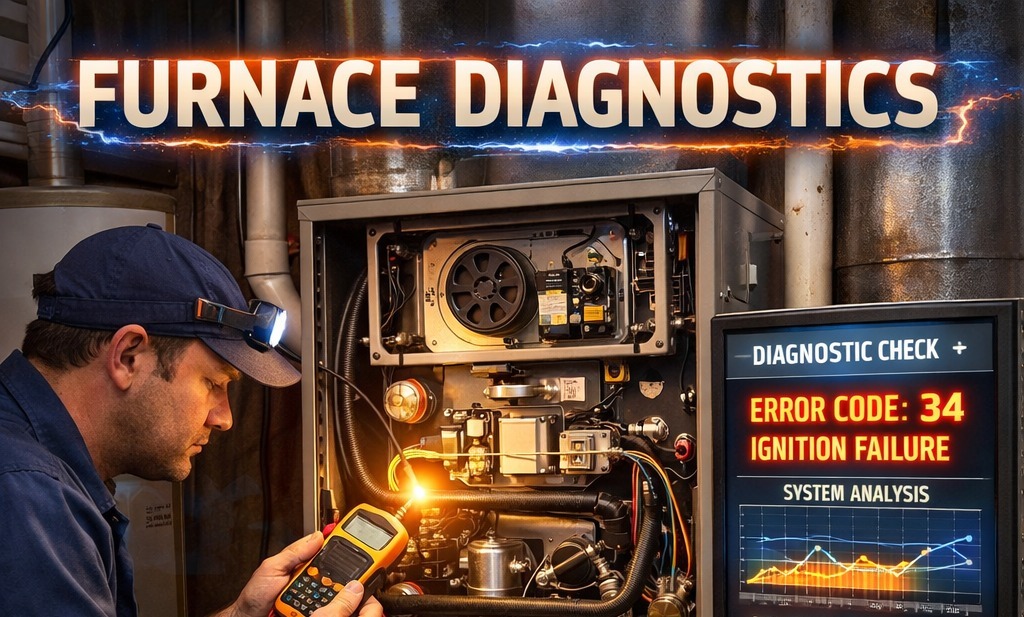
Professional furnace diagnostics require more than replacing parts until the system runs. Modern Rheem furnaces rely on precise electrical, pressure, and combustion measurements. Proper troubleshooting uses tools like digital multimeters, manometers, and combustion analyzers to measure signals such as microamps, microfarads, and draft pressure before any component replacement.
Why Modern Rheem Furnace Diagnostics Require Professional Tools
Quick Answer:
Modern Rheem furnaces include advanced control boards and safety systems that require instrument-based diagnostics, not guesswork. Measuring flame sensor current, pressure switch vacuum, and electrical load ensures the furnace operates within Department of Energy efficiency standards.
In my 30 years providing licensed HVAC oversight across Ohio, I’ve seen thousands of homeowners encounter the same repair mistake.
Technicians replace parts until the furnace starts working.
This method is known in the trade as the “parts cannon.”
It wastes money and often hides the real problem.
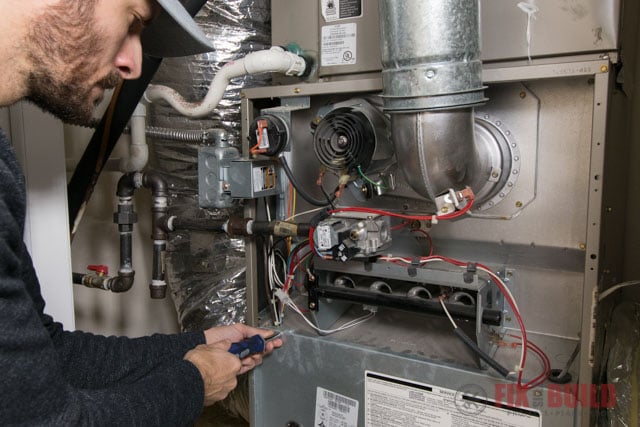
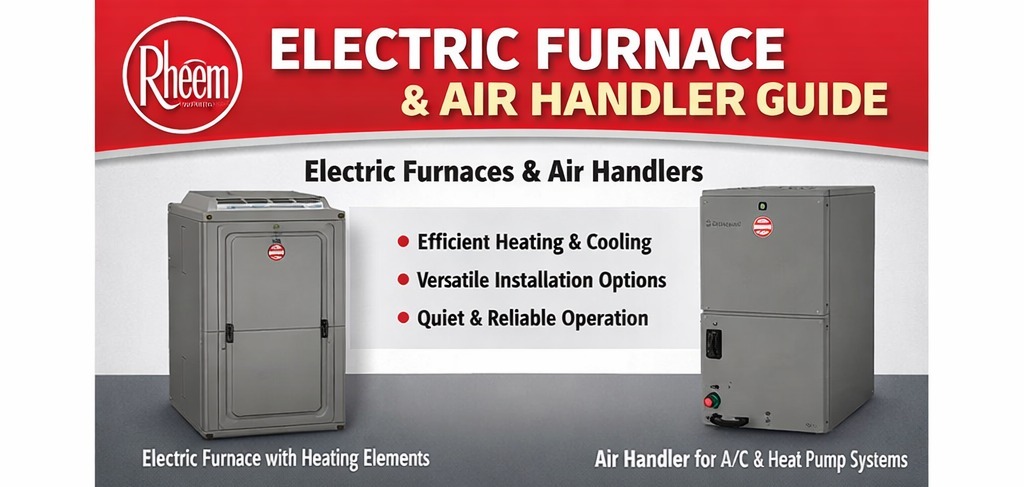
Today’s Rheem Endeavor™ and Prestige® furnaces are far more advanced than older equipment. These systems include integrated microprocessors that monitor electrical signals, combustion performance, and airflow safety.
Because of that complexity, professional diagnostics require forensic-level testing tools.
At Honest Fix Heating, Cooling & Plumbing, we follow these standards as a Rheem Pro Partner and Authorized Rheem Service Provider, ensuring every diagnostic process follows manufacturer specifications.
The U.S. Department of Energy outlines furnace efficiency and operation standards here:
https://www.energy.gov/energysaver/furnaces-and-boilers
You can also verify the certified performance data for any Rheem system through the Air-Conditioning, Heating, and Refrigeration Institute directory:
https://www.ahridirectory.org
What Is Flame Rectification and Why Do Technicians Measure Microamps?
Quick Answer:
Flame rectification is the process a furnace uses to verify that the burner flame is present. Rheem control boards require a signal of about 2.0 microamps (µA) from the flame sensor to keep the gas valve open. If the signal drops below that level, the furnace shuts down.
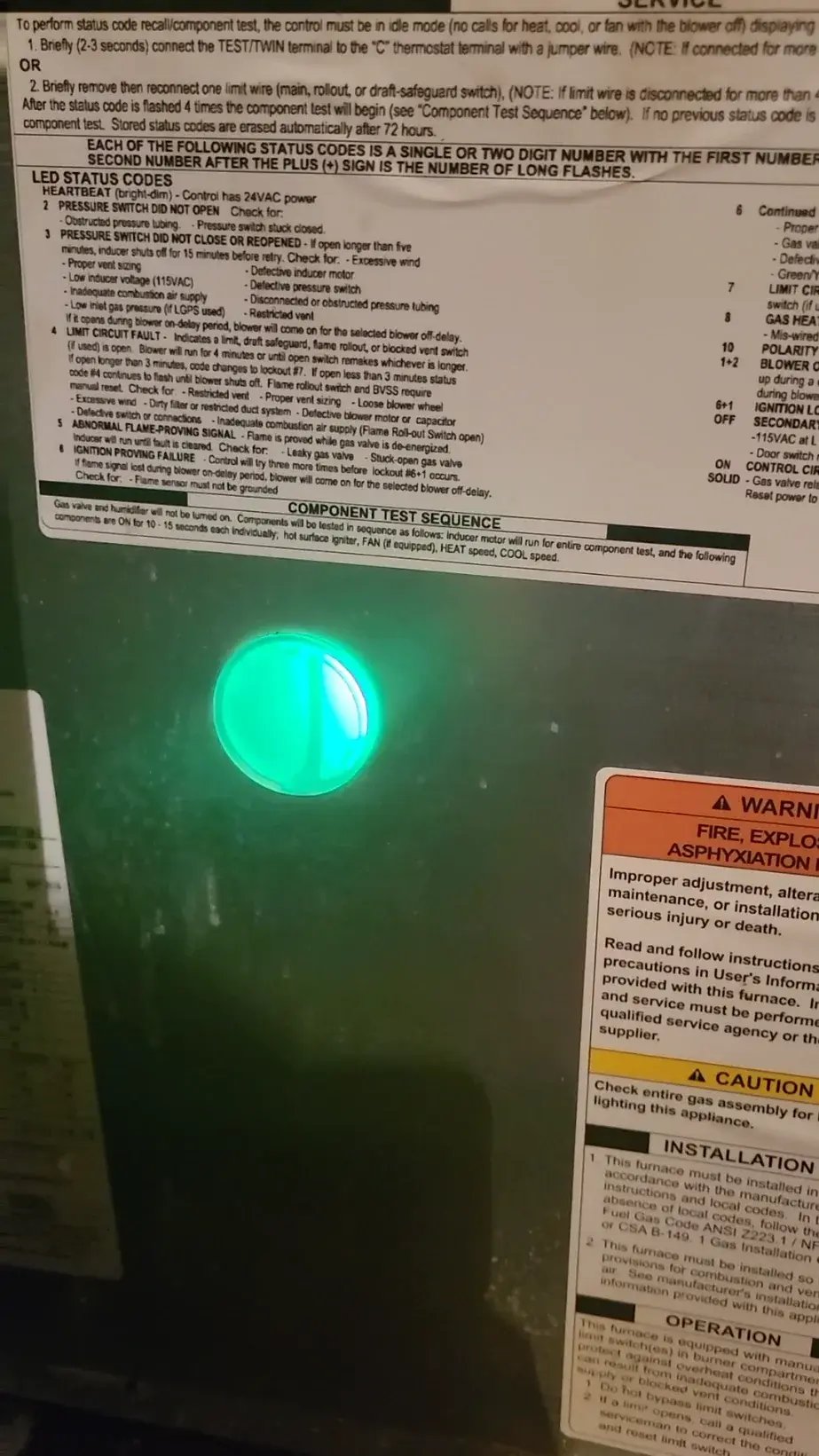
When a Rheem furnace ignites but shuts off within a few seconds, the system often shows:
- 1-blink error code
- Code 11 or Code 12
Many technicians assume the flame sensor is bad.
Professional diagnostics prove the failure instead.
The Forensic Test
The flame sensor is a stainless steel rod positioned in the burner flame.
When the flame touches the rod, it completes a small electrical circuit.
The furnace control board measures that current.
A healthy Rheem furnace requires roughly 2.0 microamps (µA) to maintain operation.
If the signal drops below this threshold, the control board shuts off the gas valve.
The Grounding Factor
A weak signal is not always caused by a dirty sensor.
A poor electrical ground connection to the furnace cabinet can create electrical interference that reduces the measured signal.
If grounding is not tested, technicians may incorrectly replace expensive control boards.
How Do Technicians Diagnose a Rheem Pressure Switch Failure?
Quick Answer:
A Rheem furnace pressure switch must verify proper airflow through the vent system before the burners ignite. Technicians confirm proper operation by measuring negative draft pressure using a manometer, comparing the reading to the rating printed on the switch.
Pressure switch errors commonly appear as:
- 3-blink code
- Code 57
The pressure switch is a critical safety device.
It confirms that combustion gases can leave the furnace safely.
Because of this, a failed pressure switch is often misdiagnosed.
In many cases, the switch opens because the furnace cannot vent properly.
Professional diagnostics require measuring the actual vacuum inside the inducer system.
Required Testing Tools
| Diagnostic Step | Tool Used | Purpose |
|---|---|---|
| Draft verification | Manometer | Confirms negative pressure meets switch rating |
| Port inspection | 18-gauge wire | Clears mineral buildup in vacuum ports |
| Combustion safety | CO analyzer | Confirms safe exhaust levels |
Carbon monoxide safety guidance from the Consumer Product Safety Commission:
https://www.cpsc.gov/Safety-Education/Safety-Education-Centers/Carbon-Monoxide-Information-Center/Home-Heating-Equipment
Why Capacitor Testing Prevents Blower Motor Failure
Quick Answer:
Blower motors in many furnaces rely on a run capacitor to provide starting torque. If the measured capacitance drops more than 10% below its rated microfarads (µF), the motor may fail to start and eventually overheat.
If your blower motor hums but fails to spin, the furnace may display:
- Code 22
- 4-flash overheating error
Many older Rheem furnaces use PSC blower motors that depend on a capacitor.
The capacitor stores electrical energy and releases it to help start the motor.
Proper Diagnostic Procedure
A technician must measure the capacitor using a digital multimeter with capacitance testing.
The measured value is compared to the rating printed on the capacitor.
Example:
- Rated capacitor: 10 µF
Acceptable range:
- 9–11 µF
If the value drops below 90% of its rating, the motor cannot start properly.
Replacing a failing capacitor is inexpensive and often prevents a $1,000+ blower motor replacement.
How Electrical Polarity Affects Modern Rheem Furnaces
Quick Answer:
Modern Rheem furnaces rely on correct electrical polarity. The voltage between line and neutral should measure roughly 115–120 volts, while neutral to ground should measure near 0 volts. Incorrect polarity can trigger fault codes and damage control boards.
Modern Rheem furnaces operate like small computers.
If the electrical wiring inside the home is reversed, the furnace may display Code 26 or other communication errors.
Professional diagnostics require verifying proper voltage relationships.
Standard Electrical Measurements
- L1 to Neutral: 115–120 volts
- Neutral to Ground: approximately 0 volts
Voltage appearing on a ground wire indicates electrical leakage.
Over time, this can damage the furnace’s integrated control board.
Rheem Furnace Diagnostic FAQs
What does “Hard Lockout” mean on a Rheem furnace?
Quick Answer:
A hard lockout occurs when the furnace attempts ignition multiple times but fails. After several failed attempts, the control board disables the furnace for about one hour to protect the system.
This is typically shown as Code 10.
Resetting power may clear the timer temporarily, but it does not correct the root cause.
Common causes include:
- dirty burner crossover channels
- weak ignitors
- flame sensor contamination
Why is my furnace blowing air but no heat?
Quick Answer:
If the furnace blower runs continuously without heat, the limit switch may be open. This safety device activates when the furnace overheats, forcing the blower to cool the heat exchanger.
The most common causes include:
- extremely dirty air filters
- blocked return vents
- restricted airflow
These problems are especially common during winter in Steubenville and Weirton homes with older duct systems.
How do I ensure my technician follows proper diagnostic standards?
Quick Answer:
Professional HVAC diagnostics require tools such as digital multimeters, manometers, and combustion analyzers. These instruments verify electrical signals, pressure levels, and combustion safety before replacing components.
Maintenance procedures should follow the ENERGY STAR HVAC maintenance checklist:
https://www.energystar.gov/saveathome/heating-cooling/maintenance-checklist
What guarantees do you offer?
Quick Answer:
Honest Fix protects homeowners with two major guarantee programs. New HVAC installations include a 15-year labor warranty, while repairs include a 5-year labor warranty, both backed by written service guarantees.
Lifetime Trust Shield — New Installations
Installation coverage includes:
- 15-year labor warranty on HVAC systems
- 90-day money-back satisfaction guarantee
- No-lemon replacement protection
- energy savings guarantee
Annual maintenance keeps this coverage active.
Service Trust Guardian — Repairs
Repair services include:
- 5-year labor warranty on qualifying repairs
- 60-day money-back service guarantee
- no overtime charges for emergency calls
- on-time arrival guarantee
These protections reduce the risk of repeat repairs.
Need a Forensic Furnace Diagnostic?
At Honest Fix, we do not rely on guesswork.
Our technicians use precision instruments to measure electrical signals, airflow pressure, and combustion performance before recommending any repair.
As a Rheem Pro Partner and Authorized Rheem Service Provider, we follow Rheem commissioning and service standards for every diagnostic inspection.
Whether you live in Steubenville, Wintersville, Weirton, or anywhere in the Upper Ohio Valley, we provide:
- a free exact quote
- clear diagnostic data
- no pressure recommendations
If you are a Columbia Gas customer, you may also qualify for safety inspections through the WarmChoice program:
https://www.columbiagasohio.com/energy-efficiency/for-your-home/income-eligible-weatherization
Need help diagnosing a complex furnace problem?
Contact Honest Fix today.
Scott Merritt is a co-founder of Honest Fix Heating, Cooling and Plumbing and brings more than 30 years of experience across HVAC, leadership, and industry education. He serves in a senior leadership and oversight role, providing licensed guidance, reviewing HVAC educational content, and supporting technician training and documentation standards. Prior to co-founding Honest Fix, Scott founded and owned Fire & Ice Heating & Air Conditioning in Columbus, Ohio, which he operated for more than two decades before selling the company in 2025. During that time, he led programs and partnerships including Carrier Factory Authorized Dealer, Trane Comfort Specialist, and Rheem Pro Partner, helping establish high technical and training standards. Scott is the Ohio State HVAC license holder for Honest Fix and provides licensed oversight to help ensure work meets applicable codes and manufacturer requirements. Learn more about Scott’s background and role at Honest Fix by viewing his full leadership bio.