
Search for topics or resources
Enter your search below and hit enter or click the search icon.
0% for 25 months on a qualifying new Rheem® heating or cooling system. Installed by November 15.

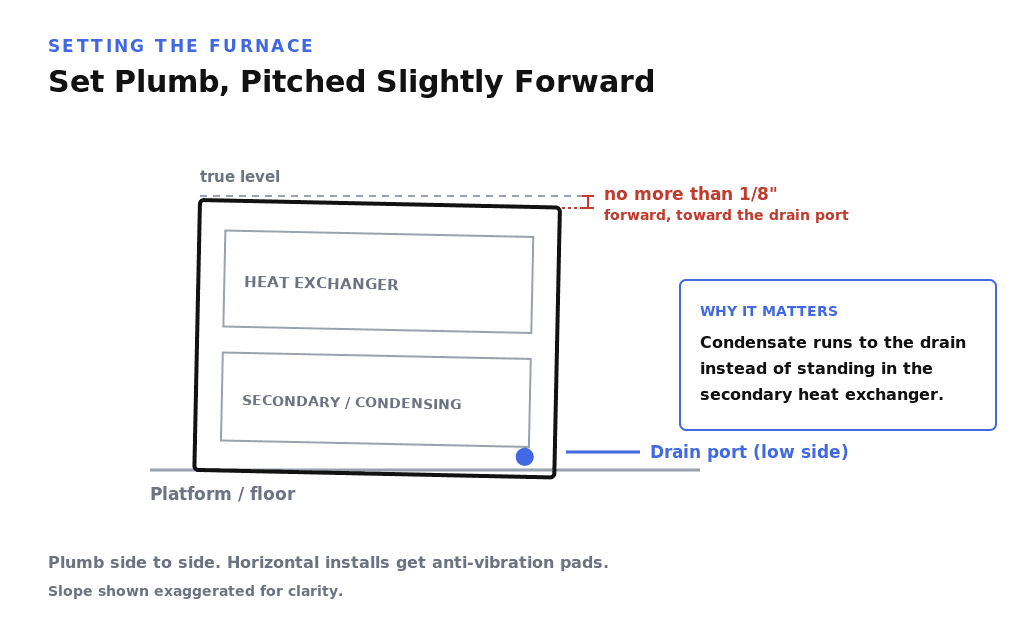
The furnace is set plumb side to side with a slight forward slope toward the drain port, so condensate leaves the secondary heat exchanger instead of standing in it.
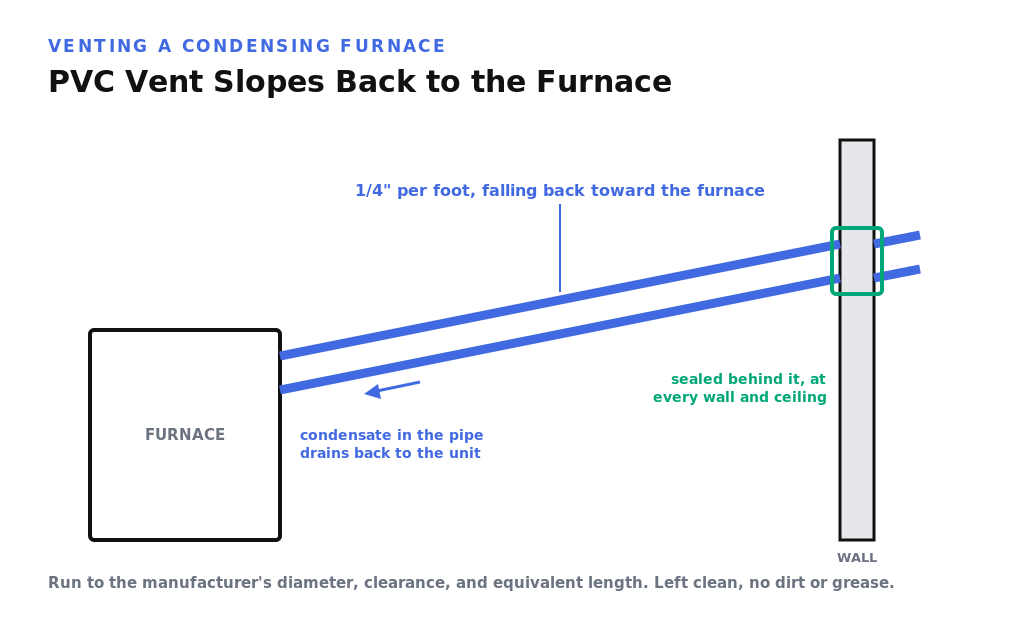
PVC venting runs to the manufacturer's diameter and length, slopes back toward the furnace a quarter inch per foot, and every wall and ceiling it passes through is sealed behind it.
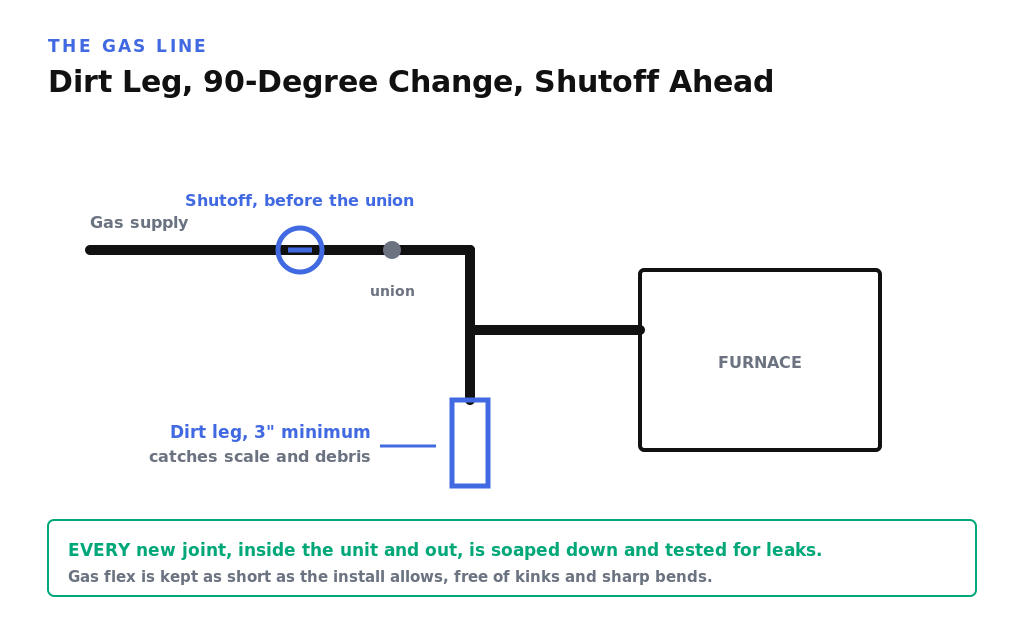
All new gas piping, inside the unit and outside it, is soaped and checked for leaks before the job is called finished.
The furnace is set plumb side to side and pitched with a slight forward slope, no more than one eighth of an inch, toward the drain port. That slope is not cosmetic. It is what moves condensate out of the secondary heat exchanger instead of letting it stand there. Where the furnace is installed horizontally, the manufacturer's clearances are met and anti-vibration pads go between the unit and the platform it rests on.
The PVC venting is run to the manufacturer's specification for diameter, clearance, and equivalent length, and it slopes back toward the furnace at a quarter inch per foot, so condensate in the pipe drains to the unit rather than pooling in a low spot. Vent runs are level and plumb wherever the building allows, and the pipe is left clean, with no dirt or grease on the outside. Every wall and ceiling the vent passes through is sealed behind it. Where a vent terminates, how far it has to sit from a window, a door, or the gas meter is set by the full venting standard.
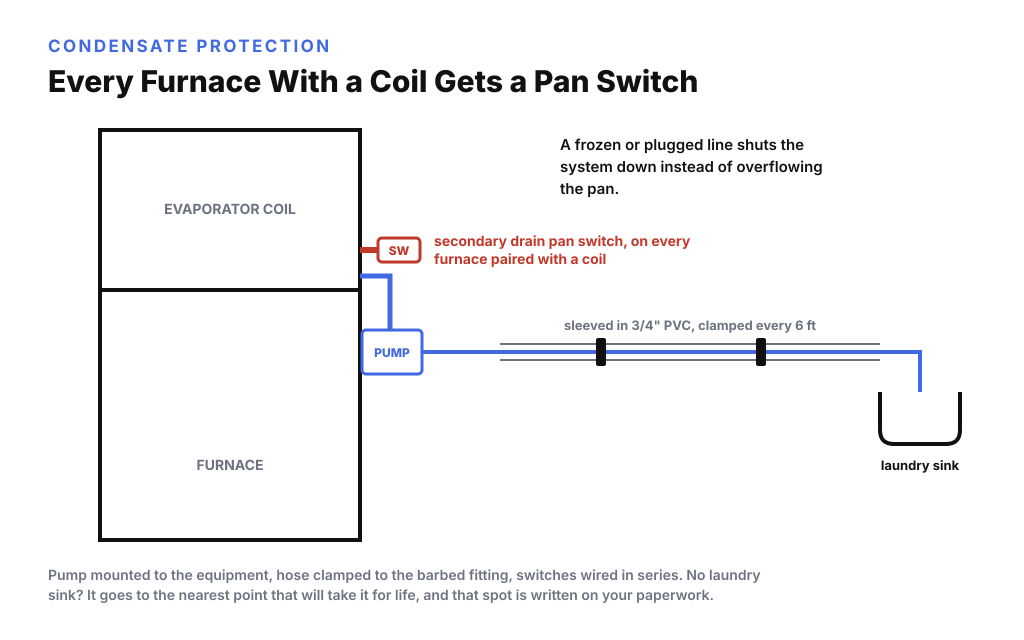
The condensate line slopes to the manufacturer's specification and terminates to a safe drain or a condensate pump, per code. Every furnace paired with an evaporator coil gets an overflow safety switch in the secondary drain port, so a frozen or plugged line shuts the system down instead of overflowing the pan. Where a pump is used, it is mounted to the equipment, the hose is clamped to the barbed fitting, horizontal runs are sleeved in three-quarter-inch PVC and clamped every six feet, and the safety switch is wired in, in series where there is more than one. The pump hose terminates at a laundry sink. Where the house does not have one, it goes to the nearest point that will take it for the life of the equipment, and where that is gets written on your paperwork. The full drain standard, slope, trap and switch, is on the condensate standard.
The gas line runs plumb and level into the furnace and carries a minimum three-inch dirt leg with a 90-degree direction change, with the shutoff installed before the union. Gas flex is kept as short as the installation allows and is free of kinks and sharp bends. Then the part that actually proves it: every new gas joint, inside the unit and outside it, is soaped down and tested for leaks.
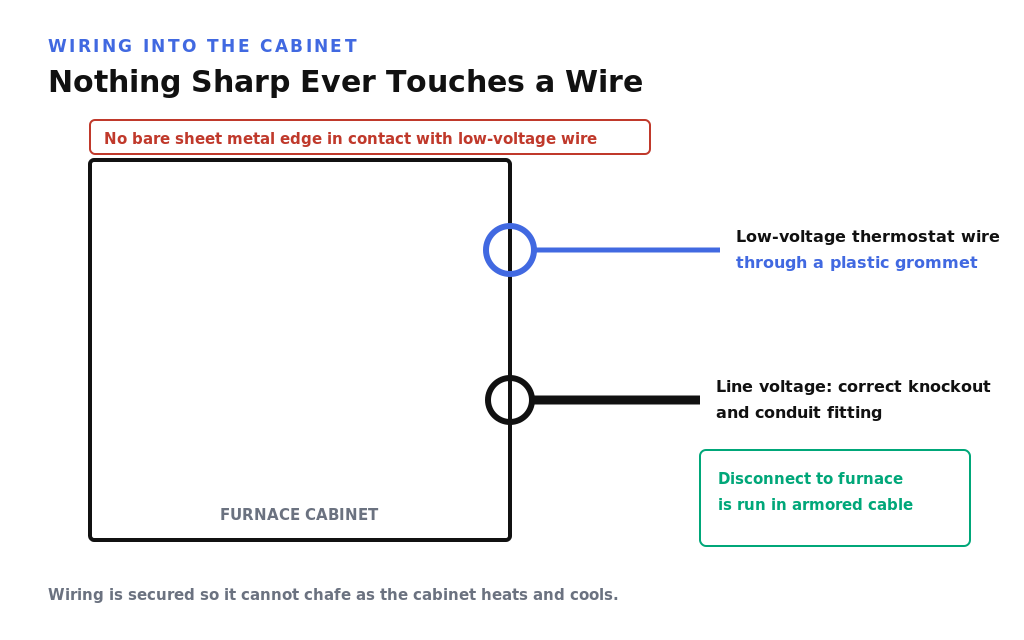
Thermostat wiring is secured neatly into the furnace and passes through a plastic grommet wherever it enters the cabinet, so no sharp sheet metal ever rests against low-voltage wire. Line-voltage electrical terminates per the manufacturer's requirements and code, using the proper knockouts with conduit fittings in place, and the run from the disconnect switch to the furnace is made in armored cable.
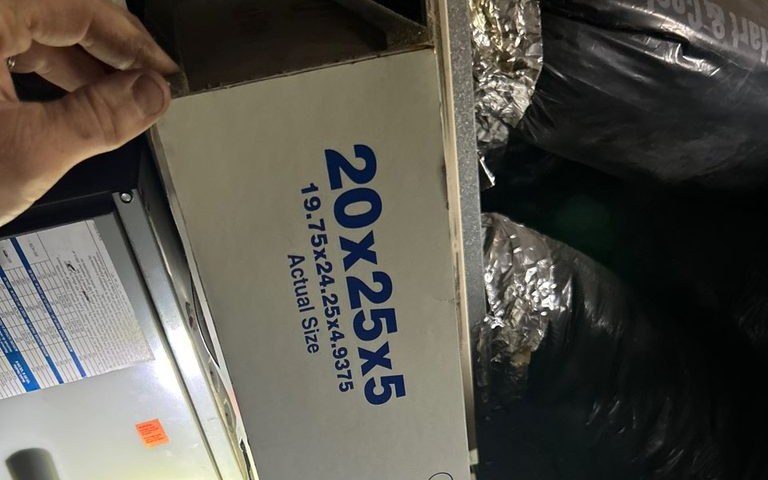
Coils and transitions are sealed to the equipment with silicone or duct sealant, and every seal there is airtight; where a sealant line will be painted, it is taped off first so the finished edge is clean. The transition into the media filter is long and gradual, so air reaches the whole face of the filter and the filter actually filters. How a furnace and a coil of different sizes get matched to each other is the evaporator coil standard. The install closes with an instruction holder mounted where paper cannot catch fire or take on water, an Honest Fix sticker carrying the install date and the technician's name, set level and somewhere you can find it, and the furnace cleaned inside and out.

Now you know what a correct high-efficiency furnace installation looks like. If yours does not look like this, or you would rather have someone else check, Honest Fix will come out and give you a straight answer. No upsells, no games.
Furnace installation · Standard-efficiency furnaces · Furnace installation pricing · How your system is commissioned · The full Installation Standard
