A Homeowner’s Guide to Rheem® Water Heater Parts in the Ohio Valley
January 13th, 2026
4 min read
By Alex Largent
Quick Answer:
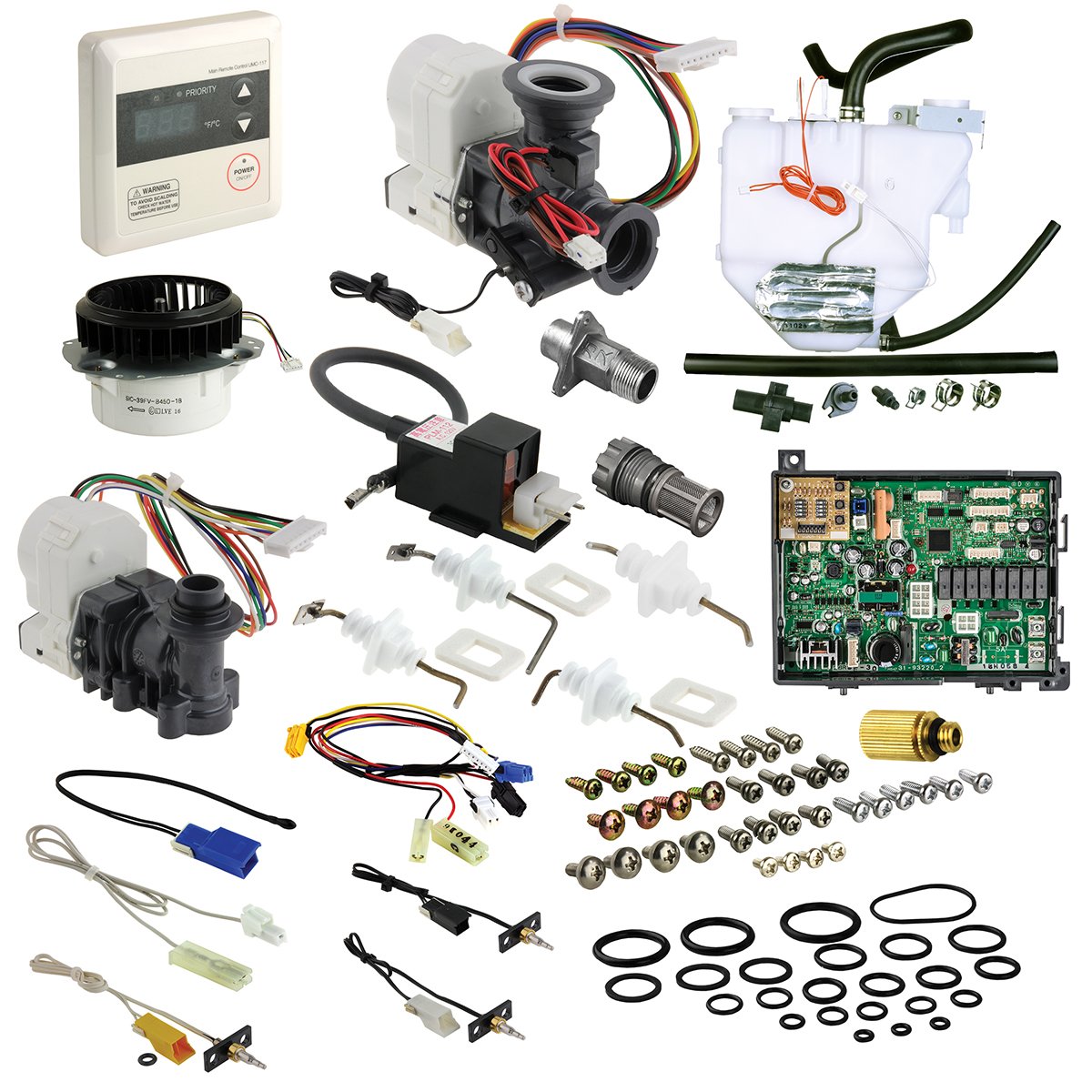
Rheem water heater parts include components like heating elements, thermostats, anode rods, and pressure relief valves. Most problems trace back to a small number of these parts. Proper diagnosis matters—replacing the wrong part wastes time and money.
Introduction
If your water heater isn’t working properly, it’s usually not the entire system.
It’s a specific component.
The challenge is knowing which part is responsible—and what you can safely check yourself.
This guide explains the most common Rheem water heater parts, what they do, and how they fail in real homes.
This guide is based on diagnosing real failures—not just identifying parts or reading manufacturer diagrams.
We’ve diagnosed and repaired Rheem water heaters and related systems across Ohio homes for decades.
Quick list of common Rheem water heater parts
Quick Answer:
The most important Rheem water heater parts include heating elements, thermostats, anode rods, dip tubes, and pressure relief valves. Most issues trace back to these components.
- Heating elements (electric systems)
- Thermostats
- Anode rod
- Dip tube
- Pressure relief valve (T&P valve)
- Gas control valve (gas systems)
- Burner assembly (gas systems)
Most problems come down to a few key parts—not the entire system.
Water heater problem → likely part → what to do
Quick Answer:
Most water heater problems can be traced to a small number of parts. Matching symptoms to the correct component helps avoid unnecessary repairs.
| Problem | Likely Part | What to Do |
|---|---|---|
| No hot water | Heating element / gas control | Check power or gas supply |
| Water too hot or cold | Thermostat | Adjust or replace |
| Rusty water | Anode rod | Inspect and replace |
| Leaking from valve | T&P valve | Do not ignore—needs attention |
| Running out of hot water | Sediment / element | Flush tank or diagnose |
What does each water heater part do?
Quick Answer:
Each component controls heating, safety, or water flow. When one part fails, it affects the system’s ability to produce hot water.
Heating elements
Heat the water in electric systems.
Thermostats
Control temperature.
Anode rod
Protects the tank from corrosion.
Dip tube
Directs cold water properly.
T&P valve
Prevents dangerous pressure buildup.
According to the U.S. Department of Energy:
https://www.energy.gov/energysaver/water-heating
Which Rheem water heater parts fail most often?
Quick Answer:
Heating elements, thermostats, anode rods, and pressure relief valves fail most often due to heat, pressure, and mineral exposure.
In real service calls:
- Heating elements burn out
- Thermostats fail or drift
- Anode rods deteriorate
- Sediment damages components
Most water heater part replacements we see are unnecessary because the wrong component was diagnosed in the first place.
How long do water heater parts last?
Quick Answer:
Most water heater parts last between 3–10 years depending on water quality, usage, and maintenance.
Typical lifespan:
- Heating elements → 3–5 years
- Anode rod → 3–5 years
- Thermostat → 5–10 years
- T&P valve → varies
Hard water can shorten these timelines significantly.
How do you know which part is bad?
Quick Answer:
Symptoms like no hot water, inconsistent temperature, or leaks usually point to specific components.
Common patterns:
- No hot water → heating element or gas issue
- Temperature problems → thermostat
- Rusty water → anode rod
- Valve leaks → T&P valve
Proper diagnosis matters.
Guessing leads to repeat repairs.
What replacing a part does NOT fix
Quick Answer:
Replacing a failed part does not fix underlying issues like sediment buildup, corrosion, or poor water quality.
Replacing parts will NOT fix:
- Heavy sediment buildup
- Internal tank corrosion
- Hard water damage
- System age-related failure
Many repeat repairs happen because the root cause was never addressed.
Can you replace Rheem water heater parts yourself?
Quick Answer:
Some basic checks are safe, but most repairs involve electrical, gas, or pressure systems and should be handled carefully.
Safe for homeowners:
- Checking thermostat settings
- Inspecting visible components
- Basic flushing (in some cases)
Not recommended:
- Gas valve work
- Electrical repairs
- Pressure valve replacement without training
Any repair involving gas, pressure, or electrical components carries risk. If you’re unsure, it’s safer to stop and have it diagnosed properly.
CPSC safety guidance:
https://www.cpsc.gov/Safety-Education/Safety-Education-Centers/Gas-Safety
What happens if you replace the wrong part?
Quick Answer:
Replacing the wrong part wastes time, money, and allows the real issue to continue.
We see this often:
- Multiple parts replaced unnecessarily
- Problem still unresolved
- Costs adding up
Diagnosis matters more than parts.
What actually matters more than the part itself
Quick Answer:
Water quality, sediment buildup, and maintenance have a greater impact than individual parts.
Most homeowners focus on parts.
In real homes, the bigger issues are:
- Hard water
- Sediment buildup
- Lack of maintenance
EPA WaterSense:
https://www.epa.gov/watersense
What we see most in real homes
Quick Answer:
Most water heater issues are caused by sediment and water conditions—not just failed parts.
In homes across Ohio:
- Sediment damages heating elements
- Hard water shortens component life
- Maintenance is often skipped
Replacing parts alone often doesn’t fix the root problem.
How much do Rheem water heater parts cost?
Quick Answer:
Parts are generally affordable, but total repair cost depends on labor and diagnosis.
Cost depends on:
- Type of part
- Labor required
- Accessibility
Diagnosis is often more important than the part itself.
When should you repair vs replace a water heater?
Quick Answer:
Repair isolated issues. Replace when age or multiple failures are present.
Consider replacement if:
- Unit is 8–12+ years old
- Multiple parts are failing
- Tank shows corrosion
DOE guidance:
https://www.energy.gov/energysaver/water-heating
What actually matters in the Ohio Valley
Quick Answer:
Water quality, sediment, and older plumbing systems significantly impact performance in this region.
In Steubenville, Weirton, and Hooverson Heights:
- Hard water accelerates wear
- Sediment buildup is common
- Older systems lack maintenance
In areas like Mingo Junction and Toronto, water conditions often matter more than equipment.
Final Answer: Do Rheem water heater parts matter?
Quick Answer:
Yes—but most problems are about diagnosis and conditions, not just parts.
Parts fail.
But the reason they fail matters more.
Your next step
If you want to better understand what’s going wrong with your water heater, visit our Learning Center for clear, straightforward guidance built for homeowners.
If you want it diagnosed correctly the first time, schedule a visit and we’ll take care of it—no upsells, no pressure, just honest fixes.
Alex Largent is the Owner and Senior HVAC Efficiency Analyst at Honest Fix Heating, Cooling & Plumbing. With more than 20 years of field experience, NATE and EPA certifications, and a hands-on leadership style, Alex teaches his team to fix systems right the first time — with transparency, precision, and no upsells. He writes about HVAC diagnostics, home energy efficiency, and practical maintenance advice for homeowners across the Upper Ohio Valley. Read Alex Largent’s full bio to learn more about his expertise in the HVAC and Plumbing industry. Updated October 2025.