What Should I Do If My HVAC Is Leaking Water or Refrigerant in Follansbee, WV?
January 9th, 2026
3 min read
By Alex Largent
Quick Answer
If your HVAC is leaking water or refrigerant, turn the system off and call a licensed HVAC professional.
Water leaks usually point to drainage or airflow issues, while refrigerant leaks indicate a sealed-system failure that should not be run.
Do not keep running the system or add refrigerant—both can cause major system damage.
Why HVAC Leaks Are a Serious Problem in Follansbee Homes
Follansbee homes come with their own set of challenges that make HVAC leaks more than a minor inconvenience.
Many houses here were built between the 1920s and 1960s, often featuring:
- Full basements with low clearances
- Older floor drains tied into shared sewer lines
- Homes close to the river with higher ambient moisture
- Electrical systems upgraded in stages over decades
When an HVAC system leaks in Follansbee, it’s often tied to aging infrastructure and moisture exposure—not just the equipment itself.
We regularly see leaks where modern air conditioning systems are paired with drainage and ductwork that were never designed to handle today’s humidity loads.
Water Leak vs. Refrigerant Leak: What’s the Difference?
If Your HVAC Is Leaking Water
Water leaks are commonly caused by:
- A clogged or partially collapsed condensate drain
- A rusted drain pan in older systems
- A frozen evaporator coil that thawed
- Airflow restrictions from aging ductwork
These problems are often fixable when caught early.
Left alone, they can lead to mold growth, rotted subfloors, and basement damage—especially in moisture-prone areas near the river.
If Your HVAC Is Leaking Refrigerant
Refrigerant leaks are more serious.
- Refrigerant stays sealed inside the system
- It does not disappear under normal operation
- Any loss means there is a leak
Running the system low on refrigerant strains the compressor and can turn a repair into a system replacement.
Refrigerant leaks must be diagnosed and repaired by an EPA-certified technician.
Should I Turn Off My HVAC If It’s Leaking?
Yes—always turn the system off.
Continuing to run a leaking system can:
- Flood basements
- Freeze coils solid
- Damage electrical components
- Permanently harm the compressor
Turning it off limits damage and protects your home.
What You Should Do Right Away
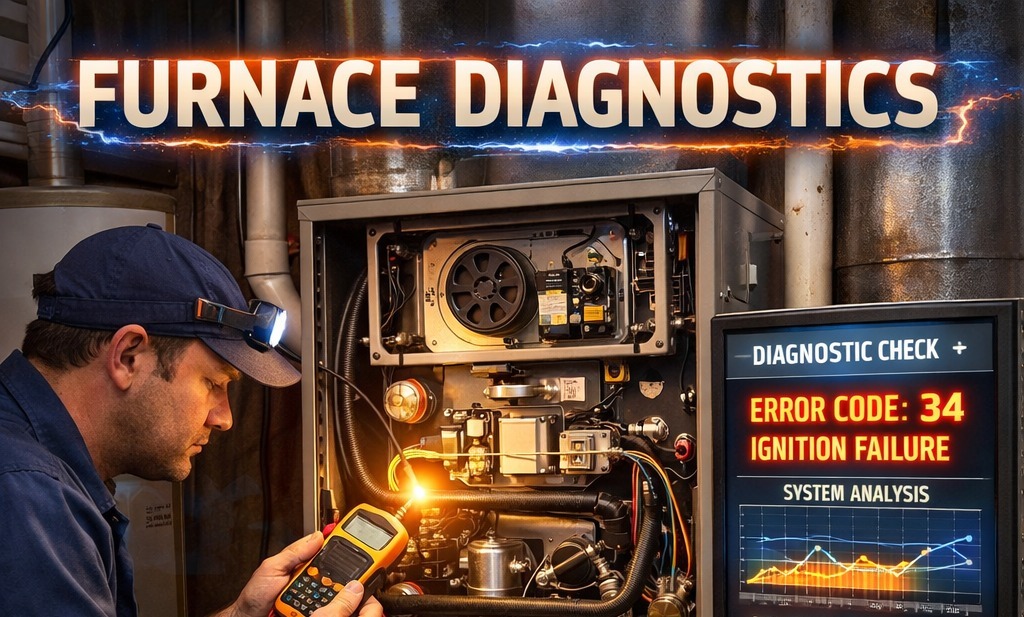
Step 1: Shut the System Off
Use the thermostat or system switch. Avoid letting it “run until service arrives.”
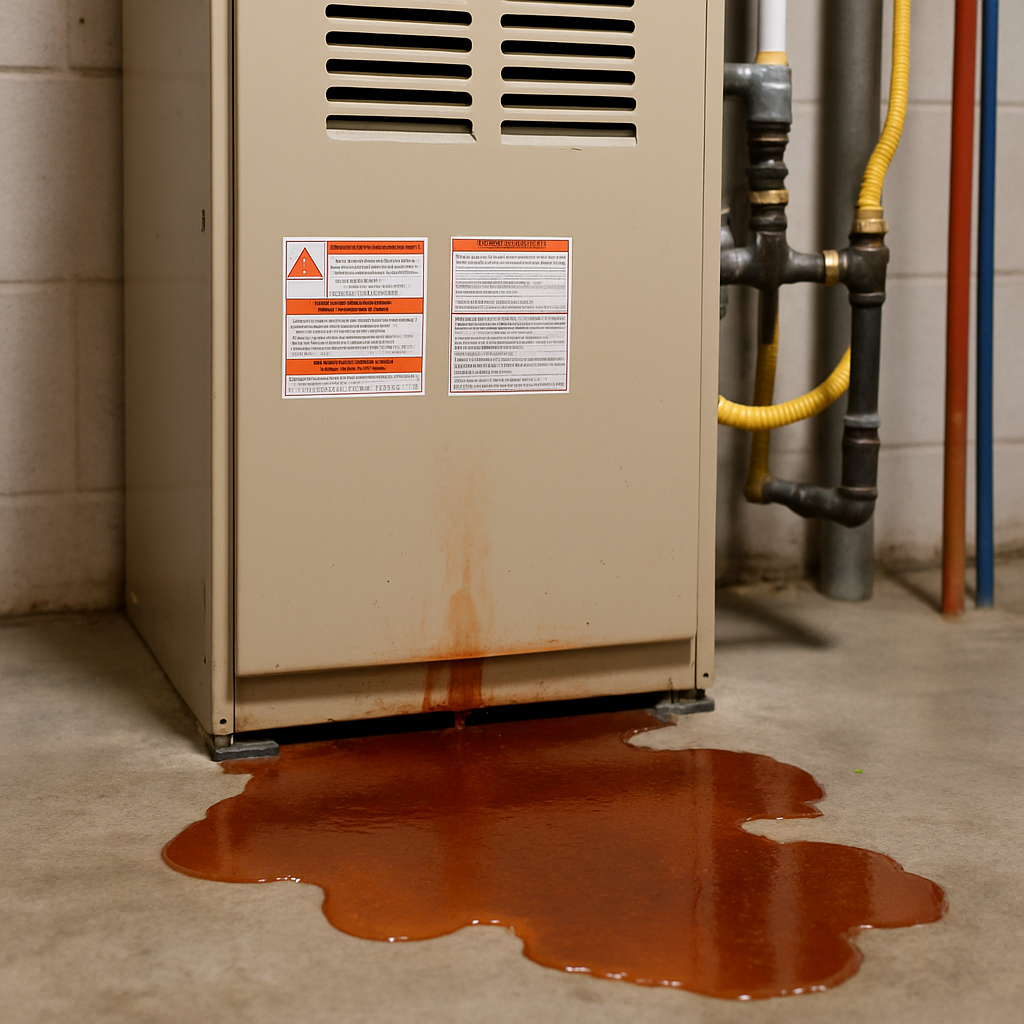
Step 2: Check for Visible Water
Look around:
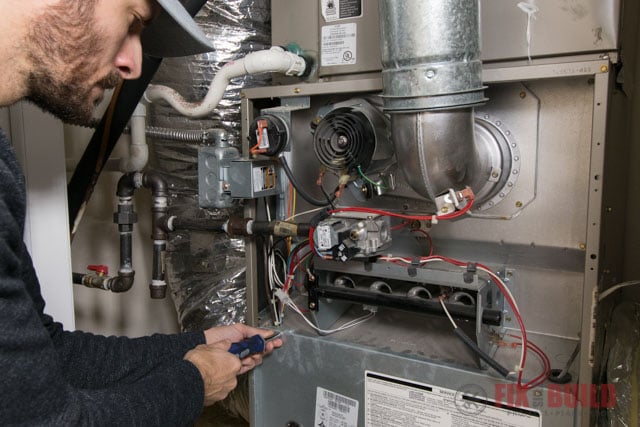
- The furnace or air handler
- Condensate drain lines
- Floor drains or sump areas
This helps determine whether the issue is water-related or something more serious.
Step 3: Call a Licensed HVAC Company
Drainage repairs and refrigerant work require proper tools and training. Temporary fixes usually fail.
A Real Follansbee Example
We recently helped a homeowner near Pennsylvania Avenue in a 1930s two-story home with a full basement.
They noticed water forming near the furnace during humid afternoons and assumed it was normal basement moisture. The real issue was a partially blocked condensate line tied into an old shared drain, which backed up whenever humidity spiked.
Unique Follansbee cost driver: older shared drain systems are common and often restrict flow under load. Once the drain was rerouted correctly, the leak stopped completely.
Cost: What Typically Affects Repair Pricing
HVAC leak repair costs depend on the cause and system condition.
What Drives Cost Higher
- Refrigerant leaks in evaporator coils or line sets
- Compressor damage from continued operation
- Drain lines buried behind finished basement walls
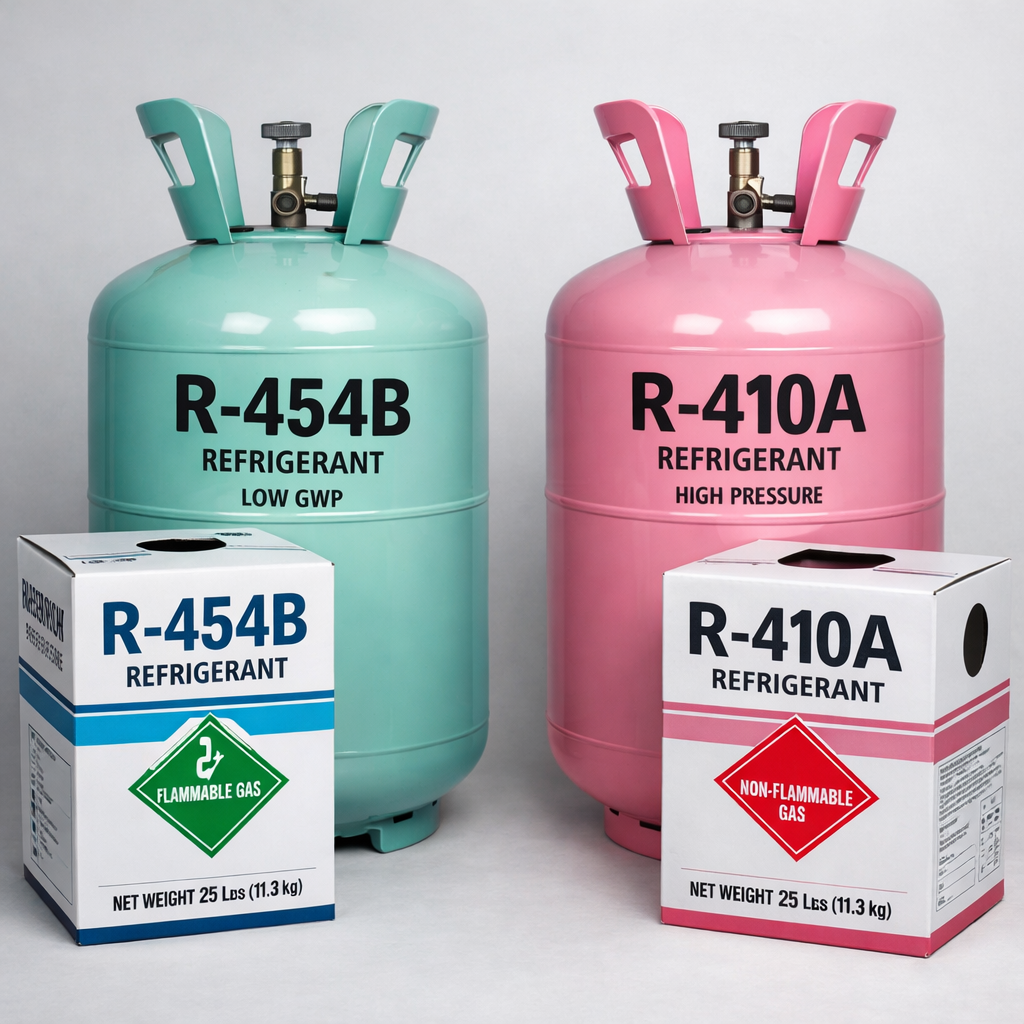
- Older systems with discontinued refrigerants
What Keeps Cost Lower
- Early diagnosis
- Simple drain clearing or re-routing
- Minor pan or safety switch replacement
Some leaks are service-level repairs, while others point toward replacement-level decisions.
Common Mistakes Follansbee Homeowners Make
The most common mistake: assuming basement water is “just humidity.”
In Follansbee, that assumption often leads to:
- Rusted HVAC equipment
- Electrical shorts
- Mold growth inside ductwork
Another common mistake is adding refrigerant without fixing the leak, which increases long-term costs and shortens system life.
Neighborhood-Specific Issues That Cause HVAC Leaks
Local construction patterns matter:
- Basements: older gravity drains clog or back up
- River proximity: higher humidity loads stress drainage
- Electrical limitations: restrict modern safety upgrades
- Retrofit ductwork: airflow issues freeze coils
Nearby Ohio Valley Cities With Similar HVAC Leak Issues
We also see similar problems in:
- Weirton, WV
- Steubenville, OH
- Wintersville, OH
- Toronto, OH
- Mingo Junction, OH
- Brilliant, OH
- Wellsburg, WV
- New Cumberland, WV
- Colliers, WV
Each location has its own combination of home age, layout, and moisture exposure.
Frequently Asked Questions About HVAC Leaks
Can I Clean the Drain Line Myself?
Minor surface clogs can sometimes be cleared, but many blockages sit deeper. Improper cleaning can cause cracks or hidden leaks.
Does a Refrigerant Leak Mean I Need a New System?
Not always. System age, refrigerant type, and leak location all matter when deciding between repair and replacement.
What Guarantees Do You Offer?
HVAC leaks often return if not handled correctly, which is why our guarantees focus on accountability.
For repairs and diagnostics, protections apply under our Service Trust Guardian, including:
- 5-year labor coverage on repairs
- No overtime charges
- Clean work area commitment
- On-time arrival accountability
- Clear, upfront pricing
For new installations, protections apply under our Lifetime Trust Shield, covering labor and performance commitments.
Final Thoughts
An HVAC leak is a warning—not a nuisance.
Ignoring it risks home damage, system failure, and higher long-term costs. Clear answers and proper diagnosis protect your home.
Call Honest Fix today for a free exact quote.
Optional next step: Learn about our guarantees before you decide.
Alex Largent is the Owner and Senior HVAC Efficiency Analyst at Honest Fix Heating, Cooling & Plumbing. With more than 20 years of field experience, NATE and EPA certifications, and a hands-on leadership style, Alex teaches his team to fix systems right the first time — with transparency, precision, and no upsells. He writes about HVAC diagnostics, home energy efficiency, and practical maintenance advice for homeowners across the Upper Ohio Valley. Read Alex Largent’s full bio to learn more about his expertise in the HVAC and Plumbing industry. Updated October 2025.