What Are the Signs of a Refrigerant Leak in My AC in Wintersville, OH?
February 1st, 2026
4 min read
Quick Answer
Common signs of a refrigerant leak include weak or uneven cooling, ice on the AC lines, hissing sounds, rising electric bills, or the system running longer without keeping the home comfortable. In Wintersville, OH, newer homes with long refrigerant line runs, aging systems, and high summer usage make these issues more common. Refrigerant does not get “used up”—if levels are low, there is a leak.
If your AC still turns on but comfort has slowly declined, a refrigerant leak may be the underlying issue. We see this frequently in Wintersville, especially in homes where systems have been recharged in the past or where the outdoor unit is far from the indoor equipment.
This article is meant to help homeowners recognize refrigerant leak warning signs—not to push system replacement.
In many cases, leaks develop gradually and give clear signals before serious damage occurs.
Why Refrigerant Leaks Are Common in Wintersville Homes
Wintersville has a large number of homes built from the 1990s through the early 2010s. Many of these homes have AC systems with longer refrigerant line sets, tighter construction, and higher cooling demand during summer.
In Wintersville, long refrigerant line runs, vibration over time, and extended seasonal use increase the likelihood of refrigerant leaks.
A Wintersville-Specific Cost Driver We See Often
Long line sets running through finished walls or ceilings can increase labor time if a leak is located inside the line rather than at the equipment.
How Refrigerant Leak Problems Usually Develop
Refrigerant leaks rarely happen suddenly.
They usually follow this pattern:
small leak → gradual comfort loss → longer run times → icing → compressor stress
Catching the problem early often prevents expensive component damage.
Big Sign #1: The AC Runs Longer but Cools Less
This is often the first noticeable symptom.
When refrigerant levels drop, the system can’t remove heat efficiently—even though it keeps running.
In Wintersville homes, this often looks like:
- AC running most of the afternoon
- Upstairs or distant rooms staying warm
- Comfort slowly declining week by week
This is commonly mistaken for poor insulation or thermostat issues.
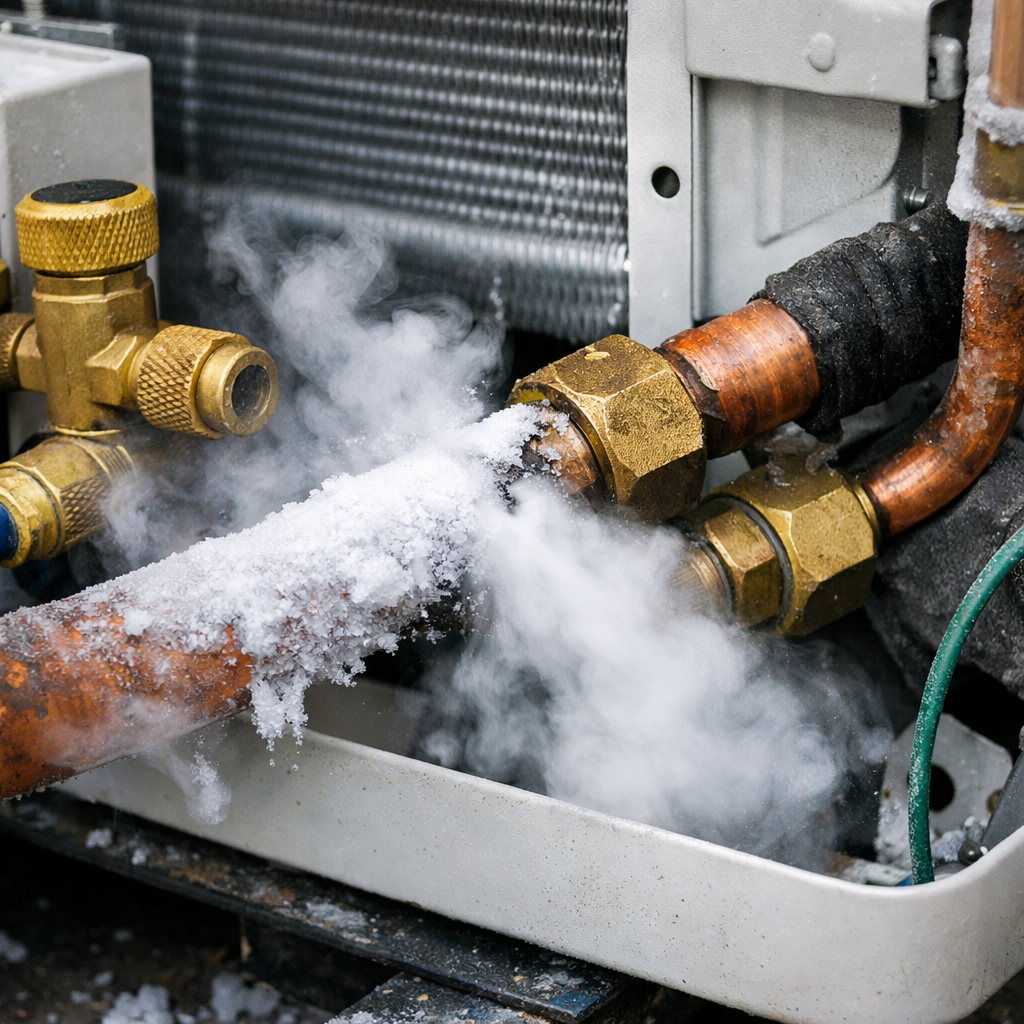
Big Sign #2: Ice on the Refrigerant Lines or Indoor Coil
Low refrigerant causes pressure imbalances that lead to freezing.
Ice on the copper lines or indoor evaporator coil is a warning sign—not normal operation.
Why this happens:
- Coil temperature drops too low
- Moisture freezes on the coil
- Airflow becomes restricted
If ice is present, the system should not continue running.
Big Sign #3: Hissing or Bubbling Sounds Near the AC
Some leaks can be heard.
A hissing or bubbling sound near the indoor or outdoor unit can indicate refrigerant escaping under pressure.
In Wintersville homes, this is often noticed:
- Near basement or closet air handlers
- Along line sets routed through ceilings
- At older connection points
Not all leaks make noise—but when they do, it matters.
Big Sign #4: Higher Energy Bills Without Better Comfort
As refrigerant levels drop, efficiency drops as well.
A leaking system uses more electricity while delivering less cooling.
Homeowners often notice:
- Gradually rising electric bills
- Longer cooling cycles
- No improvement in indoor comfort
This slow change is easy to overlook at first.
Big Sign #5: The System Has Needed Refrigerant Before
Refrigerant systems are sealed.
If your AC has been “topped off” before, there is already a leak.
Adding refrigerant without fixing the leak only delays the problem and increases long-term risk.
Where Refrigerant Leaks Actually Occur
Leaks are often hidden.
The most common leak locations include:
- Indoor evaporator coils
- Line-set joints and fittings
- Older brazed or soldered connections
This is why leak detection and pressure testing are required to confirm the problem.
What Looks Like a Refrigerant Leak — But Isn’t
Not every cooling issue is a refrigerant problem.
Issues that can mimic a refrigerant leak include:
- Dirty air filters
- Closed or blocked vents
- Thermostat setup or programming issues
These should be ruled out before confirming a leak.
Health and Safety Clarity
A refrigerant leak is not an emergency evacuation situation, but it does require professional handling. Refrigerant should never be adjusted or handled without proper licensing and equipment.
What You Can Safely Check — And What You Shouldn’t
Homeowners can safely check:
- Airflow from vents
- Whether ice is visible on the lines or coil
- Whether cooling performance has changed
Homeowners should not handle refrigerant, adjust pressures, or attempt DIY leak fixes. Refrigerant work requires certification and specialized tools.
Do Not Run the System If This Is Happening
Do not continue running the AC if cooling suddenly drops off completely or ice keeps forming. Continued operation can damage the compressor.
A Common Wintersville Homeowner Mistake
Assuming refrigerant “naturally runs low” as systems age.
Refrigerant does not get used up. If levels are low, a leak exists and will continue until repaired.
Repair vs Replacement: A Clear Boundary
Not all refrigerant leaks require system replacement.
Some leaks are repairable, while others—especially coil leaks in older systems—may make replacement the better long-term choice. The right answer depends on testing, system age, and condition.
Cost Considerations (Without Guessing)
Refrigerant leak costs vary based on:
- Leak location and accessibility
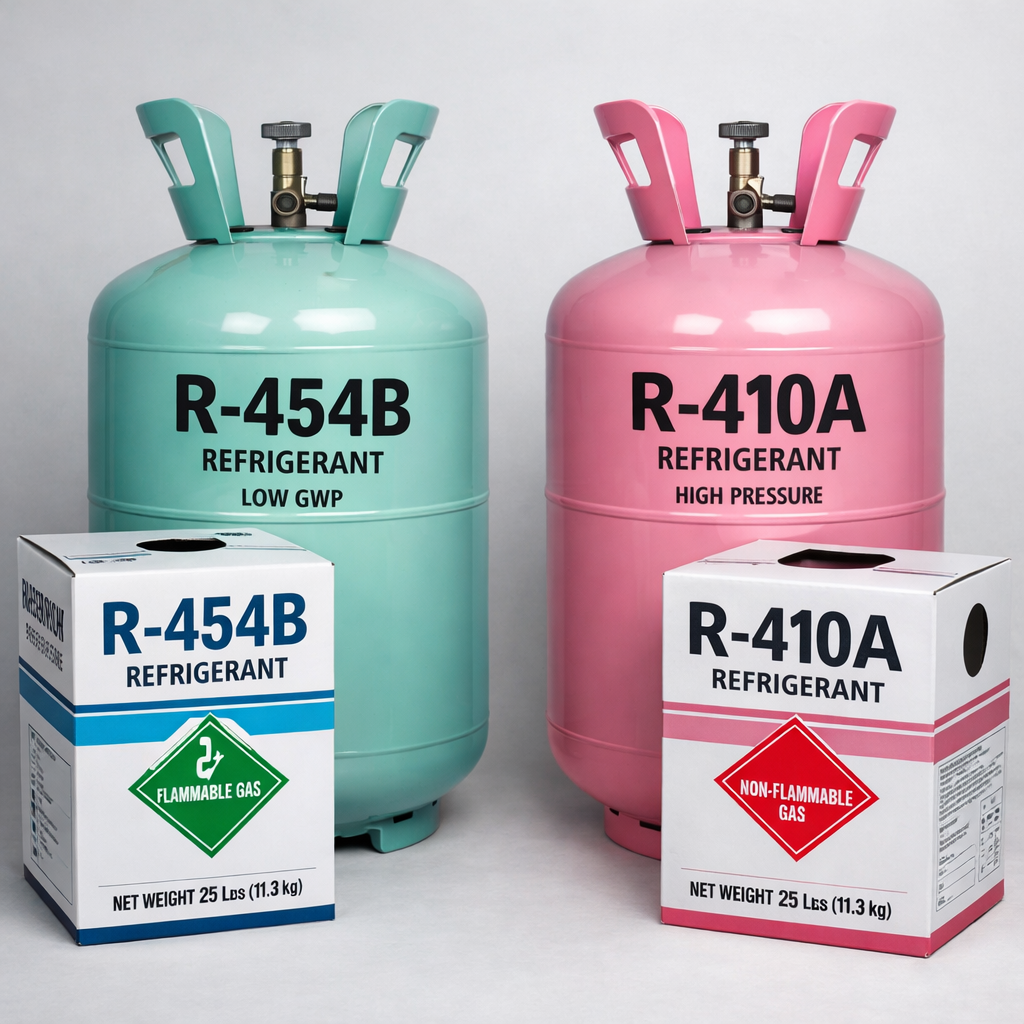
- Refrigerant type
- Line-set or coil involvement
- System age and condition
- Whether compressor damage occurred
The most expensive outcome is ignoring early warning signs.
At Honest Fix, refrigerant issues are confirmed with leak detection and pressure testing—not assumptions.
Why Guarantees Matter with Refrigerant Repairs
Refrigerant work requires accuracy and accountability.
Service Trust Guardian (Repairs & Diagnostics)
When refrigerant leaks are repairable, qualifying repairs are backed by:
- 5-year labor warranty on repairs
- No overtime charges
- On-time arrival guarantee
- Clean work area guarantee
Lifetime Trust Shield (System Replacement)
When replacement is the better option, new installations include:
- 15-year labor warranty on new HVAC system installations
- No-lemon guarantee
- Energy performance accountability
- Full satisfaction guarantee
Other Ohio Valley Cities With Similar Issues
This Wintersville article is part of a regional education series also covering:
- Steubenville, OH
- Toronto, OH
- Mingo Junction, OH
- Brilliant, OH
- Weirton, WV
- Follansbee, WV
- Wellsburg, WV
- New Cumberland, WV
- Colliers, WV
- Hooverson Heights, WV
Frequently Asked Questions
Is a refrigerant leak dangerous?
Refrigerant leaks reduce system performance and can damage equipment. Modern refrigerants are not highly toxic, but leaks should be repaired by a licensed professional.
Can I just add more refrigerant?
Adding refrigerant without repairing the leak is temporary and usually leads to repeat failures and higher costs.
Does ice always mean low refrigerant?
Not always. Ice can also be caused by airflow problems, but low refrigerant is a common cause that must be ruled out through testing.
What guarantees apply to refrigerant leak repairs?
Repairs are covered by the Service Trust Guardian, including a 5-year labor warranty on repairs.
New systems are protected by the Lifetime Trust Shield, including a 15-year labor warranty on installations.
When to Take the Next Step
If your Wintersville home isn’t cooling like it used to—or you’re seeing ice, long run times, or rising bills:
A refrigerant leak is one of the most common underlying causes.
Finding it early protects comfort and equipment.
Call Honest Fix today for a free exact quote.
Optional next step: Learn about our guarantees before you decide.
Scott Merritt is a co-founder of Honest Fix Heating, Cooling and Plumbing and brings more than 30 years of experience across HVAC, leadership, and industry education. He serves in a senior leadership and oversight role, providing licensed guidance, reviewing HVAC educational content, and supporting technician training and documentation standards. Prior to co-founding Honest Fix, Scott founded and owned Fire & Ice Heating & Air Conditioning in Columbus, Ohio, which he operated for more than two decades before selling the company in 2025. During that time, he led programs and partnerships including Carrier Factory Authorized Dealer, Trane Comfort Specialist, and Rheem Pro Partner, helping establish high technical and training standards. Scott is the Ohio State HVAC license holder for Honest Fix and provides licensed oversight to help ensure work meets applicable codes and manufacturer requirements. Learn more about Scott’s background and role at Honest Fix by viewing his full leadership bio.