What Is the Cost of Waiting to Repair or Replace a Heat Pump in Steubenville?
February 24th, 2026
6 min read
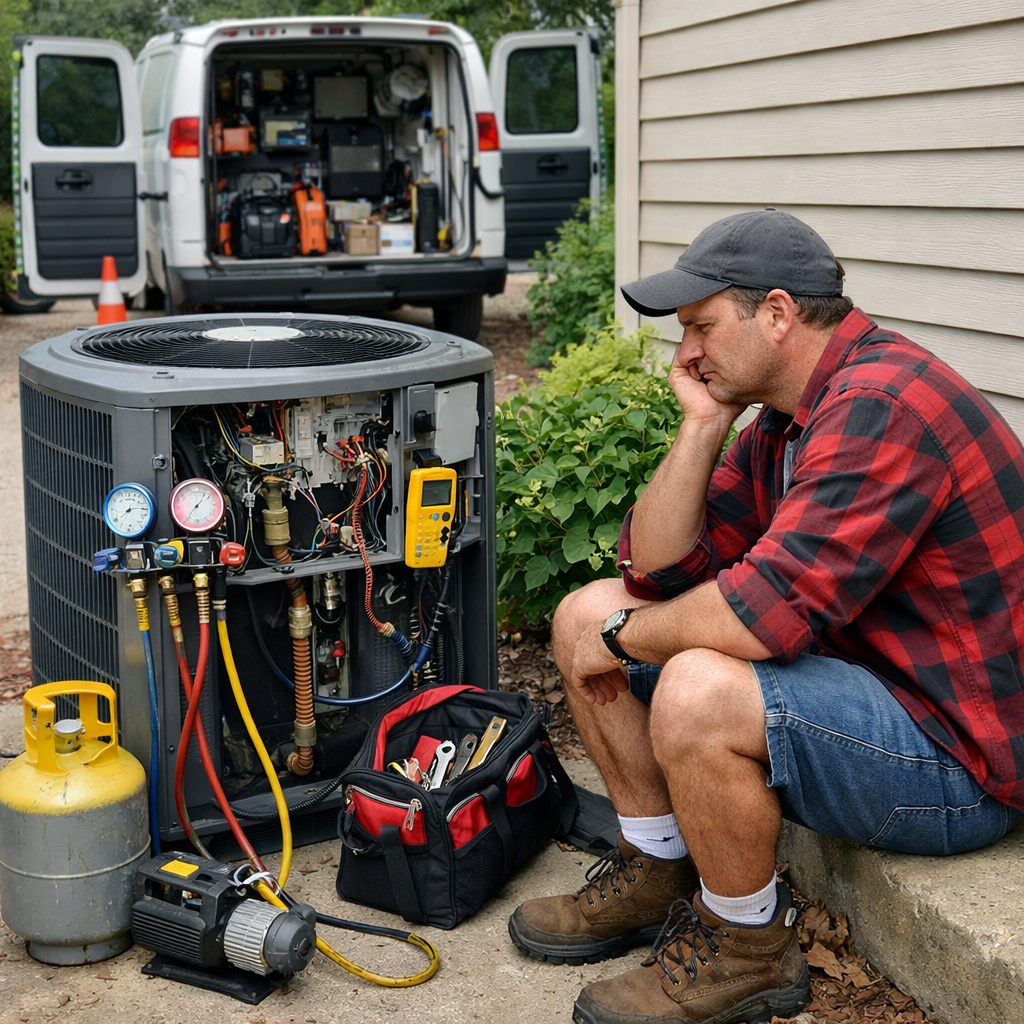
Quick Answer: In Steubenville, delaying heat pump repair ($150–$4,000) or replacement ($11,880–$24,225) can escalate minor failures into major repairs, increase strip heat use below 20°F, and reduce winter reliability. Waiting can turn a $150 repair into a $4,000 compressor failure during peak cold demand.
When a heat pump is underperforming but still operating, waiting may appear financially cautious.
Under Upper Ohio Valley winter load, measurable risk increases over time.
Steubenville Cost-of-Waiting Snapshot
- Minor repair ($150–$500) can escalate to Major repair ($1,500–$4,000)
- Declining efficiency increases strip heat engagement below 20°F
- Winter failure risk increases during peak cold demand
Waiting can increase repair exposure by up to $3,500 when Minor issues escalate into Major failures.
What Happens If You Delay a Minor Heat Pump Repair?
Quick Answer: Delaying a Minor repair ($150–$500), such as a capacitor failure or small refrigerant imbalance, can increase compressor amp draw and escalate into Medium ($500–$1,500) or Major ($1,500–$4,000) repairs under winter load.
In Steubenville’s older housing stock:
- 100-amp panels increase electrical strain
- Extended runtime below 20°F compounds wear
- Voltage fluctuation increases amp draw
Small electrical issues under load rarely remain isolated.
Can Delaying a Medium Repair Lead to Compressor Failure?
Quick Answer: Yes. Delaying a Medium repair ($500–$1,500), such as airflow restriction or refrigerant imbalance, can overload the compressor and result in Major repair costs up to $4,000.
Common Steubenville contributors include:
- Static pressure above 0.8 inches WC
- Undersized return ducts in 1950s–1970s homes
- Basement duct condensation near river level
- Freeze–thaw soil shifting affecting condenser pads
A heat pump under strain runs longer.
Longer runtime increases operating temperature.
Higher temperature accelerates mechanical wear.
How Does Waiting Increase Winter Electrical Demand?
Quick Answer: Reduced efficiency increases runtime and electric strip heat engagement below 20°F, raising electrical demand and system strain.
Steubenville conditions that amplify this:
- River valley cold air pooling
- Extended sub-freezing winter stretches
- Aging duct retrofits restricting airflow
Strip heat is resistance heat.
Resistance heat consumes more electricity than standard heat pump operation.
Increased runtime increases electrical load.
Does Waiting Increase the Risk of Emergency Winter Failure?
Quick Answer: Yes. Systems older than 15 years requiring Major repair ($1,500–$4,000) are more likely to fail during peak winter demand if replacement is delayed.
During Upper Ohio Valley cold snaps:
- Runtime becomes continuous
- Defrost cycles increase
- Compressor amp draw rises
- Electrical load spikes
Mechanical strain increases first.
Electrical stress follows.
Efficiency declines next.
Failure occurs last.
Waiting concentrates risk during the coldest weeks of the year.
How Do Steubenville Housing Conditions Amplify the Cost of Waiting?
Quick Answer: Steubenville’s hillside homes, basement duct systems, aging electrical panels, and river-level humidity increase mechanical strain when airflow and voltage instability are not corrected.
Local structural realities include:
- Static pressure exceeding manufacturer specifications
- Added duct branches over decades
- Basement moisture exposure
- Freeze–thaw soil movement affecting pad stability
Waiting compounds these measurable stress factors.
When Is Waiting a Reasonable Decision?
Quick Answer: Waiting may be reasonable if the system is under 12–15 years old, operating within manufacturer specifications, and verified as Minor with stable airflow and voltage conditions.
Waiting is not reasonable if:
- Static pressure exceeds specifications
- Compressor amp draw is elevated
- Refrigerant charge is unstable
- Major repair is required
- Winter output is declining
Waiting does not automatically mean replacement is necessary.
It means measurable risk increases under load.
What Evaluation Standards Guide the Decision?
Quick Answer: Proper evaluation includes static pressure testing, voltage drop measurement, compressor amp draw verification, and refrigerant superheat and subcooling analysis before recommending repair or replacement.
Replacement commissioning includes:
- Nitrogen pressure test
- Vacuum to 500 microns
- Refrigerant charged by exact weight
- Static pressure documentation
- Defrost verification
Commissioning requires 45–90 minutes.
We test.
We measure.
We document.
We do not guess.
How Long Can a Struggling Heat Pump Safely Operate?
Quick Answer: Safe operation depends on measured amp draw, refrigerant stability, airflow performance, and voltage integrity. Without testing, continued winter operation increases compressor and electrical risk.
A system can appear functional while operating outside manufacturer limits.
Measured performance determines safe operation.
What Happens If a Heat Pump Fails During Winter?
Quick Answer: Winter failure during sub-20°F conditions increases emergency risk, reduces scheduling flexibility, and may require temporary heating solutions.
Peak winter demand creates:
- Continuous runtime stress
- Regional service demand increases
- Reduced scheduling flexibility
The objective is not to avoid expense.
The objective is to avoid escalation during peak demand.
What Guarantees Apply if You Act Now?
Quick Answer: Repairs are protected under our Service Trust Guardian, including a 5-year labor warranty with documented annual maintenance. Replacements are protected under our Lifetime Trust Shield, including extended labor coverage.
With over 70 years of combined HVAC experience and more than 30 years overseeing commissioning, recommendations are based on measured system performance.
What Guarantees Do You Offer?
Quick Answer: Repairs include a 5-year labor warranty under the Service Trust Guardian. Replacements are protected under the Lifetime Trust Shield with extended labor coverage tied to documented maintenance.
Decision Summary
In Steubenville, the cost of waiting is escalation, increased electrical strain, and elevated risk of winter heat loss during sub-20°F conditions.
Final Summary
In Steubenville:
- Repair: $150–$4,000
- Replacement: $11,880–$24,225
The cost of waiting is determined by:
- System age
- Static pressure
- Electrical stability
- Refrigerant condition
- Winter runtime demand
Measured performance reduces uncertainty.
Call Honest Fix today for a free exact quote.
Learn about our guarantees before you decide.
SEO Set
Title: What Is the Cost of Waiting to Repair or Replace a Heat Pump in Steubenville?
Meta Description: Delaying heat pump repair ($150–$4,000) or replacement ($11,880–$24,225) in Steubenville increases winter failure risk and repair escalation.
Slug: cost-of-waiting-heat-pump-steubenville
What Is the Cost of Waiting to Repair or Replace a Heat Pump in Weirton?
Quick Answer: In Weirton, delaying heat pump repair ($150–$4,000) or replacement ($11,880–$24,225) can increase compressor strain, accelerate clay-soil pad shifting damage, and raise strip heat usage below 20°F. Waiting may turn a $150 repair into a $4,000 failure during peak winter demand.
When a system is underperforming but still heating, waiting feels practical.
In Weirton’s ridge and clay-soil conditions, mechanical strain compounds quickly under load.
Weirton Cost-of-Waiting Snapshot
- Minor repair ($150–$500) can escalate to Major repair ($1,500–$4,000)
- Clay soil movement can stress refrigerant lines over time
- Wind-driven winter runtime increases mechanical wear
- Electrical load spikes below 20°F increase failure risk
Waiting can increase repair exposure by up to $3,500 if Minor failures escalate.
What Happens If You Delay a Minor Heat Pump Repair in Weirton?
Quick Answer: Delaying a Minor repair ($150–$500), such as a capacitor issue or sensor failure, can increase amp draw and lead to Medium ($500–$1,500) or Major ($1,500–$4,000) repairs during winter runtime stress.
In Weirton neighborhoods like Weircrest and Marland Heights:
- Elevation increases winter exposure
- Continuous runtime stresses components
- Voltage fluctuation from aging feeders increases strain
Minor issues under continuous load escalate faster.
Can Clay Soil Movement Increase Repair Risk?
Quick Answer: Yes. Weirton’s clay-heavy soil expands and contracts during freeze–thaw cycles, which can shift condenser pads and stress refrigerant line connections over time.
Common findings include:
- Slight pad tilting
- Line-set tension
- Vibration stress
- Refrigerant imbalance
Mechanical misalignment increases compressor workload.
Waiting compounds that stress.
How Does Ridge Wind Exposure Affect the Cost of Waiting?
Quick Answer: Elevated ridge exposure increases winter runtime hours and defrost cycling frequency, accelerating mechanical wear in aging systems.
Below 20°F:
- Runtime becomes extended
- Strip heat engages more frequently
- Electrical demand rises
- Compressor amp draw increases
Wind-driven load increases cumulative stress.
Does Delaying a Medium Repair Increase the Risk of Major Failure?
Quick Answer: Yes. Delaying a Medium repair ($500–$1,500), such as airflow restriction or refrigerant imbalance, increases operating temperature and can result in compressor failure up to $4,000.
In Weirton split-level homes:
- Long duct runs increase static pressure
- Undersized returns elevate strain
- Static pressure above 0.8 inches WC is common
High static pressure shortens compressor life.
How Does Industrial-Era Electrical Infrastructure Influence Risk?
Quick Answer: Many Weirton homes were built during peak steel production decades, and layered electrical upgrades over older feeders can increase voltage instability during winter demand.
Electrical realities include:
- Aging disconnects
- Voltage drop during high strip heat load
- Elevated amp draw below 20°F
Electrical instability increases failure probability in aging systems.
When Is Waiting a Reasonable Decision in Weirton?
Quick Answer: Waiting may be reasonable if the system is under 12–15 years old, operating within specifications, and verified as Minor with stable airflow and voltage conditions.
Waiting is not reasonable when:
- Static pressure exceeds manufacturer limits
- Pad shifting is evident
- Compressor amp draw is elevated
- Major repair is required
- Winter output is declining
Measured performance determines risk.
What Evaluation Standards Guide the Decision?
Quick Answer: Proper evaluation includes static pressure testing, voltage drop measurement, compressor amp draw verification, refrigerant superheat and subcooling analysis, and pad stability inspection.
Replacement commissioning includes:
- Nitrogen pressure testing
- Vacuum to 500 microns
- Refrigerant charged by exact weight
- Static pressure documentation
- Defrost verification
Commissioning requires 45–90 minutes.
We test.
We measure.
We document.
We do not guess.
What Happens If a Heat Pump Fails During a Weirton Cold Snap?
Quick Answer: Failure during sub-20°F winter conditions increases emergency exposure, reduces scheduling flexibility, and places full heating demand on electric strip heat.
Peak cold periods create:
- Continuous compressor load
- Elevated electrical demand
- Regional service congestion
The objective is not urgency.
The objective is risk reduction before peak demand.
What Guarantees Apply If You Act Now?
Quick Answer: Repairs are protected under our Service Trust Guardian, including a 5-year labor warranty with documented maintenance. Replacements are protected under our Lifetime Trust Shield, including extended labor coverage.
With over 70 years of combined HVAC experience and more than 30 years overseeing commissioning, decisions are based on measured performance.
What Guarantees Do You Offer?
Quick Answer: Repairs include a 5-year labor warranty under the Service Trust Guardian. Replacements are protected under the Lifetime Trust Shield with extended labor coverage tied to documented maintenance.
Decision Summary
In Weirton, the cost of waiting is mechanical escalation driven by clay-soil movement, ridge wind exposure, electrical strain, and winter runtime demand.
Final Summary
In Weirton:
- Repair: $150–$4,000
- Replacement: $11,880–$24,225
The cost of waiting is determined by:
- System age
- Soil stability
- Static pressure
- Electrical capacity
- Winter wind-driven runtime
Measured evaluation reduces uncertainty.
Call Honest Fix today for a free exact quote.
Learn about our guarantees before you decide.
Scott Merritt is a co-founder of Honest Fix Heating, Cooling and Plumbing and brings more than 30 years of experience across HVAC, leadership, and industry education. He serves in a senior leadership and oversight role, providing licensed guidance, reviewing HVAC educational content, and supporting technician training and documentation standards. Prior to co-founding Honest Fix, Scott founded and owned Fire & Ice Heating & Air Conditioning in Columbus, Ohio, which he operated for more than two decades before selling the company in 2025. During that time, he led programs and partnerships including Carrier Factory Authorized Dealer, Trane Comfort Specialist, and Rheem Pro Partner, helping establish high technical and training standards. Scott is the Ohio State HVAC license holder for Honest Fix and provides licensed oversight to help ensure work meets applicable codes and manufacturer requirements. Learn more about Scott’s background and role at Honest Fix by viewing his full leadership bio.