Why Is My Heat Pump Blowing Cold Air in Heating Mode in Hooverson Heights?
February 28th, 2026
4 min read
Quick Answer:
If your heat pump is blowing cold air in heating mode in Hooverson Heights, the most common causes are outdoor temperatures below 30°F, a 5–15 minute defrost cycle, low refrigerant (10–20% loss), failed 5–15 kW auxiliary heat strips, incorrect thermostat reversing valve settings, duct airflow restrictions, or a stuck reversing valve. Supply air should measure 85–100°F in heating mode.
If your thermostat is set to heat and you feel cold air, the cause is either normal winter heat pump operation — or a measurable fault.
We measure it.
Hooverson Heights homes often have older duct layouts, tighter mechanical spaces, and return-air limitations that make heating mode feel colder than it should. That’s fixable — but only if it’s diagnosed correctly.
What Are the 5 Most Common Reasons a Heat Pump Blows Cold Air in Heating Mode in Hooverson Heights?
Quick Answer:
The five most common causes are:
- Defrost cycle below 35°F lasting 5–15 minutes
- Outdoor temperatures under 30°F reducing capacity
- Refrigerant loss of 10–20% lowering supply temperature
- Failed 5–15 kW auxiliary heat strips
- Reversing valve operating incorrectly
Each one can be confirmed with temperature, airflow, and electrical testing.
Is It Normal for a Heat Pump to Feel Cool in Heating Mode?
Quick Answer:
Yes. In heating mode, most heat pumps deliver 85–100°F air. Gas furnaces deliver 120–140°F. When outdoor temperatures drop below 30°F, heat pump output declines and air can feel mild but steady. Supply air below 85°F for extended periods is not normal.
Heat pumps move heat. They don’t create it like a furnace.
Normal in heating mode:
- Longer run cycles
- Steady airflow
- Mild supply temperature
Not normal:
- Indoor temperature falling below 68°F
- Supply air under 85°F for more than 30 minutes
- Cold drafts that never improve
We verify with a thermometer at the supply register.
Is My System Going Into Defrost Mode While in Heating Mode?
Quick Answer:
Yes. Below 35°F, frost forms on the outdoor coil and the system enters a 5–15 minute defrost cycle to melt ice. Steam from the outdoor unit is normal. You may feel briefly cooler air unless auxiliary heat is working correctly.
Normal signs:
- Steam outdoors
- Short temperature dip at vents
Not normal:
- Ice that lasts over 30 minutes
- Indoor temperature dropping during defrost
- Auxiliary heat never turning on
We verify auxiliary heat engagement during defrost.
Could Low Refrigerant Cause Cold Air in Heating Mode?
Quick Answer:
Yes. A 10–15% refrigerant loss can drop heating capacity enough to push supply air below 80°F. Your system may run constantly and still struggle to hold 68–72°F indoors. Ice on the outdoor unit can also worsen.
Refrigerant doesn’t “run out.” It leaks.
We measure superheat, subcooling, and airflow before any refrigerant is added. We repair the leak first. No shortcuts.
Why Is My Auxiliary Heat Not Working?
Quick Answer:
When temperatures fall below 30°F, most systems rely on 5–15 kW auxiliary heat strips. If they fail, supply air may measure 70–80°F even though heating mode is active. This feels like cold air.
Common causes:
- Burned heat strips
- Failed sequencers/relays
- Tripped breakers
- Electrical service near capacity
We measure amperage draw and confirm staging is correct.
Could My Thermostat Reversing Valve Setting Be Wrong?
Quick Answer:
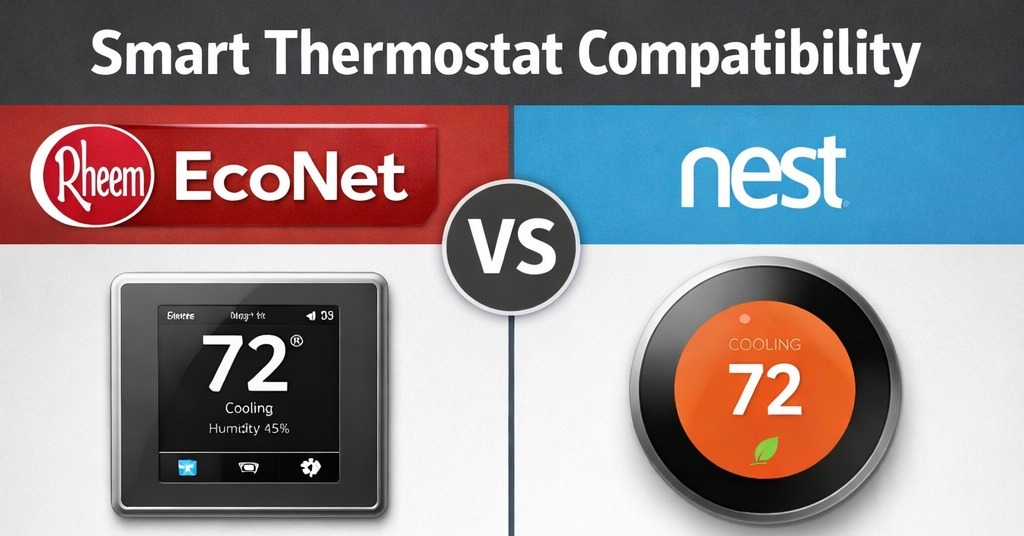
Yes. Heat pumps use a reversing valve to switch between heating and cooling. Thermostats must be configured for “O” (energized in cooling) or “B” (energized in heating). If set incorrectly, the system may run in cooling while calling for heat.
This often happens after:
- Smart thermostat installs
- DIY thermostat replacement
- Power outages
We verify wiring and configuration so heating mode runs correctly.
Could Ductwork or Airflow Restrictions Be the Real Problem?
Quick Answer:
Yes. Restricted airflow can lower supply air temperature by 5–15°F and make heating mode feel like cold air. In Hooverson Heights, older return ducts and closed-off basement returns are common culprits.
Signs of airflow problems:
- Weak airflow at some rooms
- Whistling returns
- Hot air in one room, cold in another
- Filter getting dirty fast
We measure static pressure and airflow before recommending equipment work.
Normal vs Not Normal in Heating Mode During Hooverson Heights Winters
| Situation | Normal? | Action |
|---|---|---|
| Supply air 85–95°F | Yes | Monitor |
| Supply air below 80°F | No | Schedule testing |
| Steam during defrost | Yes | Normal cycle |
| Ice lasting over 30 minutes | No | Service required |
| Long cycles below 30°F | Yes | Normal |
| Breaker trips | No | Electrical issue |
How Much Does It Cost to Fix a Heat Pump Blowing Cold Air in Heating Mode in Hooverson Heights?
Quick Answer:
We charge a $99 diagnostic service call to determine why your heat pump is blowing cold air in heating mode. After testing, you receive an exact repair quote before any work begins. Minor thermostat or electrical corrections are simple. Refrigerant leaks, auxiliary heat repairs, or airflow corrections require deeper work.
There are no surprise invoices.
If testing shows replacement is the right move, we provide a free exact quote for a new system.
You don’t need a new system until testing proves it.
What Happens During a Professional Heating Mode Diagnostic?
Quick Answer:
We measure supply air temperature, refrigerant pressures, electrical amperage draw, airflow static pressure, and thermostat configuration. A complete diagnostic typically takes 45–60 minutes. You get an exact repair quote before any work begins.
We measure before we recommend.
Frequently Asked Questions About Heating Mode Problems in Hooverson Heights
Is It Normal for My Heat Pump to Run Constantly?
Quick Answer:
Yes. Below 30°F, heat pumps may run continuously to maintain 68–72°F indoor temperatures. Constant running is normal unless supply air drops below 85°F for extended periods.
Why Does My Heat Pump Blow Colder Air at Night?
Quick Answer:
Night temperatures often drop 5–10°F below daytime highs. Below 30°F, heating capacity declines. If auxiliary heat fails, nighttime airflow may feel cold even in heating mode.
Should I Switch to Emergency Heat?
Quick Answer:
Only if the outdoor unit stops operating. Emergency heat uses 5–15 kW electric strips and can increase energy use by 30–60%. It’s a temporary setting, not a long-term solution.
Can I Fix This Myself?
Quick Answer:
You can check thermostat mode and breakers. Refrigerant testing, reversing valve diagnosis, and airflow measurement require professional tools and training.
What Guarantees Do You Offer?
For diagnostics and repairs, homeowners are protected under our Service Trust Guardian:
- 5-year labor warranty on repairs
- 60-day money-back satisfaction guarantee
- No overtime charges
- $50 on-time arrival guarantee
- Clean work area guarantee
- Follow-up service guarantee
New installations are covered under our Lifetime Trust Shield.
If we fix it, we stand behind it.
Final Thoughts
If your heat pump is blowing cold air in heating mode in Hooverson Heights, the cause is usually:
- Defrost cycle
- Low refrigerant
- Auxiliary heat failure
- Thermostat configuration error
- Airflow restrictions
- Reversing valve malfunction
The solution depends on measurement.
Call Honest Fix today to schedule your $99 diagnostic service call or request a free exact quote for a new system.
No upsells. No games. Just honest fixes
Scott Merritt is a co-founder of Honest Fix Heating, Cooling and Plumbing and brings more than 30 years of experience across HVAC, leadership, and industry education. He serves in a senior leadership and oversight role, providing licensed guidance, reviewing HVAC educational content, and supporting technician training and documentation standards. Prior to co-founding Honest Fix, Scott founded and owned Fire & Ice Heating & Air Conditioning in Columbus, Ohio, which he operated for more than two decades before selling the company in 2025. During that time, he led programs and partnerships including Carrier Factory Authorized Dealer, Trane Comfort Specialist, and Rheem Pro Partner, helping establish high technical and training standards. Scott is the Ohio State HVAC license holder for Honest Fix and provides licensed oversight to help ensure work meets applicable codes and manufacturer requirements. Learn more about Scott’s background and role at Honest Fix by viewing his full leadership bio.