What Causes a Heat Pump to Freeze Up in Winter in Mingo Junction, Ohio?
March 2nd, 2026
4 min read
Quick Answer:
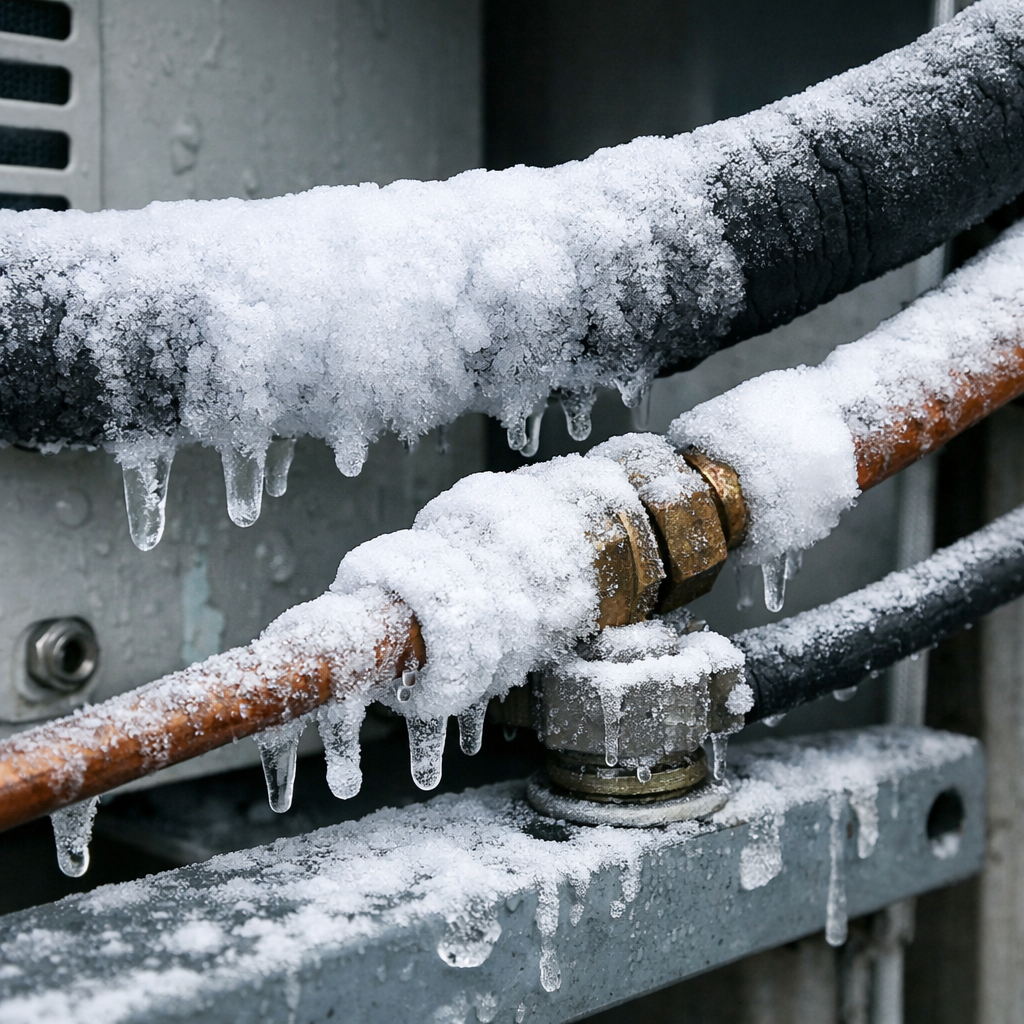
A heat pump freezes up in winter in Mingo Junction when frost forms on the outdoor coil and the system cannot remove it during the 5–15 minute defrost cycle. In this narrow river valley, steep elevation changes, wind shear, trapped cold air below 30°F, low refrigerant (10–20% loss), restricted airflow, or defrost control failure can lead to solid ice buildup.
Thin frost is normal.
Solid ice that does not clear is not.
Mingo Junction sits inside a tighter section of the Ohio River valley. Cold air settles along the valley floor while hillside neighborhoods experience stronger wind exposure. That combination affects how outdoor coils frost and defrost.
Terrain matters here.
How Does the Narrow River Valley Affect Heat Pump Freezing?
Quick Answer:
The narrow valley traps cold air near the river and creates wind shear along the hillsides. Cold air pooling below 30°F increases frost formation, while wind exposure on higher elevations accelerates coil cooling.
Two microclimates exist in Mingo Junction:
Valley floor homes:
- Colder overnight air pooling
- Higher moisture retention
Hillside homes:
- Stronger wind exposure
- Faster evaporative cooling of the coil
Both increase freeze-up risk — in different ways.
What Are the 6 Most Common Causes of Freeze-Ups in Mingo Junction?
Quick Answer:
The most common causes are:
- Failed defrost control board
- Weak or misreading defrost sensor
- Low refrigerant (10–20% below proper charge)
- Restricted airflow
- Prolonged temperatures below 25°F
- Valley cold-air pooling combined with humidity
Each cause requires measurement to confirm.
In Mingo Junction specifically, we often see:
- Units installed on north-facing hillsides receiving less sunlight
- Outdoor coils exposed to cross-valley wind
- Drainage runoff refreezing beneath units
Geography directly affects system performance.
Why Do Hillside Homes Freeze Differently Than Valley Homes?
Quick Answer:
Hillside homes experience more wind exposure, which cools the outdoor coil faster and increases frost accumulation. Valley homes experience colder air pooling, which lowers ambient temperatures and prolongs frost formation.
Even a 3–5°F difference overnight changes frost intensity.
Homes above Commercial Street often experience wind-driven frost.
Homes closer to the river experience longer freezing cycles.
We account for location during diagnosis.
Does Soil Type or Drainage Affect Freeze-Ups?
Quick Answer:
Yes. Mingo Junction’s dense clay soils hold moisture longer after snowmelt or defrost cycles. Meltwater can refreeze around the base of the unit, blocking airflow and worsening icing.
Common issues:
- Poor drainage grading
- Units set too low to the ground
- Ice buildup beneath the outdoor cabinet
Elevation and drainage corrections sometimes prevent repeat freeze-ups.
Can Low Refrigerant Worsen Freezing in Valley Terrain?
Quick Answer:
Yes. A system that is 10–15% low on refrigerant runs colder than designed. In a cold-air-trapping valley environment, that increases frost formation significantly.
Refrigerant does not disappear.
If it’s low, there is a leak.
We locate and repair leaks before adjusting refrigerant levels.
We fix the cause — not just the ice.
How Does Wind Shear Increase Icing Risk?
Quick Answer:
Wind moving across the coil increases heat loss from the metal surface. In hillside neighborhoods, steady cross-valley wind can lower coil surface temperature enough to accelerate frost formation.
Wind plus sub-30°F air equals rapid icing.
If defrost timing is even slightly weak, ice builds quickly overnight.
Is Solid Ice Ever Normal During Extreme Cold?
Quick Answer:
No. Even below 20°F, a properly functioning heat pump should clear frost during its defrost cycle. Solid ice that does not melt indicates airflow, refrigerant, or control issues.
Cold increases frost.
It should not prevent clearing.
What Happens If Freeze-Ups Are Ignored?
Quick Answer:
Ignoring a frozen heat pump reduces heating output and increases compressor strain. Continued operation while encased in ice can shorten system lifespan and increase repair costs.
Warning signs:
- Indoor temperature falling below 68°F
- Weak airflow
- Breaker trips
- Fan blades encased in ice
If ice remains longer than 30 minutes after defrost begins, turn the system off and schedule service.
What Does Professional Freeze-Up Diagnosis Include in Mingo Junction?
Quick Answer:
We inspect coil condition, test defrost cycle timing (5–15 minutes), verify sensor readings, measure refrigerant levels, confirm auxiliary heat strip engagement (5–15 kW), and evaluate airflow and drainage conditions. Diagnostics take 45–60 minutes.
Recently, in a hillside home above State Route 7, we corrected a combination of low refrigerant and blocked airflow that caused repeated overnight freeze-ups during a cold snap.
The repair restored proper operation without system replacement.
We do not recommend replacement unless testing confirms major component failure.
We measure before we recommend.
How Much Does It Cost to Fix a Frozen Heat Pump in Mingo Junction?
Quick Answer:
We charge a $99 diagnostic service call to determine why your heat pump froze. After testing, you receive an exact repair quote before work begins. Minor airflow or sensor issues are straightforward. Refrigerant or control failures require deeper repair.
There are no surprise invoices.
If replacement becomes necessary, we provide a free exact quote.
You do not need a new system unless testing proves it.
How Can Homeowners in Mingo Junction Reduce Freeze-Ups?
Quick Answer:
Maintain 18 inches of clearance around the unit, improve drainage on clay-heavy soil, elevate units when possible, replace filters every 1–3 months, and schedule fall maintenance before winter.
In valley terrain, airflow and drainage are especially important.
Frequently Asked Questions About Frozen Heat Pumps in Mingo Junction
Why Does My Unit Freeze More on the North Side of My House?
Quick Answer:
North-facing installations receive less winter sunlight, which slows natural thawing and increases overnight frost retention.
Should I Chip Ice Off My Outdoor Unit?
Quick Answer:
No. Chipping ice can damage the coil. Turn the system off and schedule service.
What Guarantees Do You Offer?
For diagnostics and repairs, Mingo Junction homeowners are protected under our Service Trust Guardian:
- 5-year labor warranty
- 60-day money-back guarantee
- No overtime charges
- $50 on-time arrival guarantee
- Clean work area guarantee
- Follow-up service guarantee
New installations are covered under our Lifetime Trust Shield.
If we fix it, it stays fixed.
Final Thoughts
In Mingo Junction, freeze-ups are influenced by:
- Valley cold-air pooling
- Hillside wind shear
- Clay-heavy soil drainage
- Defrost system performance
- Refrigerant charge
- Airflow condition
Terrain changes how systems behave.
Testing determines the real cause.
Call Honest Fix today to schedule your $99 diagnostic service call or request a free exact quote.
No shortcuts. No scare tactics. Just honest fixes.
Scott Merritt is a co-founder of Honest Fix Heating, Cooling and Plumbing and brings more than 30 years of experience across HVAC, leadership, and industry education. He serves in a senior leadership and oversight role, providing licensed guidance, reviewing HVAC educational content, and supporting technician training and documentation standards. Prior to co-founding Honest Fix, Scott founded and owned Fire & Ice Heating & Air Conditioning in Columbus, Ohio, which he operated for more than two decades before selling the company in 2025. During that time, he led programs and partnerships including Carrier Factory Authorized Dealer, Trane Comfort Specialist, and Rheem Pro Partner, helping establish high technical and training standards. Scott is the Ohio State HVAC license holder for Honest Fix and provides licensed oversight to help ensure work meets applicable codes and manufacturer requirements. Learn more about Scott’s background and role at Honest Fix by viewing his full leadership bio.