What Causes a Heat Pump to Freeze Up in Winter in Wintersville, Ohio?
March 2nd, 2026
4 min read
Quick Answer:
A heat pump freezes up in winter in Wintersville when frost forms on the outdoor coil and the system cannot properly remove it during the 5–15 minute defrost cycle. Common causes include temperatures below 35°F, humid Ohio Valley air, restricted airflow, low refrigerant (10–20% loss), defrost control failure, or auxiliary heat malfunction.
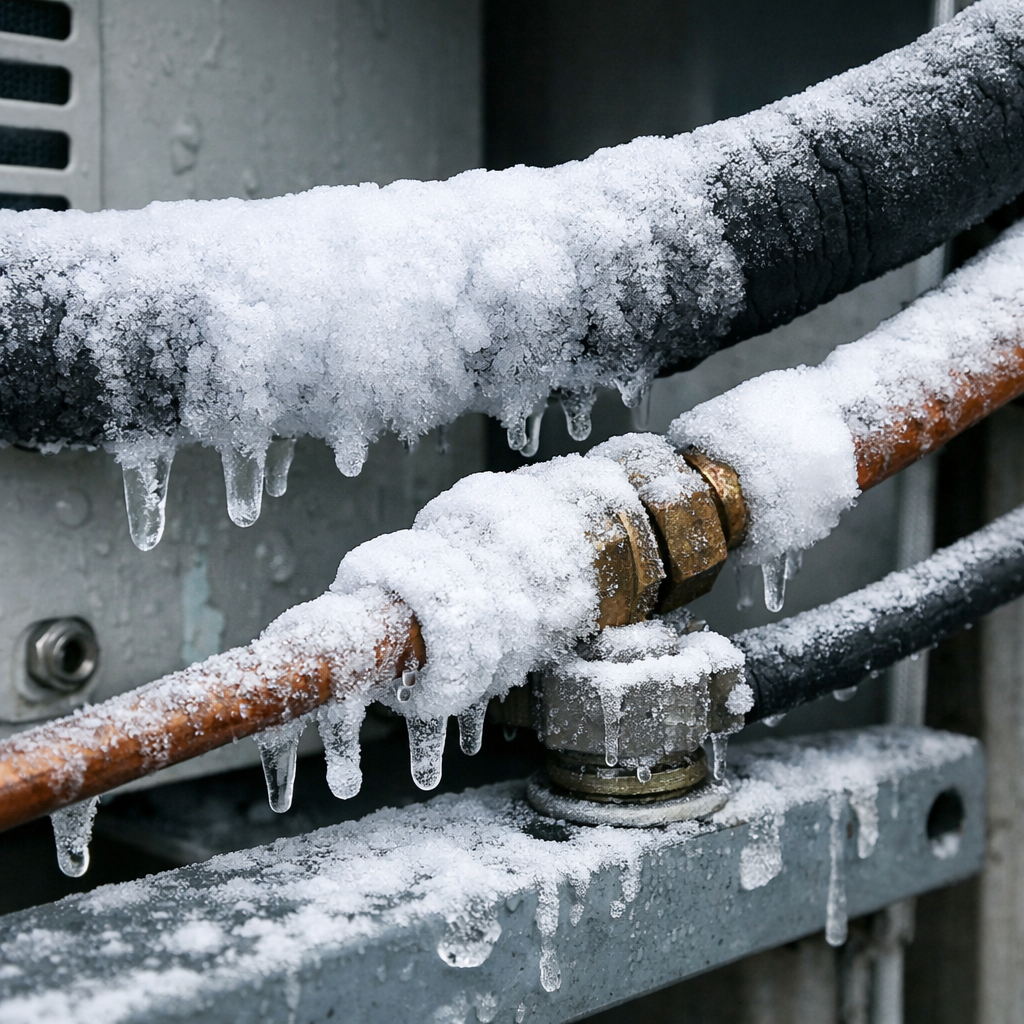
If your unit is covered in solid ice, that is not normal.
Thin frost is expected in winter.
Thick ice that does not clear is a mechanical problem.
Wintersville’s open suburban layout, combined with frequent sub-30°F nights, creates steady frost conditions during January and February. Homes in developments off Cadiz Road and Main Street often have tightly sized duct systems that make airflow issues more noticeable.
Let’s break down exactly why freeze-ups happen here.
Why Do Heat Pumps Frost Up So Easily in Wintersville?
Quick Answer:
Heat pumps frost easily in Wintersville because winter temperatures regularly fall below 30°F while humidity remains present in the Ohio Valley. That combination causes moisture in the air to freeze onto the outdoor coil during normal operation.
Heat pumps absorb heat from outdoor air.
When that air contains moisture and the coil surface is cold, frost forms.
Normally, the system removes that frost automatically.
When it cannot, ice builds.
What Are the 6 Most Common Causes of Freeze-Ups in Wintersville?
Quick Answer:
The most common causes are:
- Defrost control board failure
- Faulty coil temperature sensor
- Low refrigerant (10–20% below charge)
- Dirty outdoor coil
- Restricted indoor airflow
- Prolonged temperatures below 20°F
Each cause requires measurement to confirm.
In Wintersville specifically, we often see:
- Outdoor units installed too close to shrubs
- Narrow side-yard installations limiting airflow
- Filters not changed frequently enough during heating season
Small airflow restrictions add up.
How Does the Defrost Cycle Work?
Quick Answer:
When frost is detected, the system reverses into cooling mode for 5–15 minutes to warm the outdoor coil and melt frost. During this time, auxiliary heat (5–15 kW electric strips) should activate to prevent cold air indoors.
You may see steam rising from the unit.
That is normal.
If steam never appears and ice keeps building, the defrost system may not be functioning.
Why Does My Heat Pump Freeze Up After a Snowstorm?
Quick Answer:
Snow can block airflow around the outdoor unit and increase moisture exposure. If snow drifts against the coil or melts and refreezes, airflow becomes restricted and ice buildup accelerates.
Common issues in Wintersville:
- Snow piled too close to the unit
- Downspouts draining onto the equipment
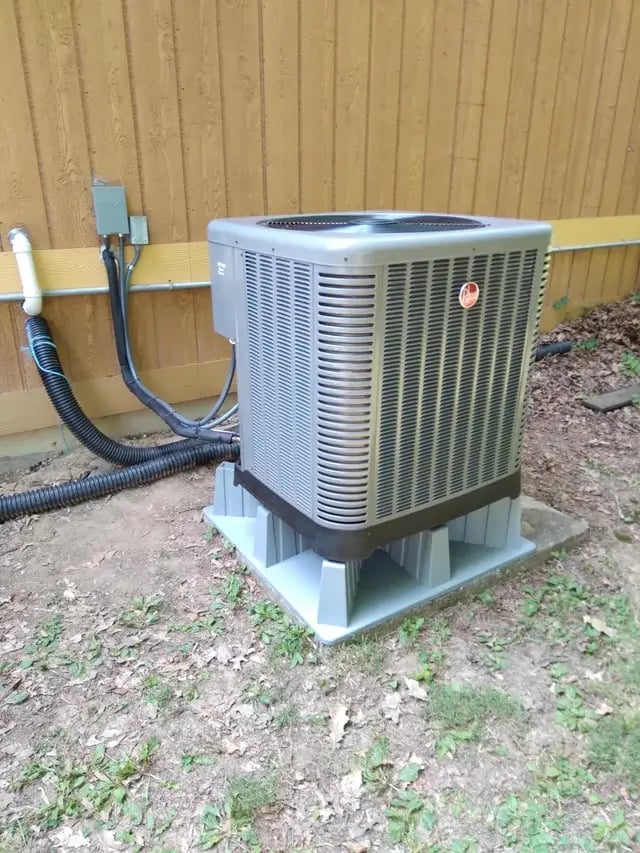
- Units installed on ground-level pads without elevation
Maintain at least 18 inches of clearance on all sides.
Can Ductwork Design Contribute to Freeze-Ups?
Quick Answer:
Yes. Undersized return ducts or restrictive airflow inside the home can reduce system efficiency and increase frost formation outdoors.
In many Wintersville homes built between 1990–2005, duct systems were sized tightly to save space. When filters clog or returns are blocked, airflow drops quickly.
Lower airflow means colder coil temperatures.
Colder coils create more frost.
We measure airflow before assuming equipment failure.
Can Low Refrigerant Cause Repeated Icing?
Quick Answer:
Yes. A refrigerant level that is 10–15% low can cause coil temperatures to drop below normal operating range. That increases frost accumulation and shortens defrost effectiveness.
Refrigerant does not evaporate or get used up.
If it’s low, there is a leak.
We locate and repair leaks before adjusting refrigerant levels.
We fix the cause — not just the symptom.
What Happens If I Ignore a Frozen Heat Pump?
Quick Answer:
Ignoring a frozen heat pump reduces heating efficiency and increases compressor strain. Continued operation while encased in ice can shorten system lifespan and increase repair costs.
Warning signs:
- Indoor temperature dropping below 68°F
- Weak airflow
- Breakers tripping
- Ice covering fan blades
If ice remains longer than 30 minutes after defrost begins, turn the system off and schedule service.
Is It Ever Normal for a Heat Pump to Be Completely Covered in Ice?
Quick Answer:
No. A fully iced-over heat pump is not normal, even in extreme cold. Light frost is normal. Thick ice that blocks airflow is a malfunction.
Cold weather increases frost formation.
It should not prevent the system from clearing itself.
What Does Professional Freeze-Up Diagnosis Include?
Quick Answer:
We inspect the coil, test defrost operation timing, check sensor readings, measure refrigerant pressures, confirm auxiliary heat strip engagement (5–15 kW), and measure airflow performance. Diagnostics take 45–60 minutes.
Recently, in a two-story home near Fernwood Road, we corrected a failing defrost board that allowed overnight ice buildup during a cold snap. The repair restored proper cycling without replacing the system.
We do not recommend system replacement unless testing confirms major component failure.
We measure before we recommend.
How Much Does It Cost to Fix a Frozen Heat Pump in Wintersville?
Quick Answer:
We charge a $99 diagnostic service call to determine why your heat pump froze. After testing, you receive an exact repair quote before work begins. Minor sensor or airflow corrections are straightforward. Refrigerant leaks or control failures require more involved repair.
There are no surprise invoices.
If replacement becomes necessary, we provide a free exact quote.
You do not need a new system unless testing proves it.
How Can I Reduce the Risk of Freeze-Ups Next Winter?
Quick Answer:
Replace filters every 1–3 months, clear debris around the unit, maintain proper snow clearance, schedule fall maintenance, and ensure airflow inside the home is unrestricted.
Preventative care reduces emergency winter calls.
Frequently Asked Questions About Frozen Heat Pumps in Wintersville
Why Does My Heat Pump Freeze but Still Blow Warm Air?
Quick Answer:
The indoor coil may still transfer heat while outdoor airflow is partially restricted. However, performance will decline as ice buildup increases.
Should I Pour Warm Water on the Ice?
Quick Answer:
No. Pouring water can cause refreezing and potential coil damage. Turn the system off and call for service.
How Long Should Defrost Mode Last?
Quick Answer:
Defrost cycles typically last 5–15 minutes. Ice should clear within 30 minutes total. Longer than that indicates a malfunction.
What Guarantees Do You Offer?
For diagnostics and repairs, Wintersville homeowners are protected under our Service Trust Guardian:
- 5-year labor warranty
- 60-day money-back guarantee
- No overtime charges
- $50 on-time arrival guarantee
- Clean work area guarantee
- Follow-up service guarantee
New installations are covered under our Lifetime Trust Shield.
If we fix it, it stays fixed.
Final Thoughts
A heat pump freezing up in winter in Wintersville is typically caused by:
- Defrost system failure
- Airflow restriction
- Low refrigerant
- Prolonged cold and humidity
- Auxiliary heat malfunction
The solution requires measurement.
Call Honest Fix today to schedule your $99 diagnostic service call or request a free exact quote.
No shortcuts. No scare tactics. Just honest fixes.
Scott Merritt is a co-founder of Honest Fix Heating, Cooling and Plumbing and brings more than 30 years of experience across HVAC, leadership, and industry education. He serves in a senior leadership and oversight role, providing licensed guidance, reviewing HVAC educational content, and supporting technician training and documentation standards. Prior to co-founding Honest Fix, Scott founded and owned Fire & Ice Heating & Air Conditioning in Columbus, Ohio, which he operated for more than two decades before selling the company in 2025. During that time, he led programs and partnerships including Carrier Factory Authorized Dealer, Trane Comfort Specialist, and Rheem Pro Partner, helping establish high technical and training standards. Scott is the Ohio State HVAC license holder for Honest Fix and provides licensed oversight to help ensure work meets applicable codes and manufacturer requirements. Learn more about Scott’s background and role at Honest Fix by viewing his full leadership bio.