Why Is My Heat Pump Running Constantly in Wintersville, OH?
March 7th, 2026
4 min read
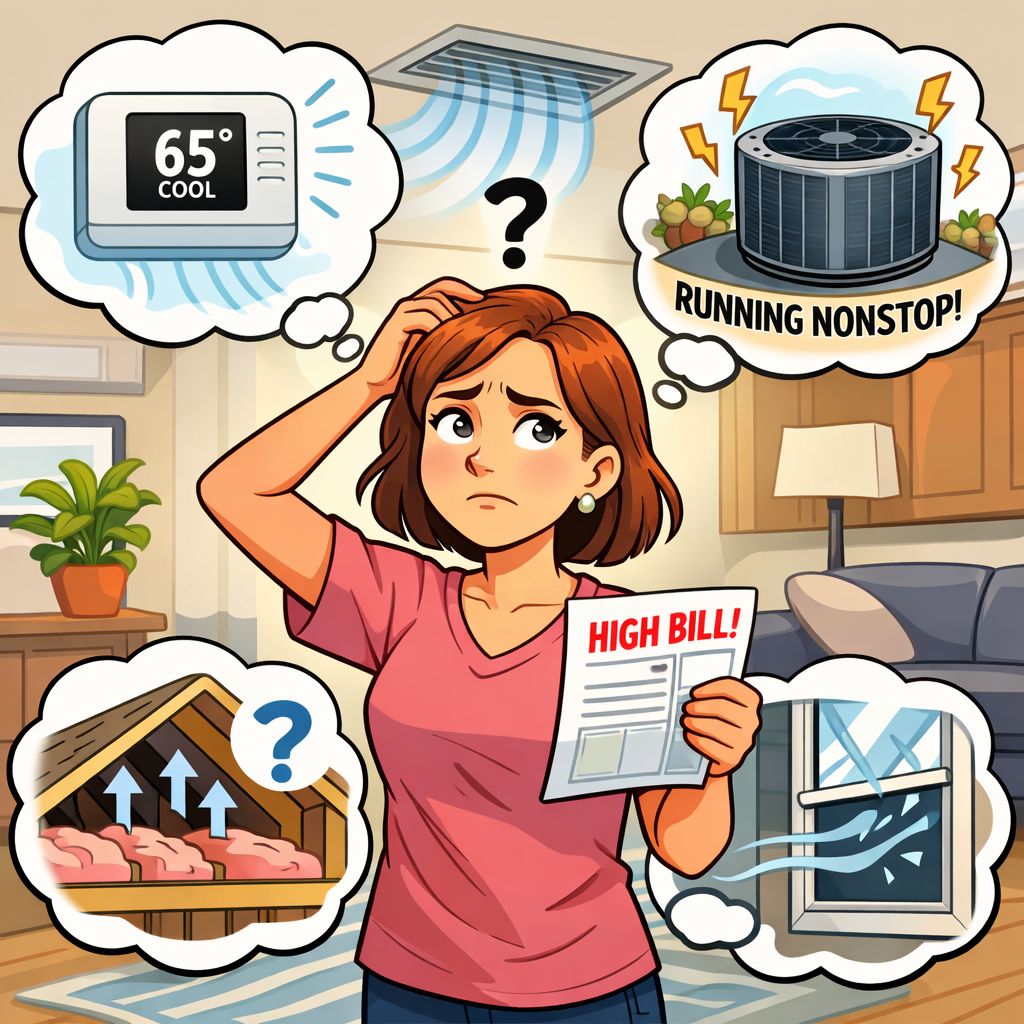
Why Your Heat Pump Runs Constantly in Wintersville
A heat pump in Wintersville may run constantly when outdoor temperatures fall below 30–35°F because the system must run longer to maintain indoor temperature. Wintersville sits on higher elevation terrain than the Ohio River valley, which often means colder overnight temperatures, stronger winter winds, and increased heat loss in homes.
If your heat pump seems like it never shuts off in Wintersville, you're not the only homeowner noticing it. Because Wintersville sits above the river valley on higher ground, temperatures often drop slightly colder overnight than nearby river communities. Wind exposure across open terrain and older housing insulation can also cause homes to lose heat faster.
When that happens, heat pumps run longer cycles to maintain indoor temperature. Sometimes that’s normal. Other times it means something in the home or system needs attention.
Why Does My Heat Pump Run Constantly in Wintersville?
Quick Answer
Heat pumps run longer when outdoor temperatures fall below 35°F because there is less usable heat in the outside air. Wintersville’s higher elevation and wind exposure often increase heat loss through roofs, walls, and attic insulation, which can make systems run longer to keep the home comfortable.
Heat Pumps Work Differently Than Furnaces
Heat pumps produce air around 85–95°F, while gas furnaces typically deliver air between 120–140°F.
Because the air temperature is lower, heat pumps run longer cycles to maintain comfort. Longer runtime is normal in cold weather.
How Long Should a Heat Pump Normally Run?
Quick Answer
During Wintersville winters, a heat pump may run 30–90 minutes per cycle when outdoor temperatures fall below 35°F. When temperatures drop into the 20°F range, the system may run nearly continuously while still maintaining the thermostat setting.
Typical Winter Run Times
| Outdoor Temperature | Typical Run Time |
|---|---|
| 45°F | 10–20 minutes |
| 35°F | 20–40 minutes |
| 25°F | 40–90 minutes |
| 15°F | Nearly continuous |
If the home reaches thermostat temperature, this behavior is usually normal.
Why Heat Pumps Behave Differently in the Upper Ohio Valley
Quick Answer
Heat pumps often run longer in the Upper Ohio Valley because the region combines river humidity, cold winter temperatures, hillside wind exposure, and older housing insulation. These conditions increase heat loss and can cause heat pumps to operate 20–40% longer than systems in flatter inland climates.
Communities across this region include:
- Steubenville
- Wintersville
- Toronto
- Mingo Junction
- Brilliant
- Hooverson Heights
- Weirton
- Follansbee
- Wellsburg
- New Cumberland
- Colliers
Regional conditions affecting HVAC performance include:
- Ohio River humidity
- Cold air settling in valleys
- Wind exposure across hills and ridges
- Older housing construction with insulation gaps
What Wintersville’s Terrain Does to Heat Pump Runtime
Quick Answer
Wintersville’s higher elevation and open terrain often produce colder nighttime temperatures and stronger winter winds than the river valley. These conditions increase heat loss through roofs, attic insulation, and exterior walls, which can cause heat pumps to run longer.
Higher Elevation Temperature Drops
Homes on higher ground often experience:
- Faster heat loss overnight
- Colder attic temperatures
- Stronger wind-driven heat loss
Wind Exposure
Many Wintersville homes sit in areas with fewer natural wind barriers. Wind strips heat from:
- Siding and exterior walls
- Roof surfaces
- Attic insulation
This increases heating demand.
Older Housing Insulation
Much of the housing stock in Wintersville was built between 1950 and 1980. Common issues include:
- Limited attic insulation
- Older windows
- Ductwork running through cool basements
- Air leakage around attic penetrations
These conditions often extend heat pump run time.
What Is Auxiliary Heat and Why Does It Turn On?
Quick Answer
Auxiliary heat activates when outdoor temperatures fall below about 30°F or when the heat pump cannot keep up with heating demand. Electric heat strips provide additional heating but consume more electricity than the heat pump.
Auxiliary heat may turn on when:
- Temperatures fall quickly
- The thermostat is raised several degrees
- The system cannot maintain temperature
Does Constant Running Increase Energy Costs?
Quick Answer
Long heat pump cycles can be efficient because heat pumps operate best with steady runtime. However, if auxiliary heat runs frequently, electricity usage can increase significantly.
If the system runs constantly but maintains temperature, it may still be operating efficiently.
When Constant Running Is Normal vs a Problem
Quick Answer
Continuous operation is normal when outdoor temperatures fall below 35°F and the system maintains thermostat temperature. If the home never reaches temperature or auxiliary heat runs constantly, service may be needed.
Often Normal
- Outdoor temperature below 35°F
- Home reaches thermostat setting
- Auxiliary heat runs occasionally
- No unusual noises
Possible System Problem
- Thermostat never reaches temperature
- Auxiliary heat always running
- Outdoor unit icing repeatedly
- Sudden increase in energy bills
Quick Checks Homeowners Can Try First
Quick Answer
Before scheduling service, homeowners should check the air filter, supply vents, thermostat settings, and outdoor temperature.
Try These Steps First
- Replace the air filter
- Make sure supply vents are open
- Confirm thermostat settings
- Check outdoor temperature
If the system still cannot maintain temperature afterward, a professional inspection may be needed.
Example from a Wintersville Home
Quick Answer
A typical Wintersville home built in the 1960s with about 1,700–1,900 square feet and moderate attic insulation may see near-continuous heat pump operation when temperatures fall below 25°F, especially during windy winter weather.
This often reflects home heat loss rather than equipment failure.
How Long Heat Pumps Usually Last
Quick Answer
Most residential heat pumps last 12–15 years in the Ohio Valley climate. Older systems may run longer cycles as efficiency declines.
Regular maintenance helps extend system life.
Frequently Asked Questions
Is It Normal for My Heat Pump to Run All Day in Winter?
Quick Answer
Yes. When outdoor temperatures fall below 30–35°F, heat pumps often run longer cycles to maintain indoor temperature.
Is It Bad If My Heat Pump Never Shuts Off?
Quick Answer
Continuous operation during cold weather can be normal if the home reaches thermostat temperature. If the home never warms up, the system may need service.
What Should I Do If My Heat Pump Runs Constantly?
Quick Answer
Check the air filter, make sure vents are open, and confirm thermostat settings. If the system cannot maintain temperature or auxiliary heat runs constantly, schedule a service inspection.
What Guarantees Do You Offer?
Quick Answer
Honest Fix provides two major protection programs depending on the type of service.
Lifetime Trust Shield — New HVAC Installations
- Lifetime labor protection (15 years of labor coverage, representing expected system life)
- No-lemon replacement guarantee
- Energy savings guarantee
- 90-day satisfaction guarantee
Service Trust Guardian — Repairs and Maintenance
- 5-year labor warranty on repairs
- No overtime charges
- On-time arrival guarantee
- Clean work area guarantee
- 60-day satisfaction guarantee
Many heat pumps that run constantly are operating normally in cold weather. Others may need airflow corrections, insulation improvements, or mechanical adjustments.
Clear diagnosis should come before any repair recommendation.
Free exact quote on new systems or schedule your service call online now.
Scott Merritt is a co-founder of Honest Fix Heating, Cooling and Plumbing and brings more than 30 years of experience across HVAC, leadership, and industry education. He serves in a senior leadership and oversight role, providing licensed guidance, reviewing HVAC educational content, and supporting technician training and documentation standards. Prior to co-founding Honest Fix, Scott founded and owned Fire & Ice Heating & Air Conditioning in Columbus, Ohio, which he operated for more than two decades before selling the company in 2025. During that time, he led programs and partnerships including Carrier Factory Authorized Dealer, Trane Comfort Specialist, and Rheem Pro Partner, helping establish high technical and training standards. Scott is the Ohio State HVAC license holder for Honest Fix and provides licensed oversight to help ensure work meets applicable codes and manufacturer requirements. Learn more about Scott’s background and role at Honest Fix by viewing his full leadership bio.