Why Is My Heat Pump Making Unusual Noises Like Humming or Rattling in Mingo Junction, Ohio?
March 3rd, 2026
3 min read
Quick Answer
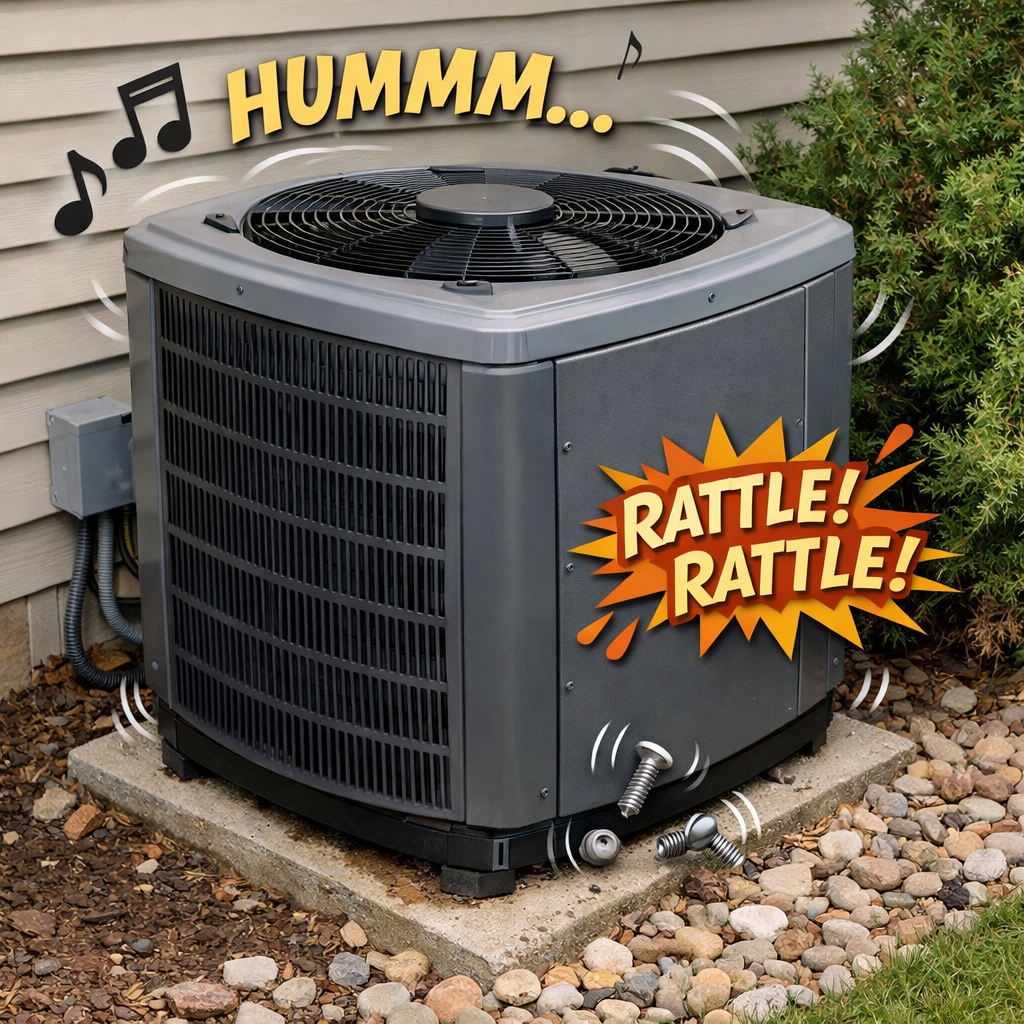
If your heat pump in Mingo Junction is making unusual noises like humming, rattling, buzzing, or vibrating, common causes include loose cabinet panels, fan motor wear, electrical contactor issues, refrigerant imbalance (10–20% off charge), compressor strain, or slope-related mounting instability. Valley acoustics can amplify vibration.
- A steady hum is normal.
- New, loud, or changing sounds are not.
Mingo Junction sits within a narrower section of the Ohio River valley. Sound reflects off hillside and masonry surfaces, making vibration seem louder than it actually is.
If the sound is increasing or irregular, it needs testing.
What Does Each Heat Pump Noise Usually Mean?
Quick Answer: Different sounds usually indicate different causes:
- Humming = Normal operation or compressor strain
- Rattling = Loose cabinet or mounting hardware
- Buzzing = Electrical component issue
- Grinding = Motor bearing failure
- Screeching = Fan motor damage
- Clicking = Normal relay (if occasional)
Identifying the sound narrows diagnosis quickly.
Normal vs. Problem Heat Pump Noises
| Sound Type | Normal? | What To Do |
|---|---|---|
| Steady low hum | Yes | Monitor |
| Single startup click | Yes | Normal relay |
| Loud humming | No | Schedule service |
| Rattling metal | No | Inspect |
| Repeated rapid clicking | No | Electrical check |
| Grinding/screeching | No | Turn system off |
If sound increases in volume or sharpness, schedule service.
Why Does My Heat Pump Sound Louder in the Valley?
Quick Answer: The narrow valley shape allows sound to reflect off hillside and masonry surfaces. Hard materials like brick and block foundations reflect low-frequency vibration, amplifying perceived noise.
In Mingo Junction:
- Hillsides create natural echo
- Brick homes reflect sound
- Outdoor units may sit close to retaining walls
Even normal 50–70 decibel operation can sound louder due to reflection.
Why Is My Heat Pump Rattling on a Hillside?
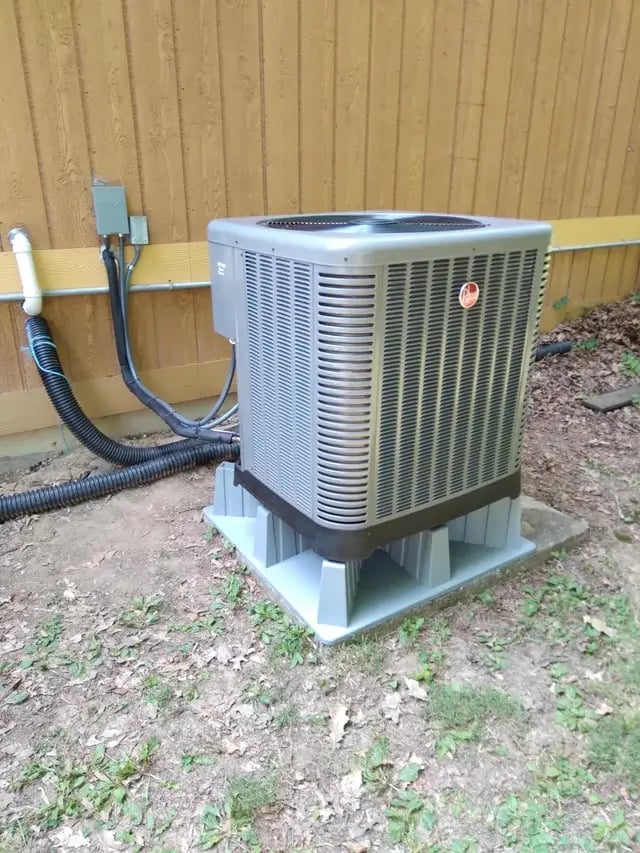
Quick Answer: Sloped terrain requires graded pads. Over time, minor soil movement or settling can cause slight tilting. That tilt increases cabinet vibration and panel rattling.
In hillside neighborhoods above Commercial Street:
- Pads are often stepped or leveled
- Freeze/thaw cycles shift soil
- Hardware loosens gradually
Even small movement increases vibration transfer.
Recently, in a hillside home near State Route 7, we corrected a slightly uneven pad and tightened mounting bolts that were amplifying startup vibration into a masonry wall. The repair eliminated the rattling without replacing the system.
Why Does My Heat Pump Buzz?
Quick Answer: Buzzing typically indicates an electrical issue such as a failing contactor, loose wiring, or voltage imbalance. Debris contacting the fan blade can also cause buzzing.
Electrical buzzing can lead to:
- Intermittent shutdown
- Breaker trips
- Component failure
Electrical testing confirms the source.
Is Humming Normal?
Quick Answer: Yes. Most heat pumps operate between 50–70 decibels at the outdoor unit. A steady hum is normal. Loud humming that vibrates nearby structures or continues after shutdown is not.
If humming becomes louder or uneven, testing is recommended.
Does Valley Wind Funneling Increase Vibration?
Quick Answer: Yes. Wind moving through the narrow valley can create steady cross-breezes. Wind across the cabinet increases vibration and can amplify panel resonance.
Wind plus slight hardware looseness equals noticeable rattling.
Wind does not cause loud noise alone.
It amplifies existing instability.
Does System Age Affect Unusual Noise?
Quick Answer: Yes. After 10–15 years, motor bearings wear, compressor mounts soften, and electrical components degrade. Older systems gradually become louder.
- Gradual increase suggests wear.
- Sudden loud change suggests mechanical failure.
Testing determines which.
Can Refrigerant Imbalance Cause Unusual Humming?
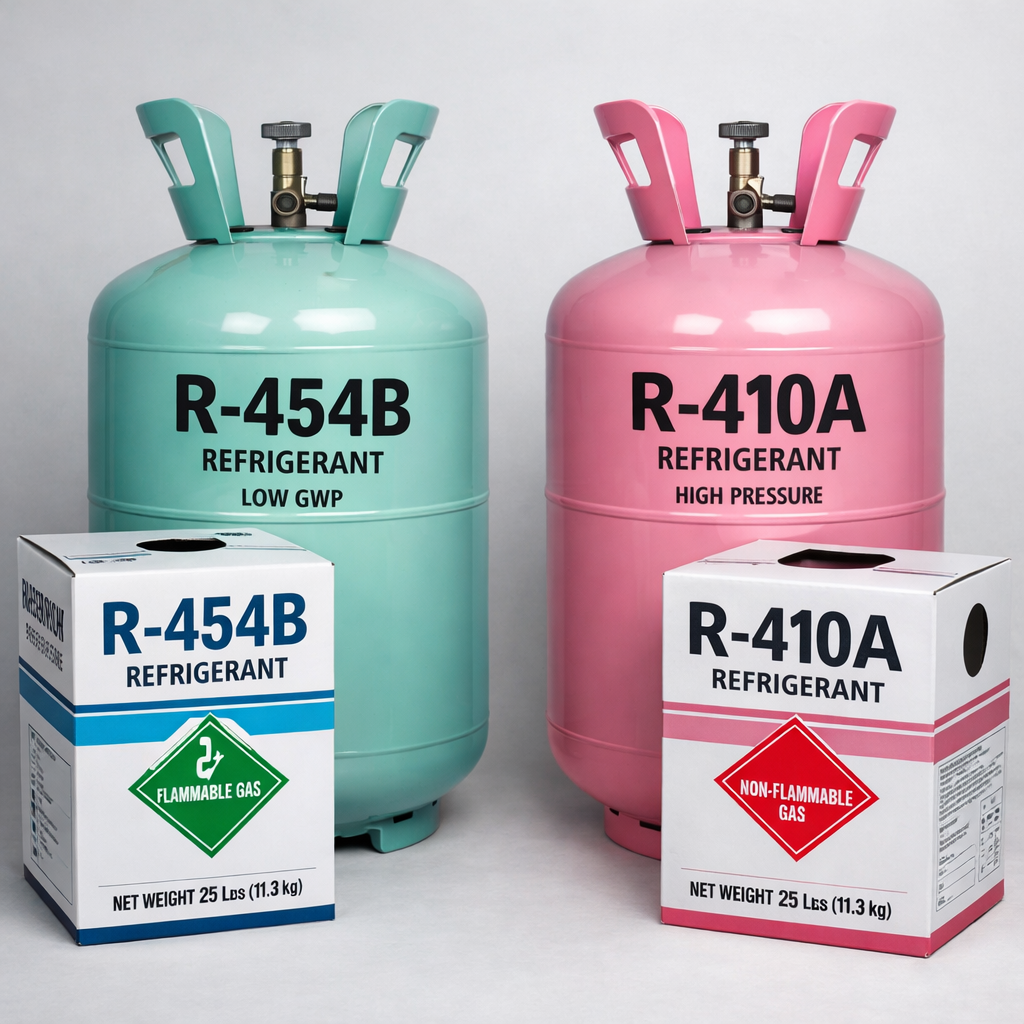
Quick Answer: Yes. A system that is 10–15% low on refrigerant may cause compressor strain, increasing humming and vibration.
Refrigerant does not get used up. If it’s low, there is a leak.
We measure pressures before recommending repair.
We fix the cause — not just the noise.
When Should I Turn My Heat Pump Off?
Quick Answer: Turn the system off immediately if you hear grinding, screeching, repeated breaker trips, or smell burning.
Shut it off if you hear:
- Sharp metal grinding
- High-pitched screeching
- Continuous electrical buzzing
- Rapid repeated clicking
Stopping operation prevents further damage.
What Does Professional Noise Diagnosis Include in Mingo Junction?
Quick Answer: We inspect cabinet stability, evaluate pad leveling on sloped terrain, tighten hardware, check fan blade balance, measure refrigerant levels, test electrical components, and evaluate compressor performance. Diagnostics take 45–60 minutes.
We do not recommend replacement unless testing confirms major mechanical failure.
We measure before we recommend.
We don’t guess at noises. We test components.
How Much Does It Cost to Diagnose Unusual Heat Pump Noises in Mingo Junction?
Quick Answer: We charge a $99 diagnostic service call to determine the source of unusual noise. After testing, you receive an exact repair quote before work begins. Minor tightening or electrical corrections are straightforward. Motor or compressor repairs require deeper service.
There are no surprise invoices.
If replacement becomes necessary, we provide a free exact quote.
You do not need a new system unless testing proves it.
How Can Mingo Junction Homeowners Reduce Noise Issues?
Quick Answer: Ensure the unit is level on sloped terrain, tighten mounting bolts annually, maintain 18 inches of clearance, clear debris, replace filters every 1–3 months, and schedule annual maintenance.
In valley terrain, pad stability and hardware integrity are critical.
Frequently Asked Questions About Heat Pump Noises in Mingo Junction
Why Does My Heat Pump Echo Off My House?
Quick Answer: Brick, block, and retaining walls reflect low-frequency vibration. In narrow valley settings, sound reflection increases perceived volume.
Is Clicking Normal?
Quick Answer: A single click during startup or shutdown is normal. Repeated rapid clicking is not and should be tested.
What Guarantees Do You Offer?
For diagnostics and repairs, Mingo Junction homeowners are protected under our Service Trust Guardian:
- 5-year labor warranty
- 60-day money-back guarantee
- No overtime charges
- $50 on-time arrival guarantee
- Clean work area guarantee
- Follow-up service guarantee
New installations are covered under our Lifetime Trust Shield.
If we fix it, it stays fixed.
Final Thoughts
In Mingo Junction, unusual heat pump noises are influenced by:
- Valley acoustics
- Hillside pad settling
- Masonry sound reflection
- Wind funneling
- Electrical wear
- Refrigerant imbalance
Noise is an early warning sign.
Testing determines the cause.
Call Honest Fix today to schedule your $99 diagnostic service call or request a free exact quote.
No shortcuts. No scare tactics. Just honest fixes.
Scott Merritt is a co-founder of Honest Fix Heating, Cooling and Plumbing and brings more than 30 years of experience across HVAC, leadership, and industry education. He serves in a senior leadership and oversight role, providing licensed guidance, reviewing HVAC educational content, and supporting technician training and documentation standards. Prior to co-founding Honest Fix, Scott founded and owned Fire & Ice Heating & Air Conditioning in Columbus, Ohio, which he operated for more than two decades before selling the company in 2025. During that time, he led programs and partnerships including Carrier Factory Authorized Dealer, Trane Comfort Specialist, and Rheem Pro Partner, helping establish high technical and training standards. Scott is the Ohio State HVAC license holder for Honest Fix and provides licensed oversight to help ensure work meets applicable codes and manufacturer requirements. Learn more about Scott’s background and role at Honest Fix by viewing his full leadership bio.