What Are The Signs Of A Refrigerant Leak Or Heat Exchanger Crack In An HVAC System In Weirton Homes?
January 5th, 2026
3 min read
By Alex Largent
Quick Answer
Refrigerant leaks and heat exchanger cracks cause warning signs like weak heating or cooling, unusual smells, short cycling, or higher energy bills. In older Weirton homes, these issues typically develop over time due to system age, airflow stress, or metal fatigue.
Why These Problems Are Common In Weirton Homes
Refrigerant leaks and heat exchanger cracks rarely happen all at once.
They develop gradually as HVAC systems age and operate under ongoing stress.
Weirton has many homes built during periods of industrial expansion, with HVAC systems commonly installed 15–30 years ago. These systems often operate in:
- Basements with higher moisture levels
- Hillside lots with limited airflow paths
- Older duct layouts that were never redesigned for modern equipment
Restricted airflow, moisture exposure, and long run times all increase wear on coils and heat exchangers. This does not automatically mean replacement is required—but it does mean early warning signs should be taken seriously.
Refrigerant Leak vs Heat Exchanger Crack: Why The Difference Matters
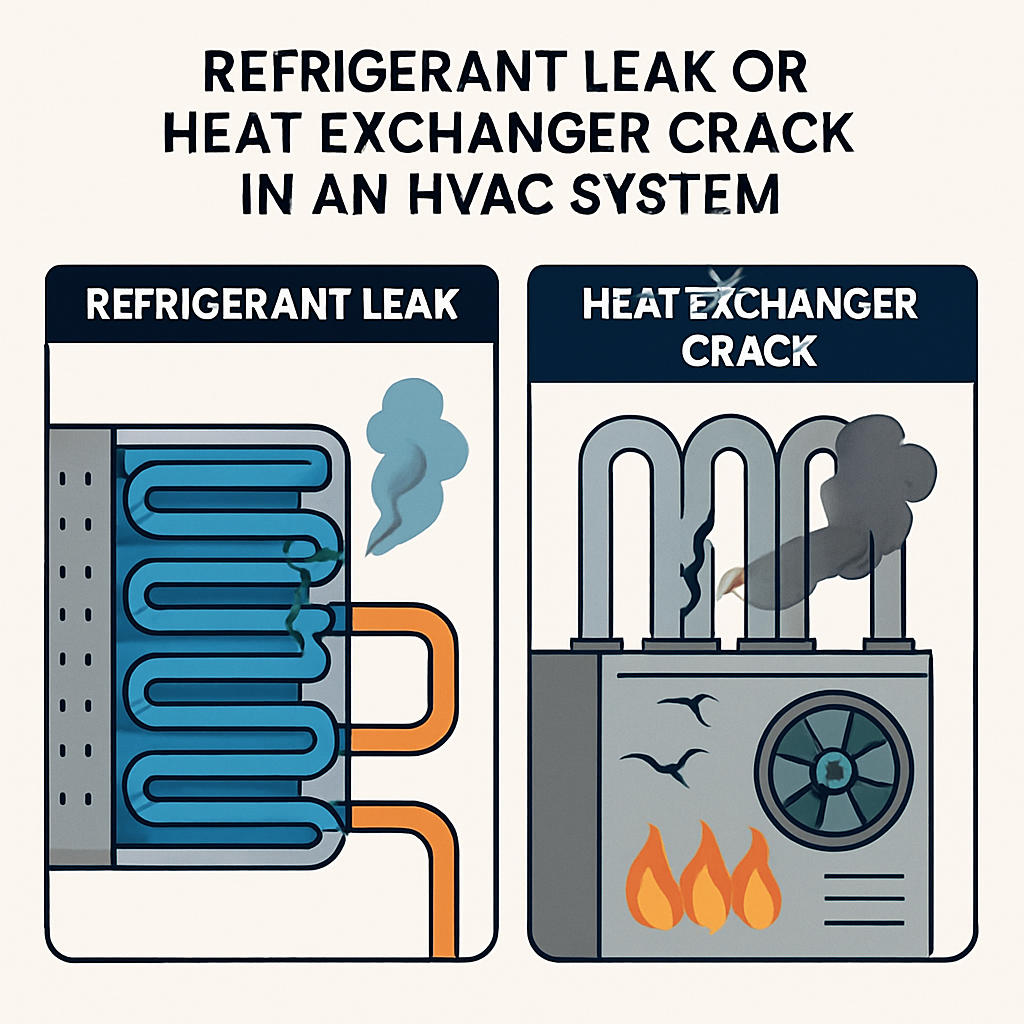
A cracked heat exchanger is a safety issue, while a refrigerant leak is a performance issue.
- Refrigerant leaks reduce cooling capacity and efficiency
- Heat exchanger cracks can allow combustion gases into the home
Understanding the difference helps homeowners avoid unnecessary repairs while protecting health and safety.
Signs Of A Refrigerant Leak
Weak Or Inconsistent Cooling
Some rooms never quite reach the temperature you set.
Common Weirton causes include:
- Aging copper refrigerant lines
- Coil corrosion from basement moisture
- Poor airflow stressing the evaporator coil
Refrigerant does not get “used up.” If levels are low, there is a leak.
Most refrigerant leaks are repairable when caught early.
Ice On The Indoor Coil Or Refrigerant Lines
Ice buildup is a clear warning sign.
This often occurs when:
- Refrigerant levels drop
- Airflow is restricted
- The system runs longer trying to compensate
Ice is a symptom, not the root problem.
Hissing Or Bubbling Sounds
These sounds can indicate refrigerant escaping under pressure.
They may come from:
- Coil pinhole leaks
- Line set connections
- Aging brazed joints
Any audible refrigerant noise should be evaluated.
Higher Energy Bills Without Better Comfort
Leaks force systems to work harder for less result.
Many Weirton homeowners first notice refrigerant problems through rising electric bills paired with weaker cooling.
Signs Of A Cracked Heat Exchanger
Strong Or Unusual Smells During Heating
Odors during heating season are a serious warning sign.
This may include:
- Sharp or metallic smells
- Burning or chemical-like odors
These smells should never be ignored.
Flu-Like Symptoms At Home
Physical symptoms are one of the most serious indicators.
Watch for:
- Headaches
- Dizziness
- Nausea
- Fatigue
If symptoms improve when you leave the home, shut the system off and call immediately.
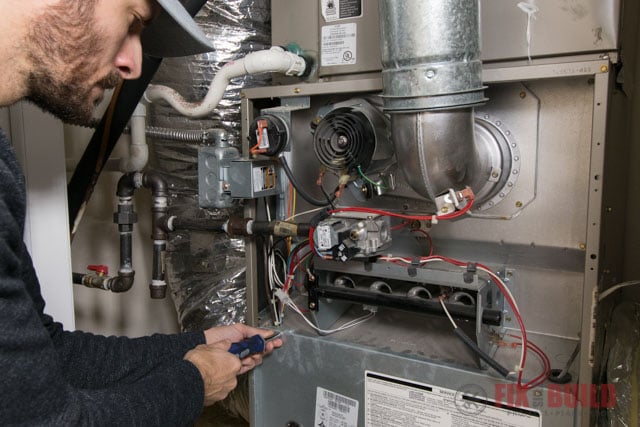
Soot, Rust, Or Corrosion Inside The Furnace
Visible corrosion often points to metal fatigue.
Older furnaces in Weirton basements are especially vulnerable due to long-term moisture exposure.
Not every older furnace has a cracked heat exchanger—but visible deterioration always warrants inspection.
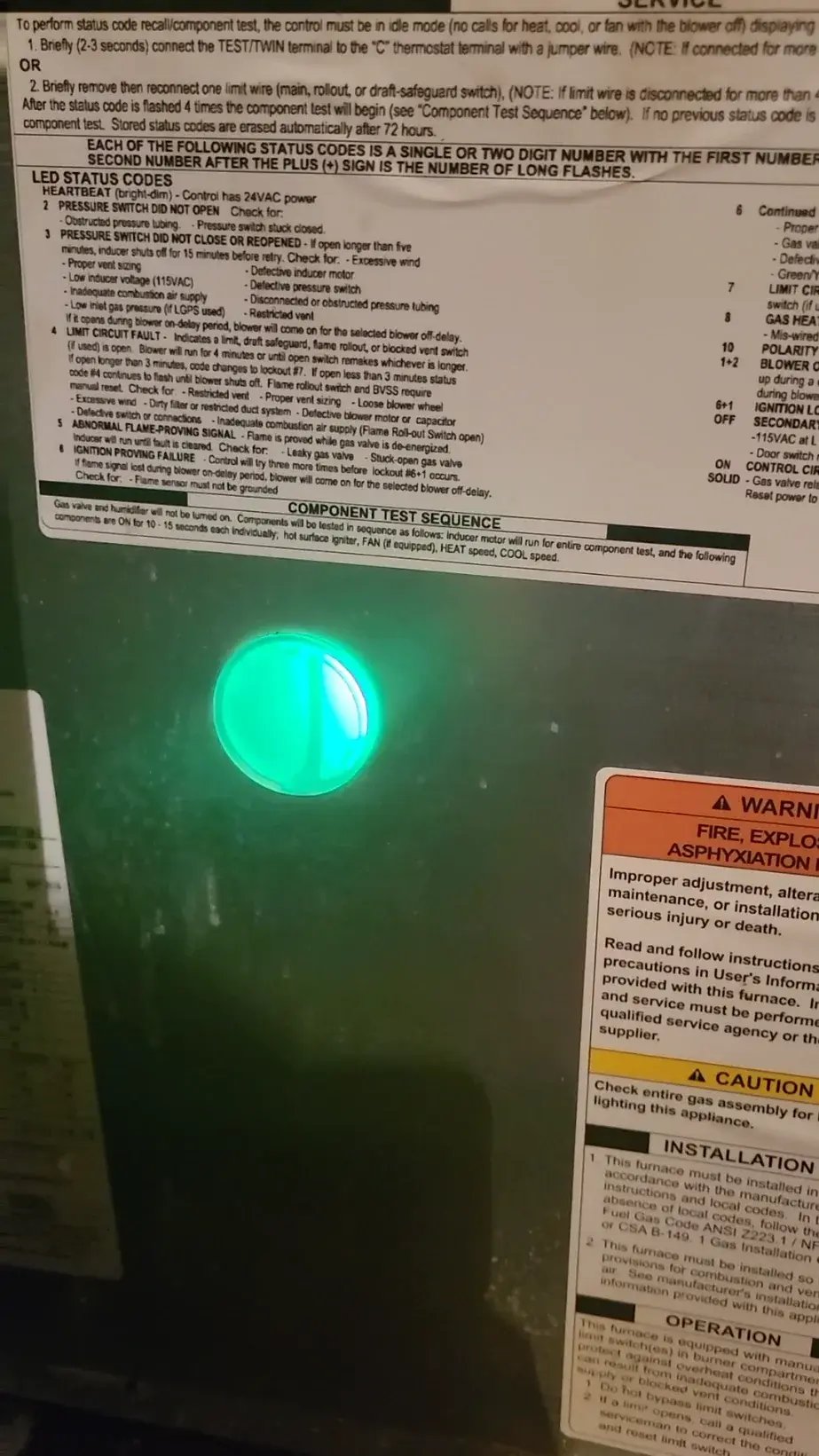
Short Cycling Or Trouble Staying Lit
Cracks can disrupt proper combustion.
This may cause:
- Frequent shutdowns
- Safety sensor activation
- Inconsistent heating
What Is Normal vs What Is Not
Clear boundaries matter.
- Brief odor at startup → sometimes normal
- Ongoing odors → not normal
- Weak airflow → common, but needs evaluation
- Physical symptoms → never normal
If something feels off, it usually is.
A Real Weirton Example We See Often
Home: 1950s two-story near Marland Heights
System: 18-year-old gas furnace with central AC
Concern: Rising energy bills and headaches during winter
What we found:
- Low refrigerant from an aging evaporator coil
- Early heat exchanger failure caused by long-term overheating
Neither issue happened overnight. Both developed gradually due to airflow restrictions combined with system age.
Cost Considerations In Weirton Homes
Cost depends on the problem, not the diagnosis name.
Typical realities homeowners see:
- Refrigerant leak detection and repair often falls in the hundreds, depending on leak location and coil condition
- Heat exchanger failure frequently leads to furnace replacement due to safety concerns and system age
In Weirton homes, cost is often influenced more by system age, basement access, and duct layout than by the part itself. Options should always be explained before decisions are made.
What We Check First During Diagnosis
Diagnosis always comes before recommendations.
We start by checking:
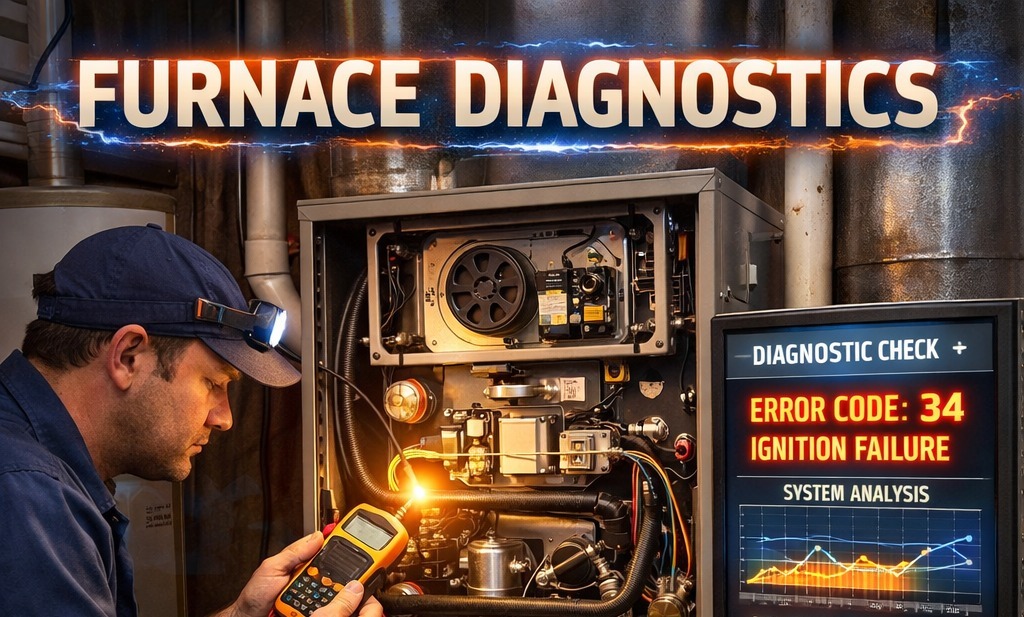
- Combustion safety and carbon monoxide risk
- Heat exchanger integrity
- Refrigerant pressures and leak indicators
- Airflow restrictions creating system stress
This process determines whether repair, monitoring, or replacement makes sense.
Repair vs Replacement: How Decisions Are Made
Some refrigerant leaks can be repaired safely. Some heat exchanger failures cannot.
Our role is to clearly explain which category your system falls into—before any recommendation is made.
What Not To Do
These mistakes often make problems worse.
Avoid:
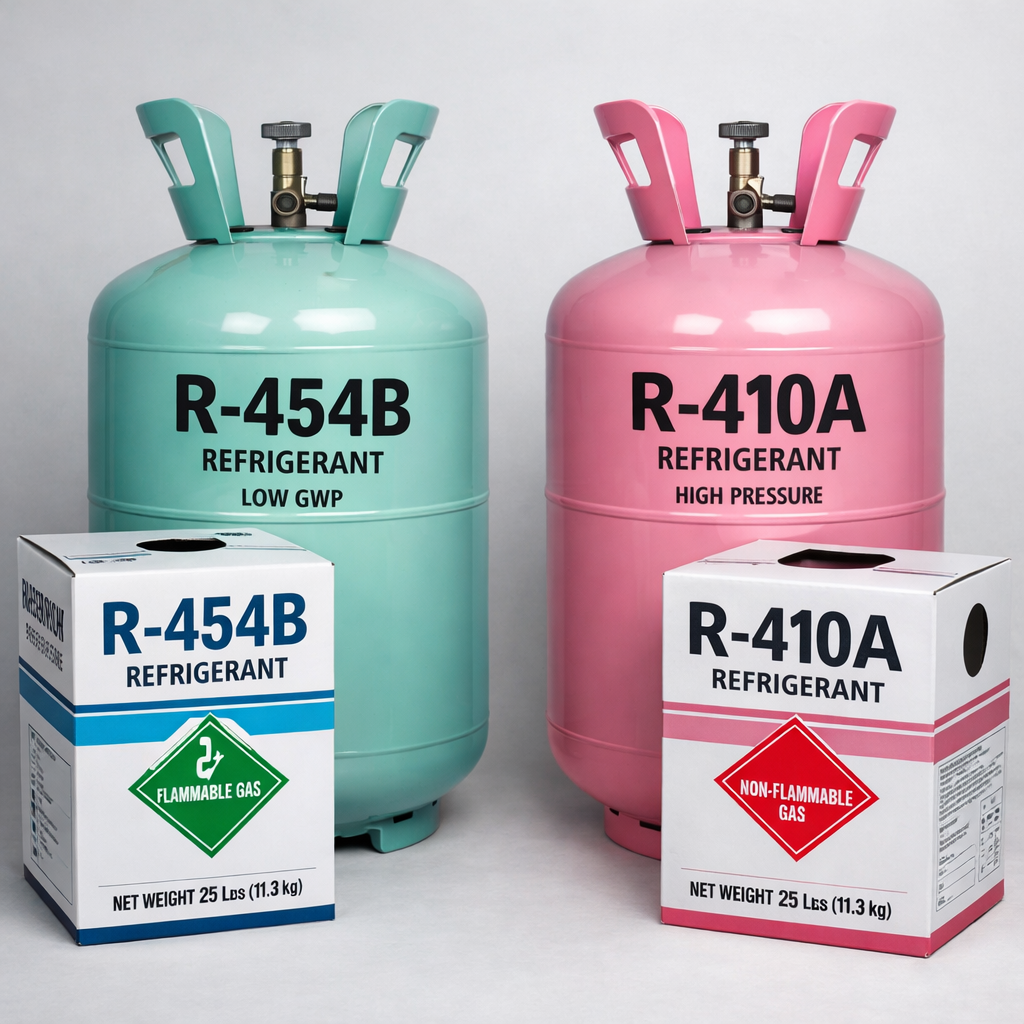
- Adding refrigerant without fixing a leak
- Ignoring health symptoms
- Continuing to run a suspected cracked furnace
- Assuming replacement is the only option
Safety Rule To Remember
If you suspect a cracked heat exchanger, shut the system off. If you suspect a refrigerant leak, limit use and schedule an inspection.
Carbon monoxide detectors are important, but they are not a substitute for a proper heat exchanger inspection.
Frequently Asked Questions
Is a refrigerant leak dangerous?
It is not typically a health risk, but it will damage system performance and efficiency if ignored.
Is a cracked heat exchanger dangerous?
Yes. It can allow combustion gases into the home and must be addressed immediately.
Which problem costs more to fix?
Heat exchanger failures usually involve higher cost and safety concerns, while refrigerant leaks vary widely depending on location and system condition.
Will a carbon monoxide detector catch a cracked heat exchanger?
Sometimes, but not always. Cracks can exist before CO levels trigger alarms.
What guarantees do you offer?
We protect homeowners with:
- Service Trust Guardian for repairs and diagnostics
- Lifetime Trust Shield for new installations
What To Do Next
If you suspect a refrigerant leak or a cracked heat exchanger, the most important step is confirming what’s actually happening—before guessing or committing to major decisions.
Call Honest Fix today for a free exact quote.
If you want to review our guarantees before deciding, we’ll walk you through them clearly—no pressure, no games.
Alex Largent is the Owner and Senior HVAC Efficiency Analyst at Honest Fix Heating, Cooling & Plumbing. With more than 20 years of field experience, NATE and EPA certifications, and a hands-on leadership style, Alex teaches his team to fix systems right the first time — with transparency, precision, and no upsells. He writes about HVAC diagnostics, home energy efficiency, and practical maintenance advice for homeowners across the Upper Ohio Valley. Read Alex Largent’s full bio to learn more about his expertise in the HVAC and Plumbing industry. Updated October 2025.