Why Does My AC Smell Musty or Like Burning in Wintersville, OH?
February 2nd, 2026
4 min read
Quick Answer
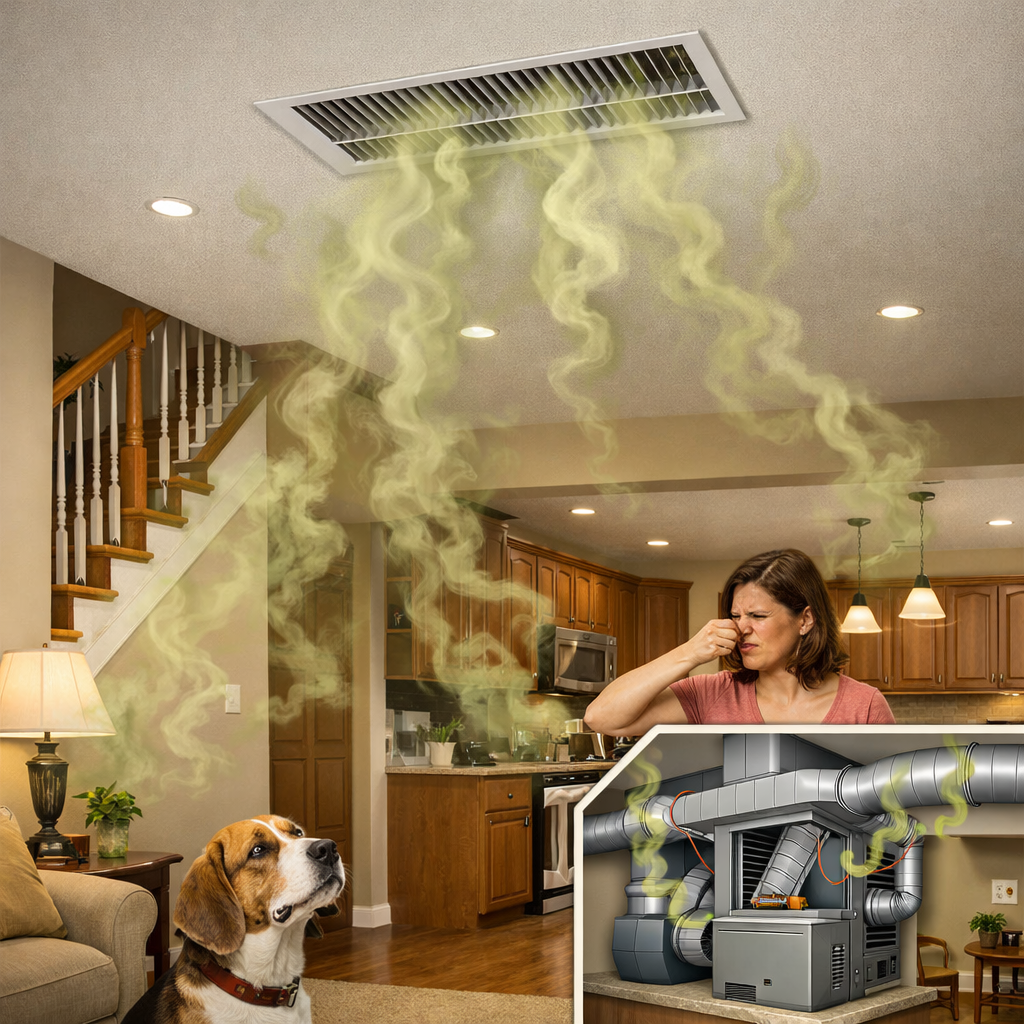
A musty AC smell usually points to moisture-related issues like mold, mildew, or dirty components, while a burning smell often signals electrical problems, overheating parts, or mechanical friction. In Wintersville, OH, finished basements, tighter home construction, and centrally located HVAC systems make both odors common—and important to diagnose quickly.
If your AC smells unpleasant or alarming when it runs, that odor is not cosmetic. HVAC systems use smells as early warning signals when something is wrong.
This article is meant to help Wintersville homeowners understand what different AC smells mean, what risks they indicate, and when it’s unsafe to keep the system running.
Why AC Odors Are Common in Wintersville Homes
Wintersville homes are often newer than surrounding areas, with tighter building envelopes, finished basements, and centrally located HVAC systems. While these homes are energy-efficient, they also trap moisture and airborne particles more easily when something goes wrong.
In Wintersville, finished basements, reduced natural air leakage, and continuous system operation increase the likelihood of both musty and burning AC smells.
A Wintersville-Specific Cost Driver
A common local cost driver is HVAC equipment installed above finished basement ceilings, where moisture buildup or electrical issues require additional labor to access and diagnose safely.
A Real Wintersville Example
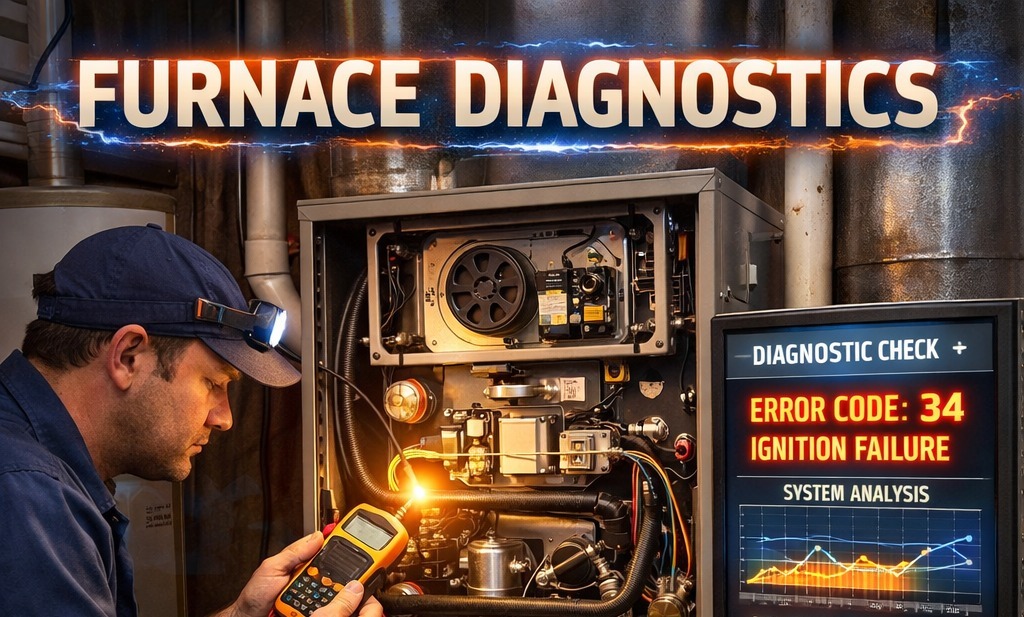
A homeowner near Canton Road called because their AC smelled musty at startup and later produced a faint burning odor after running for 15–20 minutes.
What we found:
- Mold growth on the evaporator coil due to restricted drainage
- Standing water in the condensate pan hidden above a finished ceiling
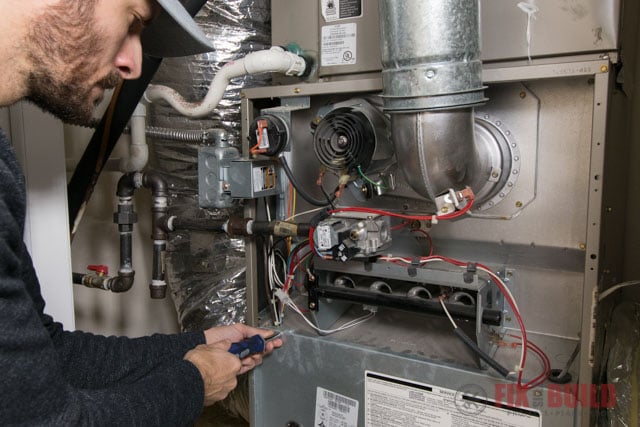
- Early overheating at a blower motor connection
The smells were early warnings—caught before major damage occurred.
Odor Type → Cause → Risk
AC smells follow predictable patterns:
- Musty smell → moisture or microbial growth → indoor air quality and health risk
- Burning smell → heat, friction, or electricity → equipment damage or fire risk
Correct identification determines urgency.
Musty Smells vs. Burning Smells: The Critical Difference
Musty smells are almost always moisture-related.
Burning smells are almost always heat-related.
Treating them the same can delay necessary safety action.
Problem #1: Musty Smell From Mold or Mildew
Musty odors mean moisture is present where it shouldn’t be.
Common sources include:
- Mold or mildew on the evaporator coil
- Standing water in the drain pan
- Clogged condensate drains
- Damp duct insulation in finished basements
In Wintersville homes, hidden moisture is a frequent contributor.
Health Note
Musty AC smells can be more concerning for children, older adults, and people with asthma or allergies, as airborne mold or bacteria can worsen symptoms.
Problem #2: Dirty Coils and Drainage Problems
When evaporator coils remain damp and dirty:
Dust + moisture + time = persistent odor.
Blocked drains allow bacteria to grow and circulate through the home when the AC runs.
Problem #3: Burning Smell From Dust Burning Off
A brief burning smell may occur:
- At first startup after months of inactivity
- When dust burns off warm components
This should disappear within a few minutes.
If it continues, it is not normal.
Problem #4: Electrical vs. Mechanical Burning Smells
Not all burning smells indicate the same danger.
- Electrical burning (sharp, plastic, ozone-like):
Overheating wires or insulation — highest safety risk - Mechanical burning (rubber, hot metal):
Motors, bearings, or belts overheating — urgent, but different failure path
Electrical smells require immediate shutdown.
When the Smell Happens Matters
Timing offers important diagnostic clues:
- Only at startup: dust or moisture buildup
- After 10–20 minutes: overheating components
- Constant while running: active electrical or mechanical failure
Persistent odors should never be ignored.
Do NOT Run the AC If You Smell This
If the smell is electrical, smoky, or intensifying, shut the system off immediately.
Do not:
- Leave it running unattended
- Allow it to run overnight
- Assume it will “burn off”
Continuing to run the system can cause serious damage or fire risk.
Problem #5: Airflow Problems That Trap Odors
Poor airflow allows smells to linger and intensify.
Common causes include:
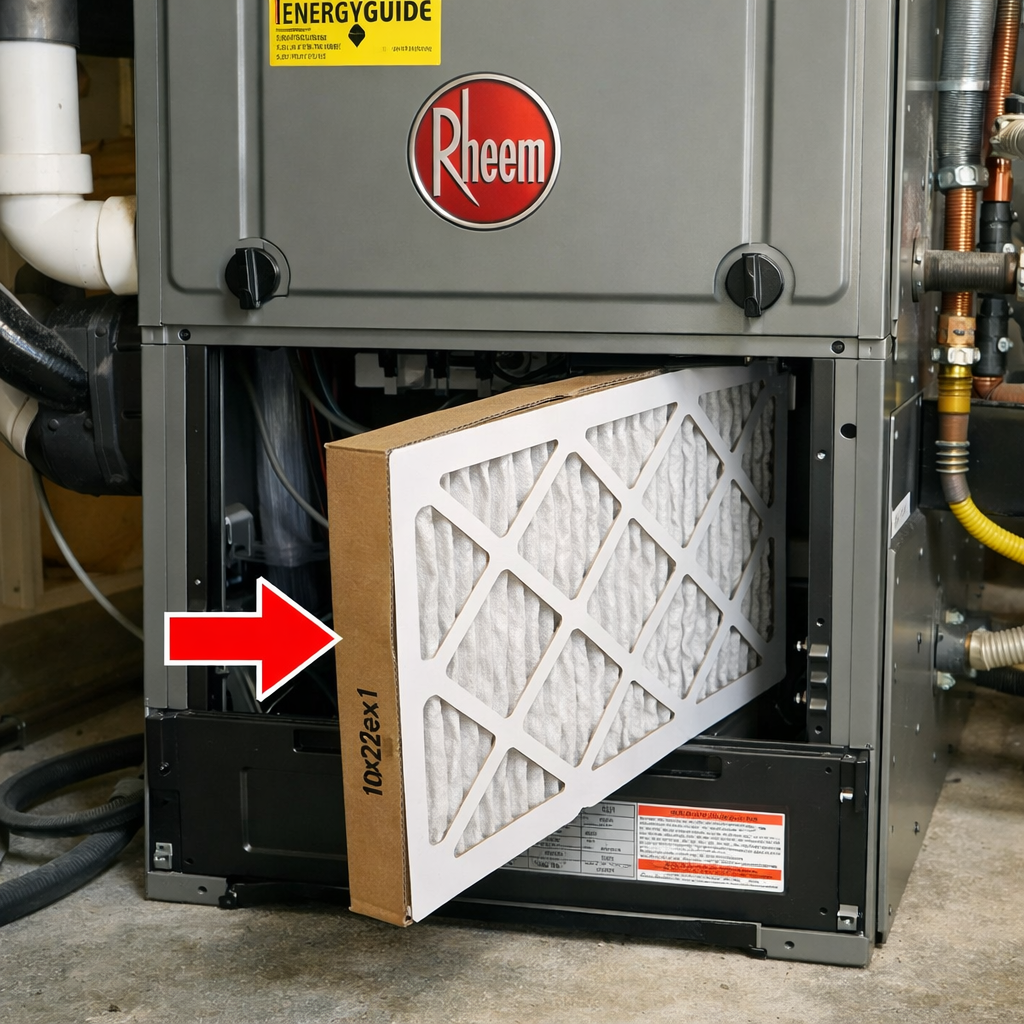
- Clogged filters
- Dirty blower wheels
- Restricted ductwork above finished ceilings
In Wintersville homes, concealed duct runs often amplify odor issues.
How Odor Problems Escalate If Ignored
Most odor problems follow this path:
odor → contamination or heat → component damage → safety risk or system failure
Early inspection prevents costly outcomes.
This Is NOT an Air Freshener Problem
Sprays and deodorizers only mask symptoms.
If your AC smells, something inside the system is producing that odor.
Ignoring it allows damage or health risks to worsen.
What You Can Safely Check — And What You Shouldn’t
Homeowners can safely:
- Replace air filters
- Check for visible water near vents or ceilings
- Note when the smell occurs
Homeowners should not:
- Spray cleaners into ducts or equipment
- Ignore burning or electrical smells
- Open electrical panels
A Common Wintersville Homeowner Mistake
Assuming newer homes don’t have odor problems.
Tighter construction often makes moisture and electrical issues show up faster—not slower.
Repair vs. Replacement: A Clear Boundary
Most AC odor issues do not require full system replacement.
Repair or cleaning may solve the problem when:
- Contamination is localized
- Electrical components are intact
- Performance normalizes after service
Replacement may be discussed when:
- Electrical damage is widespread
- Mold contamination is severe and recurring
- Major components are compromised
Inspection—not assumptions—drives the decision.
Cost Considerations (Without Guessing)
Costs depend on:
- Source of the odor
- Accessibility of components
- Extent of contamination or damage
- System age and design
Ignoring early smells is almost always the most expensive choice.
Why Guarantees Matter for Odor-Related AC Work
Service Trust Guardian (Repairs & Diagnostics)
Qualifying repairs are backed by:
- 5-year labor warranty
- No overtime charges
- On-time arrival guarantee
- Clean work area guarantee
Lifetime Trust Shield (System Replacement)
If replacement is required, new systems include:
- 15-year labor warranty
- No-lemon guarantee
- Energy performance accountability
- Full satisfaction guarantee
Other Ohio Valley Cities With Similar AC Smell Issues
This Wintersville article is part of a regional education series also covering:
- Weirton, WV
- Steubenville, OH
- Toronto, OH
- Mingo Junction, OH
- Brilliant, OH
- Follansbee, WV
- Wellsburg, WV
- New Cumberland, WV
- Colliers, WV
- Hooverson Heights, WV
Frequently Asked Questions
Is a musty AC smell dangerous?
It can be, especially for people with allergies or respiratory conditions.
Is a burning smell ever normal?
Only briefly during first startup after long inactivity. Persistent burning smells are not normal.
Can dirty coils cause AC odors?
Yes. Dirty, damp coils are one of the most common causes of musty smells.
What guarantees apply to AC odor repairs?
Repairs are covered by the Service Trust Guardian with a 5-year labor warranty.
New systems are protected by the Lifetime Trust Shield with a 15-year labor warranty.
When to Take the Next Step
If your Wintersville home’s AC smells musty, smoky, or like something is burning:
That smell is a warning—not a nuisance.
Inspection—not masking the odor—is the safest next step.
Call Honest Fix today for a free exact quote.
Optional next step: Learn about our guarantees before you decide.
Scott Merritt is a co-founder of Honest Fix Heating, Cooling and Plumbing and brings more than 30 years of experience across HVAC, leadership, and industry education. He serves in a senior leadership and oversight role, providing licensed guidance, reviewing HVAC educational content, and supporting technician training and documentation standards. Prior to co-founding Honest Fix, Scott founded and owned Fire & Ice Heating & Air Conditioning in Columbus, Ohio, which he operated for more than two decades before selling the company in 2025. During that time, he led programs and partnerships including Carrier Factory Authorized Dealer, Trane Comfort Specialist, and Rheem Pro Partner, helping establish high technical and training standards. Scott is the Ohio State HVAC license holder for Honest Fix and provides licensed oversight to help ensure work meets applicable codes and manufacturer requirements. Learn more about Scott’s background and role at Honest Fix by viewing his full leadership bio.