What Should I Do If My Heat Pump Is Leaking Refrigerant in Toronto, Ohio?
March 6th, 2026
3 min read
Quick Answer
If your heat pump is leaking refrigerant in Toronto, Ohio, turn the system off immediately and schedule a licensed HVAC inspection. Running the system low on refrigerant can damage the compressor. In river-level communities like Toronto, high groundwater, flood-stage moisture, and saturated soil conditions are common contributors to refrigerant leaks.
What Should I Do First?
If you suspect a refrigerant leak:
- Turn the system off at the thermostat.
- Do not attempt to recharge refrigerant yourself.
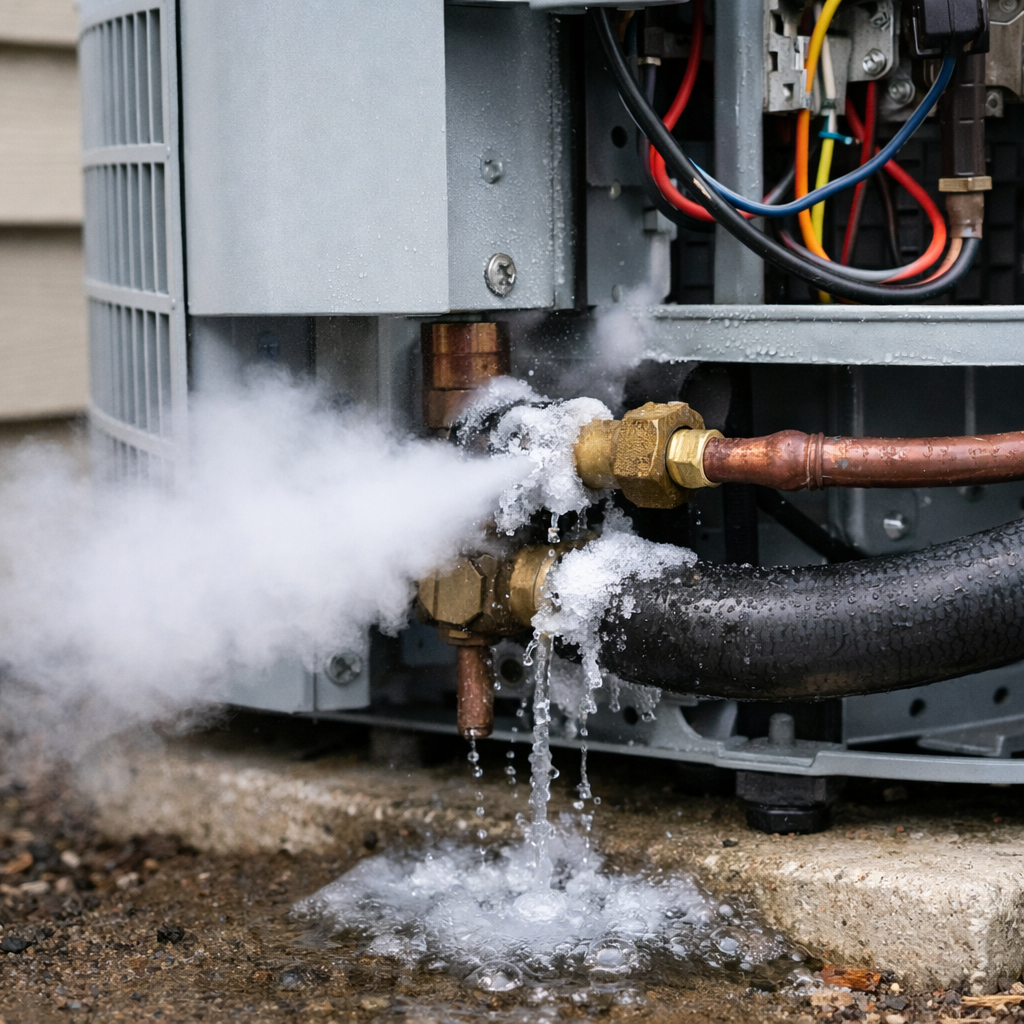
- Look for ice on copper refrigerant lines or the outdoor unit.
- Schedule a licensed, EPA-certified HVAC technician.
If ice is forming, leave the system off.
If cooling performance drops quickly, do not continue running the unit.
Early action protects the compressor and prevents more expensive repairs.
Most Common Cause in Toronto
In Toronto, Ohio, the most common cause of refrigerant leaks is long-term outdoor coil corrosion caused by persistent moisture exposure and elevated groundwater conditions near the Ohio River.
Many homes sit at lower elevations where humidity lingers and soil remains damp for extended periods.
How Do I Know If It’s a Refrigerant Leak?
Quick Answer
Weak cooling, ice on refrigerant lines, constant operation, or hissing sounds are common warning signs.
What Toronto Homeowners Often Notice
- Air feels less cool during humid summer days
- System runs longer after heavy rain
- Ice forming on the copper line outside
- Outdoor unit frosting during mild temperatures
- Unexpected increase in electric bills
If cooling declines after extended wet weather or high river stages, refrigerant loss may be developing.
Why Refrigerant Leaks Develop in Toronto
Toronto’s location along the Ohio River creates unique environmental stress on HVAC systems.
Floodplain Elevation & High Groundwater
Many Toronto properties sit close to river level.
This can result in:
- Higher average humidity
- Persistent ground moisture
- Slower drying around condenser pads
- Accelerated cabinet corrosion
Even when flooding is not present, elevated groundwater keeps soil damp longer than in higher-elevation towns.
Saturated Soil & Line Set Stress
When soil remains saturated:
- Freeze-thaw expansion increases
- Buried refrigerant lines experience movement
- Insulation can degrade
- Brazed joints can weaken
Homes closer to the river often experience stronger soil movement during late winter freeze cycles.
Drainage Challenges in Lower Elevations
Some older Toronto properties have limited grading improvements.
After heavy spring rain:
- Water may collect near outdoor units
- Pads may settle unevenly
- Moisture may remain trapped against cabinet bases
If the outdoor unit sits below street grade, drainage correction may be necessary.
Prolonged Humidity Exposure
Unlike elevated plateau communities, river-level neighborhoods often experience prolonged humid air stagnation.
Extended moisture exposure increases long-term coil deterioration.
What Happens If I Wait?
Quick Answer
Ignoring a refrigerant leak can lead to compressor failure.
Progression typically includes:
- Reduced cooling efficiency
- Ice buildup
- Compressor overheating
- Major system damage
Early repair is significantly less costly than replacing a compressor.
Repair vs Replacement in Toronto Climate
Repair is typically appropriate when:
- The leak is localized
- Coil structure remains solid
- System is under 10 years old
- Corrosion is limited
Replacement is typically appropriate when:
- Corrosion affects large portions of the coil
- System exceeds 12–15 years
- Cabinet base shows structural rust
- Multiple leaks are present
Inspection confirms which option makes the most sense.
What Influences Repair Cost in Toronto?
Repair cost depends on:
- Leak location
- Extent of corrosion
- Pad leveling needs
- Line set condition
- Warranty coverage
Moisture-related corrosion can increase labor if coil replacement is required.
Is It Safe to Run the System?
Quick Answer
No. Running a heat pump low on refrigerant can permanently damage the compressor.
Modern refrigerants are not hazardous to indoor air under normal conditions. The primary risk is mechanical failure.
If ice forms or cooling performance drops significantly, turn the system off.
Can Refrigerant Be Recharged Without Repair?
Quick Answer
No. Refrigerant does not get used up. Low levels indicate a leak.
Federal EPA Section 608 regulations require proper repair and certified refrigerant handling before recharging.
Will Warranty Cover a Refrigerant Leak?
Quick Answer
Coverage depends on system age, manufacturer terms, and the cause of failure.
Most manufacturer warranties:
- Cover factory defects
- Do not cover environmental corrosion
- Do not automatically include labor
Labor coverage depends on the installing contractor.
If your system is under 10 years old, confirm it was registered with the manufacturer.
What to Expect During a Leak Inspection
A professional inspection typically includes:
- System performance testing
- Electronic leak detection
- Pressure testing if necessary
- Coil and line set evaluation
- Drainage and pad stability review
In river-level properties, additional attention is given to moisture exposure and soil conditions.
Most inspections take approximately 60–90 minutes.
Why Local Upper Ohio Valley Experience Matters
Toronto’s floodplain elevation, groundwater conditions, and prolonged humidity exposure create HVAC stress patterns different from higher-elevation communities.
Experience with:
- River-level installations
- Below-grade properties
- Saturated soil conditions
- Drainage correction needs
helps ensure refrigerant leaks are properly diagnosed and fully repaired.
We serve Toronto and surrounding Jefferson County communities throughout the Upper Ohio Valley.
Frequently Asked Questions
Are refrigerant leaks more common near the river?
Higher moisture exposure can accelerate corrosion, increasing the likelihood of leaks over time.
Does groundwater affect HVAC systems?
Yes. Persistent soil moisture can increase corrosion and freeze-thaw stress on buried lines.
Is a small leak urgent?
Yes. Small leaks worsen over time and can lead to compressor damage.
Can flooding damage a heat pump?
Yes. Direct water exposure can damage electrical components and accelerate corrosion.
How long should a system last in Toronto?
With maintenance, most systems last 12–15 years. Moisture exposure influences lifespan.
Final Guidance
A refrigerant leak is a mechanical issue — and it is repairable. The key is addressing it early and correcting any moisture or drainage conditions contributing to the problem.
If you notice weak cooling, ice buildup, or unusual system behavior in your Toronto home, turn the system off and schedule a professional inspection promptly.
Understanding groundwater, floodplain exposure, and drainage patterns is essential for long-term HVAC reliability in the Upper Ohio Valley.
Scott Merritt is a co-founder of Honest Fix Heating, Cooling and Plumbing and brings more than 30 years of experience across HVAC, leadership, and industry education. He serves in a senior leadership and oversight role, providing licensed guidance, reviewing HVAC educational content, and supporting technician training and documentation standards. Prior to co-founding Honest Fix, Scott founded and owned Fire & Ice Heating & Air Conditioning in Columbus, Ohio, which he operated for more than two decades before selling the company in 2025. During that time, he led programs and partnerships including Carrier Factory Authorized Dealer, Trane Comfort Specialist, and Rheem Pro Partner, helping establish high technical and training standards. Scott is the Ohio State HVAC license holder for Honest Fix and provides licensed oversight to help ensure work meets applicable codes and manufacturer requirements. Learn more about Scott’s background and role at Honest Fix by viewing his full leadership bio.