What Are Common Signs That My Heat Pump Needs Repair in Colliers, WV?
March 4th, 2026
4 min read
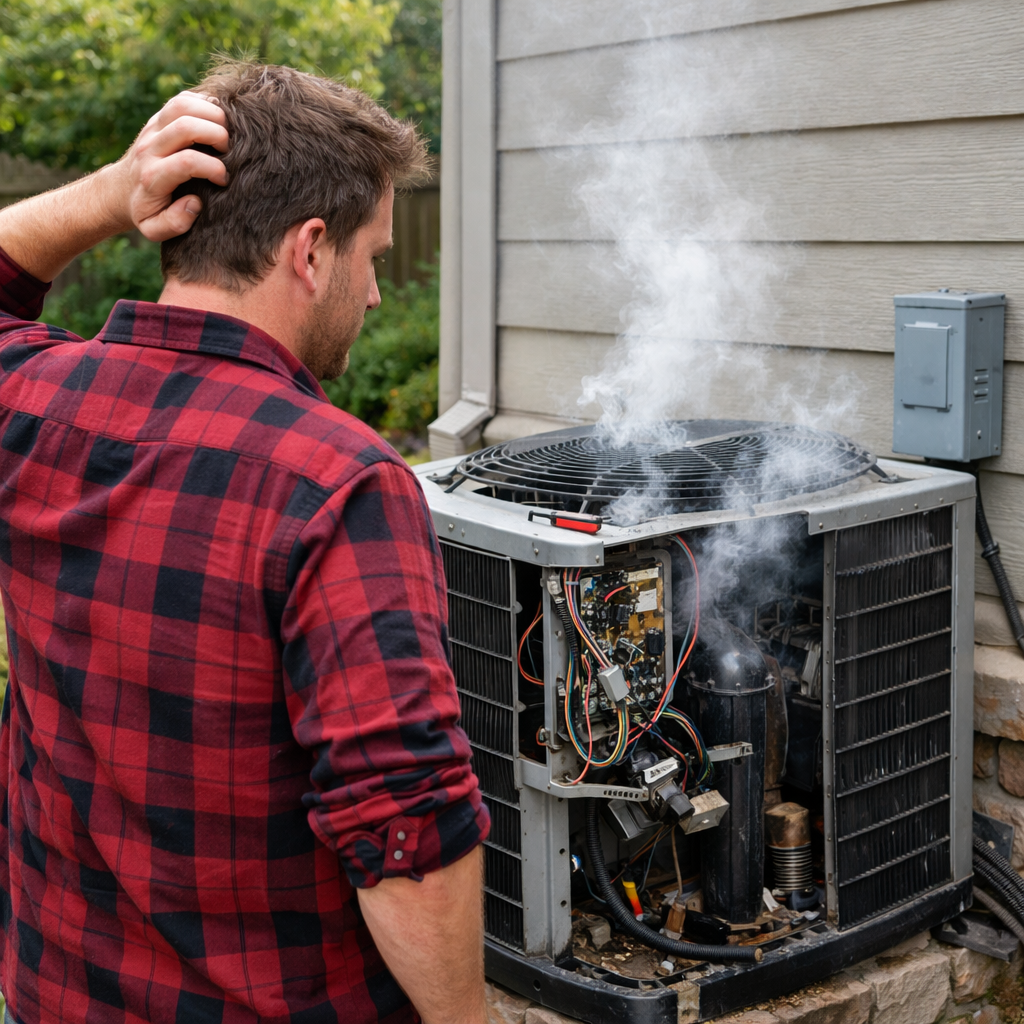
Quick Answer
Common signs your heat pump in Colliers needs repair include weak airflow, ice that doesn’t clear within 30 minutes, short cycling every 5–10 minutes, loud noises above 50–70 dB, breaker trips, or electric bills rising 15–30% unexpectedly. Rolling plateau terrain and mixed wind exposure increase system stress.
Heat pumps rarely fail without warning.
They show measurable symptoms first.
In Colliers’ rolling hills and variable exposure properties, small issues escalate faster if ignored.
Early repair reduces total cost.
When Should I Call for Repair Immediately?
Quick Answer: Call immediately if your system trips breakers, makes grinding or screeching sounds, fails to maintain 68–70°F in moderate winter weather, or develops solid ice that does not clear within 30 minutes of defrost.
These indicate active electrical or mechanical strain.
Waiting increases damage risk.
What Are the Most Common Signs a Heat Pump Needs Repair?
Quick Answer: The most common repair indicators are:
- Weak airflow
- Lukewarm air in heating mode
- Persistent ice buildup
- Loud humming, rattling, or buzzing
- Short cycling every 5–10 minutes
- Electric bills rising 15–30%
- System running constantly
- Breaker trips
Two or more symptoms together strongly suggest service is needed.
What Is Normal vs Not Normal?
Quick Answer: Normal: steady low hum, brief defrost steam, longer run times below 25°F.
Not Normal: rapid cycling, loud vibration, breaker trips, persistent ice, or rising electric bills without weather change.
Clear benchmarks prevent unnecessary delay.
Are the Signs Happening Inside or Outside?
Quick Answer: Indoor signs include weak airflow, uneven temperatures, and thermostat not reaching setpoint. Outdoor signs include ice buildup, vibration, short cycling, or breaker trips.
Indoor symptoms often indicate duct or blower issues.
Outdoor symptoms often indicate refrigerant, electrical, defrost, or mounting problems.
Location narrows diagnosis.
Is Weak Airflow a Repair Sign?
Quick Answer: Yes. Reduced airflow often indicates blower motor wear, dirty coils, duct restriction, or refrigerant imbalance (10–20% off charge). A 10–20% airflow loss significantly impacts efficiency.
In rural Colliers homes:
- Longer duct runs are common
- Crawlspace ducts may be exposed
- Return air paths may be limited
Airflow is measurable.
We test static pressure before recommending repair.
Why Is My Heat Pump Running Constantly?
Quick Answer: If your system runs continuously without maintaining 68–70°F in moderate winter weather, it may indicate refrigerant imbalance, airflow restriction, compressor inefficiency, or defrost malfunction.
Open pasture properties experience greater wind-driven heat loss.
North-facing slopes remain colder longer.
Failure to recover temperature is not normal.
Constant operation increases wear.
Is Ice Buildup More Common on Rolling Terrain?
Quick Answer: Yes. North-facing slopes and shaded wooded properties retain colder air longer, increasing frost formation. Light frost is normal. Solid ice that does not clear within 5–15 minutes of defrost — or remains longer than 30 minutes — indicates a repair issue.
Persistent ice requires service.
Why Is My Electric Bill Suddenly Higher?
Quick Answer: A 15–30% unexplained increase in electric bills may indicate auxiliary heat overuse (5–15 kW strips), refrigerant imbalance, or compressor strain.
Wind exposure in open pasture areas increases heating demand, but sudden spikes without weather change signal inefficiency.
Your utility bill often reveals decline first.
Why Is My Auxiliary Heat Running Constantly?
Quick Answer: If auxiliary heat strips (5–15 kW) operate frequently or continuously, your heat pump may not be transferring heat effectively.
Auxiliary heat significantly increases electric usage.
Common causes include:
- Refrigerant imbalance
- Defrost malfunction
- Restricted airflow
Auxiliary heat should assist — not replace — the heat pump.
Are Unusual Noises a Repair Sign?
Quick Answer: Yes. Loud humming above 50–70 dB, rattling, buzzing, grinding, or screeching indicate mechanical or electrical wear.
On plateau terrain:
- Open lots increase wind-driven vibration
- Rolling pads may settle slightly
- Tree-shielded homes experience less wind but more prolonged cold
Noise rarely improves on its own.
It usually worsens.
Why Does My Heat Pump Keep Tripping the Breaker?
Quick Answer: Breaker trips often indicate capacitor failure, compressor strain, electrical short, or wiring problems. Repeated trips require immediate testing.
Turn the system off if breakers trip repeatedly.
Electrical strain escalates quickly.
Could My Ductwork Be the Problem?
Quick Answer: Yes. Leaky or undersized ducts can reduce airflow by 10–20%, creating symptoms that resemble equipment failure.
In rural properties:
- Crawlspace insulation may be aging
- Duct joints may be unsealed
- Return sizing may be inadequate
We evaluate duct performance before recommending replacement.
Does System Age Matter?
Quick Answer: Yes. After 10–15 years, capacitors, contactors, blower motors, and compressors begin showing wear. Gradual performance decline appears before complete failure.
Age alone does not require replacement.
Most repair calls involve electrical or airflow corrections — not full system replacement.
We don’t replace systems because of symptoms.
We replace systems because of measurements.
How Does Colliers’ Plateau Terrain Affect Repair Frequency?
Quick Answer: Rolling terrain creates pad leveling challenges. Open exposure increases wind stress. Shaded slopes increase frost duration.
Terrain adds environmental load.
Small issues escalate faster in mixed exposure conditions.
What Does Professional Heat Pump Diagnosis Include?
Quick Answer: We measure airflow, refrigerant levels, electrical load, capacitor strength, defrost timing (5–15 minutes), auxiliary heat strip operation (5–15 kW), compressor performance, and thermostat calibration. Diagnostics take 45–60 minutes.
We measure before we recommend.
We don’t guess at repairs. We test components.
How Much Does It Cost to Diagnose Heat Pump Repair Issues in Colliers?
Quick Answer: We charge a $99 diagnostic service call to determine the cause of performance issues. After testing, you receive an exact repair quote before work begins.
Minor repairs are straightforward.
Major component repairs require deeper service.
There are no surprise invoices.
If replacement becomes necessary, we provide a free exact quote.
You do not need a new system unless testing proves it.
Frequently Asked Questions About Heat Pump Repair in Colliers
Can My Heat Pump Still Operate if It Needs Repair?
Quick Answer: Yes, but efficiency declines and internal strain increases. Continued operation shortens system lifespan.
Does Wooded vs Open Property Affect Repair Risk?
Quick Answer: Yes. Wooded lots reduce wind stress but may retain cold air longer. Open pasture lots experience greater wind-driven vibration and heat loss.
What Guarantees Do You Offer?
For diagnostics and repairs, Colliers homeowners are protected under our Service Trust Guardian:
- 5-year labor warranty
- 60-day money-back guarantee
- No overtime charges
- $50 on-time arrival guarantee
- Clean work area guarantee
- Follow-up service guarantee
New installations are covered under our Lifetime Trust Shield.
If we fix it, it stays fixed.
Final Thoughts
In Colliers, common repair signs include:
- Weak airflow
- Persistent ice
- Short cycling
- Rising electric bills
- Breaker trips
- Unusual noise
- Constant operation
- Excess auxiliary heat use
Rolling plateau terrain and mixed wind exposure increase system stress.
Heat pumps show measurable symptoms before failure.
Testing determines the cause.
Call Honest Fix today to schedule your $99 diagnostic service call or request a free exact quote.
No shortcuts. No scare tactics. Just honest fixes.
Scott Merritt is a co-founder of Honest Fix Heating, Cooling and Plumbing and brings more than 30 years of experience across HVAC, leadership, and industry education. He serves in a senior leadership and oversight role, providing licensed guidance, reviewing HVAC educational content, and supporting technician training and documentation standards. Prior to co-founding Honest Fix, Scott founded and owned Fire & Ice Heating & Air Conditioning in Columbus, Ohio, which he operated for more than two decades before selling the company in 2025. During that time, he led programs and partnerships including Carrier Factory Authorized Dealer, Trane Comfort Specialist, and Rheem Pro Partner, helping establish high technical and training standards. Scott is the Ohio State HVAC license holder for Honest Fix and provides licensed oversight to help ensure work meets applicable codes and manufacturer requirements. Learn more about Scott’s background and role at Honest Fix by viewing his full leadership bio.