What Are the Long-Term Operating Costs of an Inefficient Heat Pump in Mingo Junction, OH?
February 27th, 2026
3 min read
Quick Answer
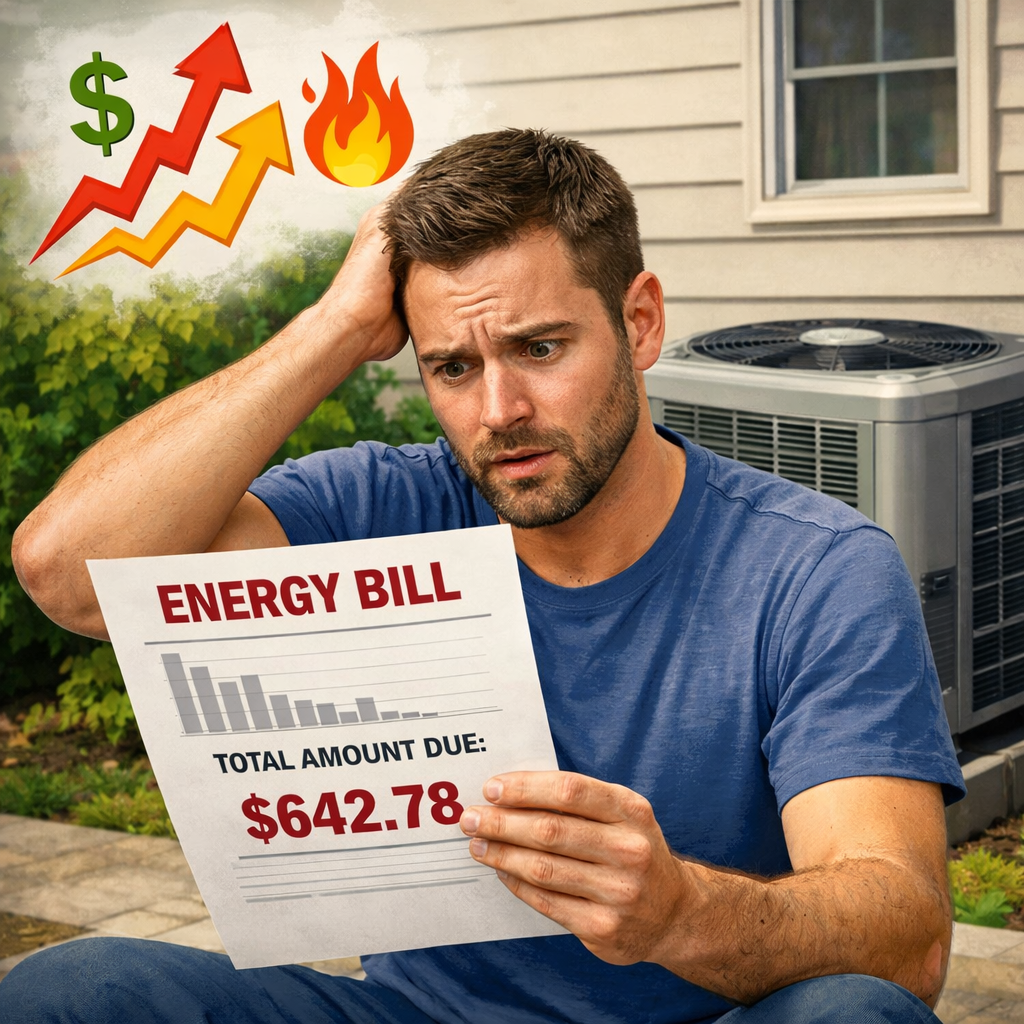
An inefficient heat pump in Mingo Junction can add $300–$1,100+ per year in excess electricity costs due to high static pressure and restricted return airflow. Systems over 12–15 years old commonly consume 20–35% more electricity when airflow is limited.
In Mingo Junction, inefficiency is often driven by duct design — not just equipment age.
Over time, that restriction becomes expensive.
What Happens If You Do Nothing?
Quick Answer: If inefficiency is left uncorrected in Mingo Junction, homeowners may spend $1,500–$5,500+ in excess electricity over 10 years, especially when auxiliary heat compensates for airflow restriction.
Example:
- $40/month excess × 5 winter months = $200/year
- $200 × 10 years = $2,000
- Add strip heat overuse = +$2,000–$3,000
Total potential impact: $4,000–$5,500+
High static pressure quietly increases runtime every winter.
Why Are Operating Costs Higher in Mingo Junction?
Quick Answer: Mingo Junction homes frequently have undersized return ductwork, which increases static pressure above 0.8” WC. Elevated static pressure reduces airflow, lowers efficiency, and increases auxiliary heat usage.
Local contributors include:
- Original 1960–1980 duct sizing
- Limited return air pathways
- Basement mechanical rooms
- 100-amp panels under electrical load strain
- Aging blower motors
When airflow is restricted, runtime increases significantly.
What Makes a Heat Pump Inefficient in Mingo Junction?
Quick Answer: In Mingo Junction, inefficiency is commonly caused by restricted return air, high static pressure, refrigerant imbalance, or blower motor strain.
Efficiency declines when:
- Static pressure exceeds 0.8” WC
- Return air is undersized
- Blower motor amp draw increases
- Refrigerant charge is imbalanced
- Auxiliary heat engages frequently
A properly functioning heat pump may operate at a COP of 3.0.
If airflow restriction reduces performance to 2.2–2.0, energy use increases roughly 25–33%.
Efficiency loss is measurable.
What Efficiency Tier Is Your Heat Pump In?
Quick Answer: Most systems fall into Optimized (under 10% loss), Degrading (10–25% loss), or Costly (25%+ loss). Static pressure and auxiliary heat runtime determine placement in Mingo Junction homes.
Tier 1 – Optimized
- Static pressure under 0.8” WC
- Balanced return air
- Minimal auxiliary heat
Tier 2 – Degrading
- 10–25% longer runtime
- Moderate strip heat use
- Measurable airflow restriction
Tier 3 – Costly
- 25%+ energy increase
- Frequent auxiliary heat
- High blower amp draw
High static pressure accelerates transition from Tier 1 to Tier 2.
Efficient vs. Inefficient System Comparison
| Condition | Efficient | Inefficient |
|---|---|---|
| Static Pressure | <0.8” WC | >0.8” WC |
| COP | ~3.0 | ~2.0–2.2 |
| Auxiliary Heat | Minimal | Frequent |
| Blower Load | Normal | Elevated |
| 10-Year Impact | Normal | +$1,500–$5,500 |
Airflow determines operating cost more than many homeowners realize.
10-Year Financial Snapshot
Quick Answer: Over 10 years, inefficiency in Mingo Junction commonly adds $1,500–$5,500+ in excess operating cost.
- 20% inefficiency = ~$1,500–$2,500
- 30% inefficiency = ~$2,500–$4,000
- 35%+ inefficiency = ~$4,000–$5,500
- Add major repair = $1,500–$4,000
Total potential long-term impact: $4,000–$9,000+
When Does Inefficiency Justify Replacement?
Quick Answer: If annual excess operating cost exceeds $500–$800 and the system is over 15 years old, replacement evaluation often becomes financially logical within 5–10 years.
Inefficiency does not automatically require replacement.
We calculate operating cost impact before recommending change.
Common Misdiagnoses in Mingo Junction
Quick Answer: Many homeowners assume refrigerant alone causes inefficiency. In Mingo Junction, return air restriction and high static pressure are often the primary drivers.
Common mistakes:
- Adding refrigerant without airflow testing
- Replacing outdoor unit without duct correction
- Ignoring static pressure measurement
Measured diagnostics prevent unnecessary system replacement.
How We Measure Operating Cost in Mingo Junction
Quick Answer: We evaluate static pressure, airflow volume, refrigerant performance, auxiliary heat runtime, and blower motor amp draw before estimating excess operating cost.
Our evaluation includes:
- Static pressure testing (target under 0.8” WC)
- Supply/return temperature split measurement
- Superheat and subcool verification
- Auxiliary heat runtime monitoring
- Blower amperage testing
We show you the math.
What Makes Honest Fix Different?
Quick Answer: We focus on measurable airflow correction and long-term operating cost reduction — not short-term pricing. Our recommendations are based on performance data and financial clarity.
Lower upfront repair cost does not always equal lower total cost.
What Protection Comes With Repairs or Replacement?
Quick Answer: Qualifying repairs are protected under our Service Trust Guardian with up to 5 years of labor coverage when maintenance is documented. New systems are protected under our Lifetime Trust Shield.
Structured protection supports long-term investment.
Frequently Asked Questions About Inefficient Heat Pumps in Mingo Junction
Can restricted return air increase my electric bill?
Quick Answer: Yes. Undersized return ductwork increases static pressure above 0.8” WC, raising runtime and auxiliary heat use.
Does high static pressure damage equipment?
Quick Answer: Elevated static pressure increases blower strain and reduces system efficiency, potentially shortening equipment lifespan.
How long should a heat pump last in Mingo Junction?
Quick Answer: Most systems last 12–15 years with proper maintenance. After 15 years, efficiency decline becomes more common.
Do you charge overtime for evaluations?
Quick Answer: Overtime rates apply for non–Priority Service Maintenance Plan members after normal hours. Priority members and warranty-covered systems receive front-of-line scheduling.
What guarantees do you offer?
Quick Answer: Repairs are protected under our Service Trust Guardian with up to 5 years of labor coverage. New systems are covered under our Lifetime Trust Shield.
Bottom Line
If your heat pump is costing you more than $500 per year in excess electricity in Mingo Junction, it deserves a measured evaluation — not a guess.
Call Honest Fix for a free exact quote.
Ask Leo, our AI assistant, any questions about system performance or operating cost.
Or schedule your in-home visit online now.
No upsells. No games. Just Honest Fixes.
Scott Merritt is a co-founder of Honest Fix Heating, Cooling and Plumbing and brings more than 30 years of experience across HVAC, leadership, and industry education. He serves in a senior leadership and oversight role, providing licensed guidance, reviewing HVAC educational content, and supporting technician training and documentation standards. Prior to co-founding Honest Fix, Scott founded and owned Fire & Ice Heating & Air Conditioning in Columbus, Ohio, which he operated for more than two decades before selling the company in 2025. During that time, he led programs and partnerships including Carrier Factory Authorized Dealer, Trane Comfort Specialist, and Rheem Pro Partner, helping establish high technical and training standards. Scott is the Ohio State HVAC license holder for Honest Fix and provides licensed oversight to help ensure work meets applicable codes and manufacturer requirements. Learn more about Scott’s background and role at Honest Fix by viewing his full leadership bio.