What Temperature Should My Heat Pump Be Set To in Steubenville, OH & Weirton, WV?
March 19th, 2026
3 min read
Best Temperature Settings for Heat Pumps in Steubenville, OH & Weirton, WV
Quick Answer:
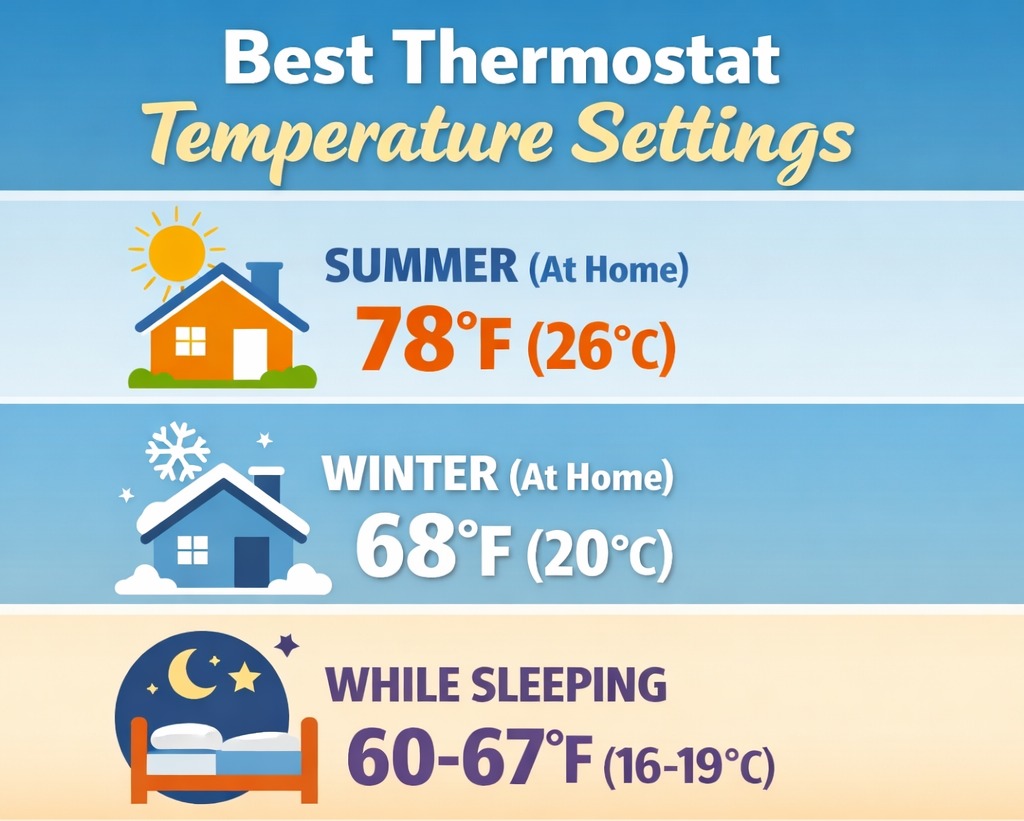
Most heat pumps in Steubenville, OH and Weirton, WV perform best when set to about 67–69°F in winter and 74–76°F in summer. Heat pumps operate most efficiently with steady temperatures and small adjustments, since large thermostat changes can trigger auxiliary (emergency) heat, which may use 5–20 kW of electricity.
Homes in the Upper Ohio Valley experience humid summers, winter lows near 22°F, and varying insulation levels. Many homes also have basement duct systems that impact airflow, making thermostat settings an important factor in comfort and efficiency year-round.
Recommended Heat Pump Temperature Settings by Season
Quick Answer: Most homes operate efficiently with 67–69°F in winter and 74–76°F in summer, with minimal temperature changes.
| Season | Recommended Setting | Why |
|---|---|---|
| Winter | 67–69°F | Reduces auxiliary heat use |
| Summer | 74–76°F | Improves cooling efficiency and humidity control |
| Spring/Fall | 68–72°F | Allows efficient operation in mild weather |
Keeping temperatures consistent helps the system run longer, more efficient cycles.
Why Your Preferred Temperature May Not Be the Most Efficient
Quick Answer: The temperature that feels most comfortable is often different from the most efficient setting for a heat pump.
Heat pumps deliver air around 90–100°F, which is lower than furnace output. Because of this:
- heat is delivered more gradually
- the system runs longer cycles
- large temperature changes reduce efficiency
Setting the thermostat too high or making large adjustments can increase energy use and reduce system performance.
Best Temperature Settings for Winter
Quick Answer: Most homes in Steubenville and Weirton operate efficiently around 67–69°F during winter.
Helpful winter practices include:
- keeping temperature changes within 2–3°F
- avoiding large overnight setbacks
- maintaining steady thermostat settings
When outdoor temperatures fall below 25–30°F, raising the thermostat too quickly can trigger auxiliary heat.
Best Temperature Settings for Summer
Quick Answer: Most homes operate efficiently around 74–76°F during summer.
Helpful cooling strategies include:
- maintaining steady thermostat settings
- using ceiling fans to improve comfort
- avoiding large daytime setbacks
During humid Upper Ohio Valley summers, longer cooling cycles help remove moisture from indoor air.
Why Large Temperature Changes Reduce Efficiency
Quick Answer: Large thermostat changes can trigger electric auxiliary heat, which uses significantly more energy.
Auxiliary heat may activate when:
- the thermostat is raised several degrees at once
- the system is recovering from a large setback
- outdoor temperatures are low
Electric backup heat can draw 5–20 kW, which increases energy costs.
How Upper Ohio Valley Climate Affects Temperature Settings
Quick Answer: Local climate conditions influence how heat pumps maintain indoor temperatures.
Regional factors include:
- cold air pooling along the Ohio River valley
- humid summers requiring longer cooling cycles
- temperature swings in spring and fall
These conditions make consistent thermostat settings more effective than frequent adjustments.
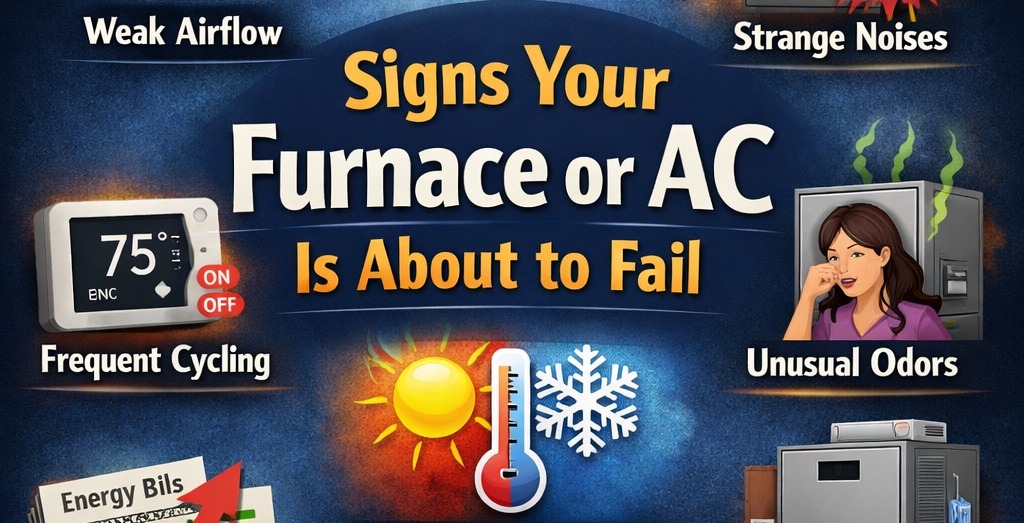
Signs Your Temperature Settings May Be Incorrect
Quick Answer: Incorrect thermostat settings can reduce comfort and increase energy use.
Common signs include:
- auxiliary heat running frequently
- uneven temperatures between rooms
- system running constantly
- high indoor humidity during summer
Thermostat settings are one of the most common causes of efficiency issues.
Quick Diagnostic Summary
| Symptom | Possible Cause | What to Check |
|---|---|---|
| Auxiliary heat runs often | Large temperature changes | Reduce thermostat adjustments |
| High energy bills | Inefficient settings | Adjust temperature range |
| System runs constantly | Setpoint too high or low | Adjust gradually |
| High humidity | Cooling cycles too short | Raise temperature slightly |
When Should You Call an HVAC Technician?
You may want professional help if:
- the system struggles to maintain temperature
- auxiliary heat runs frequently
- indoor temperatures fluctuate significantly
- energy bills increase unexpectedly
A technician can evaluate airflow, thermostat settings, and overall system performance.
Key Takeaways
- most heat pumps work best at 67–69°F in winter
- summer settings around 74–76°F improve efficiency
- steady temperatures improve performance
- large thermostat changes can trigger auxiliary heat
- proper settings help reduce energy use and improve comfort
FAQs
What temperature should I set my heat pump to in winter?
Most homes operate efficiently around 67–69°F, although comfort preferences may vary.
Should I change my heat pump temperature at night?
Small adjustments of 2–3°F may help, but large setbacks can reduce efficiency.
What temperature is best for cooling with a heat pump?
Most homes maintain good comfort and efficiency around 74–76°F.
Why does my heat pump use auxiliary heat when I raise the temperature?
Large thermostat increases can trigger backup heating to reach the set temperature faster.
Exact HVAC replacement quotes available at (740) 825-9408 or HonestFix.com/schedule-service.
Scott Merritt is a co-founder of Honest Fix Heating, Cooling and Plumbing and brings more than 30 years of experience across HVAC, leadership, and industry education. He serves in a senior leadership and oversight role, providing licensed guidance, reviewing HVAC educational content, and supporting technician training and documentation standards. Prior to co-founding Honest Fix, Scott founded and owned Fire & Ice Heating & Air Conditioning in Columbus, Ohio, which he operated for more than two decades before selling the company in 2025. During that time, he led programs and partnerships including Carrier Factory Authorized Dealer, Trane Comfort Specialist, and Rheem Pro Partner, helping establish high technical and training standards. Scott is the Ohio State HVAC license holder for Honest Fix and provides licensed oversight to help ensure work meets applicable codes and manufacturer requirements. Learn more about Scott’s background and role at Honest Fix by viewing his full leadership bio.