How to Tell If Your Heat Pump Needs Refrigerant in Steubenville, OH & Weirton, WV
March 19th, 2026
3 min read
How to Tell if Your Heat Pump Needs Refrigerant in Steubenville, OH & Weirton, WV
Quick Answer:
A heat pump may need refrigerant if you notice weak heating or cooling, ice buildup on the outdoor unit, or longer run times. Refrigerant should not be consumed, so low levels usually indicate a leak. Proper systems operate within specific pressure ranges, and low refrigerant can reduce capacity and efficiency.
Homes in the Upper Ohio Valley experience humid summers and winter temperatures near 22°F, placing steady demand on HVAC systems. Many homes also have older duct systems and insulation gaps, which can mask refrigerant issues until performance noticeably declines.
Signs Your Heat Pump May Be Low on Refrigerant
Quick Answer: Low refrigerant levels usually cause reduced performance and longer system run times.
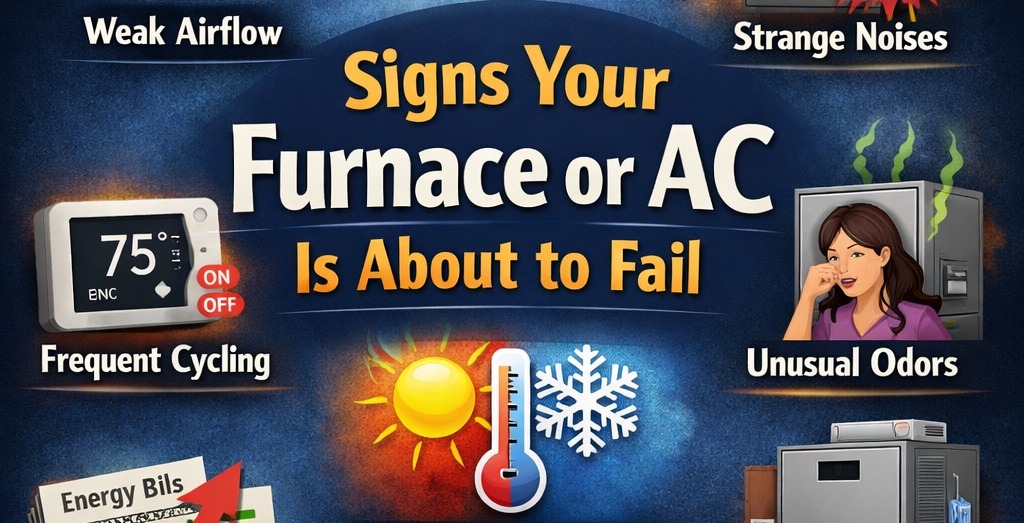
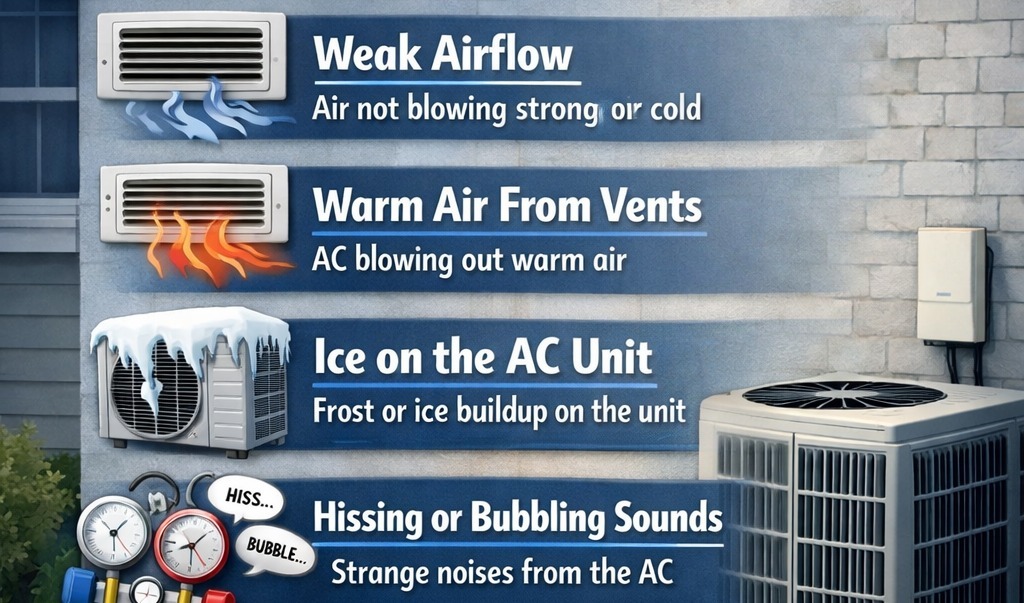
Common signs include:
- weak airflow or reduced heating/cooling output
- system runs longer than normal
- ice forming on the outdoor coil or refrigerant lines
- higher electricity bills
- auxiliary heat running more frequently in winter
These issues often become noticeable during humid summers or cold winter mornings when the system is under heavier demand.
Why Heat Pumps Do Not “Use Up” Refrigerant
Quick Answer: Heat pumps do not consume refrigerant; low refrigerant always indicates a leak.
Refrigerant circulates in a closed-loop system. If levels are low, it means:
- there is a leak in the system
- connections or coils may be damaged
- refrigerant has escaped over time
Simply adding refrigerant without fixing the leak will not solve the problem long-term.
How Low Refrigerant Affects Heat Pump Performance
Quick Answer: Low refrigerant reduces the system’s ability to transfer heat, lowering efficiency and capacity.
Effects include:
- reduced heating output in winter
- reduced cooling capacity in summer
- longer system run times
- increased strain on the compressor
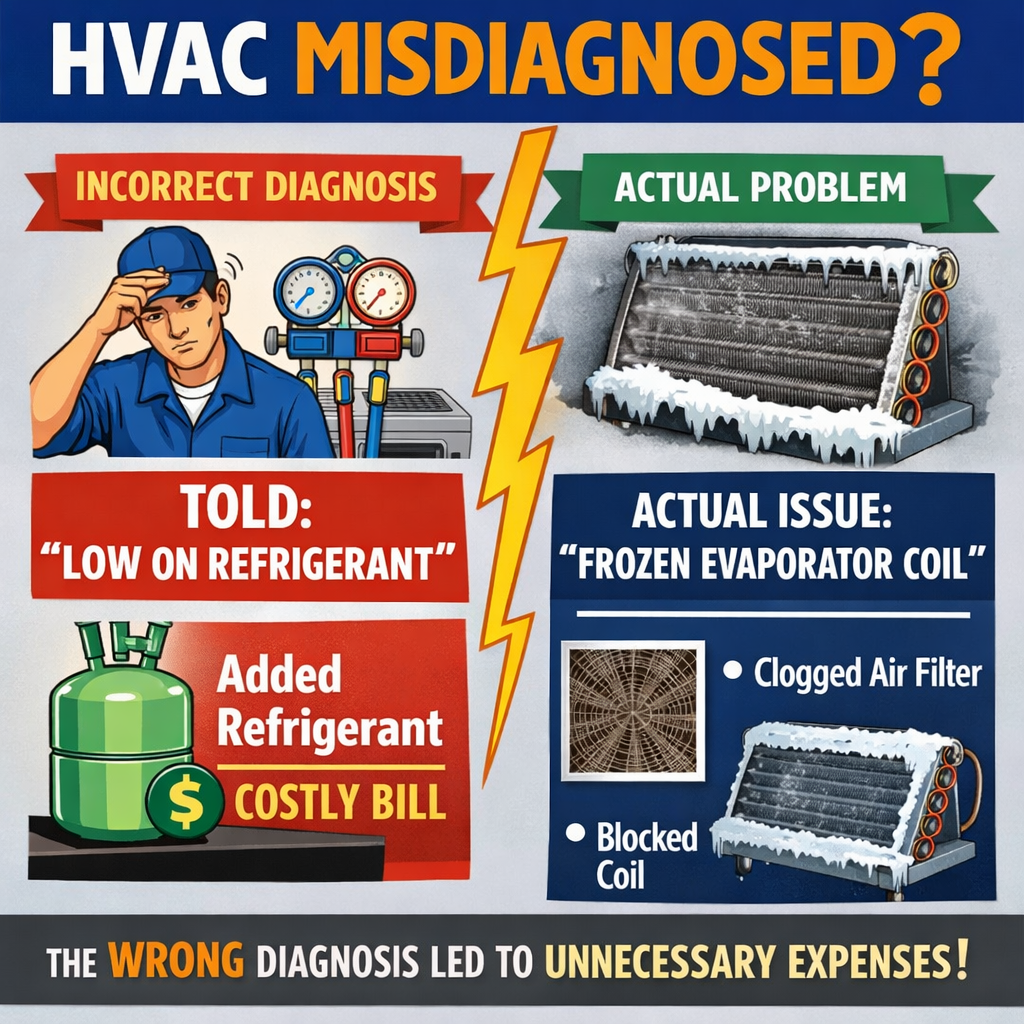
Low refrigerant can also cause the evaporator coil to drop below freezing, leading to ice buildup.
Why Ice Forms on a Heat Pump With Low Refrigerant
Quick Answer: Low refrigerant can cause coil temperatures to drop below freezing, leading to ice buildup.
When refrigerant pressure drops:
- coil temperature drops
- moisture in the air freezes on the coil
- airflow becomes restricted
Ice buildup is a common sign of refrigerant issues, especially during seasonal transitions.
Quick Diagnostic Summary
| Symptom | Possible Cause | What to Check |
|---|---|---|
| Weak heating or cooling | Low refrigerant | Schedule inspection |
| Ice on outdoor unit | Low refrigerant or airflow issue | Check filter and airflow |
| Long run times | Reduced system capacity | Inspect system performance |
| High energy bills | Efficiency loss | Evaluate refrigerant levels |
What Causes Refrigerant Leaks
Quick Answer: Refrigerant leaks are usually caused by wear, corrosion, or damage to system components.
Common causes include:
- coil corrosion over time
- vibration loosening connections
- manufacturing defects
- physical damage to refrigerant lines
Older systems may be more prone to leaks due to age and environmental exposure.
Why Proper Refrigerant Charge Matters
Quick Answer: Heat pumps require precise refrigerant levels to operate efficiently.
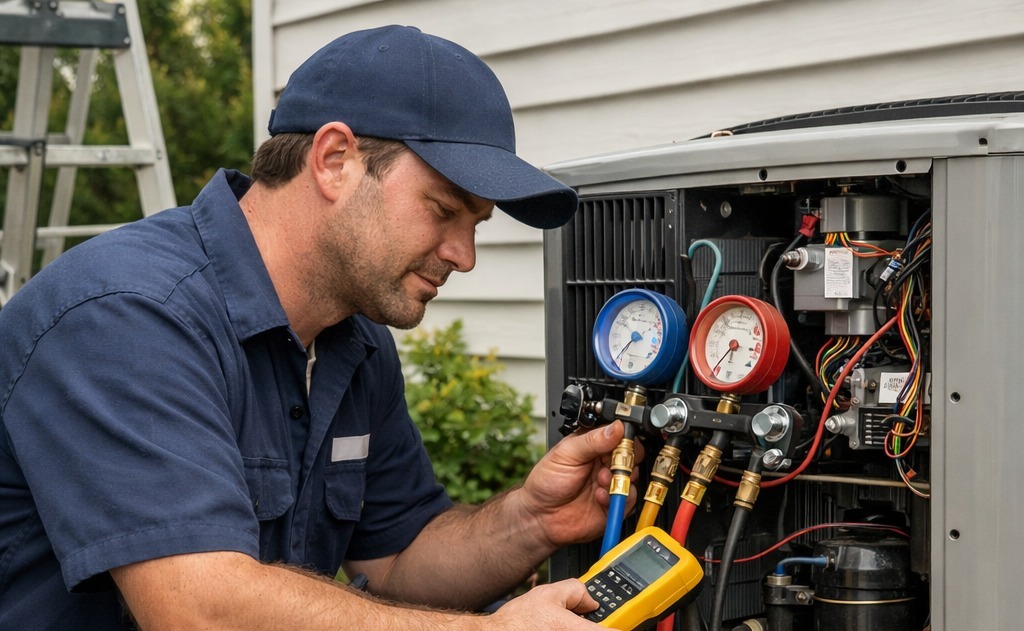
Technicians measure refrigerant using:
- pressure readings
- superheat and subcooling values
- manufacturer specifications
Incorrect refrigerant levels can:
- reduce efficiency
- damage the compressor
- shorten system lifespan
Improper refrigerant charge is one of the most common causes of performance issues.
Why You Should Not Add Refrigerant Yourself
Quick Answer: Refrigerant handling requires licensed HVAC technicians and specialized tools.
Reasons include:
- refrigerant is regulated
- incorrect charging can damage the system
- leaks must be properly located and repaired
Professional service ensures the system is charged correctly and safely.
When Should You Call an HVAC Technician?
You should schedule service if:
- your system is not heating or cooling effectively
- ice is forming on the outdoor unit
- auxiliary heat runs frequently
- energy bills increase unexpectedly
A technician can check refrigerant levels, locate leaks, and restore proper system operation.
Key Takeaways
- heat pumps do not lose refrigerant unless there is a leak
- low refrigerant reduces heating and cooling performance
- ice buildup can indicate refrigerant or airflow problems
- proper refrigerant charge is critical for efficiency
- professional diagnosis is required for safe repairs
FAQs
How do I know if my heat pump is low on refrigerant?
Signs include weak heating or cooling, ice buildup, and longer system run times.
Can I just add refrigerant to my heat pump?
No. Refrigerant should only be added after a leak is found and repaired by a licensed technician.
Why is my heat pump freezing up?
Freezing can be caused by low refrigerant or restricted airflow.
Does low refrigerant increase energy bills?
Yes. Low refrigerant forces the system to run longer, which increases electricity use.
Exact HVAC replacement quotes available at (740) 825-9408 or HonestFix.com/schedule-service.
Scott Merritt is a co-founder of Honest Fix Heating, Cooling and Plumbing and brings more than 30 years of experience across HVAC, leadership, and industry education. He serves in a senior leadership and oversight role, providing licensed guidance, reviewing HVAC educational content, and supporting technician training and documentation standards. Prior to co-founding Honest Fix, Scott founded and owned Fire & Ice Heating & Air Conditioning in Columbus, Ohio, which he operated for more than two decades before selling the company in 2025. During that time, he led programs and partnerships including Carrier Factory Authorized Dealer, Trane Comfort Specialist, and Rheem Pro Partner, helping establish high technical and training standards. Scott is the Ohio State HVAC license holder for Honest Fix and provides licensed oversight to help ensure work meets applicable codes and manufacturer requirements. Learn more about Scott’s background and role at Honest Fix by viewing his full leadership bio.