What to Do If Your HVAC Stops Working in Steubenville OH and Weirton WV
March 24th, 2026
3 min read
Quick Answer
Shut the HVAC system off if it’s not turning on, not blowing air, or tripping the breaker. Check the thermostat, breaker, and air filter first—most problems are airflow, power, or control issues. If the system doesn’t restart within 5 minutes after one reset, stop and schedule professional service.
Steubenville and Weirton sit along the Ohio River, where humidity often runs 70–80% and older homes rely on aging ductwork and electrical panels. Basement moisture, insulation gaps, and river-valley temperature swings increase system strain, especially during summer humidity spikes and winter cold snaps.
What Should You Check First When Your HVAC Stops Working?
Quick Answer:
Check the thermostat, breaker, and air filter immediately. These three items account for most HVAC shutdowns and can often be verified in under 3 minutes.
Start with the thermostat. Confirm it’s set correctly and has power. Dead batteries or incorrect mode settings are common causes of “no operation.”
Next, check the breaker. If it’s tripped, reset it once. A second trip usually means the system is pulling excess amps from a failing capacitor, motor, or compressor.
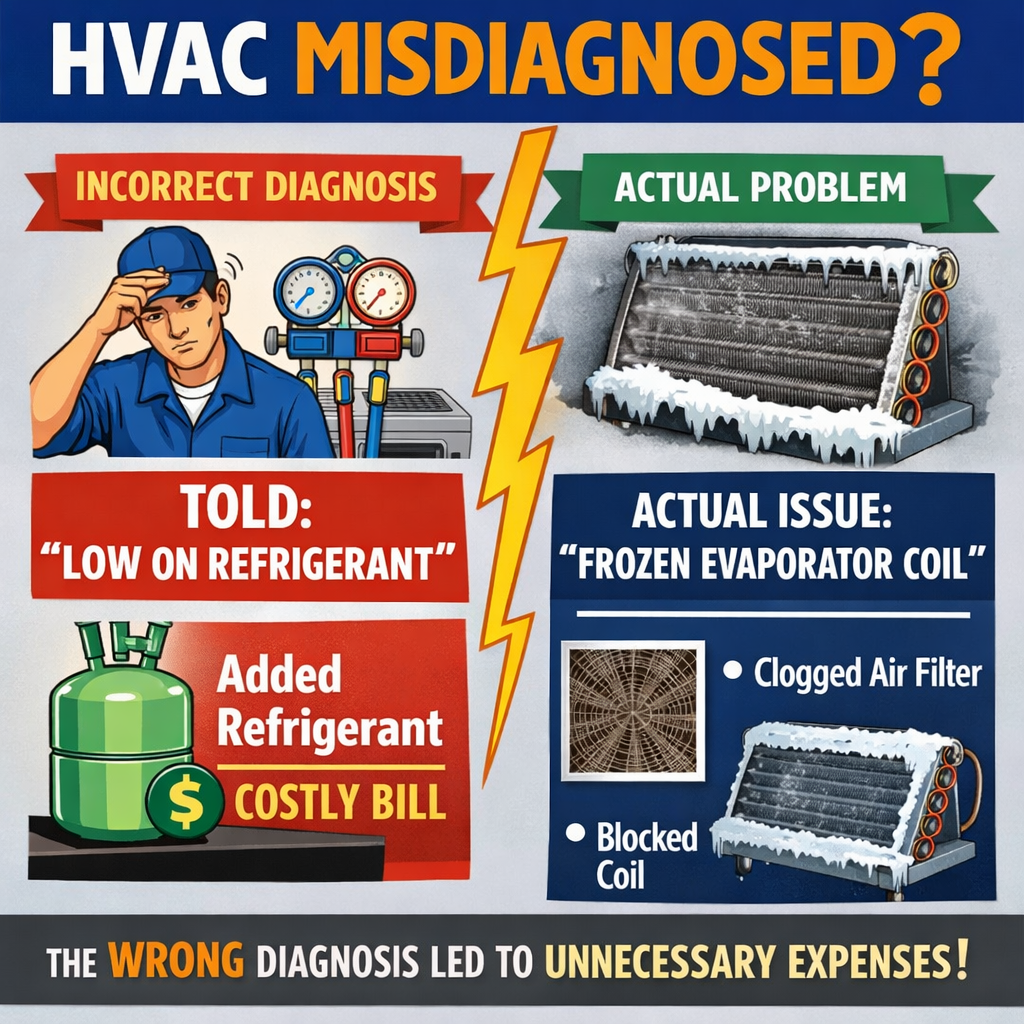
Then check the air filter. A clogged filter can restrict airflow enough to cause overheating or freezing. Replace it right away if dirty.
After 30+ years servicing HVAC systems across Ohio, most service calls at this stage trace back to airflow restriction or simple electrical issues—not full system failure.
What If Your HVAC Is Running But Not Heating or Cooling?
Quick Answer:
If the system is running but not heating or cooling, the most likely causes are airflow restriction, low refrigerant, or a failing outdoor unit component.
Check airflow first. Dirty filters or blocked vents can prevent proper heat transfer, leading to weak or no temperature change.
If airflow is normal, the issue may be refrigerant-related or a failing compressor. In cooling mode, this often shows up as warm air or ice on the indoor coil. In heating mode, it may feel like lukewarm air instead of a proper temperature rise.
A properly functioning system should deliver about a 15–20°F temperature difference between return and supply air. If that split isn’t there, the system is not operating correctly.
Why Do HVAC Systems Fail in Steubenville and Weirton?
Quick Answer:
HVAC systems in Steubenville and Weirton fail most often due to high humidity, aging systems (10–15+ years), and airflow problems tied to older homes and ductwork.
Ohio River valley humidity regularly pushes indoor levels above 60%, increasing the risk of coil freezing and short cycling. Systems must run longer to remove moisture, which adds wear.
Many homes were built before modern insulation standards. That leads to duct leakage, uneven airflow, and extended run times. Over time, this strains components like capacitors, blower motors, and compressors.
Cold air pooling in the river valley during winter also increases heating demand, exposing weak ignitors and flame sensors.
Most repeat breakdowns come from airflow, installation quality, or system age—not the brand itself.
What Problems Should You Watch for Right Away?
Quick Answer:
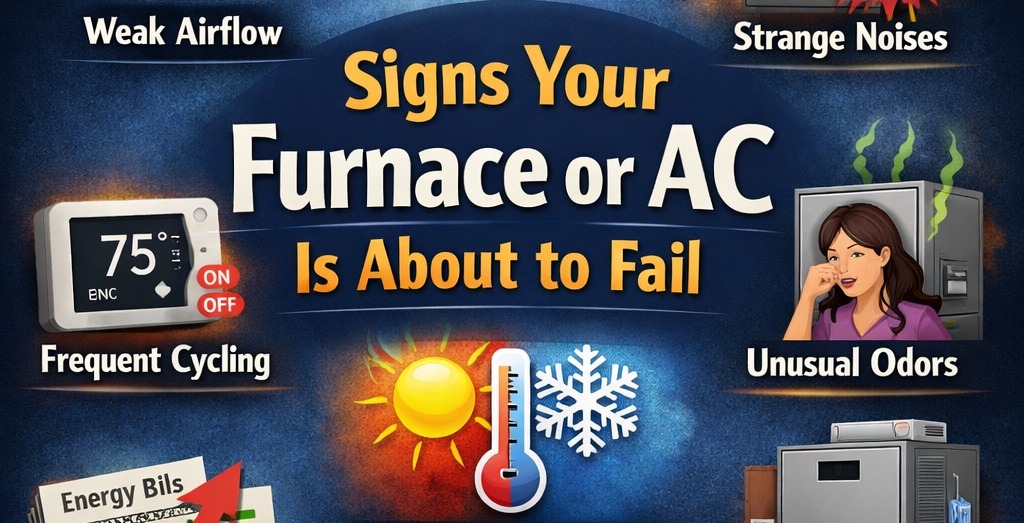
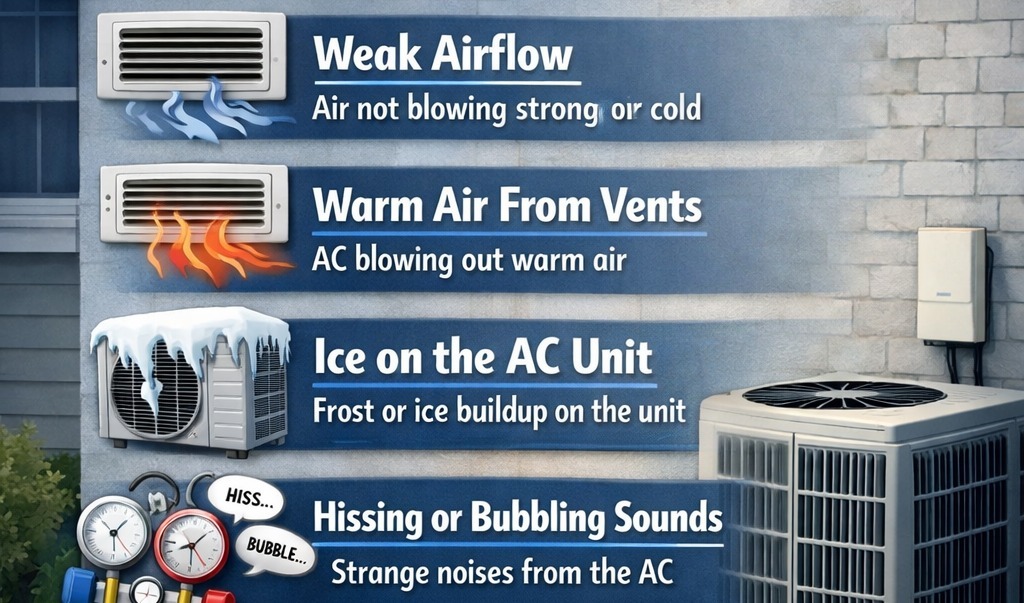
Watch for no airflow, warm air, short cycling, breaker trips, or ice buildup—these are early signs of airflow, electrical, or refrigerant problems.
| Problem | Likely Cause | What You Should Do |
|---|---|---|
| No airflow | Blower failure or breaker trip | Reset breaker once, check filter |
| Warm air | Low refrigerant or dirty coil | Replace filter, schedule service |
| Short cycling | Airflow restriction or control issue | Inspect filter and vents |
| Ice buildup | Low airflow or refrigerant issue | Shut system off and let thaw |
| Breaker trips | Electrical fault or over-amp draw | Stop and call for service |
According to the U.S. Department of Energy:
https://www.energy.gov/energysaver/maintaining-your-air-conditioner
What If the HVAC Stopped After a Power Outage?
Quick Answer:
If the system stopped after a power outage, check the breaker, thermostat reset, and system delay before assuming failure.
Many systems have a built-in 3–5 minute delay to protect the compressor after power is restored. This is normal.
If the system does not restart after that delay:
- Check the breaker panel
- Confirm thermostat settings and power
- Look for system errors
If it still does not run, the outage may have damaged a capacitor, fuse, or control board.
When Should You Stop Troubleshooting and Call for Service?
Quick Answer:
Stop troubleshooting if the system fails after one reset, repeatedly trips the breaker, or shows signs of electrical or refrigerant issues.
Do not keep resetting the system. Repeated attempts can damage compressors or electrical components.
Call for service if you notice:
- Breaker trips more than once
- Burning or electrical smells
- Grinding or buzzing noises
- Ice on the system
- System shuts down repeatedly
EPA refrigerant regulations require proper handling:
https://www.epa.gov/section608
If your system is over 12–15 years old and repairs are becoming frequent, replacement is often the more reliable option—especially in homes with older duct systems.
As an Aprilaire Healthy Air Professional, airflow, filtration, and humidity control (target 40–60%) should always be addressed alongside repairs.
Quick Decision Guide
- System under 10 years old, single issue: Repair
- Repeated shutdowns or rising bills: Evaluate replacement
- Major failure (compressor or heat exchanger): Replace
- Comfort or humidity problems: Address airflow and duct system
FAQs
Why did my HVAC stop working all of a sudden?
Most sudden failures are caused by electrical components like capacitors or airflow problems that trigger safety shutdowns. These often happen during peak demand like hot, humid days or freezing mornings.
Is this more common in Steubenville and Weirton homes?
Yes. Many homes have aging ductwork, insulation gaps, and older electrical systems. These conditions increase strain and lead to more frequent failures.
Should I keep resetting my HVAC system?
No. Resetting repeatedly can damage key components. If it fails after one restart, it needs proper diagnosis.
How long should an HVAC system normally run?
Most systems run in 10–15 minute cycles. Constant running, rapid cycling, or shutting off quickly indicate a problem.
Exact HVAC replacement quotes available at (740) 825-9408 or HonestFix.com/schedule-service.
Scott Merritt is a co-founder of Honest Fix Heating, Cooling and Plumbing and brings more than 30 years of experience across HVAC, leadership, and industry education. He serves in a senior leadership and oversight role, providing licensed guidance, reviewing HVAC educational content, and supporting technician training and documentation standards. Prior to co-founding Honest Fix, Scott founded and owned Fire & Ice Heating & Air Conditioning in Columbus, Ohio, which he operated for more than two decades before selling the company in 2025. During that time, he led programs and partnerships including Carrier Factory Authorized Dealer, Trane Comfort Specialist, and Rheem Pro Partner, helping establish high technical and training standards. Scott is the Ohio State HVAC license holder for Honest Fix and provides licensed oversight to help ensure work meets applicable codes and manufacturer requirements. Learn more about Scott’s background and role at Honest Fix by viewing his full leadership bio.