Does High Humidity Affect Heat Pump Performance in Steubenville, OH and Weirton, WV?
March 11th, 2026
4 min read
Can High Humidity Affect Heat Pump Performance?
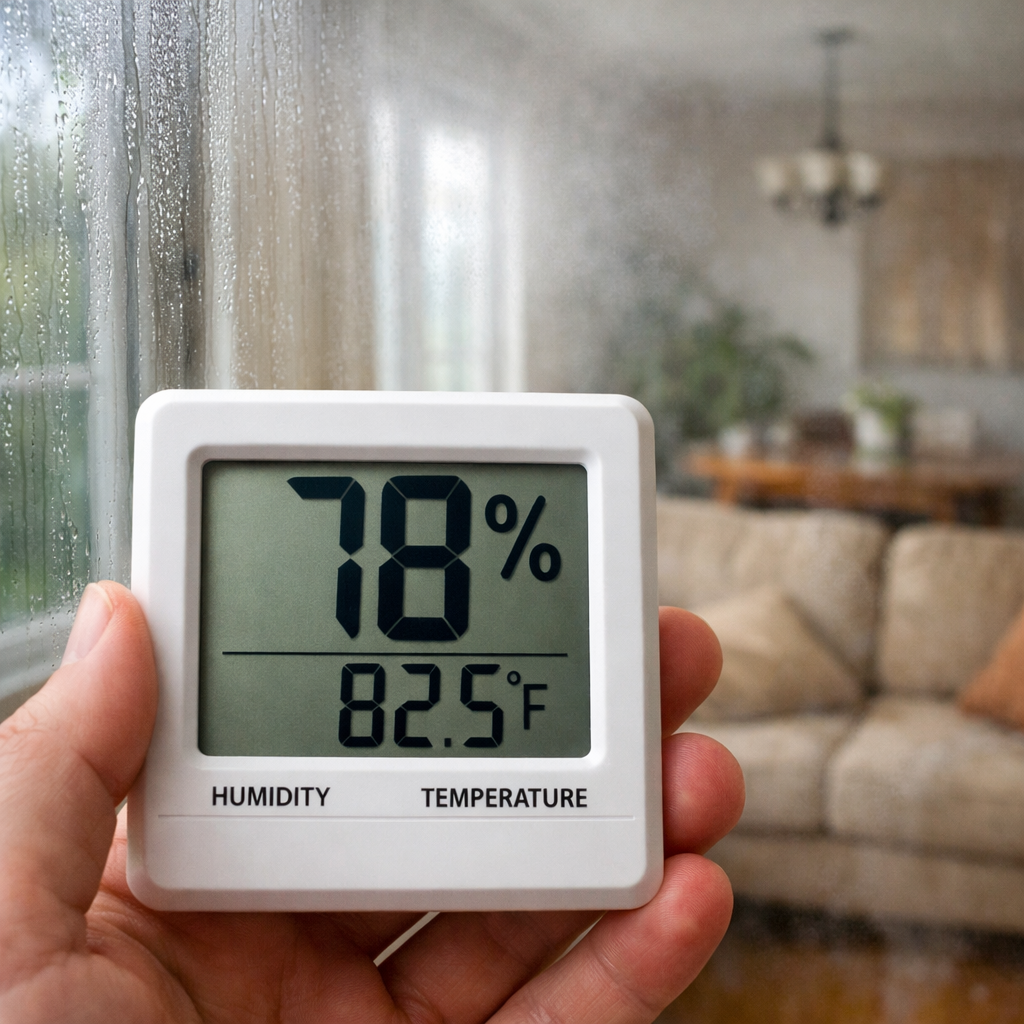
Quick Answer: Yes. High humidity can reduce heat pump efficiency and make homes feel warmer even when the thermostat shows the correct temperature. Heat pumps remove moisture when indoor air passes across evaporator coils near 40–50°F. When humidity rises above 60% relative humidity, the system must remove both heat and moisture, increasing the latent cooling load and forcing longer cooling cycles.
Many homes in Steubenville’s historic neighborhoods and Weirton’s hillside communities experience elevated humidity due to the Ohio River valley climate. Seasonal moisture levels, older homes built before modern insulation standards, and basements common in the region can allow humidity to accumulate indoors. Summer thunderstorms and river-valley moisture patterns can further increase humidity levels, making moisture control more challenging for heat pump systems.
Quick Diagnostic Summary
| Symptom | Likely Cause | What to Check |
|---|---|---|
| Indoor air feels sticky | High indoor humidity | HVAC runtime |
| Heat pump running longer cycles | Excess moisture load | Humidity level |
| Condensation on vents or windows | Excess humidity | Airflow inspection |
| Cooling but home still feels warm | Humidity affecting comfort | System evaluation |
| Musty odors indoors | Moisture buildup | Drain and airflow |
| High indoor humidity readings | System not removing moisture effectively | HVAC inspection |
| Uneven cooling | Airflow imbalance | Duct system check |
| Cooling cycles shorter than 10 minutes | Oversized system | HVAC sizing |
How Does Humidity Affect Heat Pump Performance?
Quick Answer: High humidity increases the workload on a heat pump because the system must remove both heat and moisture from indoor air.
During cooling mode, heat pumps remove humidity when warm air condenses on the evaporator coil. Effective dehumidification requires coil temperatures near 40–50°F so water vapor can condense and drain away.
When humidity is high, the system must handle a larger latent cooling load, which can result in:
- Longer cooling cycles
- Increased electricity consumption
- Reduced indoor comfort
Proper humidity removal improves both comfort and system efficiency.
What Humidity Level Should a Home Maintain?
Quick Answer: Most homes remain comfortable when indoor humidity stays between 40–60% relative humidity.
When humidity rises above this range, indoor air can feel warmer than the thermostat reading.
Excess humidity may cause:
- Sticky indoor air
- Condensation on windows
- Musty odors
- Increased mold risk
Maintaining proper humidity levels improves indoor comfort and HVAC performance.
Can High Humidity Make My Heat Pump Run Constantly?
Quick Answer: Yes. High indoor humidity can cause heat pumps to run longer cycles because the system must remove both heat and moisture.
As humidity rises, the system must condense more moisture on the evaporator coil before the thermostat temperature is satisfied.
This can lead to:
- Longer cooling cycles
- Higher electricity consumption
- Slower indoor temperature changes
Continuous operation may occur when moisture levels exceed normal system capacity.
Can an Oversized Heat Pump Cause Humidity Problems?
Quick Answer: Yes. Oversized heat pumps often cool the home too quickly and shut off before enough moisture is removed from indoor air.
Most cooling cycles should run 10–15 minutes or longer to effectively remove both heat and humidity. When oversized systems satisfy the thermostat too quickly, the evaporator coil does not remain cold long enough for proper moisture removal.
Common signs include:
- Short cooling cycles
- Sticky indoor air
- High humidity levels even while cooling
Oversized systems are a frequent cause of humidity problems in homes where HVAC equipment was installed without detailed load calculations.
Could Airflow Problems Reduce Humidity Removal?
Quick Answer: Yes. Improper airflow across the evaporator coil can reduce moisture removal.
Most heat pump systems require approximately 350–450 cubic feet per minute (CFM) per ton of airflow.
If airflow is too high or too low, the system may struggle to remove humidity efficiently.
Airflow problems may include:
- Dirty air filters
- Duct restrictions
- Incorrect blower speed settings
Balanced airflow helps maintain effective dehumidification.
Can Dirty Coils Reduce Dehumidification?
Quick Answer: Yes. Dirty evaporator coils reduce heat transfer and prevent moisture from condensing efficiently.
When dust or debris builds up on the coil surface, the system cannot cool air effectively enough to condense moisture.
This may cause:
- Reduced cooling performance
- Higher indoor humidity
- Longer system run times
Routine maintenance helps maintain coil efficiency.
Can a Clogged Condensate Drain Affect Humidity Control?
Quick Answer: Yes. A clogged condensate drain can prevent moisture removed from indoor air from draining properly.
If water cannot drain away from the system, humidity removal may decline and water may accumulate near the indoor unit.
Possible signs include:
- Water near the air handler
- Musty odors
- Reduced humidity control
Drain line cleaning may restore normal operation.
Can a Whole-Home Dehumidifier Help a Heat Pump?
Quick Answer: Yes. Whole-home dehumidifiers work alongside HVAC systems to remove moisture even when the heat pump is not running.
These systems help maintain humidity levels around 45–50% relative humidity, which can improve comfort during humid summer conditions.
Whole-home dehumidifiers are often helpful in:
- Homes with basements
- Houses experiencing persistent humidity
- Buildings with oversized HVAC systems
How Can Homeowners Improve Humidity Control?
Quick Answer: Maintaining proper airflow, clean system components, and steady cooling cycles helps heat pumps remove humidity effectively.
Helpful steps include:
- Replace air filters every 1–3 months
- Schedule annual HVAC maintenance
- Keep vents unobstructed
- Maintain clean evaporator coils
- Keep condensate drains clear
- Monitor indoor humidity using a hygrometer
Maintaining humidity between 40–60% RH helps maintain comfort and system efficiency.
Quick Troubleshooting Checklist
Quick Answer: Homeowners can check several conditions if humidity remains high while the heat pump runs.
Basic checks include:
- Replace a dirty air filter
- Inspect vents for airflow restrictions
- Confirm thermostat cooling settings
- Check condensate drain for blockage
- Observe whether cooling cycles are very short
If humidity remains high after these checks, system evaluation may be needed.
When Should You Call an HVAC Technician?
Quick Answer: If humidity remains high even when the heat pump runs regularly, the system should be inspected by an HVAC technician.
HVAC technicians in the Steubenville and Weirton area frequently diagnose humidity problems in homes where oversized systems run short cooling cycles during humid summer conditions.
Professional inspection may include:
- Airflow measurement
- Coil inspection and cleaning
- System sizing evaluation
- Drain line inspection
- Humidity control assessment
Key Takeaways
Quick Answer: High humidity can reduce heat pump performance and indoor comfort.
Common effects include:
- Longer cooling cycles
- Higher electricity usage
- Sticky indoor air
- Reduced cooling comfort
- Increased HVAC workload
Proper airflow, humidity control, and system sizing help maintain efficient heat pump operation.
FAQs
Can humidity make my house feel hotter?
Quick Answer: Yes. High humidity slows the evaporation of sweat and can make indoor temperatures feel warmer than the thermostat setting.
Is it normal for heat pumps to remove humidity?
Quick Answer: Yes. Heat pumps naturally remove moisture during cooling as water vapor condenses on the evaporator coil.
Why does my home feel humid even when the AC runs?
Quick Answer: Short cooling cycles, airflow problems, or oversized HVAC systems can reduce humidity removal.
Should I use a dehumidifier with a heat pump?
Quick Answer: In very humid homes, a whole-home or portable dehumidifier can help maintain comfortable indoor humidity levels.
Exact HVAC replacement quotes available at (740) 825-9408 or HonestFix.com/schedule-service.
Scott Merritt is a co-founder of Honest Fix Heating, Cooling and Plumbing and brings more than 30 years of experience across HVAC, leadership, and industry education. He serves in a senior leadership and oversight role, providing licensed guidance, reviewing HVAC educational content, and supporting technician training and documentation standards. Prior to co-founding Honest Fix, Scott founded and owned Fire & Ice Heating & Air Conditioning in Columbus, Ohio, which he operated for more than two decades before selling the company in 2025. During that time, he led programs and partnerships including Carrier Factory Authorized Dealer, Trane Comfort Specialist, and Rheem Pro Partner, helping establish high technical and training standards. Scott is the Ohio State HVAC license holder for Honest Fix and provides licensed oversight to help ensure work meets applicable codes and manufacturer requirements. Learn more about Scott’s background and role at Honest Fix by viewing his full leadership bio.