Ductless Heat Pumps (Mini-Splits) vs Central HVAC Pros and Cons in Steubenville, OH & Weirton, WV
March 13th, 2026
4 min read
Ductless Heat Pumps vs Central HVAC: What’s the Difference?
Quick Answer
Ductless heat pumps (mini-splits) work well in Steubenville, OH and Weirton, WV homes without reliable ductwork and often reach 20–30 SEER2 efficiency. Central HVAC systems distribute air through ducts and provide stronger whole-home heating during winter cold snaps near 10–20°F. Many Ohio River valley homes use central systems for whole-house comfort and ductless heat pumps for additions or difficult rooms.
Steubenville and Weirton homes face HVAC conditions shaped by the Ohio River valley climate. High humidity near the river, homes built before modern insulation standards, and aging basement ductwork can all affect airflow and efficiency. Hillside neighborhoods often see temperature differences between floors, while cold air pooling in the valley can make winter nights colder than surrounding areas. These conditions often influence whether ductless heat pumps or central systems perform better.
What Is a Ductless Heat Pump (Mini-Split)?
Quick Answer
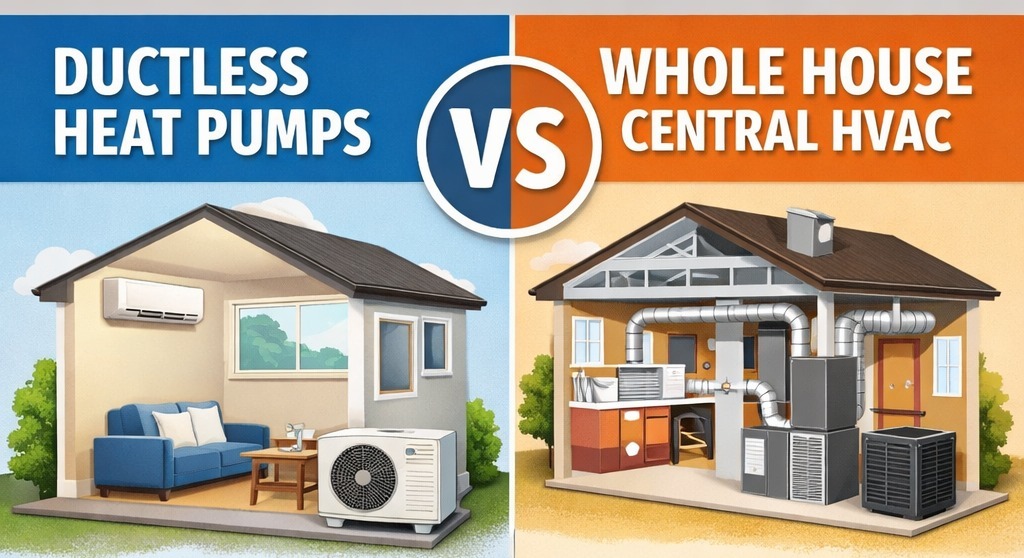
A ductless heat pump, often called a mini-split, heats and cools individual rooms using indoor wall-mounted units connected to an outdoor compressor, eliminating the need for ductwork.
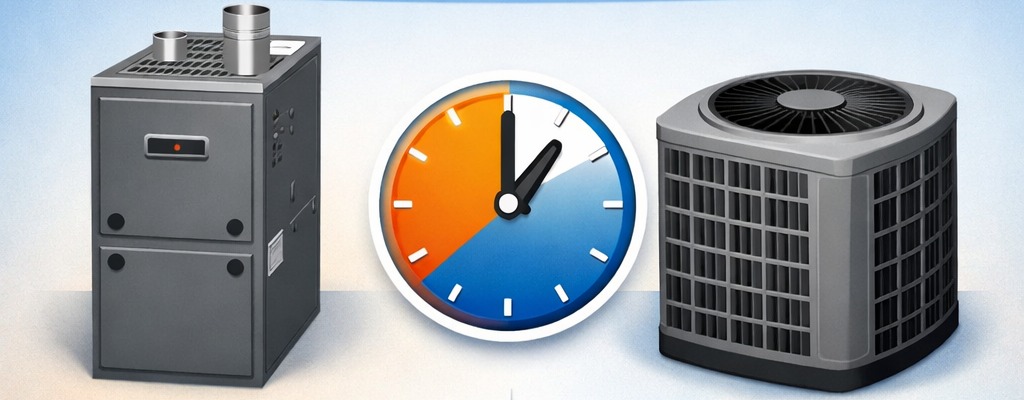
Ductless systems include two main components:
- an outdoor condenser unit
- one or more indoor air-handling units mounted on walls or ceilings
Each indoor unit controls the temperature of a specific room or zone.
HVAC technicians servicing homes in Steubenville and Weirton often install mini-splits in older homes, finished basements, and attic conversions where adding new ductwork would require major remodeling.
What Is a Central HVAC System?
Quick Answer
A central HVAC system heats and cools the entire home using a furnace or central heat pump connected to ductwork that distributes conditioned air to every room.
Central systems usually include:
- a furnace or heat pump
- an air handler or evaporator coil
- supply and return ductwork
- a thermostat controlling the whole home
Many homes in the Ohio River valley rely on central systems paired with gas furnaces because they provide strong heating capacity when winter temperatures fall below 20°F.
Ductless Heat Pumps vs Central HVAC: Pros and Cons
Advantages of Ductless Heat Pumps
- high efficiency, often 20–30 SEER2
- zoned temperature control for individual rooms
- no ductwork required
- useful for additions, basements, or converted spaces
- reduced energy loss from duct leakage
Limitations of Ductless Heat Pumps
- visible indoor units on walls or ceilings
- higher cost for full-home coverage
- multiple filters requiring regular cleaning
- heating output decreases during extreme cold
Advantages of Central HVAC Systems
- consistent temperature throughout the home
- stronger heating during winter cold snaps
- single thermostat for simple control
- less visible equipment indoors
Limitations of Central HVAC Systems
- duct leakage can reduce efficiency
- airflow problems in older homes with aging ducts
- ducts in basements or attics may lose heat
- installation requires functional ductwork
HVAC technicians in Steubenville and Weirton frequently discover duct leaks or airflow restrictions in older homes that reduce central system performance.
Are Ductless Heat Pumps Better for Homes in Steubenville and Weirton?
Quick Answer
Ductless heat pumps are often better for homes without reliable ductwork or for rooms that central HVAC struggles to heat or cool. Central systems remain the best option for consistent whole-home heating in the Ohio River valley climate.
Steubenville and Weirton typically experience winter lows around 22°F, with occasional cold snaps below 10°F. During these colder periods, central systems paired with gas furnaces produce stronger heating output.
Ductless systems are commonly used in:
- older homes with failing or undersized ductwork
- finished basements or attic spaces
- additions not connected to the main duct system
- homes with uneven temperatures between floors
Many homeowners combine both systems by keeping central heating while installing ductless units in difficult areas.
Which System Is Best for Homes in Steubenville and Weirton?
Quick Answer
For whole-home comfort in the Ohio River valley climate, central HVAC systems are usually the most practical solution. Ductless heat pumps work best for additions, older homes without ducts, or rooms where airflow problems exist.
Typical recommendations:
Central HVAC
Best for:
- whole-home heating and cooling
- homes with functional ductwork
- strong heating during winter cold
Ductless Heat Pumps
Best for:
- additions or converted spaces
- rooms with poor airflow
- homes without existing ducts
Hybrid Systems
Best for:
- homes with uneven temperatures between floors
- older homes with partial ductwork
- improving comfort without replacing the entire system
HVAC technicians servicing homes across Steubenville and Weirton often recommend hybrid setups in older houses where ductwork cannot easily reach every room.
Quick System Comparison for Ohio Valley Homes
| Situation | Best System |
|---|---|
| Homes without ductwork | Ductless heat pump |
| Whole-home heating with existing ducts | Central HVAC |
| Additions or finished basements | Ductless heat pump |
| Mixed heating problems | Hybrid system |
How to Improve HVAC Performance in Ohio Valley Homes
Several improvements can help either system perform better in the Steubenville and Weirton climate.
Helpful steps include:
- sealing duct leaks in older basement duct systems
- maintaining 350–450 CFM airflow per ton of cooling capacity
- upgrading attic insulation to reduce heat loss
- cleaning mini-split filters regularly
- scheduling annual HVAC inspections
Cold air pooling along the Ohio River valley can create temperature differences between valley floors and hillside neighborhoods. Proper insulation and airflow help maintain stable indoor comfort during these conditions.
When Should You Talk to an HVAC Technician?
A professional HVAC inspection may help if:
- certain rooms feel warmer or colder than others
- ductwork is more than 20 years old
- energy bills rise without clear explanation
- the system struggles to maintain thermostat temperature
- you are finishing a basement or adding living space
HVAC technicians working across Steubenville and Weirton frequently see older homes where duct leakage or insulation gaps reduce heating efficiency. Identifying these issues early can prevent comfort problems and wasted energy.
Key Takeaways
- Ductless heat pumps heat and cool individual rooms without ducts
- Central HVAC distributes air through ductwork across the entire home
- Mini-splits often reach 20–30 SEER2 efficiency
- Central systems provide stronger heating during winter cold snaps
- Many Ohio River valley homes benefit from hybrid HVAC setups
FAQs
Are ductless heat pumps efficient in Steubenville and Weirton homes?
Yes. Many modern mini-splits reach 20–30 SEER2 efficiency, which can reduce cooling energy use compared with older central systems. Efficiency depends on insulation levels and correct system sizing.
Do ductless heat pumps work during winter in the Ohio River valley?
Most modern mini-splits heat efficiently down to about 5–15°F. During extreme cold, heating output decreases, which is why some homeowners keep a furnace for backup heat.
Are ductless systems good for older homes?
Often yes. Many homes in Steubenville and Weirton have aging or undersized duct systems. Ductless systems avoid duct losses and allow room-by-room temperature control.
Can ductless heat pumps be combined with central HVAC?
Yes. Many homeowners keep central heating while installing mini-splits in additions, basements, or rooms where airflow is limited.
Exact HVAC replacement quotes available at (740) 825-9408 or HonestFix.com/schedule-service.
Scott Merritt is a co-founder of Honest Fix Heating, Cooling and Plumbing and brings more than 30 years of experience across HVAC, leadership, and industry education. He serves in a senior leadership and oversight role, providing licensed guidance, reviewing HVAC educational content, and supporting technician training and documentation standards. Prior to co-founding Honest Fix, Scott founded and owned Fire & Ice Heating & Air Conditioning in Columbus, Ohio, which he operated for more than two decades before selling the company in 2025. During that time, he led programs and partnerships including Carrier Factory Authorized Dealer, Trane Comfort Specialist, and Rheem Pro Partner, helping establish high technical and training standards. Scott is the Ohio State HVAC license holder for Honest Fix and provides licensed oversight to help ensure work meets applicable codes and manufacturer requirements. Learn more about Scott’s background and role at Honest Fix by viewing his full leadership bio.