Why Is My Heat Pump Defrost Cycle Not Working in Steubenville, OH and Weirton, WV?
March 9th, 2026
4 min read
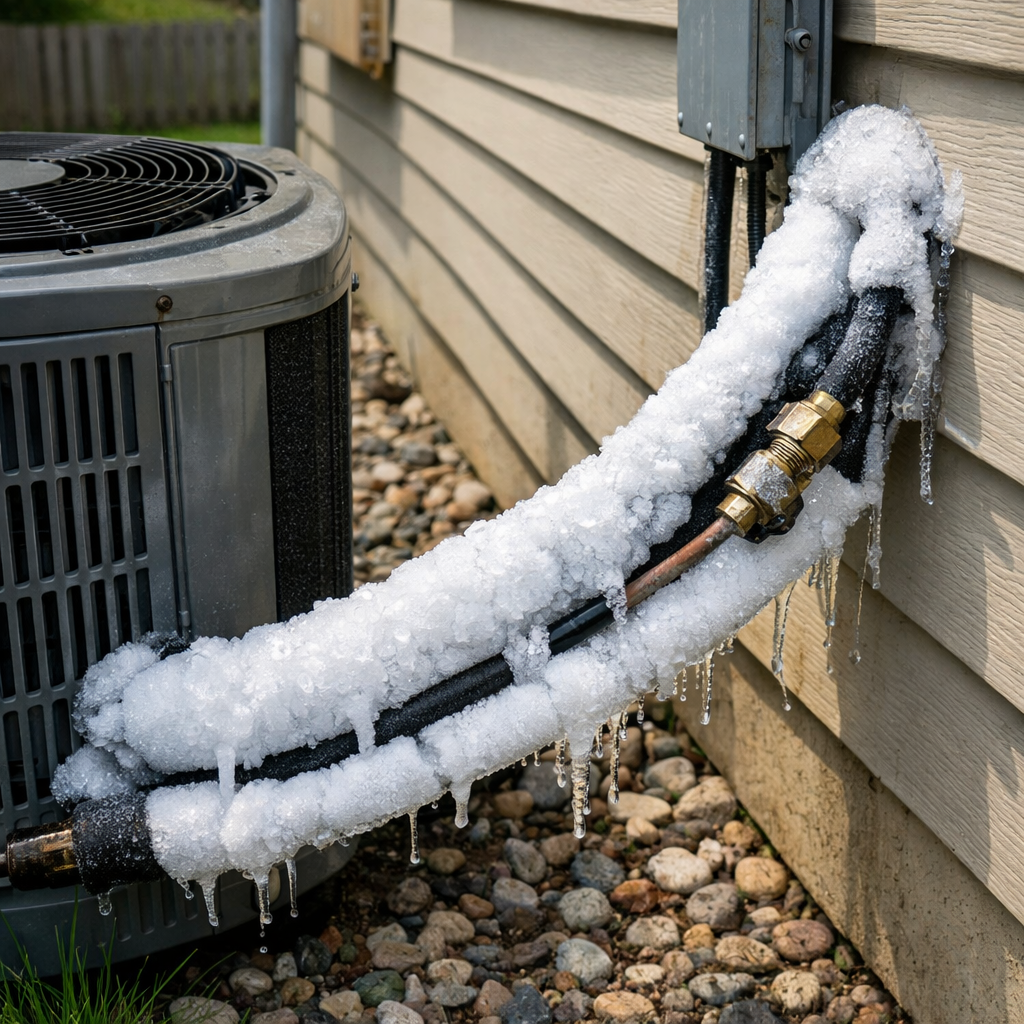
Why Would a Heat Pump Defrost Cycle Stop Working?
Quick Answer: A heat pump defrost cycle may fail if the defrost control board, outdoor temperature sensor, or reversing valve stops working correctly, or if refrigerant levels and airflow conditions prevent the system from detecting frost buildup. When the outdoor coil temperature drops below about 32°F, the defrost system should activate to melt ice. Persistent ice buildup usually requires HVAC inspection.
Many homes in Steubenville’s historic neighborhoods and Weirton’s hillside communities rely on heat pumps for winter heating. When temperatures drop into the 20–35°F range, outdoor coils often collect frost as the system pulls heat from cold air. Ohio River valley humidity, winter temperature swings, and leaf debris around outdoor units can increase frost buildup. Older homes with aging duct systems may also experience airflow issues that contribute to defrost problems.
Quick Diagnostic Summary
| Symptom | Likely Cause | What to Check |
|---|---|---|
| Thick ice on outdoor unit | Defrost cycle not activating | Inspect outdoor coil |
| Heat pump running constantly | Frost blocking heat transfer | Check coil condition |
| System blowing cool air | Heat pump stuck in defrost mode | Technician diagnosis |
| Outdoor fan stops temporarily | Defrost cycle active | Usually normal |
| Heavy frost during cold weather | Sensor or control board issue | Schedule inspection |
| Outdoor coil covered in solid ice | Defrost system failure | HVAC service required |
What Does the Heat Pump Defrost Cycle Do?
Quick Answer: The defrost cycle temporarily reverses the heat pump operation to melt frost that forms on the outdoor coil during cold weather.
When outside temperatures drop below about 40°F, moisture in the air can freeze on the outdoor coil. Frost buildup blocks airflow and prevents the system from absorbing heat efficiently.
During the defrost cycle:
- Refrigerant flow reverses temporarily
- The outdoor coil warms up
- Ice and frost melt from the coil surface
Most defrost cycles last 5–15 minutes before the system returns to normal heating.
Is Frost on My Heat Pump Normal?
Quick Answer: Yes. A thin layer of frost on the outdoor coil is normal during cold weather, but thick ice covering the unit indicates the defrost system may not be working properly.
Heat pumps commonly develop light frost when outdoor temperatures fall between 30–40°F. The defrost cycle should periodically melt this frost.
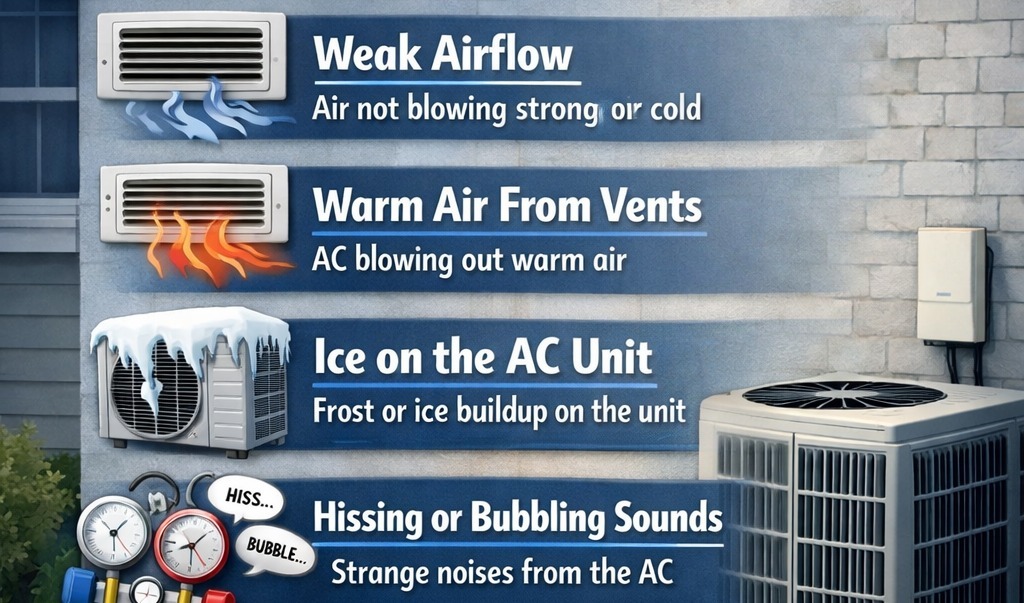
However, if the outdoor unit becomes heavily coated in ice or frost that remains for long periods, the defrost system may not be activating.
How Often Should a Heat Pump Defrost?
Quick Answer: Most heat pumps enter defrost mode every 30–90 minutes during freezing weather when frost buildup is detected on the outdoor coil.
The defrost control board monitors coil temperature and operating time. When frost conditions are detected, the system temporarily switches modes to remove the ice.
Frequent defrost cycles during cold, humid weather in the Ohio Valley are normal.
What Causes a Heat Pump Defrost Cycle to Stop Working?
Quick Answer: Defrost problems usually occur when a defrost control board, temperature sensor, reversing valve, or refrigerant system component fails.
Several components work together to activate the defrost cycle:
| Component | Function |
|---|---|
| Defrost control board | Determines when defrost should begin |
| Temperature sensor | Detects coil temperature and frost conditions |
| Reversing valve | Switches system into defrost mode |
| Outdoor fan | Stops briefly during defrost |
Other issues that may contribute to defrost failure include:
- Low refrigerant levels
- Restricted refrigerant flow
- Faulty reversing valve
- Electrical wiring problems
Can Airflow Problems Cause Defrost Issues?
Quick Answer: Yes. Poor airflow inside the home or around the outdoor unit can contribute to frost buildup that overwhelms the defrost system.
Restricted airflow can occur when:
- Air filters are clogged
- Return vents are blocked
- Outdoor units are surrounded by debris
Reduced airflow limits heat transfer and can allow frost to build faster than the defrost cycle can remove it.
Quick Troubleshooting Checklist
Quick Answer: Homeowners can check several simple conditions before scheduling HVAC service if frost buildup appears on the outdoor unit.
Basic checks include:
- Inspect the outdoor coil for heavy frost or ice
- Remove leaves and debris around the outdoor unit
- Replace a dirty air filter
- Confirm vents are not blocked indoors
- Observe whether the heat pump periodically enters defrost mode
If thick ice remains on the outdoor unit for extended periods, professional inspection is recommended.
How Can Homeowners Prevent Defrost Problems?
Quick Answer: Keeping the outdoor unit clear of debris and maintaining proper airflow helps prevent excessive frost buildup.
Homeowners can reduce defrost problems by:
- Maintaining 2–3 feet of clearance around the outdoor unit
- Removing leaves, dirt, and debris from the unit
- Replacing air filters every 1–3 months
- Scheduling annual HVAC maintenance
These steps help the heat pump maintain proper airflow and heat transfer.
When Should You Call an HVAC Technician?
Quick Answer: If thick ice continues forming on the outdoor coil or the heat pump struggles to heat the home, the defrost system should be inspected by a technician.
HVAC technicians in the Steubenville and Weirton area frequently inspect defrost systems during late winter when humidity and freezing temperatures combine to produce heavy frost buildup.
Professional service may include:
- Testing the defrost control board
- Inspecting temperature sensors
- Checking reversing valve operation
- Verifying refrigerant levels and pressures
Key Takeaways
Quick Answer: The defrost cycle prevents frost buildup on heat pump outdoor coils during cold weather.
When the defrost system fails, homeowners may notice:
- Ice buildup on the outdoor unit
- Reduced heating performance
- Longer heating cycles
- Higher energy bills
Proper defrost operation is essential for reliable winter heating.
FAQs
Is it normal for my heat pump to have frost on the outdoor unit?
Quick Answer: Yes. Light frost is normal when outdoor temperatures fall below about 40°F, but the defrost cycle should periodically remove it.
How long should a heat pump defrost cycle last?
Quick Answer: Most defrost cycles last between 5 and 15 minutes before the system returns to normal heating.
Can ice damage my heat pump?
Quick Answer: Yes. Excessive ice buildup can restrict airflow and place strain on system components if the defrost cycle does not remove it.
Why does my heat pump blow cool air during defrost?
Quick Answer: During defrost mode the system temporarily reverses operation, which may cause cooler air from indoor vents for a short period.
Exact HVAC replacement quotes available at (740) 825-9408 or HonestFix.com/schedule-service.
Scott Merritt is a co-founder of Honest Fix Heating, Cooling and Plumbing and brings more than 30 years of experience across HVAC, leadership, and industry education. He serves in a senior leadership and oversight role, providing licensed guidance, reviewing HVAC educational content, and supporting technician training and documentation standards. Prior to co-founding Honest Fix, Scott founded and owned Fire & Ice Heating & Air Conditioning in Columbus, Ohio, which he operated for more than two decades before selling the company in 2025. During that time, he led programs and partnerships including Carrier Factory Authorized Dealer, Trane Comfort Specialist, and Rheem Pro Partner, helping establish high technical and training standards. Scott is the Ohio State HVAC license holder for Honest Fix and provides licensed oversight to help ensure work meets applicable codes and manufacturer requirements. Learn more about Scott’s background and role at Honest Fix by viewing his full leadership bio.