Heat Pump vs Boiler Heating Systems in Steubenville, OH & Weirton, WV
March 14th, 2026
4 min read
Quick Answer
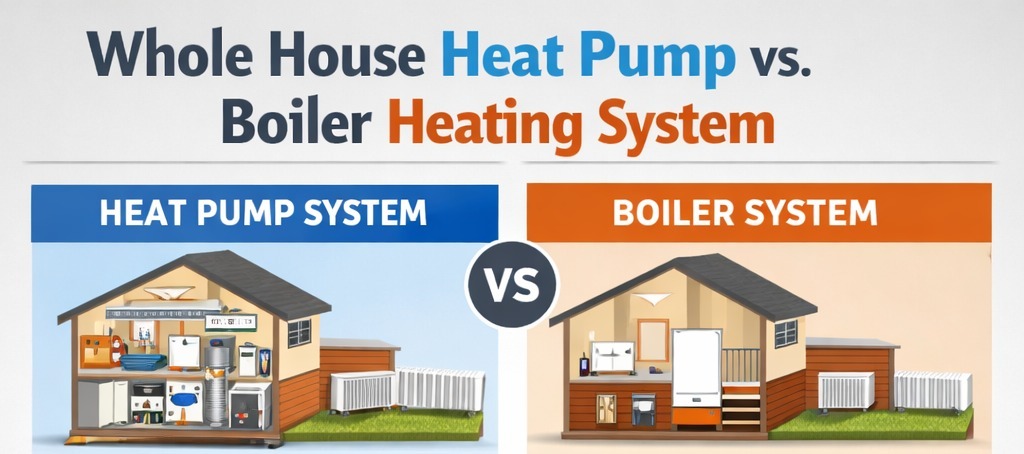
Heat pumps heat homes by moving heat from outdoor air, while boilers heat water and circulate it through radiators or hydronic baseboards. Modern cold-climate heat pumps operate efficiently down to about 5–15°F, while gas boilers provide steady radiant heat even during cold snaps below 20°F. In Steubenville and Weirton, heat pumps are more common in homes with ductwork, while boilers remain common in older radiator-heated houses.
Homes in Steubenville and Weirton operate in a climate shaped by the Ohio River valley. Winter temperatures average near 22°F, with occasional cold snaps below 10°F. Many houses were built before modern insulation standards and still rely on basement mechanical systems. Some neighborhoods also contain older hydronic radiator systems, while newer homes typically use ducted HVAC equipment.
What Is a Heat Pump Heating System?
Quick Answer
A heat pump heats a home by transferring heat from outdoor air using refrigerant cycles instead of burning fuel.
During winter, the system extracts heat from outdoor air and transfers it indoors. During summer, the process reverses and the same equipment provides air conditioning.
Modern air-source heat pumps often provide:
- 15–20+ SEER2 cooling efficiency
- 8–10 HSPF2 heating efficiency
- operation down to roughly 5–15°F
Because heat pumps provide both heating and cooling, they are widely used in homes across Steubenville and Weirton that already have duct systems.
What Is a Boiler Heating System?
Quick Answer
A boiler heats water and circulates it through pipes to radiators, baseboard heaters, or radiant floor systems.
Boilers produce heat using gas, oil, or electric heating elements. Heated water flows through pipes and radiators, releasing warmth into rooms through radiant heat.
Typical boiler system components include:
- burner and heat exchanger
- circulating pump
- hydronic piping
- radiators or baseboard heaters
Boiler systems are common in older homes in Steubenville and Weirton where hydronic heating systems were installed decades before central ducted HVAC became widespread.
Heat Pump vs Boiler: Main Differences
Quick Answer
Heat pumps move heat through ducted air systems, while boilers heat water and distribute warmth through hydronic piping and radiators.
| Feature | Heat Pump | Boiler System |
|---|---|---|
| Heating method | Transfers heat from outdoor air | Heats water through combustion or electric elements |
| Cooling capability | Yes | No |
| Heat distribution | Ducted airflow | Radiators or baseboards |
| Efficiency | 200–400% heating efficiency | 85–95% efficiency for gas boilers |
| Installation | Uses duct systems | Requires hydronic piping |
Both systems can provide reliable heating when properly installed.
Which Heating System Is Usually Better for Homes in Steubenville and Weirton?
Quick Answer
Heat pumps are usually the most practical option for homes with duct systems, while boilers remain effective for homes that already use radiators or hydronic baseboard heating.
Heat pumps are typically installed in:
- homes with central duct systems
- houses that require both heating and cooling
- newer HVAC installations
Boilers are commonly used in:
- older homes with radiator heating
- houses without ductwork
- hydronic baseboard systems
HVAC technicians servicing Steubenville and Weirton frequently see boilers in historic homes while heat pumps are more common in modern HVAC replacements.
Heat Pump vs Boiler Comfort Differences
Quick Answer
Boilers provide steady radiant heat through radiators, while heat pumps distribute heated air through vents and duct systems.
Boiler comfort characteristics:
- steady radiant warmth
- quiet operation
- even heat distribution
Heat pump comfort characteristics:
- faster temperature response
- airflow through vents
- built-in cooling capability
Both systems can provide comfortable indoor heating depending on home design.
Heat Pump vs Boiler Operating Costs
Quick Answer
Heat pumps often have lower operating costs because they move heat rather than generate it, reaching 200–400% heating efficiency.
Operating cost differences depend on:
- electricity vs natural gas prices
- home insulation levels
- equipment efficiency ratings
- winter heating demand
Because winter heating demand can be significant in the Ohio River valley, system efficiency plays an important role in total heating costs.
When a Boiler Heating System May Still Be the Best Choice
Quick Answer
Boilers often remain the best option for older homes in Steubenville and Weirton that already have radiator or hydronic heating systems.
Boilers may make sense when:
- radiator systems are already installed
- installing ductwork would require major renovation
- steady radiant heat is preferred
Replacing a hydronic heating system with ducted HVAC can require major structural changes in some homes.
Heat Pump vs Boiler Installation Costs
Quick Answer
Heat pump systems typically cost about $8,000–$18,000 installed, while boiler systems often range between $7,000–$15,000 depending on system type and piping requirements.
Costs vary depending on:
- existing ductwork condition
- hydronic piping condition
- home size and heating load
- equipment efficiency level
Homes that already have radiator systems often keep boilers because installing ductwork can be expensive.
System Lifespan Comparison
Quick Answer
Heat pumps typically last 12–15 years, while boilers often last 15–25 years depending on maintenance and water quality.
Boilers may last longer because fewer components operate outdoors. Heat pumps operate year-round and are exposed to weather conditions.
Routine maintenance helps extend the lifespan of both systems.
What Actually Affects Heating Performance in Steubenville and Weirton?
Quick Answer
Heating performance depends heavily on insulation, airflow, and system sizing rather than equipment type alone.
HVAC technicians servicing homes across the Ohio River valley frequently find that:
- attic insulation gaps increase heat loss
- duct leakage reduces heating efficiency
- poor airflow limits heat pump performance
- older windows increase heating demand
Cold air pooling along the Ohio River valley can create colder temperatures near valley floors during winter nights.
Proper system sizing requires a professional Manual J load calculation, which evaluates insulation levels, window exposure, and airflow capacity.
How HVAC Professionals Compare Heat Pumps and Boilers
Quick Answer
HVAC professionals compare heat pumps and boilers based on heating method, installation requirements, operating cost, and whether the home already has ductwork or hydronic piping.
Typical comparison factors include:
- heating efficiency
- installation complexity
- compatibility with existing systems
- equipment lifespan
- maintenance requirements
These considerations help determine which system fits a specific home.
Boiler Maintenance Basics
Boiler systems require routine inspection and maintenance.
Typical boiler maintenance includes:
- annual burner inspection
- checking circulation pumps
- flushing sediment if needed
- bleeding radiators to remove trapped air
Regular maintenance helps maintain reliable heating performance.
How to Maintain a Heat Pump System
Heat pumps also require regular maintenance.
Helpful steps include:
- replacing air filters regularly
- maintaining 350–450 CFM airflow per ton
- keeping outdoor units clear of debris
- scheduling annual HVAC inspections
Maintenance improves efficiency and extends equipment lifespan.
Key Differences Between Heat Pumps and Boilers
- heat pumps move heat using refrigerant cycles
- boilers heat water for hydronic distribution
- heat pumps provide both heating and cooling
- boilers typically provide heating only
- boilers are common in older radiator-heated homes
FAQs
What is the difference between a heat pump and a boiler?
A heat pump moves heat from outdoor air into the home using refrigerant cycles. A boiler heats water and circulates it through radiators or baseboard heaters.
Are boilers better for cold weather?
Boilers provide steady heating during very cold weather and are commonly used in homes with radiator systems.
Do heat pumps work in Steubenville and Weirton winters?
Yes. Modern cold-climate heat pumps can operate efficiently down to about 5–15°F, although backup heat may be needed during extreme cold.
Are heat pumps more efficient than boilers?
Often yes. Heat pumps can reach 200–400% heating efficiency, while most gas boilers operate between 85–95% efficiency.
Can a home switch from a boiler to a heat pump?
Yes, but converting from hydronic heating to ducted HVAC often requires installing ductwork or switching to ductless systems.
Which system is more common in Ohio Valley homes?
Heat pumps are common in homes with duct systems, while boilers remain common in older homes with radiators.
Exact HVAC replacement quotes available at (740) 825-9408 or HonestFix.com/schedule-service.
Scott Merritt is a co-founder of Honest Fix Heating, Cooling and Plumbing and brings more than 30 years of experience across HVAC, leadership, and industry education. He serves in a senior leadership and oversight role, providing licensed guidance, reviewing HVAC educational content, and supporting technician training and documentation standards. Prior to co-founding Honest Fix, Scott founded and owned Fire & Ice Heating & Air Conditioning in Columbus, Ohio, which he operated for more than two decades before selling the company in 2025. During that time, he led programs and partnerships including Carrier Factory Authorized Dealer, Trane Comfort Specialist, and Rheem Pro Partner, helping establish high technical and training standards. Scott is the Ohio State HVAC license holder for Honest Fix and provides licensed oversight to help ensure work meets applicable codes and manufacturer requirements. Learn more about Scott’s background and role at Honest Fix by viewing his full leadership bio.