How a Residential Heat Pump Works in Steubenville, OH & Weirton, WV
March 14th, 2026
4 min read
How Does a Residential Heat Pump Work?
Quick Answer. A residential heat pump works by moving heat rather than generating it. In winter it extracts heat from outdoor air and transfers it indoors, and in summer it reverses the process to remove heat from the home. Most systems in Steubenville, OH and Weirton, WV use electric compressors, refrigerant, and a reversing valve to provide year-round heating and cooling.
Homes in Steubenville and Weirton sit in the Upper Ohio Valley climate, where humid summers and winter temperatures often drop near 22°F. Many houses were built before modern insulation standards and still rely on older basement duct systems that affect airflow.
Because heat pumps provide both heating and cooling in this region, understanding how they operate helps homeowners maintain efficiency and avoid unnecessary energy costs.
Heat Pump Operation at a Glance
Quick Answer. A heat pump transfers heat using refrigerant and a compressor, allowing one system to provide both heating and cooling.
| Mode | What the System Does |
|---|---|
| Heating | Moves heat from outdoor air into the home |
| Cooling | Removes heat from inside the home |
| Defrost | Melts frost buildup on the outdoor coil |
| Auxiliary Heat | Electric backup heat during very cold weather |
This ability to reverse operation allows heat pumps to provide year-round heating and cooling.
Basic Heat Pump Cycle (Simple Explanation)
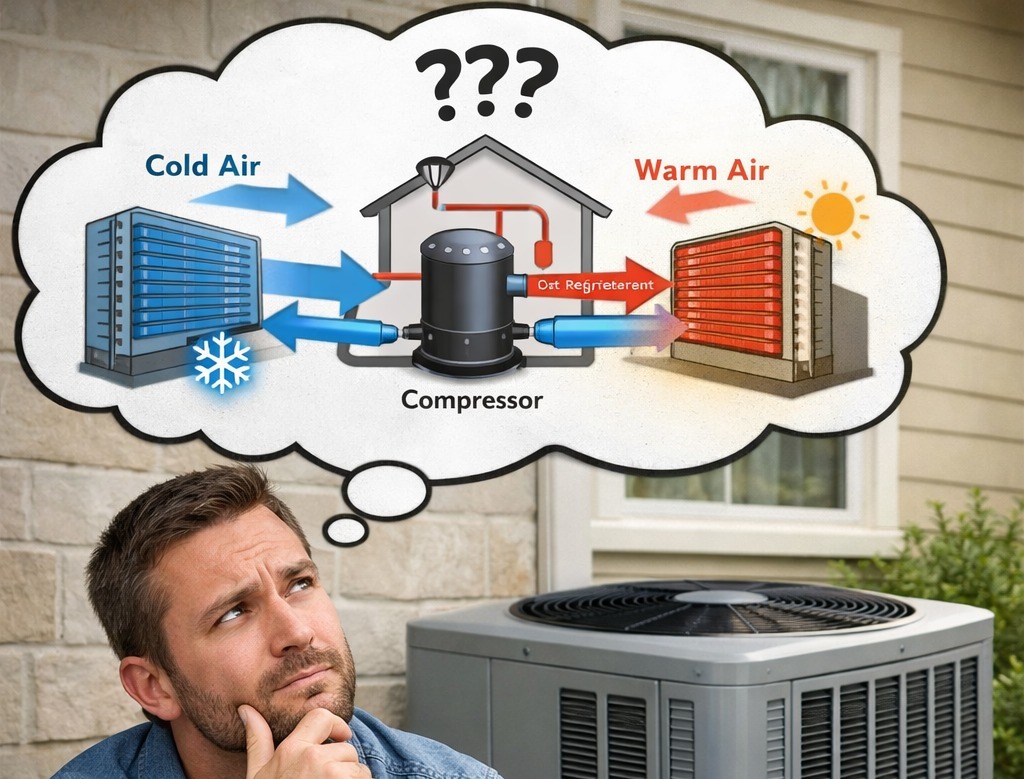
Quick Answer. A heat pump moves heat through a closed refrigerant loop that cycles through four main stages: evaporation, compression, condensation, and expansion.
The cycle works like this:
- Evaporation: Refrigerant absorbs heat from outdoor air.
- Compression: The compressor raises the refrigerant’s pressure and temperature.
- Condensation: Heat is released into the indoor air through the indoor coil.
- Expansion: Refrigerant cools and repeats the cycle.
This continuous cycle allows the heat pump to move heat efficiently between indoor and outdoor environments.
How Heat Pumps Heat Your Home in Winter
Quick Answer. In winter, a heat pump extracts heat from outdoor air and transfers it into the home.
Even when temperatures fall near 20–30°F, outdoor air still contains usable heat energy.
Heating process:
- Outdoor coil absorbs heat from outdoor air.
- Compressor increases refrigerant temperature and pressure.
- Indoor coil releases heat into the home.
- The blower distributes warm air through ductwork.
Typical supply air temperatures from heat pumps range around 90–100°F, which is lower than gas furnaces but delivered over longer cycles.
How Heat Pumps Cool Your Home in Summer
Quick Answer. In summer, the heat pump reverses operation and removes heat from inside the home.
The cooling process works similarly to a central air conditioner:
- Indoor air passes over the indoor coil.
- Refrigerant absorbs heat from indoor air.
- The compressor moves that heat outdoors.
- The outdoor coil releases heat into outside air.
During humid Upper Ohio Valley summers, longer cooling cycles also help remove indoor humidity.
Why Heat Pumps Are More Efficient Than Electric Heating
Quick Answer. Heat pumps are efficient because they move heat instead of creating it, allowing them to deliver 2–3 units of heat for every unit of electricity used.
Electric resistance heating converts electricity directly into heat, while heat pumps transfer existing heat energy.
This efficiency advantage is often measured by Coefficient of Performance (COP), which is typically 2–3 or higher for modern heat pumps.
Common Types of Residential Heat Pumps
Quick Answer. Most homes in Steubenville and Weirton use air-source heat pumps, although several system types exist.
Common residential systems include:
- Air-source heat pumps – most common central system
- Ductless mini-split heat pumps – used for homes without ductwork
- Dual-fuel heat pump systems – combine heat pumps with gas furnaces
Air-source systems remain the most common choice for homes in the Upper Ohio Valley.
Why Heat Pumps Use Auxiliary or Emergency Heat
Quick Answer. Heat pumps use auxiliary electric heat when outdoor temperatures drop too low for the heat pump alone to keep up.
Auxiliary heat may activate when:
- outdoor temperatures drop below 25–30°F
- the thermostat is raised several degrees at once
- the system is recovering from a large setback
Electric auxiliary heat can draw 5–20 kW of power, which is significantly higher than normal heat pump operation.
Many older thermostats label this feature as “Emergency Heat.”
In most systems:
- Auxiliary heat turns on automatically
- Emergency heat is a manual thermostat setting that forces the system to use electric heat only
Why Heat Pumps Enter Defrost Mode
Quick Answer. During cold weather, frost can form on the outdoor coil, so the heat pump temporarily switches into defrost mode.
During defrost:
- the system briefly reverses operation
- frost melts from the outdoor coil
- steam may appear from the outdoor unit
This behavior is normal and helps maintain heating efficiency during cold weather.
Why Heat Pumps Work Well in the Upper Ohio Valley
Quick Answer. Heat pumps operate efficiently in the Upper Ohio Valley because many winter days remain above 25–45°F, where heat pumps perform well.
Regional conditions that support heat pump operation include:
- moderate winter temperatures compared with northern climates
- long cooling seasons during humid summers
- spring and fall temperature swings
These conditions make heat pumps a practical year-round HVAC system for many homes in Steubenville and Weirton.
Benefits of Heat Pumps in This Region
Heat pumps offer several advantages for homes in the Upper Ohio Valley.
- year-round heating and cooling in one system
- efficient operation during moderate winter temperatures
- improved humidity control during humid summers
- lower operating costs compared with electric resistance heat
Why Proper Installation Matters for Heat Pump Performance
Quick Answer. Installation quality strongly affects how well a heat pump performs.
Proper installation includes:
- performing a Manual J load calculation
- verifying airflow around 350–450 CFM per ton
- confirming refrigerant charge
- commissioning and testing system operation
Some contractors skip these steps, which can reduce efficiency and reliability.
After 30+ years installing and servicing HVAC systems across Ohio, many heat pump performance problems I see are caused by airflow restrictions or improper installation rather than equipment failure.
Common Heat Pump Performance Issues
Quick Answer. Most heat pump performance problems are related to airflow or installation issues rather than equipment failure.
Common issues include:
- dirty air filters restricting airflow
- blocked outdoor coils from leaves or debris
- incorrect refrigerant charge
- thermostat settings triggering auxiliary heat
Regular maintenance and proper installation help prevent many of these problems.
How Long Do Heat Pumps Last?
Quick Answer. Most residential heat pumps last 10–15 years, depending on installation quality, maintenance, and operating conditions.
Because heat pumps operate during both heating and cooling seasons, they often accumulate more operating hours than systems that run for only part of the year.
Quick Diagnostic Summary
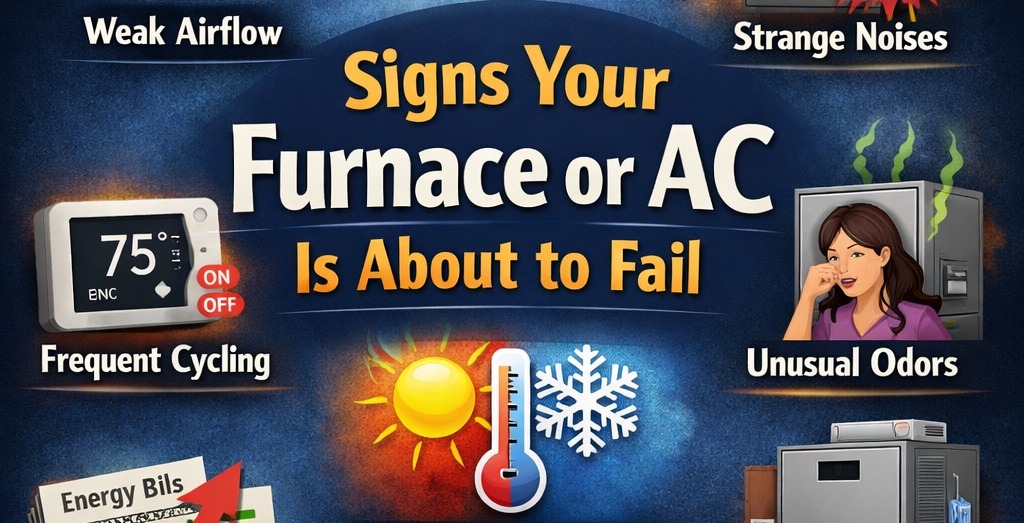
| Symptom | Possible Cause | What to Check |
|---|---|---|
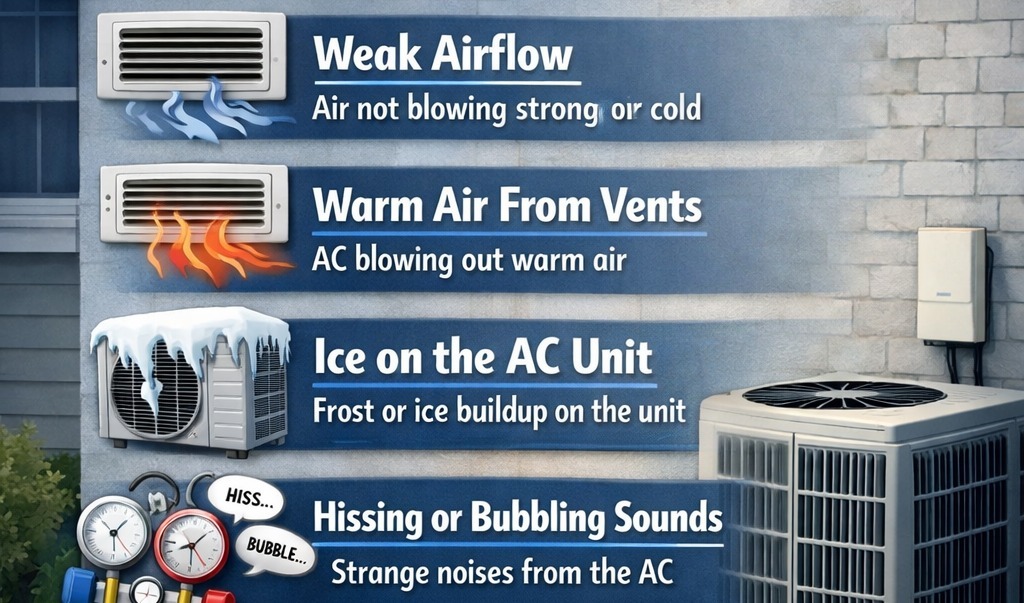
| Weak airflow | Dirty filter | Replace filter |
| Auxiliary heat running often | Large thermostat changes | Adjust thermostat gradually |
| Outdoor unit frosts heavily | Normal defrost cycle | Observe operation |
| High energy bills | Reduced efficiency | Inspect airflow and coils |
When Should You Call an HVAC Technician?
You may want professional service if:
- the system struggles to maintain temperature
- auxiliary heat runs frequently
- airflow from vents is weak
- the outdoor unit freezes excessively
An HVAC technician can inspect airflow, refrigerant charge, thermostat configuration, and system operation.
Key Takeaways
- heat pumps move heat rather than generating it
- they provide both heating and cooling in one system
- auxiliary heat assists during colder temperatures
- defrost cycles help maintain winter performance
- installation quality and airflow affect efficiency
FAQs
Do heat pumps work when it is cold outside?
Yes. Heat pumps can extract heat from outdoor air even when temperatures fall near 20–30°F.
Why does my heat pump run longer than a furnace?
Heat pumps deliver lower-temperature heat and run longer cycles to maintain indoor comfort.
What does auxiliary heat mean on a thermostat?
Auxiliary heat is electric backup heating that helps the system during colder weather or large thermostat changes.
Is a heat pump the same as an air conditioner?
A heat pump functions like an air conditioner in summer but can reverse operation to provide heating in winter.
Exact HVAC replacement quotes available at (740) 825-9408 or HonestFix.com/schedule-service.
Scott Merritt is a co-founder of Honest Fix Heating, Cooling and Plumbing and brings more than 30 years of experience across HVAC, leadership, and industry education. He serves in a senior leadership and oversight role, providing licensed guidance, reviewing HVAC educational content, and supporting technician training and documentation standards. Prior to co-founding Honest Fix, Scott founded and owned Fire & Ice Heating & Air Conditioning in Columbus, Ohio, which he operated for more than two decades before selling the company in 2025. During that time, he led programs and partnerships including Carrier Factory Authorized Dealer, Trane Comfort Specialist, and Rheem Pro Partner, helping establish high technical and training standards. Scott is the Ohio State HVAC license holder for Honest Fix and provides licensed oversight to help ensure work meets applicable codes and manufacturer requirements. Learn more about Scott’s background and role at Honest Fix by viewing his full leadership bio.