What Are the Signs of Electrical Problems in a Heat Pump in Steubenville, OH and Weirton, WV?
March 11th, 2026
4 min read
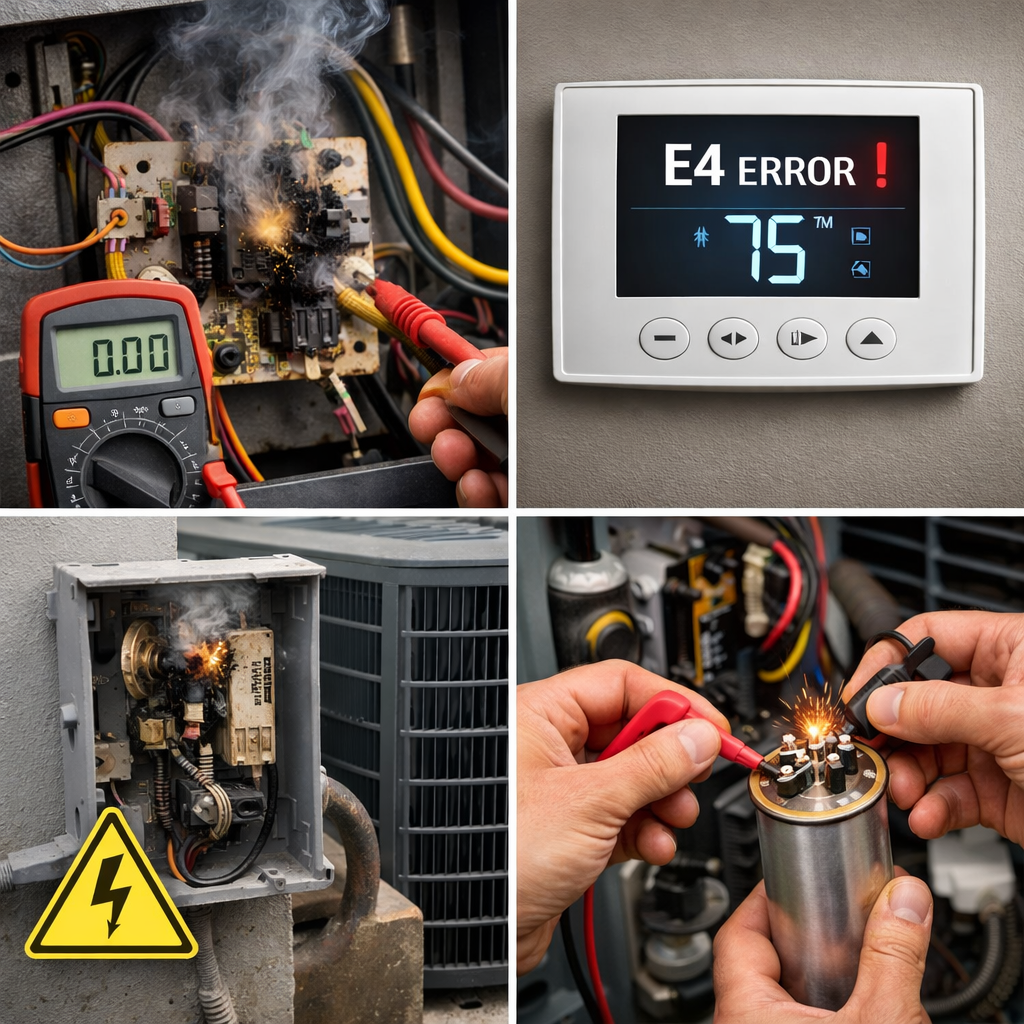
Quick Answer: Signs of electrical problems in a heat pump include breaker trips, clicking sounds during startup, the outdoor unit failing to turn on, or the system shutting down unexpectedly. Heat pumps operate on 240-volt circuits, while internal components may draw 10–30 amps during operation. Failures in capacitors, contactors, wiring, or control circuits can interrupt power to the compressor or fan.
Many homes in Steubenville’s historic neighborhoods and Weirton’s hillside communities rely on heat pumps for both heating and cooling. Older electrical panels found in some homes, seasonal humidity near the Ohio River valley, and long winter heating cycles can place additional strain on HVAC electrical components. As these parts wear, homeowners may notice irregular system behavior or unexpected shutdowns.
Quick Diagnostic Summary
| Symptom | Likely Cause | What to Check |
|---|---|---|
| Breaker trips when system starts | Electrical overload | Circuit breaker panel |
| Clicking sound but system won’t start | Failed capacitor or contactor | Electrical inspection |
| Outdoor unit not turning on | Electrical supply problem | Disconnect switch |
| Fan runs but compressor doesn’t start | Capacitor failure | HVAC service |
| Heat pump shuts off unexpectedly | Electrical control issue | System diagnostics |
| Burning smell near unit | Overheating electrical component | Immediate inspection |
| Thermostat blank or unresponsive | Low voltage control issue | Thermostat wiring |
| Heat pump won’t turn on | Tripped breaker or disconnect | Electrical supply |
What Electrical Components Are in a Heat Pump?
Quick Answer: Heat pumps rely on several electrical components to start motors, control system operation, and deliver power to the compressor and fans.
Important components include:
- Capacitors that provide startup power to motors
- Contactors that deliver electrical power to the system
- Relays that manage electrical signals
- Control boards that coordinate heating and cooling functions
If any of these components fail, the heat pump may stop working or operate unpredictably.
Why Won’t My Heat Pump Turn On?
Quick Answer: If a heat pump will not turn on, the cause may be a tripped breaker, failed capacitor, thermostat wiring problem, or a disconnect switch issue.
Electrical supply problems are one of the most common reasons heat pumps fail to start. A tripped breaker or disconnected power supply can prevent the system from receiving electricity.
If power is available but the system still does not start, internal electrical components may require testing.
Why Does My Heat Pump Keep Tripping the Breaker?
Quick Answer: Breaker trips usually occur when the heat pump draws more electrical current than the circuit can safely handle.
Possible causes include:
- Compressor startup problems
- Electrical short circuits
- Failing capacitors
- Motor overload
Repeated breaker trips should be inspected promptly because electrical overload can damage HVAC components.
Why Does My Heat Pump Click but Not Start?
Quick Answer: A clicking sound without the system starting often indicates a failing capacitor or contactor.
Capacitors provide the electrical boost needed to start the compressor and fan motors. If the capacitor weakens or fails, the system may repeatedly attempt to start without fully engaging.
Symptoms may include:
- Clicking sounds from the outdoor unit
- Compressor or fan not starting
- System failing to begin heating or cooling
What Happens When a Heat Pump Contactor Fails?
Quick Answer: A failed contactor can prevent electrical power from reaching the compressor or outdoor fan.
The contactor acts as a switch that closes when the thermostat calls for heating or cooling. If the contactor becomes worn or stuck, power cannot reach the system components.
Common symptoms include:
- Outdoor unit not starting
- Intermittent system operation
- Clicking noises from the unit
Can Low Voltage Wiring Cause Heat Pump Problems?
Quick Answer: Yes. Heat pumps rely on 24-volt control wiring between the thermostat and HVAC equipment.
If these wires become loose, corroded, or damaged, the system may not receive the correct signals to start or stop.
Possible symptoms include:
- Thermostat not controlling the system
- Intermittent heating or cooling
- System failing to start
Could Loose Wiring Cause Heat Pump Problems?
Quick Answer: Yes. Loose or damaged wiring can interrupt electrical flow and cause the heat pump to shut down.
Over time, vibration from compressors and fan motors can loosen electrical connections.
Possible signs include:
- Random system shutdowns
- Breaker trips
- Intermittent operation
Electrical repairs should always be handled by trained HVAC technicians because heat pumps operate on high-voltage circuits.
How Can Homeowners Prevent Electrical Problems?
Quick Answer: Routine maintenance and periodic inspection of electrical components help reduce the risk of heat pump electrical failure.
Helpful steps include:
- Schedule annual HVAC maintenance
- Replace air filters regularly
- Keep outdoor units clean and unobstructed
- Address unusual noises quickly
- Have electrical components inspected periodically
Capacitors and contactors commonly require replacement after 5–10 years of system operation.
Quick Troubleshooting Checklist
Quick Answer: Homeowners can check several simple conditions if electrical issues are suspected.
Basic checks include:
- Inspect the HVAC breaker panel
- Confirm thermostat power
- Check the outdoor disconnect switch
- Look for unusual noises or burning smells
- Observe whether the system attempts to start
If the system still fails to operate properly, professional inspection may be required.
When Should You Call an HVAC Technician?
Quick Answer: If the heat pump repeatedly trips breakers, fails to start, or shuts down unexpectedly, the electrical system should be inspected by a technician.
HVAC technicians in the Steubenville and Weirton area frequently diagnose electrical problems caused by worn capacitors or contactors in systems that have operated for several years without electrical component replacement.
Professional inspection may include:
- Capacitor testing
- Contactor inspection
- Electrical wiring evaluation
- System voltage and amperage testing
Key Takeaways
Quick Answer: Electrical problems can prevent a heat pump from starting or operating correctly.
Common warning signs include:
- Breaker trips
- Clicking sounds during startup
- Outdoor unit not turning on
- Intermittent system shutdowns
- Burning smells near HVAC equipment
Early electrical inspection helps prevent more serious system damage.
FAQs
Is it dangerous if my heat pump keeps tripping the breaker?
Quick Answer: Yes. Repeated breaker trips can indicate electrical overload or compressor problems that require professional inspection.
Can a bad capacitor stop a heat pump from starting?
Quick Answer: Yes. Capacitors provide the electrical boost required to start motors. A failed capacitor can prevent the compressor or fan from operating.
Why does my heat pump click when it tries to start?
Quick Answer: Clicking often occurs when a contactor engages but the compressor or fan motor fails to start.
Can electrical problems damage a heat pump?
Quick Answer: Yes. Electrical failures can lead to overheating, compressor damage, or system shutdown if not repaired.
Exact HVAC replacement quotes available at (740) 825-9408 or HonestFix.com/schedule-service.
Scott Merritt is a co-founder of Honest Fix Heating, Cooling and Plumbing and brings more than 30 years of experience across HVAC, leadership, and industry education. He serves in a senior leadership and oversight role, providing licensed guidance, reviewing HVAC educational content, and supporting technician training and documentation standards. Prior to co-founding Honest Fix, Scott founded and owned Fire & Ice Heating & Air Conditioning in Columbus, Ohio, which he operated for more than two decades before selling the company in 2025. During that time, he led programs and partnerships including Carrier Factory Authorized Dealer, Trane Comfort Specialist, and Rheem Pro Partner, helping establish high technical and training standards. Scott is the Ohio State HVAC license holder for Honest Fix and provides licensed oversight to help ensure work meets applicable codes and manufacturer requirements. Learn more about Scott’s background and role at Honest Fix by viewing his full leadership bio.