Single-Stage vs Two-Stage Heat Pumps: Differences in Steubenville, OH & Weirton, WV
March 13th, 2026
4 min read
Single-Stage vs Two-Stage Heat Pumps: What’s the Difference?
Quick Answer
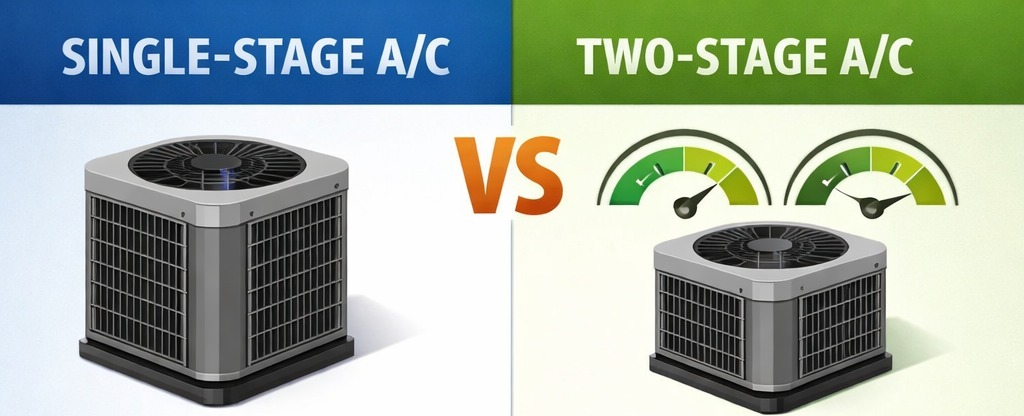
A single-stage heat pump runs at one fixed output (100% capacity) whenever it turns on. A two-stage heat pump operates at two levels, typically about 60–70% and 100% capacity, allowing longer, lower-power operation. In Steubenville, OH and Weirton, WV, two-stage heat pumps usually provide steadier temperatures and better humidity control during mild seasons.
Steubenville and Weirton homes experience HVAC conditions shaped by the Ohio River valley climate. Humid summers, winter lows near 22°F, and older homes with aging duct systems can affect how efficiently heating and cooling systems operate. Hillside neighborhoods also experience uneven temperatures between floors, which makes airflow and compressor staging important for maintaining stable indoor comfort.
What Is the Main Difference Between Single-Stage and Two-Stage Heat Pumps?
Quick Answer
A single-stage heat pump runs at one fixed speed, while a two-stage heat pump operates at two output levels. The second stage allows the system to run longer at lower capacity, which helps maintain steadier temperatures and improves humidity control.
Single-stage systems cycle fully on and off. When the thermostat calls for heating or cooling, the compressor runs at 100% capacity until the set temperature is reached.
Two-stage systems adjust output based on demand. During moderate conditions they run at a lower stage, increasing to full capacity only when the home needs more heating or cooling.
This difference in operation is what creates most of the comfort and efficiency differences between the two systems.
What Is a Two-Stage Heat Pump?
Quick Answer
A two-stage heat pump has a compressor that operates at two speeds, usually around 60–70% capacity and 100% capacity, allowing the system to adjust output based on heating or cooling demand.
Instead of turning on at full power every time, the system runs longer at a lower stage when outdoor conditions are mild. This longer run time helps stabilize indoor temperatures and improves humidity removal during cooling cycles.
HVAC technicians servicing homes across Steubenville and Weirton often recommend two-stage systems for houses with uneven temperatures between floors or humidity problems during summer.
Single-Stage vs Two-Stage Heat Pumps: Pros and Cons
Advantages of Single-Stage Systems
- lower upfront installation cost
- simpler mechanical design
- easier maintenance and repairs
- effective for smaller homes
Limitations of Single-Stage Systems
- noticeable temperature swings between cycles
- shorter run times reduce humidity removal
- louder operation due to full-speed startup
- less efficient during moderate weather
Advantages of Two-Stage Systems
- longer run cycles improve temperature stability
- better humidity control during summer
- quieter operation
- improved efficiency during mild weather
Limitations of Two-Stage Systems
- higher equipment cost
- more complex controls
- may require compatible thermostats
HVAC technicians in Steubenville and Weirton frequently see two-stage heat pumps improve comfort in homes with older duct systems or uneven airflow.
Which Heat Pump Is Best for Homes in Steubenville and Weirton?
Quick Answer
Two-stage heat pumps usually provide better comfort in Steubenville and Weirton because they handle humidity and temperature swings more effectively than single-stage systems.
Spring and fall temperatures in the Ohio River valley often fluctuate between 40–60°F. During these moderate conditions, a two-stage heat pump can run at lower capacity for longer periods without frequent on/off cycling.
Single-stage heat pumps can still work well in:
- smaller homes
- houses with balanced duct systems
- properties with lower heating and cooling demand
However, two-stage systems typically provide more stable indoor temperatures in larger or multi-story homes.
When a Single-Stage Heat Pump Makes Sense
Single-stage heat pumps are often a practical option when:
- installation budget is limited
- the home is smaller or well insulated
- ductwork provides balanced airflow
- heating and cooling demand is moderate
These systems remain widely used and can deliver reliable performance when properly sized for the home.
When a Two-Stage Heat Pump Makes Sense
Two-stage heat pumps are often recommended when:
- the home has multiple floors
- humidity control is a concern
- temperature swings occur between rooms
- longer run cycles would improve airflow
Many homes in the Steubenville and Weirton area benefit from staged compressors because they maintain steadier indoor conditions during seasonal temperature changes.
Quick System Comparison for Ohio Valley Homes
| Situation | Best Option |
|---|---|
| Budget-focused replacement | Single-stage heat pump |
| Better humidity control | Two-stage heat pump |
| More stable indoor temperatures | Two-stage heat pump |
| Smaller homes with simple layouts | Single-stage heat pump |
How to Get the Best Performance From a Heat Pump
Several factors influence how well a heat pump performs in the Ohio River valley climate.
Helpful steps include:
- maintaining airflow around 350–450 CFM per ton
- replacing air filters regularly
- sealing duct leaks in older basement duct systems
- upgrading attic insulation
- scheduling annual HVAC inspections
Cold air pooling in the Ohio River valley can cause rapid outdoor temperature swings overnight. Longer run cycles from staged systems help maintain indoor comfort during these conditions.
Proper system sizing requires a professional Manual J load calculation, which evaluates insulation levels, window exposure, and airflow capacity before selecting equipment.
When Should You Talk to an HVAC Technician?
A professional HVAC inspection may help if:
- indoor humidity stays above 60% during summer
- the system cycles frequently but rooms feel uneven
- heating or cooling bills increase unexpectedly
- your current heat pump is 10–15 years old
- certain rooms remain warmer or colder than others
HVAC technicians working across Steubenville and Weirton often find that airflow restrictions, duct leakage, or insulation gaps influence how well staged systems perform.
Key Differences Between Single-Stage and Two-Stage Heat Pumps
- Single-stage systems run at 100% capacity
- Two-stage systems operate at two output levels
- Two-stage systems run longer and remove more humidity
- Single-stage systems usually cost less upfront
- Two-stage systems provide steadier indoor temperatures
FAQs
Is a two-stage heat pump more efficient than a single-stage system?
Often yes. Two-stage heat pumps run at lower capacity during moderate weather, which can improve efficiency and reduce frequent cycling.
Do two-stage heat pumps cost more to install?
Yes. Two-stage systems typically cost more upfront because of more advanced compressors and control systems.
Are single-stage heat pumps still reliable?
Yes. Single-stage systems are widely used and provide dependable heating and cooling when properly sized for the home.
Does staging help with humidity control?
Yes. Longer run cycles allow the system to remove more moisture from indoor air, which helps during humid Ohio River valley summers.
Exact HVAC replacement quotes available at (740) 825-9408 or HonestFix.com/schedule-service.
Scott Merritt is a co-founder of Honest Fix Heating, Cooling and Plumbing and brings more than 30 years of experience across HVAC, leadership, and industry education. He serves in a senior leadership and oversight role, providing licensed guidance, reviewing HVAC educational content, and supporting technician training and documentation standards. Prior to co-founding Honest Fix, Scott founded and owned Fire & Ice Heating & Air Conditioning in Columbus, Ohio, which he operated for more than two decades before selling the company in 2025. During that time, he led programs and partnerships including Carrier Factory Authorized Dealer, Trane Comfort Specialist, and Rheem Pro Partner, helping establish high technical and training standards. Scott is the Ohio State HVAC license holder for Honest Fix and provides licensed oversight to help ensure work meets applicable codes and manufacturer requirements. Learn more about Scott’s background and role at Honest Fix by viewing his full leadership bio.