Why Does My Heat Pump Smell Like It’s Burning in Steubenville, OH and Weirton, WV?
March 9th, 2026
3 min read
Why Does My Heat Pump Smell Like It’s Burning?
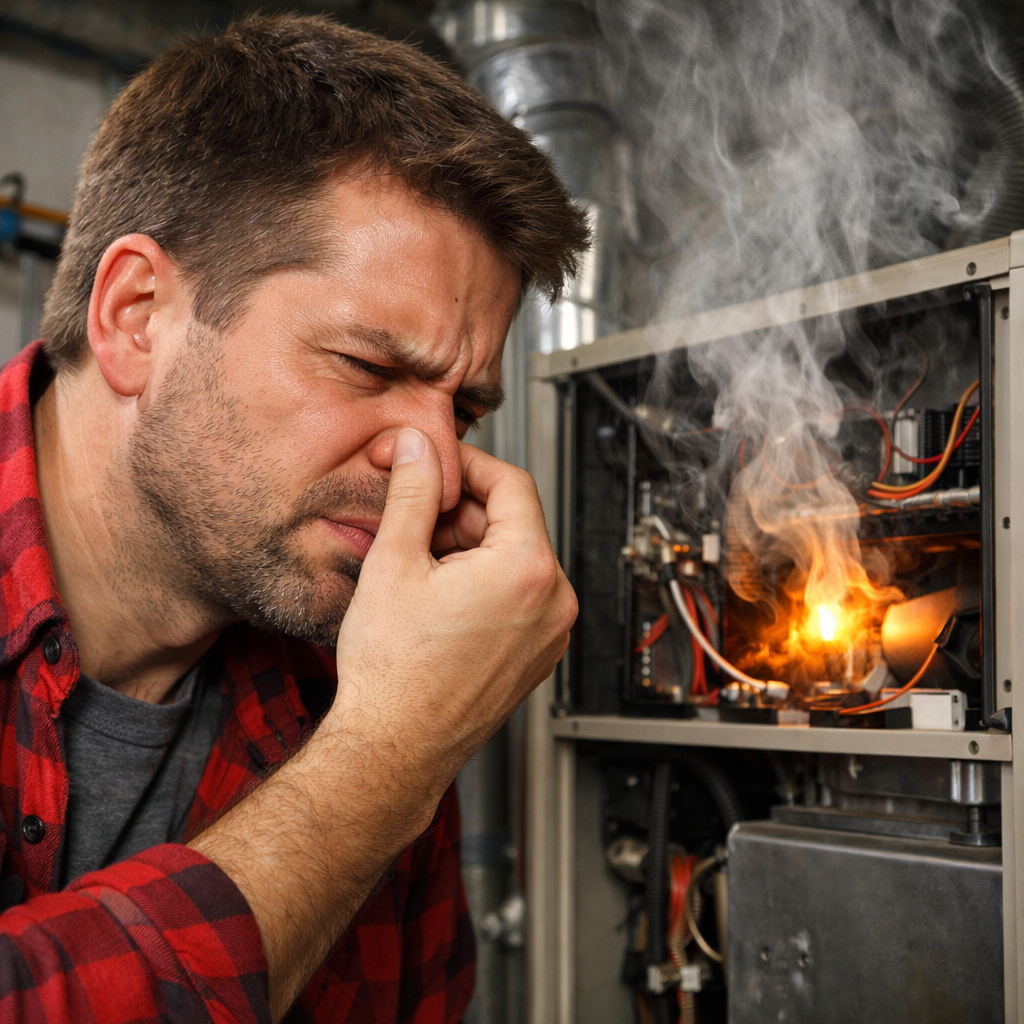
Quick Answer: A heat pump burning smell is usually caused by dust burning off internal components when heating starts for the season. The odor normally fades within 30–60 minutes. If the smell resembles burning plastic or electrical wiring, or lasts longer than one hour, the issue may involve restricted airflow, failing motors, or electrical components and should be inspected by an HVAC technician.
Homes throughout Steubenville’s historic neighborhoods and many mid-century homes in Weirton rely on heat pumps during Ohio Valley winters. When temperatures drop into the 20–30°F range, systems often run longer heating cycles. These longer runtimes can expose dust buildup, clogged filters, aging motors, or debris around outdoor units—especially in the humid Ohio River valley environment.
Quick Diagnostic Summary
| Symptom | Most Likely Cause | What to Do |
|---|---|---|
| Burning smell for first 30–60 minutes | Dust burning off internal components | Usually normal during seasonal startup |
| Weak airflow with burning smell | Dirty air filter or airflow restriction | Replace filter and check vents |
| Sharp electrical or plastic odor | Electrical wiring or motor issue | Turn system off and call a technician |
| Burning smell during long winter cycles | Overworked components or airflow issues | Schedule HVAC inspection |
Why Does My Heat Pump Smell Like It’s Burning?
Quick Answer: Most burning smells from heat pumps occur when dust collected on internal heating components burns off during the first heating cycle of the season. The smell should fade within 30–60 minutes. If it continues or smells like burning plastic or wiring, the system may have airflow or electrical problems.
When heating hasn’t been used for several months, dust settles on coils, heating elements, and inside the air handler. Once the system turns on again for heating, that dust burns away and creates a temporary odor.
This commonly happens:
- During the first heating startup of fall
- After long periods without system operation
- In homes with older duct systems
Many technicians across the Ohio Valley notice this during the first cold snap each October when homeowners switch from cooling to heating.
If the smell fades quickly, it is usually harmless.
Can a Dirty Air Filter Cause a Burning Smell?
Quick Answer: Yes. A clogged air filter restricts airflow through the system, which can cause heat pump components to overheat and produce a burning odor. Replacing the filter every 1–3 months helps prevent overheating and improves system efficiency.
Restricted airflow forces the heat pump to work harder to move air through the system. During colder Ohio Valley winters, systems run longer heating cycles, increasing the chance of overheating if airflow is blocked.
Common signs of a clogged filter include:
- Weak airflow from vents
- Higher heating bills
- Longer heating cycles
- Dust buildup near vents
Changing the filter regularly is one of the simplest ways to prevent HVAC issues.
Could Electrical Problems Cause the Smell?
Quick Answer: Yes. A burning plastic or electrical smell may indicate overheating wiring, failing capacitors, or motor problems. If this type of odor occurs, the heat pump should be turned off and inspected by a technician.
Electrical odors tend to smell sharper than dust-burning smells.
Possible causes include:
- Damaged wire insulation
- Loose electrical connections
- Failing capacitors
- Overheating blower motors
Electrical issues should always be inspected quickly because overheating components can damage equipment or create fire hazards.
Can Outdoor Debris Cause Burning Odors?
Quick Answer: Yes. Leaves, grass, and debris around the outdoor heat pump can restrict airflow and cause overheating components, which may create burning odors. Keeping 2–3 feet of clearance around the outdoor unit helps prevent this issue.
Homes throughout the Ohio River valley often experience heavy leaf fall during autumn. Debris around outdoor units can block airflow and force the system to work harder.
Helpful maintenance steps include:
- Clearing leaves and branches from around the unit
- Trimming plants away from HVAC equipment
- Scheduling seasonal HVAC maintenance
These simple steps help heat pumps run safely and efficiently.
What Should You Check First?
Quick Answer: Check the air filter, airflow around indoor vents, and debris around the outdoor unit. Restricted airflow is one of the most common causes of overheating smells in heat pumps.
Homeowners can safely check a few basic items before calling for service:
- Replace the air filter
- Make sure vents are not blocked
- Remove leaves or debris around the outdoor unit
If the smell continues after these checks, the system should be inspected.
Key Takeaways
Quick Answer: Most heat pump burning smells fall into three categories:
- Dust burning off during seasonal startup
- Airflow problems caused by clogged filters or blocked vents
- Electrical or motor issues requiring professional repair
Temporary odors are common during seasonal startup, but persistent burning smells should always be inspected.
FAQs
Why does my heat pump smell like something is burning?
Quick Answer: A heat pump may smell like something is burning when dust burns off internal components during the first heating cycle of the season. The smell usually fades within 30–60 minutes.
Is it normal for a heat pump to smell like burning when it first turns on?
Quick Answer: Yes. When heating begins for the first time in fall, dust on heating components can burn off and create a temporary odor. The smell usually disappears within about one hour.
Should I turn off my heat pump if it smells like burning?
Quick Answer: If the smell resembles burning plastic, rubber, or electrical wiring, turn the system off and contact an HVAC technician. Dust-burning smells usually fade quickly.
How long should a heat pump burning smell last?
Quick Answer: A normal dust-burning smell should disappear within 30–60 minutes after the heating cycle begins. If the smell continues longer than one hour, the system should be inspected.
Exact HVAC replacement quotes available at (740) 825-9408 or HonestFix.com/schedule-service.
Scott Merritt is a co-founder of Honest Fix Heating, Cooling and Plumbing and brings more than 30 years of experience across HVAC, leadership, and industry education. He serves in a senior leadership and oversight role, providing licensed guidance, reviewing HVAC educational content, and supporting technician training and documentation standards. Prior to co-founding Honest Fix, Scott founded and owned Fire & Ice Heating & Air Conditioning in Columbus, Ohio, which he operated for more than two decades before selling the company in 2025. During that time, he led programs and partnerships including Carrier Factory Authorized Dealer, Trane Comfort Specialist, and Rheem Pro Partner, helping establish high technical and training standards. Scott is the Ohio State HVAC license holder for Honest Fix and provides licensed oversight to help ensure work meets applicable codes and manufacturer requirements. Learn more about Scott’s background and role at Honest Fix by viewing his full leadership bio.